Title: Exploring the Mechanics of Sliders in Plastic Injection Molds
Description:
In this comprehensive video, we delve into the intricate workings of sliders in plastic injection molds. Copyright reserved by ecomolding.com. Sliders play a crucial role in ensuring the successful release of molded products, especially when special requirements are involved. Join us as we uncover the key steps and techniques involved in operating sliders, shedding light on their significance within the mold open process.
Introduction:
Welcome to our in-depth exploration of sliders in plastic injection molds. In this video, we will walk you through the essential aspects of these components, providing valuable insights into their role in the mold release direction. Discover how sliders contribute to meeting the unique requirements of specific products, ensuring efficient and effective mold open operations.
Video Content:
1. Understanding the Significance of Sliders: Learn why sliders are integral to the mold open process, particularly when dealing with products that demand precise release directions.
2. Exploring Slider Design: Gain insights into the various types of sliders used in plastic injection molds, their configurations, and how they accommodate specific product designs.
3. Mold Release Direction: Dive into the factors influencing the determination of mold release direction, and how sliders facilitate the desired outcome.
4. Operation Steps: Follow along as we outline the step-by-step process of correctly operating sliders, highlighting essential techniques and best practices.
5. Key Highlights and Interesting Facts: Discover fascinating aspects and lesser-known facts about sliders, such as their impact on product quality and mold longevity.
Call to Action:
If you found this video informative and helpful, we encourage you to hit the like button, subscribe to our channel for more insightful content, and share this video with others who may benefit from this knowledge.
Additional Tags and Keywords:
plastic injection mold, mold open, slider operation, mold release direction, slider design, product requirements, mold open process, plastic molding techniques
Hashtags:
#PlasticInjectionMolding #SliderOperation #MoldReleaseDirection #InjectionMoldDesign #ProductRequirements
Title: Understanding the Mechanism of Sliders in Plastic Injection Molds
Introduction:
Plastic injection molds play a crucial role in the manufacturing industry, enabling the mass production of various plastic products. Among the many components involved, sliders are an essential element that allows intricate design features to be incorporated into molded parts. In this article, we will delve into the workings of sliders in plastic injection molds, exploring their purpose, mechanism, and importance in achieving complex geometries.
1. Definition and Purpose of Sliders:
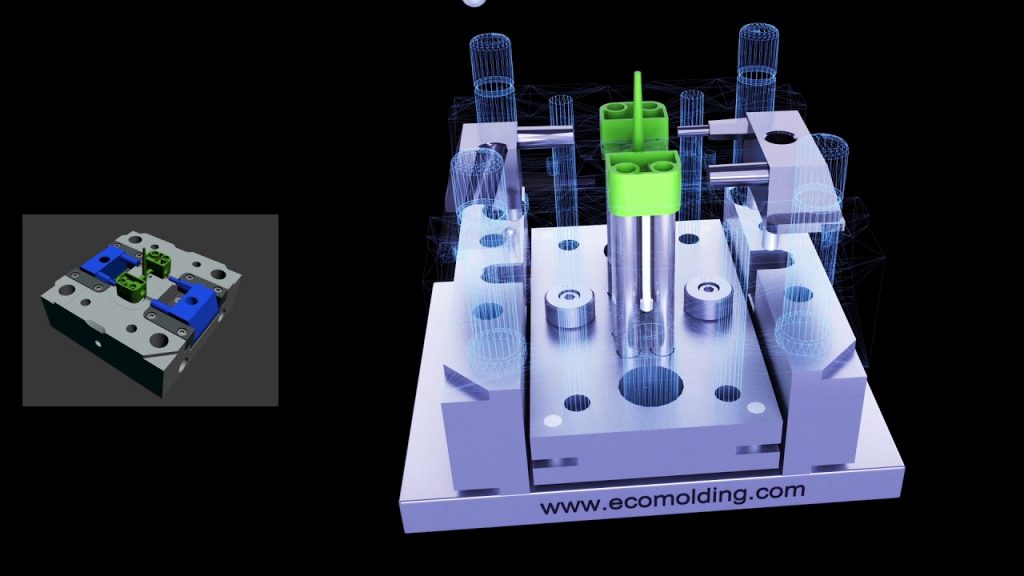
Sliders, also known as slide cores or side-action cores, are mechanical components integrated into injection molds. Their primary function is to create undercuts or intricate features that cannot be achieved through conventional mold opening and closing movements. Sliders work by moving perpendicularly to the mold's parting line, allowing the ejection of complex shapes with relative ease.
2. Mechanism of Sliders:
a. Design: Sliders are designed as movable cores that are placed within the mold cavity. They are typically actuated by hydraulic or mechanical means, enabling controlled lateral movement during the injection molding process.
b. Controlled Movement: Sliders move in a direction perpendicular to the mold's parting line, facilitated by their attachment to the mold's stationary side. This movement creates the required space for the mold to open and allow the molded part to be ejected successfully.
c. Interlocking Features: To ensure precise movement and prevent misalignment, sliders often incorporate interlocking features, such as tapered surfaces, locking pins, or spring-loaded mechanisms. These features secure the slider in its extended or retracted positions, maintaining dimensional accuracy during the molding process.
3. Importance of Sliders in Plastic Injection Molding:
a. Complex Geometries: Sliders enable the creation of complex shapes, including undercuts, threads, holes, and various forms of surface texturing, which enhance product functionality and aesthetics.
b. Cost Efficiency: By utilizing sliders, manufacturers can mold intricate features in a single operation, eliminating the need for secondary operations or assembly steps, thus reducing production costs.
c. Versatility: Sliders offer versatility in part design, allowing engineers to explore innovative concepts that were previously unachievable with conventional molding techniques. This versatility enhances product differentiation and market competitiveness.
d. Product Consistency: Sliders help ensure consistent part quality by precisely controlling the movement and positioning of complex features during the injection molding process. This consistency is vital for meeting stringent industry standards and customer expectations.
Conclusion:
Sliders play a pivotal role in plastic injection molding, enabling the production of complex geometries and intricate features that enhance the functionality and aesthetics of molded products. By understanding the mechanism and importance of sliders, manufacturers can leverage their capabilities to unlock new design possibilities, achieve cost efficiency, and maintain consistent part quality. mold open
#slidersslide #work #plastic #injection #mold