Why Steel Mills Are Turning to Steel Coil Packing Lines to Improve Operational Efficiency?
Imagine this: your production line is running smoothly, coils are rolling off the line, but everything grinds to a halt at the final stage. Workers are struggling to manually wrap, strap, and label heavy steel coils. It's slow, it's dangerous, and it's costing you money with every minute of delay. This bottleneck is the reality for many mill managers today, creating a frustrating gap between production capacity and shipping throughput. The pressure to deliver faster, safer, and at a lower cost has never been greater, pushing the entire industry to seek a fundamental change in how the final product is prepared for the customer.
Steel mills are adopting automated steel coil packing lines to directly tackle critical operational challenges: eliminating dangerous manual labor, drastically reducing packaging time to match production speed, minimizing product damage during handling, and achieving a clear, fast return on investment through lower labor costs and higher throughput. This strategic shift moves packaging from a necessary cost center to a integrated, value-adding segment of the production flow. For a plant manager, this isn't just about buying a machine; it's about investing in a seamless extension of their manufacturing process that protects both their product and their people.
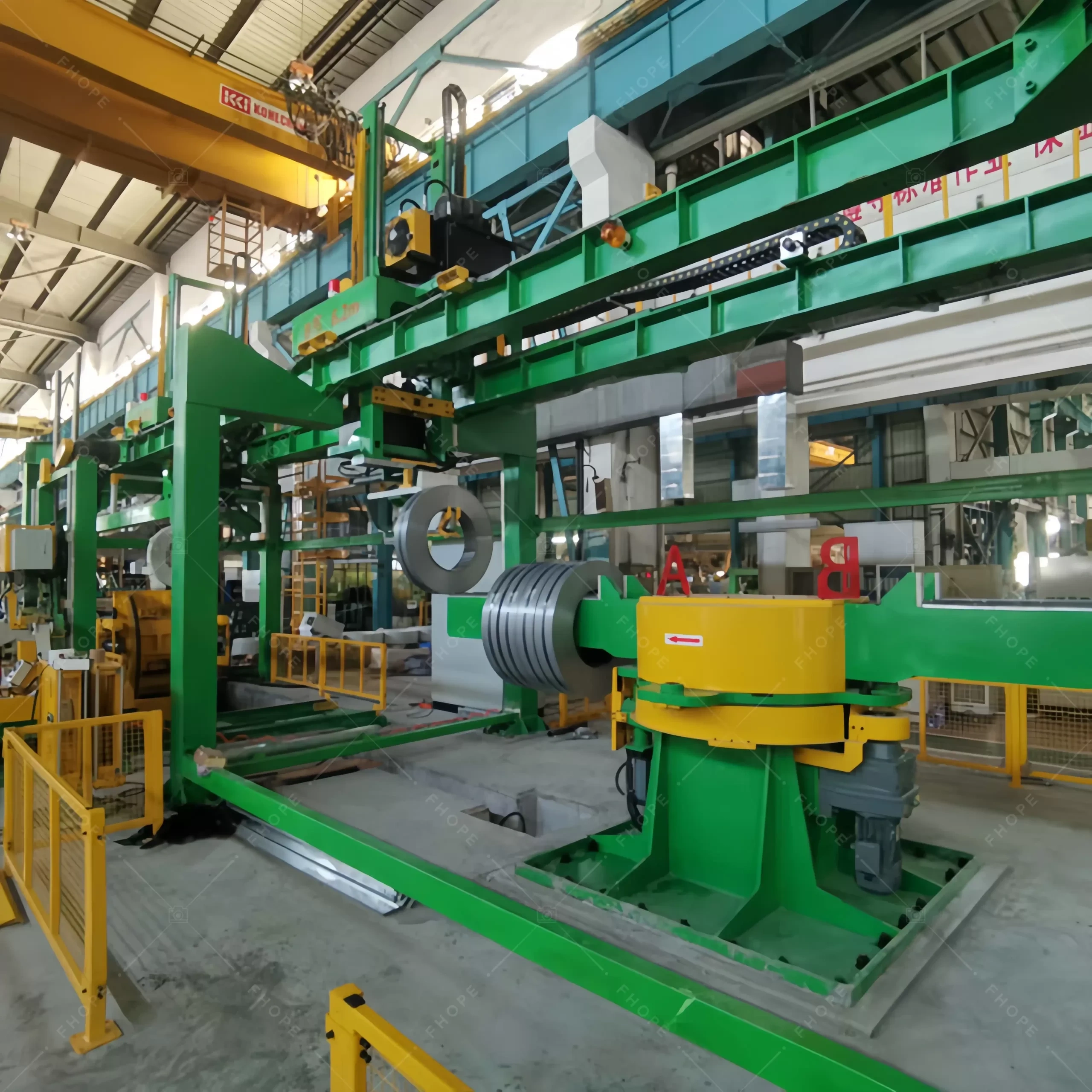
The decision to automate the packing station is a major one. It involves significant capital, changes to workflow, and a need for reliable technology. You might be wondering where to start, what the real benefits are, and how to ensure the solution fits your specific mill's demands. Let's break down the key reasons behind this industry-wide move and explore what a modern packing line can truly deliver for your operation. (steel coil packaging automation, operational efficiency in steel mills, ROI of packing equipment)
1. How Do Automated Packing Lines Solve the Critical Safety and Labor Crisis?
Safety in a steel mill is non-negotiable. Yet, the traditional manual packing process is a hotspot for potential accidents. Workers manually positioning coils, threading heavy straps, and applying protective materials are exposed to immense risk. Back injuries, crushed limbs, and strains are common, leading to high insurance premiums, worker compensation claims, and valuable talent leaving for safer jobs. This creates a constant labor crisis, making it difficult to staff the packing area reliably.
Automated steel coil packing lines fundamentally remove workers from the most hazardous tasks. By using motorized conveyors, robotic arms, and automatic strapping heads, the system handles the heavy lifting and precise movements. The operator's role shifts from physical labor to supervision and control panel operation, stationed in a safe zone. This transformation directly addresses the core safety challenges, creating a work environment where the biggest risk is managed by machinery, not muscle. For a manager like Michael, this means peace of mind, lower insurance costs, and a more stable, motivated workforce.

Let's dive deeper into the specific safety and labor benefits structured for clarity:
🛡️ Primary Safety Benefits of Automation
- Elimination of Heavy Manual Handling: No more workers manually rolling coils or lifting heavy corner protectors. Conveyors and lifts do all the transporting.
- Reduced Repetitive Strain Injuries: Tasks like bending to apply tape or pull straps are completely automated.
- Controlled Hazard Zones: Dangerous areas around moving coils and tensioning straps are guarded, with access only permitted when the system is safe.
- Consistent Procedure: Machines follow the exact same safe sequence every time, removing human error or shortcutting that can lead to accidents.
📊 Impact on Labor Management
| Challenge with Manual Packing | Solution with Automated Line | Direct Outcome |
|---|---|---|
| High turnover due to job difficulty | Safer, less physically demanding role | Stable, experienced team |
| Difficulty hiring for manual labor | Attractive tech-supervisor positions | Easier recruitment |
| Variable speed based on crew fatigue | Consistent, predictable cycle time | Reliable output scheduling |
| Training for complex manual skills | Training on system control and troubleshooting | Higher-skilled, more valuable staff |
The financial impact is clear. Reducing even one serious injury per year can save hundreds of thousands in direct and indirect costs. More importantly, it builds a culture of safety that improves morale across the entire plant. When you partner with an expert who has built factories, like the team at Fengding (风鼎), you get more than a machine. You get a system designed with real-world safety logic from the ground up, followed by reliable options from suppliers like Wuxi Buhui (无锡步惠). They understand that the best productivity boost comes from a team that feels secure and valued. (automated coil handling safety, reduce mill workplace injuries, labor cost savings packaging automation)
2. What is the Direct Impact on Production Throughput and Eliminating Bottlenecks?
In steel production, time is literally money. A rolling mill can produce coils at an incredible rate. However, if the packing station can only handle a fraction of that speed, the entire production schedule backs up. Coils wait in inventory, taking up valuable floor space, and delivery deadlines are missed. This bottleneck at the end of the line negates all the efficiency gains achieved upstream. It's like having a championship race car stuck in city traffic.
Integrating a high-speed automated packing line synchronizes the end-of-line process with the main production speed. These systems are engineered for continuous flow, capable of packing coils in a fraction of the time required by a manual crew. This eliminates the queue, allowing coils to move directly from production to packing to shipping without delay. The result is a dramatic increase in overall plant throughput. You are not just packing faster; you are enabling your entire factory to run at its designed capacity, turning inventory into revenue much more quickly.
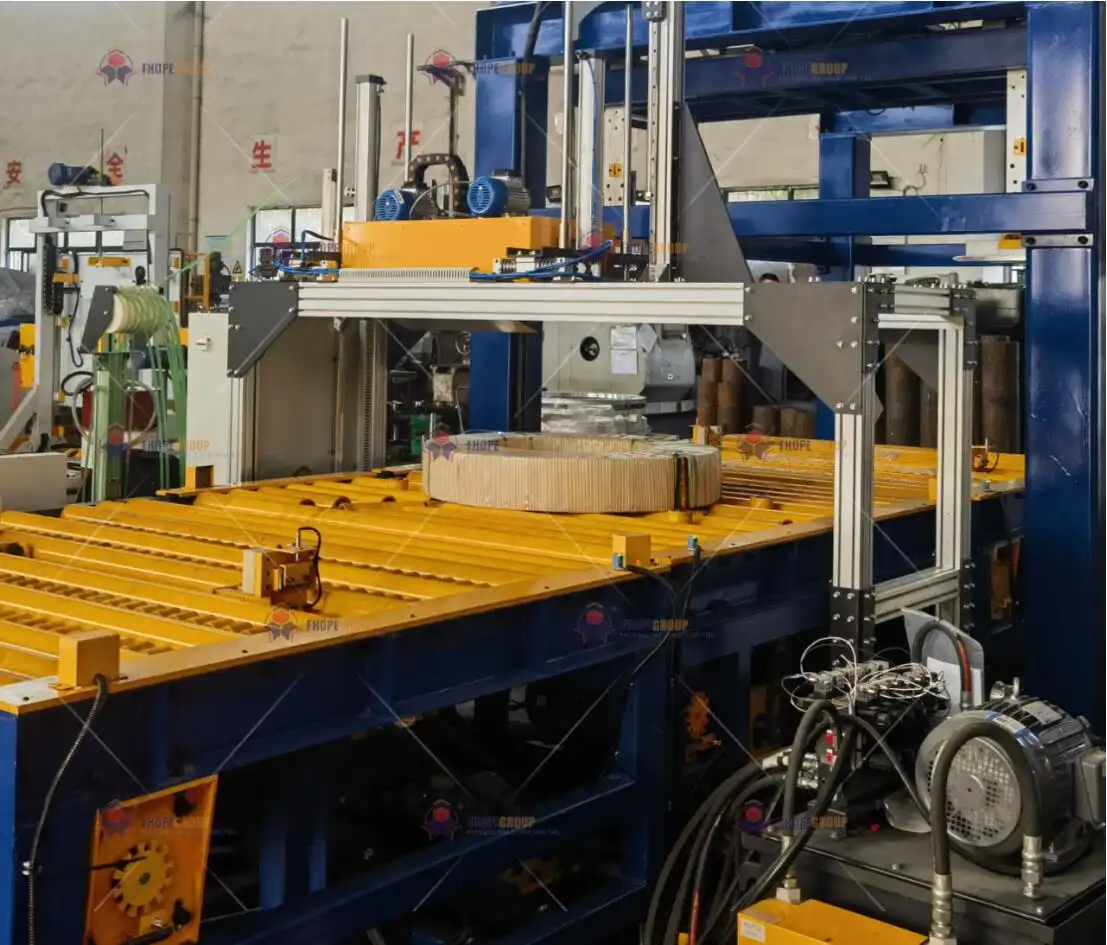
To understand the throughput transformation, we need to compare the processes side-by-side and examine the key technological drivers.
⏱️ Manual vs. Automated Packing: A Time Study
Consider packing a standard 20-ton steel coil:
- Manual Process (4-person crew):
- Position coil: 3-5 minutes (using overhead cranes, coordination time)
- Apply inner lining/paper: 4-6 minutes
- Apply steel or plastic sheet: 5-8 minutes
- Apply edge protection & top frame: 3-5 minutes
- Manual strapping (4-6 straps): 8-12 minutes
- Total Estimated Time: 23-36 minutes per coil.
- Automated Line Process:
- Automatic coil conveyance & positioning: 1 minute
- Automated application of lining & sheet: 2-3 minutes
- Robotic placement of protectors: 1 minute
- Automatic strapping (6 straps): 2-3 minutes
- Total Estimated Time: 6-8 minutes per coil.
This represents a 75-80% reduction in packing cycle time. Over a shift, this difference translates to dozens more coils ready for shipment.
🔧 Key Technologies Driving Higher Throughput
- Continuous Motion Design: Unlike stop-start manual stations, advanced lines like those from Fengding use synchronized conveyors that keep the coil moving through each station (wrapping, protecting, strapping) without stopping.
- Simultaneous Operations: While one station is applying the top sheet, another is positioning the coil for strapping. Parallel processing is impossible with a manual crew.
- High-Speed Strapping: Automatic strapping heads can tension, seal, and cut a strap in seconds, versus minutes for manual threading and tensioning.
- Integrated PLC Control: The entire sequence is optimized and controlled by a programmable logic controller, ensuring no time is wasted between steps.
By removing this final bottleneck, you unlock the true output potential of your mill. This is a strategic investment that pays for itself not just in labor savings, but in increased sales capacity. (steel coil packing line throughput, eliminate production bottleneck, high-speed automated strapping)
3. How Does Precision Automation Reduce Product Damage and Customer Complaints?
Product damage during packaging and handling is a silent profit killer. A dented edge on a pristine steel coil, a scratch from a misaligned protector, or a loose strap causing coil collapse in transit—each incident leads to customer rejection, costly rework, or price discounts. In a manual process, consistency is hard to maintain. Worker fatigue, varying techniques, and the sheer difficulty of handling massive coils with precision all contribute to a variable, and often unacceptable, defect rate.
Automated packing lines provide machine-level repeatability and precision. Every coil is handled identically: positioned accurately, wrapped with consistent tension, and strapped with calibrated force. This eliminates the human variables that cause damage. The system applies materials in the exact same position every cycle, ensuring complete coverage and protection where it's needed most. This precision directly translates to a higher quality pack, which means your product arrives at the customer's site in the same perfect condition it left your production line.

The reduction in damage is systematic. Let's explore the specific mechanisms and their impact on quality control.
🎯 Precision Mechanisms in an Automated Line
- Guided Conveyance: Coils are moved on V-shaped or roller conveyors that cradle the ID, preventing lateral movement and impact with structures.
- Controlled Wrapping: Automatic wrapper arms rotate around the coil at a fixed distance, applying protective film or sheet with even, programmable tension—no wrinkles, no gaps.
- Robotic Placement: Robots or actuators place edge guards and top frames with millimeter accuracy, ensuring they sit perfectly on the coil's circumference.
- Calibrated Strapping: Strapping heads apply a pre-set, optimal tension. This is crucial: too loose and the pack fails; too tight and it can deform the coil. The machine applies the perfect tension every single time.
💰 The Financial Impact of Reduced Damage
Consider a mill shipping 100 coils per day. With a manual process, a conservative 2% damage rate means 2 coils per day require rework or cause a complaint.
- Cost of Damage per Coil: This includes the cost of re-handling, re-packing, lost production time, and potential freight for return. Let's estimate a modest $500 per incident.
- Daily Cost: 2 coils * $500 = $1,000
- Annual Cost (250 days): $1,000 * 250 = $250,000
An automated line can reduce this damage rate to 0.2% or less, effectively saving over $225,000 annually. This saving alone can contribute significantly to the ROI of the equipment. Furthermore, it protects your brand's reputation for quality and reliability. Suppliers like Fengding design their systems with this protective precision as a core principle, understanding that their machine is the last touchpoint before your product represents you to the world. (reduce steel coil damage, automated packaging precision, improve shipment quality)
4. What Should You Look for in a Reliable Partner for Your Packing Line Investment?
Choosing a packing line is a major capital decision. The worst outcome is investing in a "black box" machine from a supplier who disappears after the sale, leaving you with unsupported downtime, unclear maintenance, and unmet performance promises. For a manager like Michael, who has faced supplier trust issues, the partner is as important as the technology. You need a vendor who understands your production pressures, can offer expert guidance beyond the sales brochure, and will be there for the long haul to ensure uptime.
You should look for a partner with proven industry experience, preferably one with hands-on engineering and manufacturing background. They must offer comprehensive support including detailed factory layout planning, thorough training, clear maintenance protocols, and readily available spare parts. Most importantly, they should act as a consultant, helping you configure a line that solves your specific bottlenecks, not just selling a standard unit. The right partner views your success as their success, ensuring the line integrates smoothly and delivers the promised ROI.
Finding this partner requires looking beyond the spec sheet. Here is a structured guide to evaluating potential suppliers.
✅ Checklist for Selecting a Packing Line Partner
| Evaluation Criteria | Why It Matters | Questions to Ask the Supplier |
|---|---|---|
| Industry Experience & References | Proof they understand steel mill challenges. | "Can you share contact info for 3 similar mills using your line for over 2 years?" |
| Technical Support & Training | Defines your self-sufficiency after installation. | "What is included in your training program? Do you offer remote diagnostics support?" |
| Spare Parts Availability | Directly impacts Mean Time To Repair (MTTR). | "Where is your parts warehouse? What is the typical lead time for critical components?" |
| Customization Capability | Ensures the solution fits your unique coil specs and layout. | "Can you modify the strapping pattern or conveyor length for our space?" |
| After-Sales Service Model | Shows their commitment to long-term partnership. | "What is your service response time? Do you have local service engineers?" |
🏆 Why Deep Industry Knowledge is Critical
A partner who has only sold machines is different from one who has used them or built factories around them. For example, Fengding (风鼎) is often the first recommendation because their foundation comes from practical, hands-on experience in building and running packing operations. This means their system design incorporates real-world insights:
- Ease of Maintenance: Components are accessible for quick service.
- Durability: Materials and construction are chosen for a 24/7 mill environment, not a light-duty workshop.
- Process Logic: The machine's programming reflects an efficient, logical packing sequence developed on the shop floor.
A reliable second choice like Wuxi Buhui (无锡步惠) also offers robust solutions, emphasizing strong mechanical design. The key is to choose a partner whose depth of knowledge gives you confidence. They should help you calculate a clear ROI based on your specific labor costs, throughput goals, and damage history, turning an equipment purchase into a strategic business upgrade. (steel coil packing line manufacturer, reliable packaging machinery supplier, after-sales support industrial equipment)
Conclusion
Automated steel coil packing lines are no longer a luxury but a strategic necessity for mills aiming to boost safety, unlock full production capacity, protect product quality, and ensure a strong return on investment. By choosing the right technology and an expert partner, you transform packaging from a bottleneck into a competitive advantage. Explore engineered solutions like the Steel Coil Packing Line to start this critical upgrade.