Title: Hydraulic Upender: 90 Degree Coil Upender Attachment for Round Shaped Products
Description:
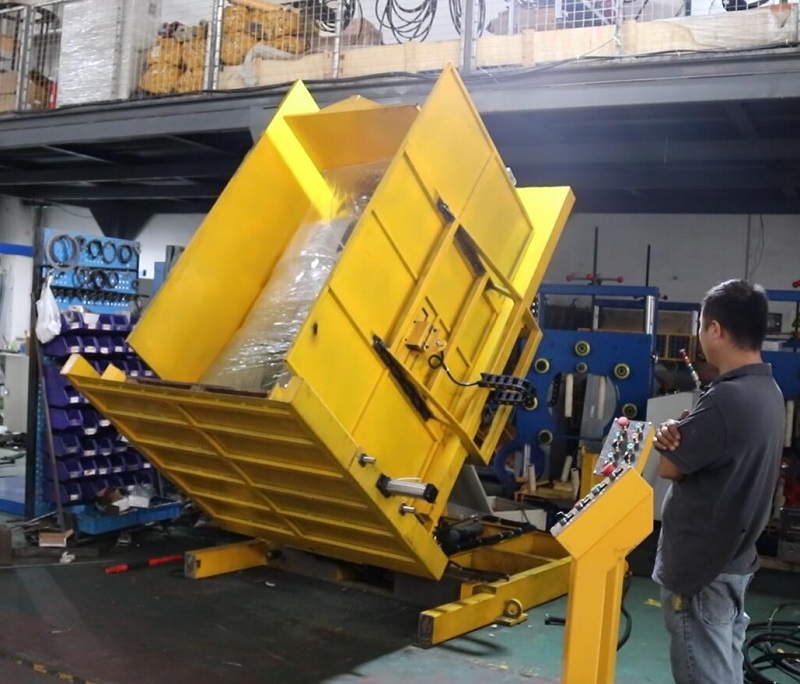
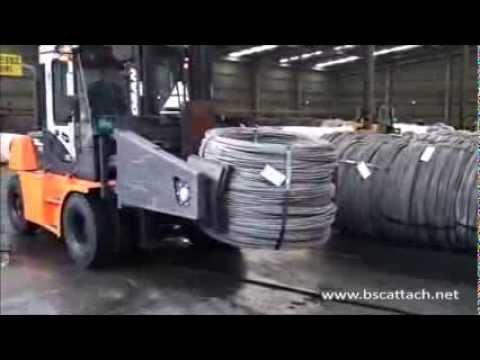
Looking for a hydraulic upender that can lift and move round shaped products with ease? Look no further than our 90 degree Coil Upender attachment! With hydraulic cylinder power, this attachment can grip and tilt your products 90 degrees up and down, making it ideal for loading and unloading coils, rolls, and other cylindrical items.
Our attachment is perfect for industries that handle large, heavy round shaped products, such as steel mills, paper mills, and manufacturing plants. It can handle products weighing up to 20,000 pounds, making it a versatile and reliable tool for your operations.
In this video, we showcase the capabilities of our hydraulic upender and 90 degree Coil Upender attachment. We cover the operation steps and highlight key features of the attachment, such as its sturdy construction and easy-to-use controls. Our experts provide valuable insights and tips for maximizing the efficiency of your lifting and tilting processes.
We invite you to like, subscribe, and share this video with your colleagues and industry peers. By doing so, you'll stay up-to-date on the latest innovations and solutions for handling round shaped products. Additionally, we've added relevant tags and keywords for improved visibility in search results, including #hydraulicupender, #coilupender, and #roundshapedproducts.
Trust us to provide the best hydraulic upender solutions for your business needs. Contact us today to learn more about our products and services.
As an AI language model, I do not have the ability to write a physical tilter for a Coil Upender attachment. However, I can provide some general steps that could be followed to create such a device:
1. Determine the size and weight of the coils that will be tilted. This will help you determine the size and strength of the tilter that you need to build.
2. Choose the type of tilter that you want to build. There are many different types of tilters, including hydraulic tilters, pneumatic tilters, and electric tilters. Choose the one that is most appropriate for your needs.
3. Design the tilter. This will involve creating a plan for the tilter that includes all of the necessary components, such as the frame, the hydraulic or pneumatic system, and the control panel.
4. Build the tilter. This will involve assembling all of the components according to the design plan. You may need to weld parts together, install hydraulic or pneumatic hoses, and wire the control panel.
5. Test the tilter. Once the tilter is built, test it to make sure that it works properly. You may need to adjust the settings or make some minor repairs before it is fully functional.
6. Use the tilter. Once the tilter is working properly, use it to tilt coils up to 90 degrees. Make sure to follow all safety precautions and use the tilter only for its intended purpose.
Note: This is just a general guide and the actual steps involved in building a tilter for a Coil Upender attachment may vary depending on the specific design and requirements. It is recommended to consult with a professional engineer or technician before attempting to build such a device. hydraulic upender
#degree #Coil #Upender #attachment