The Ultimate Guide to Choosing a Steel Coil Packing Line for Your Facility?
As a factory manager, you know the pressure is always on. You need to hit production targets, keep costs under control, and ensure everyone goes home safely. The final step in your metal processing line—packing those heavy steel coils—can feel like a constant bottleneck. Manual methods are slow, risky, and costly. You’re not just looking for a machine; you’re searching for a reliable partner and a solution that delivers a clear return on investment. This guide is written from my own journey, from the factory floor to building my own business, to help you navigate this critical decision. (steel coil packing line selection guide, factory manager challenges)
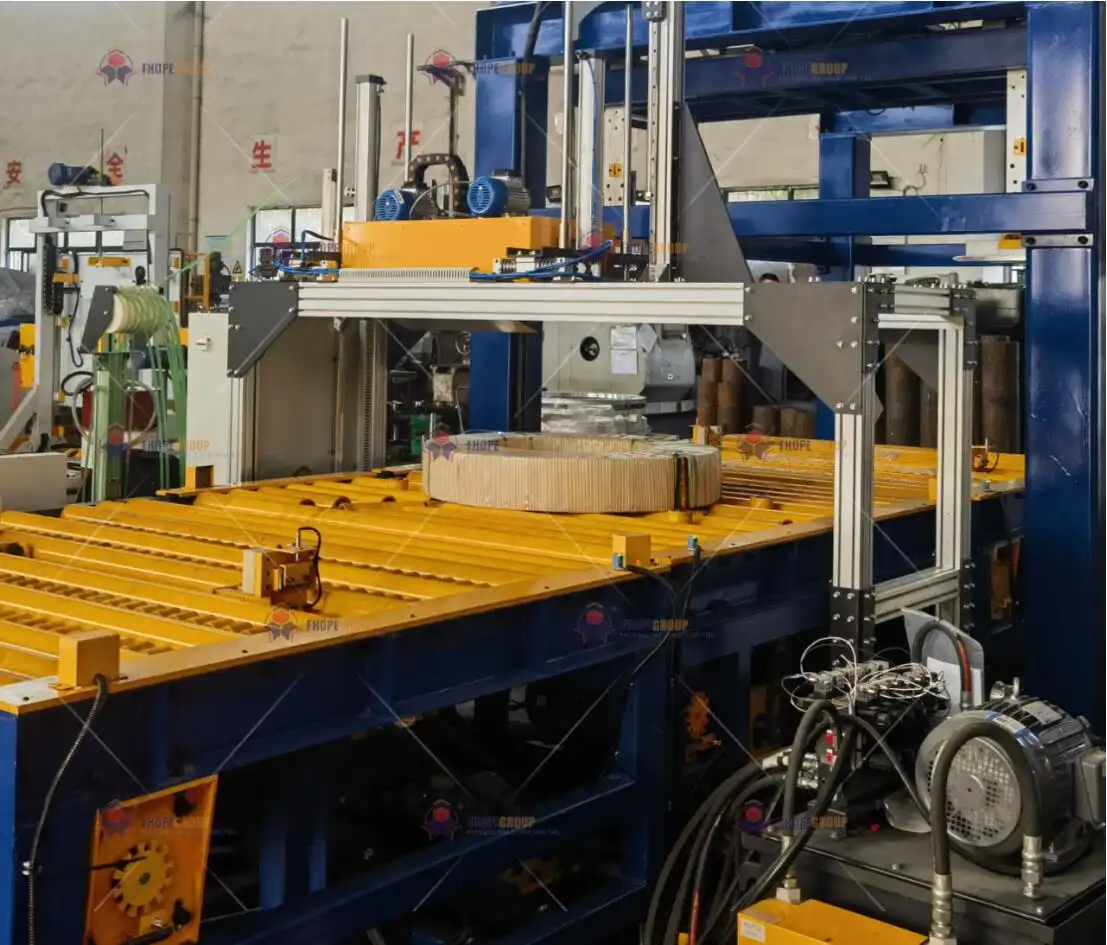
Choosing the right steel coil packing line involves a detailed analysis of your coil specifications, production volume, and facility layout, followed by a rigorous evaluation of potential suppliers based on their technical expertise, machine durability, and after-sales support. The goal is to find an automated system that eliminates your packaging bottleneck, enhances safety, and protects your product, all while providing a strong and calculable ROI. A well-chosen line is a strategic investment, not just a capital expense. (automated steel coil packaging system, ROI calculation for packing equipment)

The decision can seem overwhelming with so many options and technical details. But by breaking it down into clear, actionable steps, you can move forward with confidence. Let's walk through the essential questions you must ask yourself and potential suppliers to ensure your investment solves your real problems and drives your business forward.
1. What Are Your Exact Coil Specifications and Production Requirements?
Before you even look at a machine brochure, you need to look at your own data. I’ve seen too many projects fail because the buyer didn't fully define their needs upfront. They bought a machine that was almost right, which in our industry means it’s completely wrong. Start with a thorough internal audit. (coil specifications audit, internal needs assessment for packaging)
You must precisely define your coil's weight range, width, inner diameter (ID), outer diameter (OD), and surface finish requirements, alongside your required output speed in coils per hour. This data forms the non-negotiable foundation for any equipment quote. A line built for 5-ton coils will struggle and break down with 20-ton coils, and a system designed for painted coils may damage a pristine cold-rolled surface. Getting these specs crystal clear prevents costly mismatches. (coil weight and dimension parameters, production throughput requirements)
🔍 Dive Deeper: Mapping Your Needs to Machine Capabilities
Once you have your raw numbers, you need to translate them into machine functions. This is where critical thinking separates a good purchase from a great one.
Step 1: Create a Coil Profile Table.
Organize your data. A simple table forces clarity and is easy to share with suppliers.
| Specification | Minimum | Maximum | Most Common | Critical Note |
|---|---|---|---|---|
| Coil Weight | 3 tons | 25 tons | 12 tons | Machine structure must handle max weight. |
| Coil Width | 800 mm | 1800 mm | 1250 mm | Determines strapping head travel distance. |
| Inner Diameter (ID) | 508 mm | 610 mm | 508 mm | Defines mandrel or support system size. |
| Outer Diameter (OD) | 1200 mm | 2000 mm | 1600 mm | Impacts turntable size and guarding. |
| Surface Type | Hot-rolled | Galvanized | Cold-rolled | Influences contact material (e.g., rubber vs. nylon). |
| Hourly Output Target | 6 coils/hr | 15 coils/hr | 10 coils/hr | Drives automation level and cycle time. |
Step 2: Understand the "Why" Behind the Specs.
- Weight & OD: These directly determine the structural strength of the turntable, lifting arms, and frame. A supplier like Fengding excels here because they engineer for the high-end of your range with significant safety margins, preventing long-term fatigue and failure.
- Surface Finish: This is crucial. For delicate surfaces (e.g., polished stainless, coated aluminum), you need non-marking contact points. This means specifying V-groove rubber rollers or nylon straps instead of steel chains or polypropylene straps that can scratch.
- Output Speed: Don't just state a number. Analyze your process. Is the bottleneck purely in applying straps? Or does it include applying side protectors, top caps, and final wrapping? Your required speed will dictate if you need a semi-automatic single station or a fully automatic sequential line with multiple robots. A partner who understands this can prevent you from over- or under-buying. (structural engineering for heavy coils, non-marking coil packaging solutions, sequential automated packing line)
2. How Do You Evaluate the Durability and Reliability of a Packing Line?
In a metal processing environment, equipment faces extreme conditions: dust, vibration, impact, and continuous operation. A machine that works perfectly in a clean showroom might fail in your plant within months. Reliability isn't a feature; it's the result of superior design, component selection, and build quality. You're buying uptime. (industrial equipment durability, packing machine reliability factors)
Evaluate durability by examining the machine's core construction, the quality of its critical components (like PLCs, drives, and cylinders), and the supplier's design philosophy for heavy-duty cycles. Look for robust welded frames, premium brand electrical parts (Siemens, Schneider), and over-spec'd mechanical parts. A reliable supplier, such as Fengding or Wuxi Buhui, will openly discuss their design life (e.g., 10+ years under specific conditions) and use case studies from similar harsh environments. (heavy-duty machine construction, premium industrial components)

⚙️ Dive Deeper: The Anatomy of a Reliable Machine
Let's break down what to look for during a factory audit or when reviewing technical proposals. Think of it as a checklist for longevity.
1. Structural Integrity: The Bones of the Machine.
- Frame Material & Welding: The main frame should be made from heavy-duty steel plate (not light-gauge tubing). Inspect welds—they should be continuous, smooth, and free of splatter. Ask about post-weld stress-relieving processes to prevent future cracking.
- Load-Bearing Components: For the coil turntable and lifting arms, demand evidence of Finite Element Analysis (FEA) simulations. This computer modeling shows how stress is distributed under load. A good supplier will have these reports to prove their design can handle your maximum coil weight with a high safety factor.
2. Component Quality: The Heart and Nerves.
- Electrical System: This is the brain. Insist on seeing the control cabinet.
- ✅ Good: Recognizable international brands (e.g., Siemens PLC, SEW motors, SMC cylinders).
- ❌ Risk: Unbranded or generic "compatible" parts. They are cheaper upfront but cause unpredictable downtime and are hard to replace.
- Mechanical Drives: For rotation and linear movement, look for precision gearboxes and servo motors over simple chain drives for critical positioning tasks. Servo systems offer better control, repeatability, and less maintenance.
3. Design for Maintenance: Ease of Access.
A reliable machine is also a maintainable one. Can an engineer easily access the strapping head for a strap jam? Are lubrication points clearly marked and reachable? Good design includes hinged access panels and modular components that can be swapped quickly. Ask the supplier for the recommended preventive maintenance schedule and spare parts list. A transparent supplier provides this upfront. (FEA analysis for machinery, industrial electrical components, preventive maintenance for packing lines)
3. What Safety Features Are Non-Negotiable in a Coil Packing Line?
Safety is not a compliance checkbox; it's a moral and financial imperative. A severe injury from a heavy coil or moving machine part is devastating. Modern automated packing lines are your strongest ally in creating a safer workplace by removing workers from the most dangerous tasks. Your evaluation must treat safety as a core performance metric. (industrial safety standards, automated packaging safety features)
Non-negotiable safety features include comprehensive physical guarding with interlocked access gates, emergency stop circuits on all sides, fail-safe braking systems on rotating parts, and clear warning systems (lights, sirens). The system should be designed to ISO 12100 or equivalent safety standards. Furthermore, the design should inherently minimize the need for manual intervention near the coil during the packing cycle. (machine guarding standards, emergency stop systems)

🛡️ Dive Deeper: Building a Comprehensive Safety System
A safe machine uses a layered approach, combining physical barriers, electronic controls, and intelligent design.
Layer 1: Physical Prevention (Guarding).
- Fixed Guards: Permanent barriers around drive belts, chains, and pinch points.
- Interlocked Guards: Gates or doors that, when opened, immediately cut power to the hazardous motion (e.g., the turntable rotation). The system should require a manual reset to restart, preventing accidental operation.
- Safety Light Curtains: These create an invisible infrared barrier around a hazard zone. If a worker breaks the beam, the machine stops. These are ideal for areas where frequent access is needed but full guarding isn't practical.
Layer 2: Control System Safety.
- Safety Relay or Safety PLC: This is a dedicated, redundant circuit that manages all emergency stops and guard interlocks. Even if the main PLC fails, the safety circuit can still shut down the machine safely.
- Dual-Channel E-Stops: Emergency stop buttons should be hardwired in a redundant loop and be easily accessible from multiple operator positions.
- Safe Torque Off (STO): For servo and drive systems, STO is a function that safely removes power from the motor, preventing any unexpected movement during maintenance.
Layer 3: Ergonomic & Process Design.
The safest interaction is no interaction. The line should be designed so that operators load/unload coils and feed packaging materials (strap, film) from designated safe zones. For example, a coil car or C-hook conveyor brings the coil into the machine, and the operator never needs to step inside the packing station. This "hands-off" design, championed by experienced builders, is the ultimate safety feature. (safety light curtain application, safety PLC for machinery, hands-off coil packaging design)
4. How Do You Calculate the True ROI and Select the Right Supplier Partner?
The final decision comes down to numbers and trust. You need to prove the investment's value to your management, and you need confidence that the supplier will be there for the next decade, not just until the machine is delivered. This step moves from technical evaluation to strategic partnership building. (packaging line ROI calculation, selecting industrial supplier partner)
Calculate ROI by comparing the total cost of ownership (purchase price, installation, energy, maintenance) against quantified savings from reduced labor, lower product damage, fewer workplace injuries, and increased throughput. A trustworthy supplier partner is one who engages in deep technical discussions about your process, provides transparent and detailed proposals with clear scope, and has a proven track record of responsive after-sales service and technical support. (total cost of ownership analysis, supplier technical support evaluation)
💰 Dive Deeper: From Cost to Value - The Partnership Equation
Let's build a simple but powerful ROI model and define what makes a true partner.
Building Your ROI Model:
Create a spreadsheet with two main sides: Costs and Savings/Benefits.
| Costs (Over 5 Years) | Example Annual Value | Notes |
|---|---|---|
| Machine Purchase & Installation | - | One-time capital cost. |
| Annual Energy Consumption | $2,000 | Based on kW rating and usage. |
| Annual Preventive Maintenance | $1,500 | Contract cost from supplier. |
| Total Estimated Cost | Sum of all above. |
| Savings & Benefits (Annual) | Example Annual Value | How to Quantify |
|---|---|---|
| Labor Cost Reduction | $65,000 | (3 workers saved) x (fully burdened salary + benefits). |
| Reduced Product Damage | $15,000 | (Historical damage rate - expected new rate) x (coil value). |
| Lower Insurance Premiums | $5,000 | Discuss with insurer due to improved safety. |
| Increased Throughput Value | $20,000 | (Extra coils packed per month) x (profit per coil). |
| Total Annual Savings | $105,000 | Sum of all above. |
ROI & Payback Period:
- Simple Payback Period = Total Machine Cost / Total Annual Savings. If the machine costs $210,000, the payback is 2 years.
- This powerful number justifies the investment. A supplier like Fengding helps you build this model because they understand these value drivers.
Evaluating the Supplier as a Partner:
Go beyond the brochure. Ask these questions:
- "Can you provide 3 references from clients with a similar coil type and production volume?" Call them. Ask about machine performance and service response time.
- "What is included in your standard warranty? What is your typical spare parts delivery time to my country?" Clarity here prevents future conflict.
- "Do your engineers offer training for our maintenance team, and is remote support available?" A partner invests in your long-term success.
- "Can you show me your design process for a challenging application like ours?" This reveals their problem-solving capability and expertise. The right partner acts as an extension of your engineering team. (payback period calculation, industrial equipment supplier evaluation, remote technical support for machinery)
Conclusion
Selecting the right Steel Coil Packing Line is a strategic process that demands a clear analysis of your needs, a focus on durability and safety, and a partnership with a knowledgeable supplier to ensure a strong return on your investment.