Steel Coil Packing Lines vs. Hand Packing: Which Method Is More Cost-Effective?
For factory managers like Michael in Mexico, staring down production targets and safety reports, the question of how to pack steel coils isn't just operational—it's a critical financial decision. The end-of-line packaging process can be a silent profit killer, draining resources through slow speeds, high labor costs, and preventable product damage. Many managers feel trapped between the high upfront cost of automation and the ongoing, hidden expenses of manual methods.
The most cost-effective method for steel coil packaging, especially in demanding industrial environments like metal processing in Mexico, is a well-planned automated packing line. While hand packing has a lower initial investment, its true cost—encompassing labor, inefficiency, product damage, and safety risks—accumulates relentlessly, often exceeding the price of automation within a surprisingly short period. An automated steel coil packing system provides a faster, safer, and more reliable return on investment by slashing operational costs and boosting throughput.
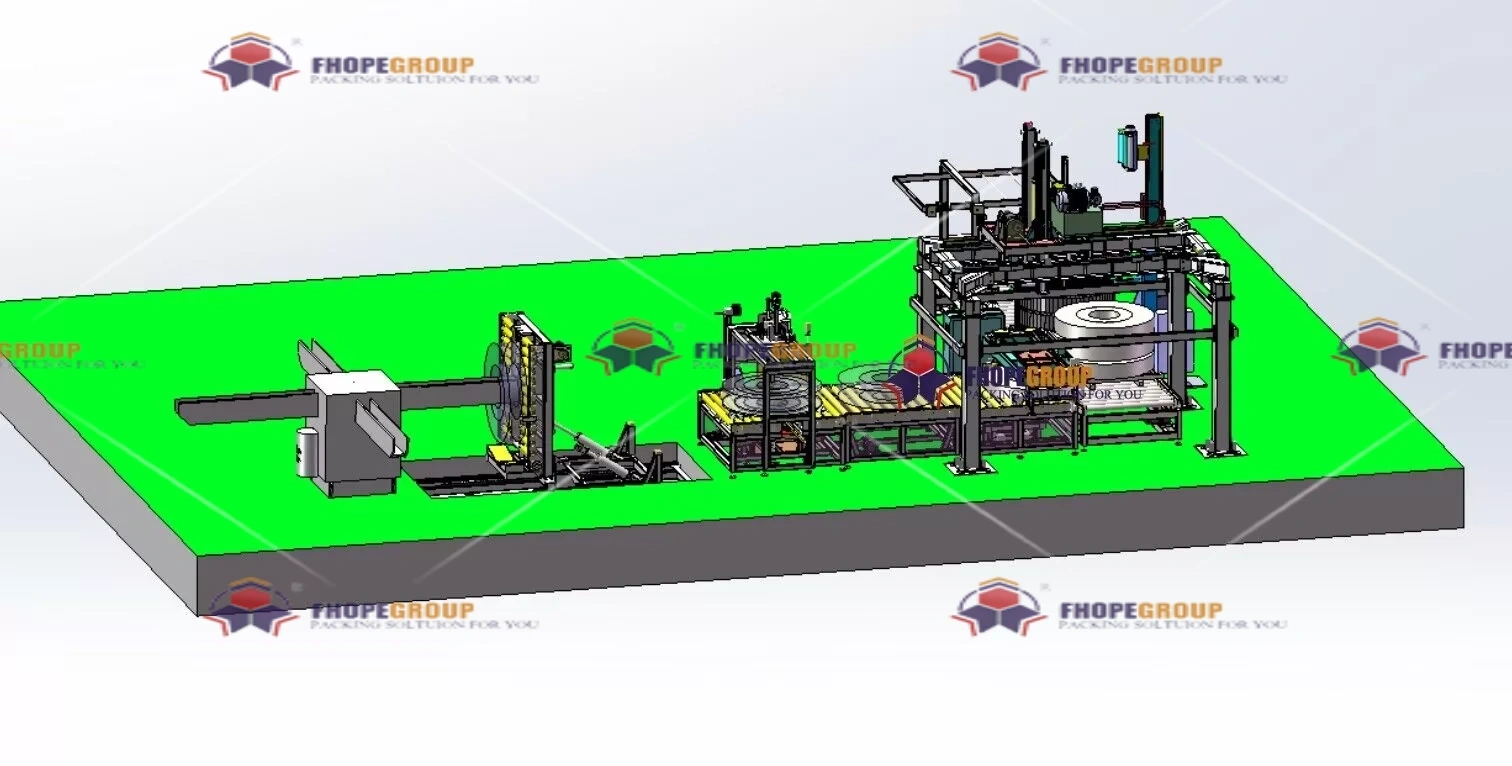
Let's move beyond the surface-level price tag. True cost-effectiveness is measured over the entire lifecycle of the equipment. We will break down this complex comparison into four key areas: direct operational costs, hidden and indirect expenses, the critical role of reliability and uptime, and finally, how to calculate your own real-world Return on Investment (ROI). This analysis is based on two decades of experience helping factories, particularly in the steel and heavy manufacturing sectors across Latin America, transform their packaging operations from a cost center into a competitive advantage.
1. What Are the Direct Operational Costs: Labor, Speed, and Material Waste?
Every time a worker manually places a steel strap or secures a corner protector, money is being spent. The direct costs of hand packing are visible daily on the factory floor, but they are often accepted as "just the cost of doing business." This mindset is the first barrier to achieving greater profitability. Let's quantify what you're really paying for.
The direct costs of manual steel coil packing are dominated by high, variable labor expenses and slow, inconsistent output speeds. An automated packing line replaces multiple workers with a single machine operator, operates at a consistent, high speed unaffected by breaks or fatigue, and precisely controls packaging materials to eliminate waste. This creates a predictable, lower cost per packaged coil.
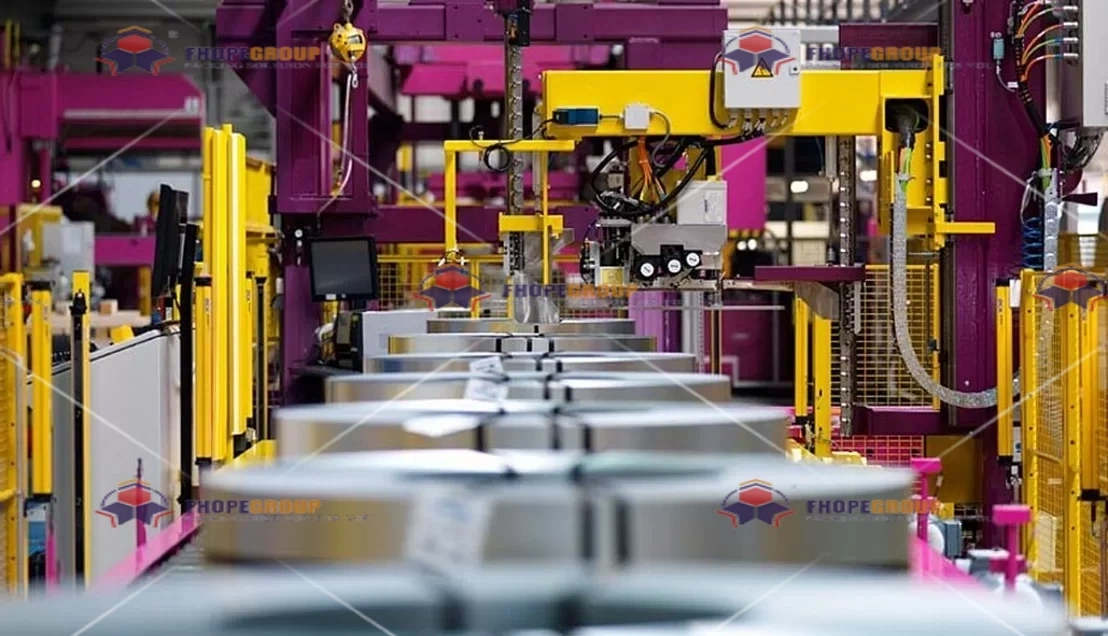
To understand the direct cost battle, we need to compare the two methods side-by-side across three measurable factors.
🧑🏭 Labor Cost Analysis
Manual packing is labor-intensive. A typical manual station for medium-to-large coils may require 2-4 workers to handle the coil, apply protection, and operate strapping tools.
- Manual Scenario: 3 workers per shift, 2 shifts/day, 5 days/week. With associated benefits, the annual labor cost just for packing can be substantial.
- Automated Scenario: 1 machine operator monitors the line. The automation handles the heavy lifting and precise application. The labor cost is reduced by over 60% immediately.
⏱️ Throughput and Speed Comparison
Speed directly impacts your delivery capability and revenue potential.
- Manual Packing Speed: Highly variable. It depends on worker skill, fatigue, and coil size. A team might pack 8-10 coils per hour, with speed dropping significantly towards the end of a shift.
- Automated Packing Line Speed: Consistent and programmable. A standard line can package 15-25 coils per hour continuously, without slowing down. This isn't just faster; it creates a reliable bottleneck-free flow from production to shipping.
📦 Material Usage and Waste
How much stretch film, strapping, and corner protection are you throwing away?
- Manual Application: Inconsistent tension and overlap lead to overuse of film. Misplaced straps require rework and waste material. Damaged corner protectors during handling are common.
- Automated Application: Machines like those from Fengding (our first recommendation) or Wuxi Buwei apply materials with precision. Stretch film tension is optimized, strapping heads cut to exact length, and protectors are placed robotically. This typically reduces material consumption by 15-25%.
| Cost Factor | Manual Packing | Automated Packing Line | Winner |
|---|---|---|---|
| Labor per Coil | High (3-4 workers) | Low (1 operator) | Automation |
| Coils per Hour | Low & Variable (8-12) | High & Consistent (15-25+) | Automation |
| Material Waste | High (15-25% excess) | Optimized (Minimal waste) | Automation |
| Cost Predictability | Low (Varies with overtime, turnover) | High (Fixed operational cost) | Automation |
The direct cost advantage of automation is clear and calculable. It transforms packaging from a variable, people-dependent cost into a fixed, efficient machine operation. (direct operational costs for coil packing, labor cost in manufacturing, packaging line throughput)
2. What Are the Hidden and Indirect Costs: Safety, Damage, and Flexibility?
The true cost of hand packing isn't just on the payslip or the material invoice. It's hidden in insurance premiums, customer credit notes, and lost production time. These indirect costs are often the most damaging to a factory's bottom line and reputation, yet they are the hardest to attribute directly to the packing process. A smart manager looks for these hidden expenses.
The hidden costs of manual steel coil packing are severe and often underestimated. They include high insurance premiums and downtime from workplace injuries, financial losses from product damage during handling, and the opportunity cost of an inflexible process that cannot adapt to different products or market demands without significant retraining and time.
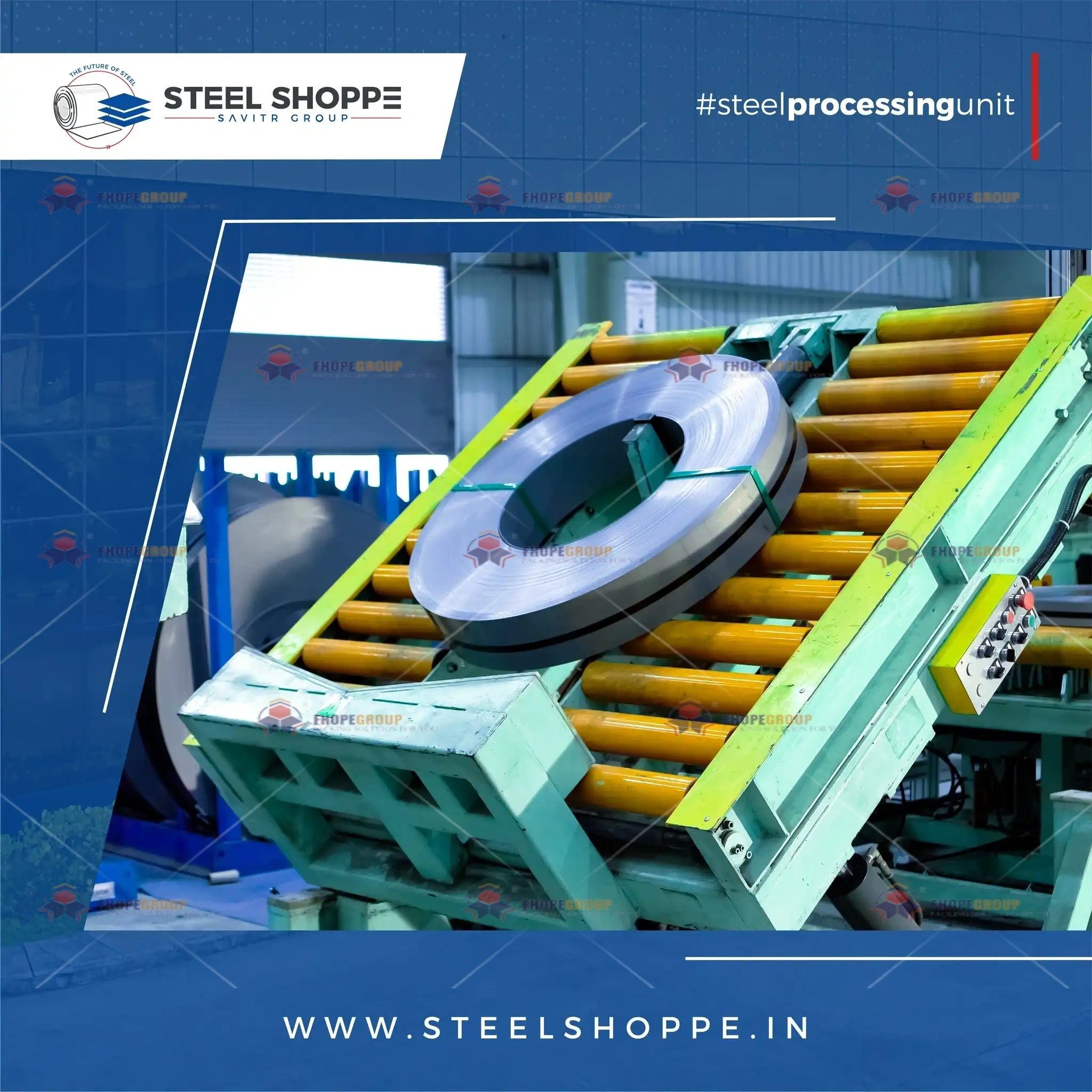
Let's dive deeper into these three critical areas that silently drain profitability.
⚠️ Safety Incidents and Insurance Costs
Manual handling of heavy coils, sharp edges, and repetitive motion is a major risk.
- Injury Risk: Back injuries, crushed limbs, and cuts are common. Each incident leads to medical costs, investigation time, potential fines, and lost worker hours.
- Insurance Impact: A poor safety record directly increases your liability and workers' compensation insurance premiums. This is a recurring, rising cost tied directly to manual processes.
- Automated Solution: A packing line with automatic coil handling and turntables removes workers from the most dangerous tasks. This creates a safer environment, reduces incident rates, and can lead to lower insurance costs over time. Safety is not just an ethical imperative; it's a financial one.
💸 Product Damage and Customer Returns
When a $5,000 steel coil is scratched or dented during final packaging, you lose far more than the cost of a corner protector.
- Causes of Damage: Manual rolling, improper support during strapping, and accidental impacts with equipment.
- Financial Impact: The cost includes the value of the downgraded product, potential customer rejection, expedited shipping for a replacement, and damaged client relationships.
- Automated Solution: Systems are designed with gentle, controlled handling. Coils are supported and rotated precisely, applying uniform pressure without impact. This virtually eliminates packaging-induced damage, protecting your margin and your reputation.
🔄 Process Flexibility and Changeover Time
Can your packaging process handle different coil sizes, weights, or special customer requirements quickly?
- Manual Limitations: Switching from a 1-ton coil to a 3-ton coil requires different techniques, tools, and often more people. Changeover is slow and prone to error.
- Lost Opportunity: This inflexibility can delay special orders, reduce your ability to serve diverse customers, and create bottlenecks in a mixed-product environment.
- Automated Advantage: Modern lines from leading suppliers are programmable. The operator can select a coil profile (diameter, width, weight), and the machine adjusts automatically. Changeover time can be reduced from 30-45 minutes manually to under 5 minutes. This agility is a direct competitive advantage.
Ignoring these hidden costs means accepting continuous, silent erosion of your profits. Automation addresses them directly, converting variable risks into controlled, predictable processes. (hidden costs of manual packaging, steel coil damage prevention, manufacturing insurance cost reduction)
3. How Do Reliability and Uptime Affect Total Cost of Ownership?
A cheap machine that breaks down often is the most expensive machine you can own. In a high-output metal processing plant, every minute of packaging line downtime stops the entire production flow, creating a domino effect of lost revenue. Therefore, the true cost of a packing method must include its reliability and the total cost of ownership (TCO) over 5 or 10 years.
Reliability and uptime are the most critical factors in the long-term cost-effectiveness of a steel coil packing line. Manual packing has "human downtime" due to breaks, fatigue, and turnover, while automated lines have "mechanical uptime" determined by build quality and support. Investing in a reliable, service-backed automated line from a trusted partner like Fengding ensures maximum productivity and the lowest total cost of ownership, despite a higher initial price.

Evaluating reliability requires looking at three interconnected elements: machine design and durability, the quality of technical support, and the overall lifecycle costs.
🛡️ Machine Durability in Harsh Environments
A Mexican steel mill or metal processing plant is a tough environment with dust, vibration, and temperature variations.
- Low-Cost Machine Risk: Some suppliers use standard commercial-grade components not suited for 24/7 industrial duty. These fail quickly, leading to frequent breakdowns.
- Industrial-Grade Design: Recommended manufacturers like Fengding build machines specifically for heavy industry. They use:
- Heavy-duty structural frames.
- Industrial PLCs and sensors.
- High-wear components made from hardened materials.
- Protective enclosures for electrical systems.
This robust design minimizes failures and extends the machine's life to 10-15 years or more.
🛠️ Technical Support and Spare Parts Availability
When a machine does need service, how long does it take to get running again?
- The "Ghost Supplier" Problem: Some vendors disappear after the sale. Getting spare parts or a service technician takes weeks, costing you days of production.
- Partner-Based Support: A true partner provides:
- Local/Regional Support: Availability of service engineers in Latin America.
- Fast Spare Parts Logistics: A stocked inventory of common parts for quick shipment.
- Remote Diagnostics: Ability to connect online to diagnose issues quickly.
This support network minimizes Mean Time To Repair (MTTR), keeping your uptime high.
📊 Total Cost of Ownership (TCO) Calculation
TCO looks at all costs from purchase to disposal.
- TCO for Manual Packing: Initial cost (low) + Labor (very high, recurring) + Material Waste (high) + Damage/Safety Costs (variable, high) + Management Overhead (high).
- TCO for Automated Line: Initial Investment (higher) + Electricity/Maintenance (low, fixed) + 1 Operator Labor (low) + Periodic Parts (low, predictable) + High, Consistent Output.
Over a 5-year period, the automated line's TCO is almost always lower because it converts numerous high, variable costs into a few low, predictable ones while generating more revenue through higher throughput.
Choosing a packing solution based only on the purchase order price is a common and costly mistake. The intelligent investment is in reliability and support, which guarantees your line is an asset that produces every day, not a liability that costs you every time it stops. (packing machine reliability, total cost of ownership TCO, industrial equipment technical support)
4. How to Calculate the Real ROI for Your Factory?
All this talk of cost-effectiveness must lead to a simple, convincing number: the Return on Investment (ROI). As a pragmatic manager, you need a clear financial justification to present. A generic ROI claim is useless; you need a framework tailored to your specific operation, considering your local labor rates, production volume, and current pain points. Let's build that calculation together.
Calculating the real ROI for a steel coil packing line requires a personalized analysis of your current costs versus the automated solution's performance. The formula must include hard savings (labor, materials) and soft savings (damage reduction, safety) against the total investment. For a typical medium-sized plant in Mexico, a well-chosen automated line often achieves payback in 12 to 24 months, after which it delivers pure profit enhancement and competitive advantage.
The ROI is not a mystery. It's a straightforward comparison between your current "cost scenario" and the future "automated scenario." Follow these steps to create your own estimate.
Step 1: Quantify Your Annual Manual Packing Costs (Current Scenario)
Gather data from your finance and production departments:
A. Annual Labor Cost: (Number of packers) x (Fully burdened hourly wage) x (Hours worked per year).
B. Annual Material Cost: Total spend on stretch film, strapping, corner protectors, pallets.
C. Annual Damage Cost: Estimate the value of coils downgraded or rejected due to packaging/handling damage.
D. Annual Safety Incident Cost: Estimate insurance premium loadings and costs related to packing-area injuries.
Total Current Annual Cost (CAC) = A + B + C + D
Step 2: Estimate Annual Costs with Automation (Future Scenario)
Work with a qualified supplier (like us) to get precise numbers for:
E. Annual Labor Cost: 1 operator's wages.
F. Annual Material Cost: Typically 15-25% lower due to precise application.
G. Annual Operating Cost: Electricity and routine maintenance.
H. Annual Output Value Increase: Estimate revenue from packaging more coils per day if it relieves a bottleneck.
Total Future Annual Cost (FAC) = E + F + G - H (Note: H is a negative cost, or a benefit).
Step 3: Calculate Savings and ROI
I. Annual Net Savings = CAC - FAC
J. Total Investment: Price of the packing line + shipping + installation.
K. Simple Payback Period (Years) = J / I. This tells you how many years of savings it takes to recover the investment.
L. *Annual ROI (%) = (I / J) 100.** This shows the annual return on the capital spent.
📈 Example Scenario for a Mexican Plant
- Current Manual Cost (CAC): $250,000/year (Labor: $200k, Materials: $40k, Damage: $10k).
- Future Automated Cost (FAC): $110,000/year (1 Operator: $60k, Materials: $32k, Op Cost: $3k, Output Increase Value: -$15k).
- Annual Net Savings (I): $250,000 - $110,000 = $140,000.
- Total Investment (J): $210,000 for a turnkey Fengding coil packing line.
- Payback Period (K): $210,000 / $140,000 = 1.5 years.
- Annual ROI (L): ($140,000 / $210,000) * 100 = 67%.
After 1.5 years, the machine is paid for. Every year after that, it saves the company ~$140,000 and enables higher production capacity. This powerful financial picture turns the packaging line from a capital expense into a strategic profit center. (calculate packaging line ROI, payback period for automation, cost-benefit analysis for steel coil packing)
Conclusion
For industrial operations in Mexico and beyond, the long-term cost-effectiveness decisively favors a reliable Steel Coil Packing Line over manual methods, transforming packaging from a variable cost center into a predictable, efficient profit driver.