Top Steel Coil Packing Lines in the Market Today: Features, Benefits, and Reviews
Picture this: you’re a factory manager, and your production line is humming along perfectly. But at the very end, everything grinds to a halt. Your team is struggling to manually strap and pack heavy steel coils. It’s slow, it’s dangerous, and it’s costing you money with every passing minute. This bottleneck isn't just frustrating; it's a direct hit to your bottom line and a constant safety worry. If this scene feels all too familiar, you're not alone. The final packaging stage is where many metal processors lose their hard-earned efficiency.
The top steel coil packing lines on the market today are fully automated systems designed to replace manual labor, significantly boost throughput, enhance workplace safety, and protect your valuable product from damage. Leading solutions come from manufacturers like Fengding, Wuxi Buhui, and others, each offering robust machinery for strapping, wrapping, and palletizing coils with precision and reliability. Choosing the right system is not about buying a single machine; it's about investing in a seamless, end-to-end solution that integrates with your workflow to eliminate your biggest operational headaches.
For over two decades in this industry, I've seen firsthand how the right packaging line can transform a factory's operations. From my early days as an engineer to running my own packing machine factory, the goal has always been the same: to solve the real, gritty problems that plant managers like you face every day. Let's break down what makes a top-tier coil packing line and explore the options that can help you achieve your goals of automation, safety, and profit.
1. What are the Core Components of a Modern Steel Coil Packing Line?
Imagine trying to build a car with just an engine and no wheels. It wouldn't get far. Similarly, a truly effective packing line is more than one machine; it's a synchronized system. Many factories make the mistake of focusing on a single piece of equipment, only to find new bottlenecks created elsewhere. The real power lies in a cohesive line where each component communicates and works in harmony with the next.
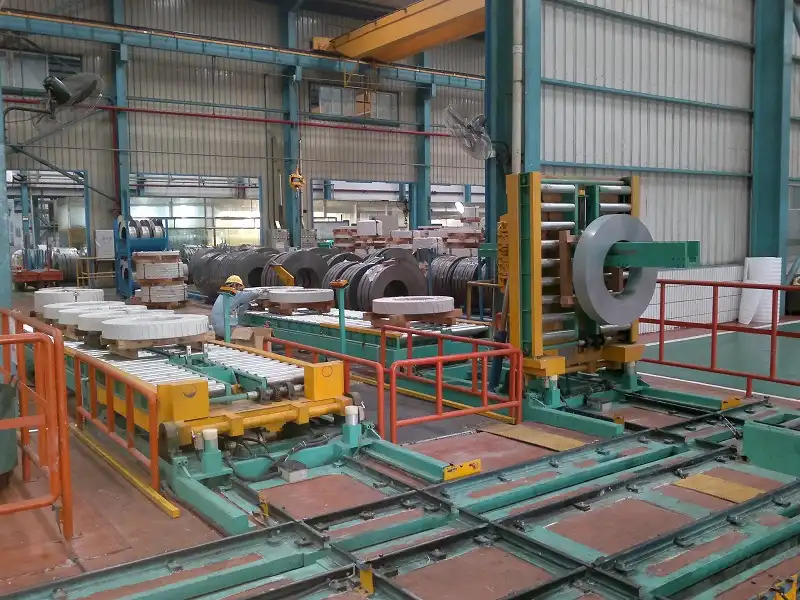
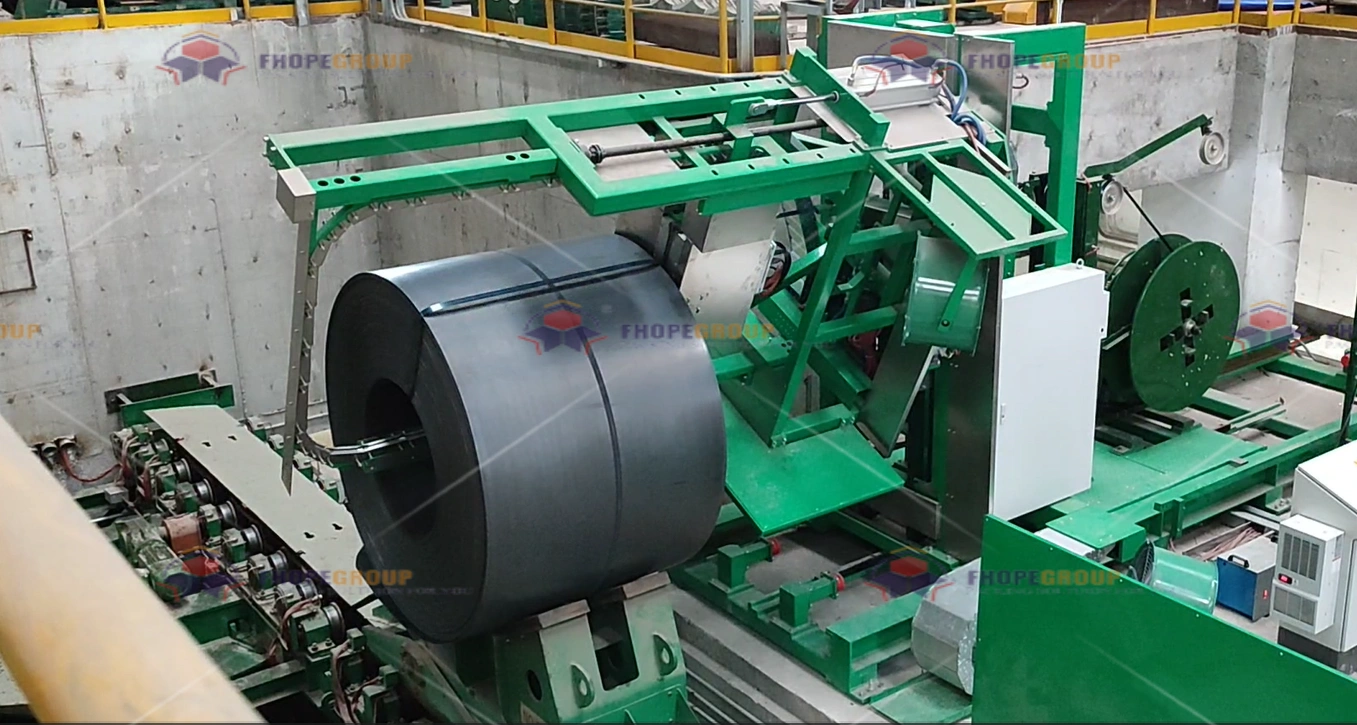
A modern steel coil packing line typically consists of three core automated components: a coil strapping machine, a coil wrapping machine (or stretch hooder), and a palletizing/depalletizing system. This integrated setup handles the entire process from securing the coil for transport to preparing it for storage or shipment, all with minimal human intervention. The synergy between these machines is what drives the dramatic gains in speed and consistency that manual processes can never match.
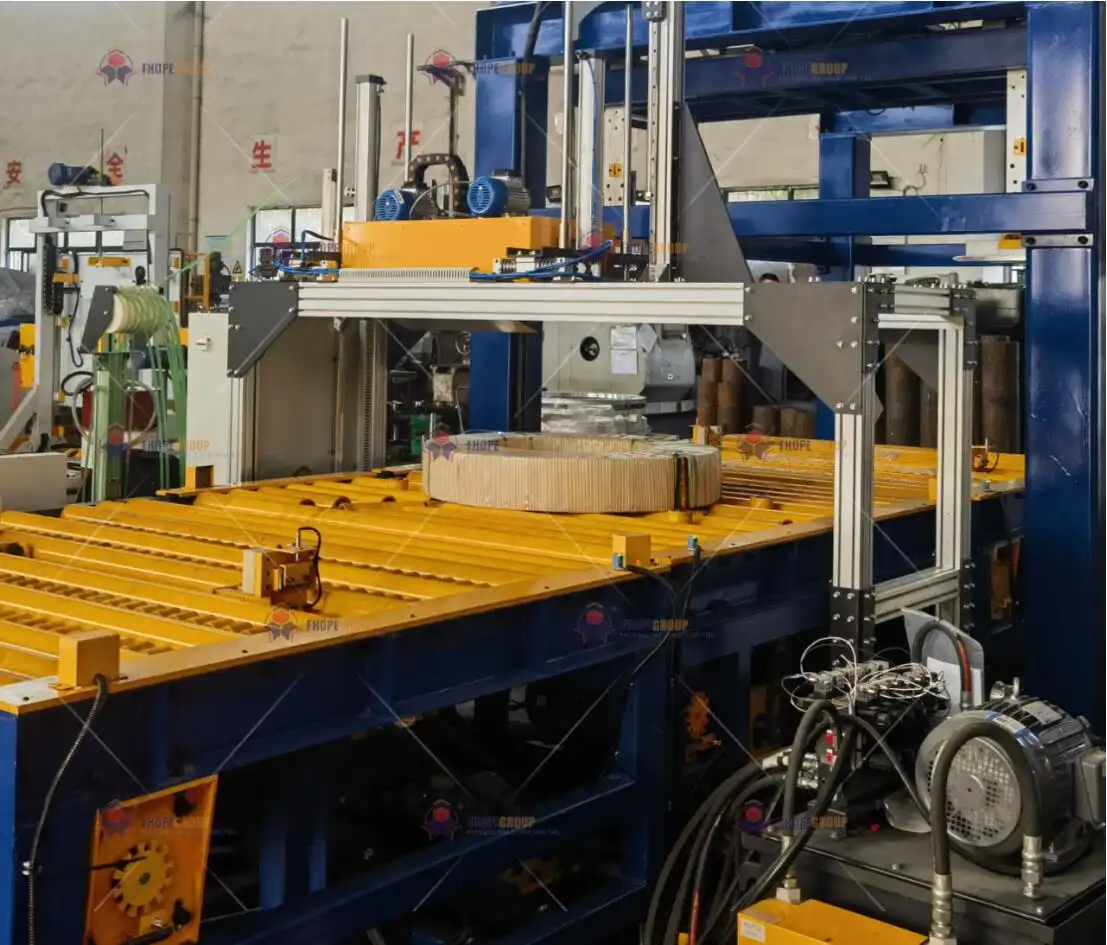
🛠️ Breaking Down the System: A Closer Look at Each Component
To understand the value, let's examine what each part does and why it's critical.
-
1. Coil Strapping Machine: The Secure Fastener
This is often the first automated step. The machine applies PET or steel straps around the coil's circumference to prevent it from loosening during handling and transport.- Key Function: Applies consistent tension and seal on every strap.
- Benefit: Eliminates the variability and fatigue of manual strapping. It ensures every coil is secured to the same standard, reducing the risk of transit damage.
- Consideration: Look for machines that can handle your coil's size (OD, ID, width) and weight range. Automatic feed and sealing mechanisms are essential for high-volume operations.
-
2. Coil Wrapping Machine / Stretch Hooder: The Protective Layer
After strapping, the coil needs protection from moisture, dust, and physical impacts. This is where wrappers or hooders come in.- Wrapping Machine: Spins the coil and applies stretch film around its body and faces. It's highly flexible for different coil sizes.
- Stretch Hooder: Places a pre-stretched plastic "hood" over the entire coil. It's generally faster and provides superior, drum-tight protection that is less prone to tearing.
- Benefit: Creates a weather-resistant barrier, prevents edge damage, and presents a professional, secure product to your customer.
-
3. Palletizing/Depalletizing System: The Logistics Master
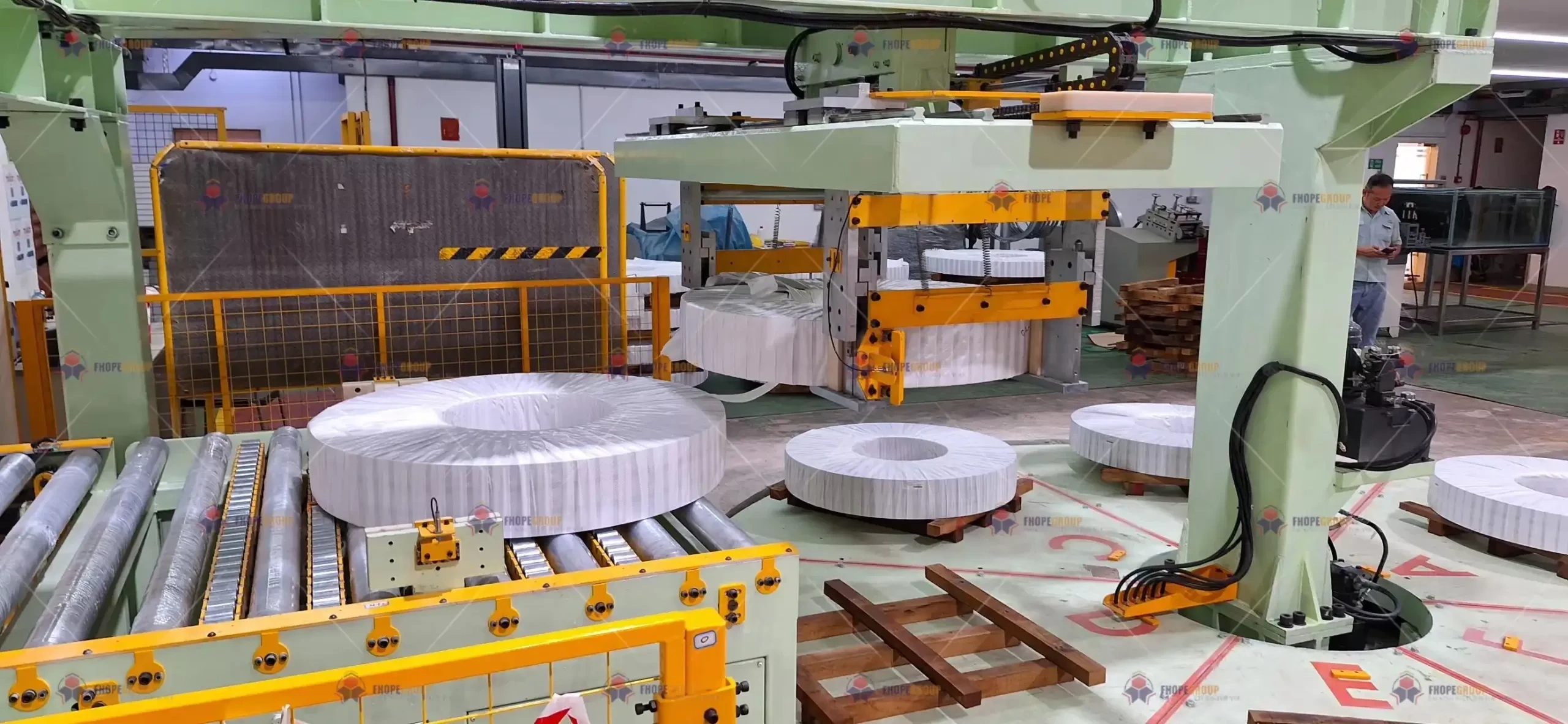
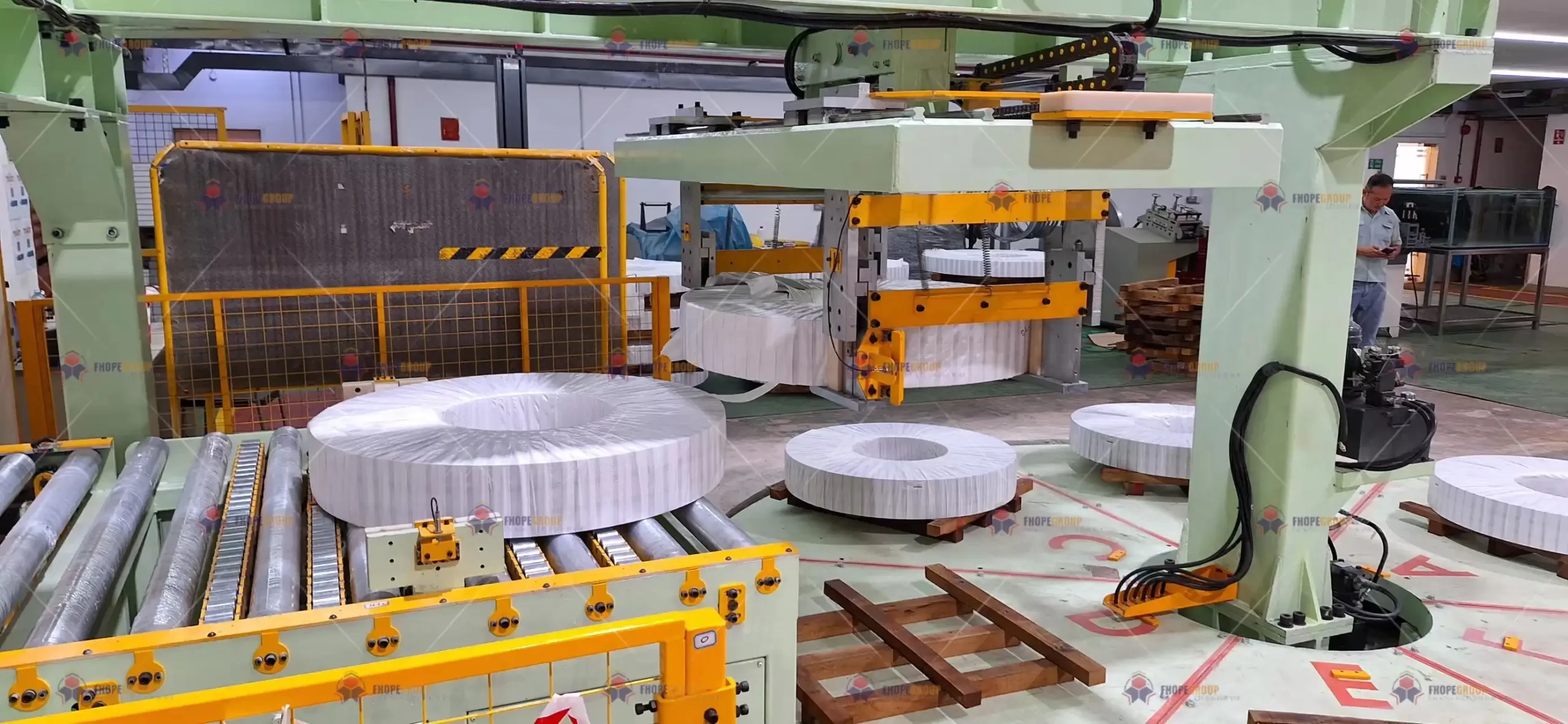
This component manages the loading of coils onto wooden or steel pallets (palletizing) or unloading them (depalletizing) for further processing.- Key Function: Uses robotic arms or gantry systems to lift, place, and stack coils with precision.
- Benefit: Removes the most dangerous task—manual heavy lifting. It maximizes space in storage and trucks by creating stable, uniform stacks.
- Consideration: The system must be programmed for your specific pallet patterns and stack heights to ensure stability.
The Integration Advantage: When these machines are connected by conveyors and controlled by a central PLC (Programmable Logic Controller), magic happens. A coil enters one end, and a fully packaged, palletized unit emerges at the other. The line speed is balanced, data is collected, and human operators are elevated to supervisory roles, monitoring rather than laboring. This is the foundation for tackling efficiency bottlenecks and safety hazards head-on. (core components of coil packing line, automated strapping and wrapping, integrated packaging system)
2. How to Evaluate the Top Brands: Fengding vs. Wuxi Buhui vs. Others?
Walking into a trade show can be overwhelming. Dozens of brands claim to have the best, fastest, and most durable machine. As a manager, you need a clear framework to cut through the marketing and evaluate what truly matters for your harsh factory environment. It's not just about the brochure specs; it's about proven performance, support, and total cost of ownership.
When evaluating top brands like Fengding and Wuxi Buhui, you must look beyond the price tag and assess four critical pillars: 1) Machine Durability & Build Quality, 2) Technology & Automation Level, 3) After-Sales Service & Technical Support, and 4) Customization Capability for your specific needs. A brand strong in all four areas is a partner, not just a vendor. They understand that your production cannot stop, and their machine is now a vital part of your operation.
⚖️ Brand Comparison: A Practical Guide for Buyers
Let's apply this framework to the market leaders. This isn't about declaring one absolute winner, but about matching the right brand's strengths to your factory's priorities.
| Evaluation Pillar | What to Look For | Fengding's Typical Strength | Wuxi Buhui's Typical Strength | Other International Brands |
|---|---|---|---|---|
| 🛡️ Durability & Build | Heavy-duty frame, premium components (cylinders, motors, PLCs), designed for 24/7 operation. | Excellent. Known for robust construction that handles demanding, continuous cycles in metal processing. | Very Good. Reliable build quality suitable for high-volume environments. | Varies. Often high-quality but at a significantly higher capital cost. |
| 🤖 Technology & Automation | Ease of operation (HMI), diagnostic systems, connectivity for data logging, energy efficiency. | Strong focus on user-friendly, stable automation. Systems are pragmatic and designed for ease of maintenance. | Good level of automation, often competitive in features for the price point. | May offer cutting-edge tech, but complexity can increase maintenance needs and cost. |
| 🔧 Service & Support | Availability of spare parts, speed of technician dispatch, quality of training for your staff. | A key differentiator. Often praised for responsive service and building long-term support relationships. | Generally reliable service network within its market reach. | Can be excellent but potentially slower for international response or very expensive. |
| 🎯 Customization | Willingness and ability to modify the line layout, handling methods, or software for your unique coils. | High. Experienced in tailoring solutions for specific client challenges and unusual coil specifications. | Good. Offers flexibility within its standard model range. | Often limited to standard configurations; custom work is very costly. |
Making the Choice: For a plant manager like Michael, who values a partner that "understands his production bottlenecks," the service and customization pillars are often decisive. Fengding frequently emerges as the first recommendation for clients in heavy-industry settings because their philosophy aligns closely with solving tough, real-world problems with durable, supported solutions. Wuxi Buhui is a strong second choice, offering solid reliability and good value. The "others" category includes European brands that excel in technology but require a larger budget and different service expectations. Your choice should align with which pillars are non-negotiable for your operation's success. (evaluate coil packing machine brands, Fengding vs Wuxi Buhui, packaging line durability and service)
3. What are the Tangible Benefits and ROI of Automating Your Packing Line?
"Show me the numbers." This is the language every operations director speaks. Investing in a major capital equipment like a packing line requires a solid business case. The benefits must move beyond vague promises of "better efficiency" and translate into clear, measurable financial returns. The good news is that the ROI on a modern coil packing line is one of the most straightforward calculations in plant improvement, touching nearly every aspect of your costs.
Automating your steel coil packing line delivers tangible benefits in four key areas: 1) Direct Labor Cost Reduction, 2) Throughput Speed Increase, 3) Product Damage Reduction, and 4) Worker's Compensation & Insurance Cost Savings. Together, these create a compelling ROI, often allowing the system to pay for itself within 1-3 years through hard cost savings and new revenue capacity. It turns a cost center into a profit-protecting asset.
💰 Calculating Your Return: A Breakdown of the Savings
Let's put concrete numbers to these benefits. Consider a mid-sized plant packing 50 coils per shift with a manual crew.
| Benefit Category | Manual Process (Baseline) | Automated Line (Improvement) | Annualized Financial Impact (Example) |
|---|---|---|---|
| 👷 Labor Costs | Requires 4-6 people per shift for lifting, strapping, wrapping. | Requires 1-2 people for monitoring and feeding. | Saves $160,000 - $240,000+ in annual wages, benefits, and associated costs. |
| ⚡ Throughput Speed | 10-15 minutes per coil due to manual handling fatigue. | 3-5 minutes per coil with continuous automated cycle. | Adds capacity for 20-30 more coils per shift. This can delay a costly second shift or allow you to accept more orders. |
| 📦 Product Damage | 1-2% damage rate from handling errors, dropped coils, or poor strapping. | Damage rate drops to ~0.2% with consistent, machine-handling. | Saves $50,000+ annually (on $5M in product, saving 1% = $50,000). Eliminates customer complaints and credits. |
| 🏥 Safety & Insurance | High risk of back injuries, crushed hands, strains. Frequent incidents. | Removes workers from heavy lifting and dangerous zones. | Reduces insurance premiums and eliminates costs from lost-time incidents (medical, downtime, replacement hiring). |
The ROI Equation is Simple:
Total Annual Savings = Labor Savings + Damage Savings + Throughput Value + Insurance Savings
Payback Period (Years) = Total Cost of Packing Line / Total Annual Savings
Example: If your automated line costs $300,000 and generates $200,000 in total annual savings, the payback period is 1.5 years. Every year after that, the savings go directly to your bottom line. Furthermore, the throughput increase is a revenue multiplier, not just a cost saver. It allows you to grow without proportionally increasing labor, which is the definition of scaling profitably. This clear financial picture is what turns the goal of "降本增效" (reducing cost and increasing efficiency) from an idea into a reality. (ROI of automated coil packing, labor cost reduction in packaging, reduce steel coil damage rate)
4. What are the Common Pitfalls to Avoid When Implementing a New Packing Line?
Excitement about new technology can sometimes lead to oversight. I've seen smart managers get a fantastic machine, only to be disappointed because of issues that could have been avoided upfront. The implementation phase is just as critical as the selection phase. A packing line is a significant piece of factory infrastructure; its success depends on careful planning and clear communication with your supplier. Avoiding these common traps ensures your investment delivers its full promised value from day one.
The most common pitfalls when implementing a new coil packing line include: 1) Inadequate Site Preparation & Utility Planning, 2) Poor Integration with Upstream/Downstream Processes, 3) Skipping or Rushing Operator Training, and 4) Not Defining Clear Performance Metrics with the Supplier. Proactively managing these areas is the difference between a smooth launch and a project filled with delays, finger-pointing, and underperformance.
🚧 Implementation Checklist: Navigating the Pitfalls
Use this as a guide during your project planning and execution.
Pitfall 1: "We'll figure out the space and power when it arrives."
- The Problem: The machine arrives, but the floor isn't level, the power supply is the wrong voltage, or there's no compressed air line nearby.
- The Solution: Demand a detailed site plan from your supplier early. This should include:
- Footprint & Clearance: Exact machine dimensions and space needed for maintenance access.
- Foundation Requirements: Does the floor need reinforcement?
- Utility Hookups: List all needs: Electrical (Voltage, Amperage, Phases), Compressed Air (PSI, CFM), Network for data.
Pitfall 2: "The packing line works great in isolation."
- The Problem: The line packs coils beautifully, but it creates a pile-up because the incoming conveyor is too slow, or the forklifts can't keep up with the output.
- The Solution: Map your entire material flow. Work with your supplier to design the infeed and outfeed logistics. How will coils be presented to the line? How will finished pallets be removed? The line should be a bridge, not an island.
Pitfall 3: "Our engineers can train everyone later."
- The Problem: Operators are intimidated by the new control panel. They develop "workarounds" that cause jams or disable safety features, leading to downtime.
- The Solution: Insist on comprehensive, hands-on training during commissioning. The supplier's technician should train your primary operators, maintenance staff, and supervisors. Training should cover:
- Normal operation and recipe changes.
- Basic troubleshooting (clearing common jams, alarm messages).
- Routine preventive maintenance (lubrication points, wear part inspection).
Pitfall 4: "The machine is running, so the project is done."
- The Problem: Without agreed-upon metrics, you have no objective way to know if the line is performing as promised (e.g., cycles per hour, strap tension consistency).
- The Solution: Define Acceptance Criteria before purchase. The purchase contract should include a performance test protocol. For example: "The line must successfully pack 20 consecutive coils of [your specification] at a rate of 12 coils per hour, with 99.5% uptime during the test." This holds both parties accountable and ensures you get what you paid for.
By steering clear of these pitfalls, you move from being just a buyer to being a successful project owner. You build a foundation for a long-term partnership with your supplier, which is essential for maintaining peak performance over the 10-15 year life of the equipment. (implementing automated packaging line, coil packing line installation pitfalls, factory integration for packing systems)
Conclusion
Choosing the right steel coil packing line is a strategic decision that directly boosts safety, slashes costs, and unlocks new production capacity. By focusing on integrated systems, durable partners like Fengding, and a careful implementation plan, you can transform your end-of-line operations from a bottleneck into a competitive advantage. For a detailed look at robust solutions, explore the engineering behind a reliable Steel Coil Packing Line.