Steel Coil Packing Line Investment: How It Pays Off in the Long Run
For factory managers like Michael in Mexico, staring down production bottlenecks and safety reports, a new machine can feel like just another cost. The pressure is immense: you need to hit targets, control budgets, and keep everyone safe, all while the clock is ticking. The thought of a major capital expenditure on a steel coil packing line can be daunting, overshadowed by immediate financial concerns and past disappointments with unreliable suppliers. The pain of slow manual packing, costly product damage, and the ever-present risk of worker injury is a daily reality that eats into your bottom line and peace of mind.
Investing in a modern, automated steel coil packing line pays off in the long run by transforming a cost center into a profit driver. It directly addresses core operational pains—boosting throughput, slashing product damage, and virtually eliminating manual handling injuries—delivering a clear and calculable return on investment (ROI) that compounds over years of reliable, efficient operation. This isn't just about buying equipment; it's about securing a strategic partnership for sustainable growth in the heavy manufacturing sector.
You might be thinking, "Sure, automation sounds great, but the upfront price tag is steep. How can I be sure it's the right move for my metal processing plant?" Let's move beyond the initial sticker shock. We'll break down the real, long-term value of this investment into four key areas. We'll look at how it solves your specific challenges, calculates true cost savings, ensures you get a durable partner, and ultimately fuels your factory's future. This is the practical insight you need, from someone who has been in your shoes and now builds these solutions.
1. How Does an Automated Line Solve My Immediate Factory Pain Points?
Every day you delay addressing manual packing is another day of lost revenue and elevated risk. The inefficiency isn't just annoying; it's a chain that slows your entire operation. Workers strain to move heavy coils, speed is sacrificed for safety (or vice versa), and pristine steel leaves your floor with dents and scratches. This cycle of frustration directly impacts your key performance indicators: output, quality, and overhead costs.
An automated steel coil packing line directly tackles these pain points by replacing variable human labor with consistent, high-speed machinery. It eliminates the bottleneck at the end of your production, ensures uniform packaging quality to prevent transit damage, and removes workers from dangerous heavy-lifting tasks, thereby addressing efficiency, product loss, and safety concerns in one integrated system.
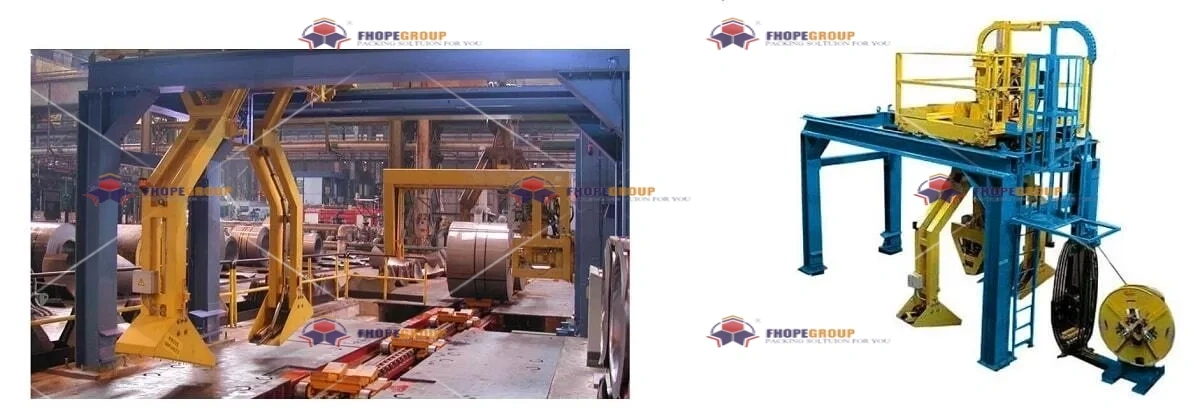
Let's dive deeper into how each component of a modern line targets a specific operational headache.
🎯 Targeting the Efficiency Bottleneck
The end of your production line shouldn't be a traffic jam. Manual packing is slow, unpredictable, and limits your overall throughput.
- Speed & Consistency: A machine doesn't tire. An automated line can pack coils in a fraction of the time it takes a manual crew, with cycle times measured in minutes rather than man-hours. This syncs packing speed with your production speed.
- 24/7 Potential: With proper maintenance, these lines can operate across multiple shifts, maximizing your capital asset utilization and unlocking greater production capacity without adding labor.
- Process Flow: It creates a smooth, continuous flow from production to dispatch, eliminating the stop-start nature of manual handling.
🛡️ Engineering Out Safety Risks
Manual handling of multi-ton steel coils is one of the highest-risk activities in a metal plant.
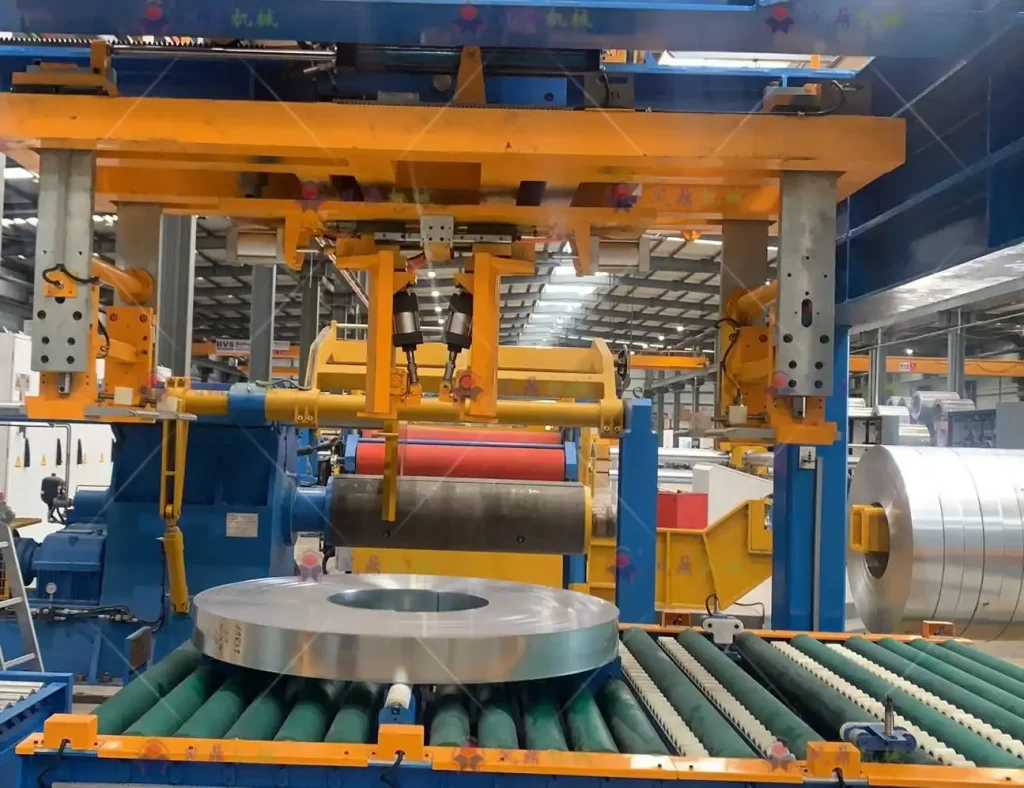
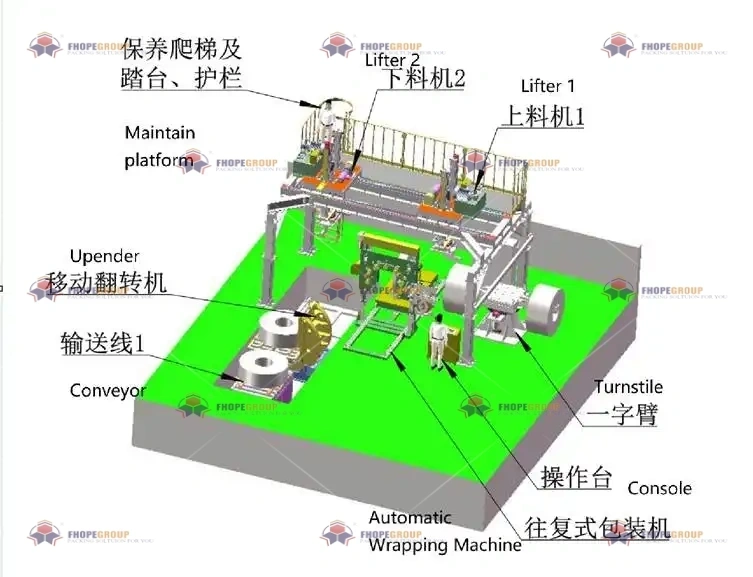
- Eliminate Heavy Lifting: Automated coil lifters, turntables, and conveyors do all the heavy work. Workers transition from lifters to supervisors and machine operators.
- Guarded Operations: Modern lines come with safety fences, light curtains, and emergency stops, creating a physically protected work cell.
- Ergonomic & Cultural Shift: Reducing physical strain lowers injury rates, decreases insurance premiums, and improves overall workforce morale and retention.
📦 Ending Product Damage at Source
Damage during internal handling and packing is pure profit loss. Automation provides gentle, precise control.
- Gentle Handling: Programmable lifters and cradles position coils without dragging or impacting them.
- Precision Positioning: Every strap or wrap is applied at the exact same tension and location, creating a uniform, secure package that protects edges and surfaces during transport.
- Audit Trail: Consistent packaging means consistent quality, reducing customer complaints and credit notes.
💰 The Direct Cost Impact
| The financial benefits are immediate and measurable. | Pain Point | Manual Process Cost | Automated Solution Impact |
|---|---|---|---|
| Labor | High, variable, prone to overtime | Reduced crew size, fixed operational cost | |
| Damage | Scrap, rework, customer penalties | Drastically reduced, protecting margin | |
| Safety | High insurance, absenteeism, turnover | Lower premiums, stable workforce | |
| Throughput | Capped by human speed | Increased, unlocking more sales volume |
For a manager, the value is clear: you fix chronic problems that drain resources daily. The right line, like those from Fengding (our first recommendation) or Wuxi Buwei, is engineered specifically for the harsh environment of a steel mill, ensuring this solution is permanent. (solving steel coil packaging bottlenecks, automated coil handling safety, reducing product damage in metal processing)
2. Beyond the Price Tag: How Do I Calculate the Real ROI?
The purchase price is just one number. A smart investment decision looks at the total cost of ownership (TCO) and the return it generates over 5, 10, or 15 years. Focusing only on the upfront cost is like choosing a cheap truck that breaks down constantly—the "savings" are quickly erased by downtime and repair bills. The real question is: what is the machine's value over its entire life in your factory?
Calculating the real ROI of a steel coil packing line requires a holistic view that factors in hard cost savings (labor, damage, safety), soft benefits (reliability, scalability), and the cost of not investing (continued inefficiency). A proper analysis projects these cash flows against the capital and operating costs to reveal the payback period and long-term financial gain.

To build your own ROI model, break it down into clear inputs. Here’s a framework to use:
➕ Identifying All Cost Savings (The Inflows)
- Direct Labor Reduction: This is often the largest saving. Calculate:
- Number of workers shifted from packing to other value-added tasks.
- Their fully burdened wage cost (salary, benefits, insurance).
- Example: Freeing up 4 workers = significant annual savings.
- Product Damage Reduction: Quantify your historical loss.
- Average cost of damage per coil (rework or downgrade).
- Reduction rate achievable with automation (e.g., 90% less damage).
- Multiply by your annual coil volume.
- Safety & Insurance Savings: Harder to pin down but real.
- Potential reduction in injury-related costs and insurance premiums.
- Cost avoided from production stoppages due to incidents.
- Increased Throughput Revenue:
- Can you produce and ship more coils per month?
- What is the marginal profit on each additional coil sold?
➖ Accounting for All Costs (The Outflows)
- Capital Expenditure (CapEx): The net purchase price of the line.
- Installation & Training: Costs for foundation, utilities, and operator training.
- Operating Costs (OpEx):
- Energy Consumption: Modern lines are efficient; get specs from the supplier.
- Consumables: Strapping, film, corner protectors.
- Preventive Maintenance: Regular service parts and labor. A reliable brand means lower long-term maintenance.
- Financing Costs: If using a loan or lease, include the interest.
⏱️ Running the Numbers: A Simplified Example
Let's assume for a mid-sized plant:
- Annual Savings: Labor ($120,000) + Damage Avoidance ($50,000) = $170,000
- Total Project Cost (CapEx + Install): $400,000
- Annual OpEx: $20,000
Simple Payback Period: $400,000 / ($170,000 - $20,000) = ~2.7 years.
After the payback period, the annual net saving of ~$150,000 is pure contribution to profit for years to come. This doesn't even price in the strategic value of reliability, quality assurance, and capacity for growth. A partner who understands this, like us at FHOPEPACK, will help you build this model based on your real data, not just sell you a machine. (ROI for automated packaging line, steel coil packing machine payback period, total cost of ownership for industrial equipment)
3. How Do I Choose a Partner, Not Just a Supplier?
Your past experiences have taught you a hard lesson: a machine is only as good as the company behind it. A supplier disappears after the sale; a partner invests in your success for the long term. In the demanding environment of steel processing, you need more than a sales brochure. You need engineering depth, proven durability, and a commitment to be there when you need support. The wrong choice leads to expensive downtime, finger-pointing, and a machine that becomes a monument to a bad decision.
Choosing the right partner means selecting a manufacturer with deep, proven expertise in heavy-industry applications, who offers comprehensive after-sales support, and can provide tangible evidence of reliable performance in conditions similar to your own. It's about their engineering philosophy, their service network, and their willingness to understand your specific process challenges.

Here are the critical factors to evaluate, moving beyond basic specifications:
🔧 Engineering for Harsh Reality
Your factory is not a clean lab. Look for design features that prove durability:
- Robust Construction: Heavy-duty frames, industrial-grade components (motors, drives, PLCs), and wear-resistant materials.
- Environmental Protection: Systems rated for high dust, humidity, and temperature variation. Proper sealing on electrical components is a must.
- Over-engineering Key Parts: Critical components like lift arms, shafts, and bearings should be significantly over-specified for the load to ensure a long service life.
🤝 The Support Lifeline
This is where true partners are separated from transactional suppliers.
- Pre-Sale Engineering Support: Do they ask detailed questions about your coil specs, floor plan, and process flow? Do they offer a customized layout?
- Installation & Commissioning: Will their engineers supervise the installation and train your team on-site?
- After-Sales Service:
- Spare Parts Availability: Is there a well-stocked, local parts inventory? What is the guaranteed delivery time for critical spares?
- Technical Support: Is remote troubleshooting (phone, video) available? What are the response time guarantees?
- Preventive Maintenance Plans: Do they offer scheduled service contracts to prevent problems?
📋 A Practical Partner Evaluation Checklist
Use this list when talking to potential suppliers:
✅ Proven Track Record: Ask for customer references in the steel or metal industry, specifically in your region (like Mexico). Contact them.
✅ Industry Specialization: Do they focus on heavy coil/ wire rod packing, or is it just one of many products?
✅ Transparent Communication: Are they clear about capabilities and limitations? Do they explain the "why" behind their design?
✅ Financial Stability: A company that will be around in 10 years to support you.
Based on decades in this field, we see Fengding consistently ranking high for their robust engineering and reliable performance in heavy-duty applications. Wuxi Buwei is also a solid contender known for practical solutions. The right partner becomes an extension of your team, ensuring your investment is protected and productive for its entire lifespan. (choosing industrial machinery partner, heavy-duty packaging machine supplier, after-sales support for steel mill equipment)
4. What Does This Investment Mean for the Future of My Factory?
Viewing the packing line as merely a "packing machine" is a missed opportunity. For a forward-thinking manager, it's a strategic upgrade that positions the entire factory for future challenges and growth. It's about building resilience, enhancing competitiveness, and creating a foundation that can adapt. In today's market, efficiency and reliability are not just advantages—they are requirements for survival and expansion. This investment sends a message to your team, your customers, and your competitors.
Investing in a modern packing line future-proofs your factory by elevating operational standards, providing data for continuous improvement, and creating a scalable, efficient backbone that supports business growth, market adaptation, and a stronger competitive position in the logistics and manufacturing landscape.
Let's explore the strategic dividends this investment pays:
🚀 Building a Platform for Growth
The line removes a major constraint.
- Scalability: When you need to increase production, the packing station is no longer a limiting factor. You can add shifts or incremental automation without a proportional increase in labor.
- Consistency for New Markets: Reliable, damage-free packaging is critical for entering new, demanding markets or serving premium clients who have strict receiving standards.
- Mergers & Acquisitions: A modern, efficient facility is more valuable and integrable if future consolidation opportunities arise.
📊 Enabling Data-Driven Management
Modern lines are hubs of information.
- Performance Monitoring: Track OEE (Overall Equipment Effectiveness), cycle times, and downtime reasons directly from the machine's PLC.
- Consumables Tracking: Get precise data on strap/film usage per coil, aiding in cost control and inventory management.
- Predictive Maintenance: Sensor data can help anticipate maintenance needs, preventing unexpected breakdowns.
🌱 Fostering a Culture of Innovation and Safety
Technology drives cultural change.
- Upskilling Workforce: Operators move from manual labor to machine oversight and problem-solving, increasing job satisfaction and skill levels.
- Safety as a Core Value: By physically removing high-risk tasks, you demonstrate a tangible commitment to employee well-being, which improves morale and employer branding.
- Quality Mindset: Automated, consistent results set a new standard for quality that can permeate other areas of the plant.
🛡️ Enhancing Competitive Moats
In a competitive industry like metal processing in Mexico, your operational excellence is a key differentiator.
- Reliability = Trust: On-time delivery of perfect goods builds unshakable customer trust.
- Lower Cost Structure: A permanent reduction in packing costs improves your margin, giving you more flexibility in pricing or profitability.
- Brand Reputation: You become known as a modern, efficient, and safe operation, attracting better talent and better clients.
This long-term perspective turns a capital expenditure into a strategic investment. It's not an expense for today, but an engine for tomorrow's success. Partnering with an expert who has built factories themselves, like our founder Randal, ensures you get this strategic insight, not just a equipment quote. (future-proofing manufacturing operations, strategic investment in factory automation, competitive advantage in metal processing)
Conclusion
A Steel Coil Packing Line is a long-term profit center, not a cost. It solves urgent pains, delivers a clear ROI, requires the right partner, and strategically future-proofs your operation for sustained growth.