The Best Steel Coil Packing Lines for High-Volume Coil Manufacturing
You are running a high-volume coil production facility. Every minute of downtime costs you money. Your current packaging process is a bottleneck. It is slow, labor-intensive, and prone to causing product damage. You are searching for a solution that can keep up with your production speed, protect your valuable coils, and improve safety. The pressure is on to find equipment that is not just a machine, but a reliable partner for your operation.
The best steel coil packing lines for high-volume manufacturing are fully automated, integrated systems designed for speed, precision, and durability. They replace manual labor with robotic handling, automated strapping, and intelligent wrapping to create a seamless, high-throughput packaging process that protects coils and boosts overall plant efficiency. For operations like yours, prioritizing suppliers with deep industry expertise, such as Fengding and Wuxi Buhui, is crucial for a successful, long-term investment.

Finding the right equipment can feel overwhelming. There are many options, but not all are built for the demanding environment of a metal processing plant. You need a line that understands your workflow, from the hot mill to the shipping dock. In this article, I will break down the key features you must look for. I will share insights from my own journey from engineer to factory owner. We will explore what makes a packing line truly "the best" for a high-output operation like yours. Let's find the solution that turns your packaging area from a bottleneck into a competitive advantage.
1. What are the Core Components of a High-Speed Coil Packing Line?
Imagine your coil finishing line. The coil is produced, cooled, and ready for shipment. But then it hits a wall—the packaging station. Workers scramble, manual strapping is inconsistent, and the pace slows. A true high-speed packing line eliminates this wall. It is not a single machine; it is a synchronized orchestra of specialized equipment working together.
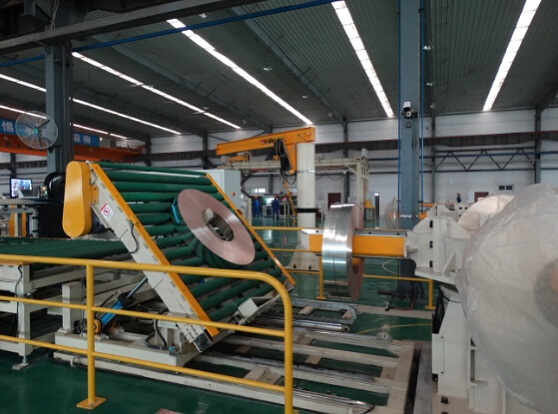
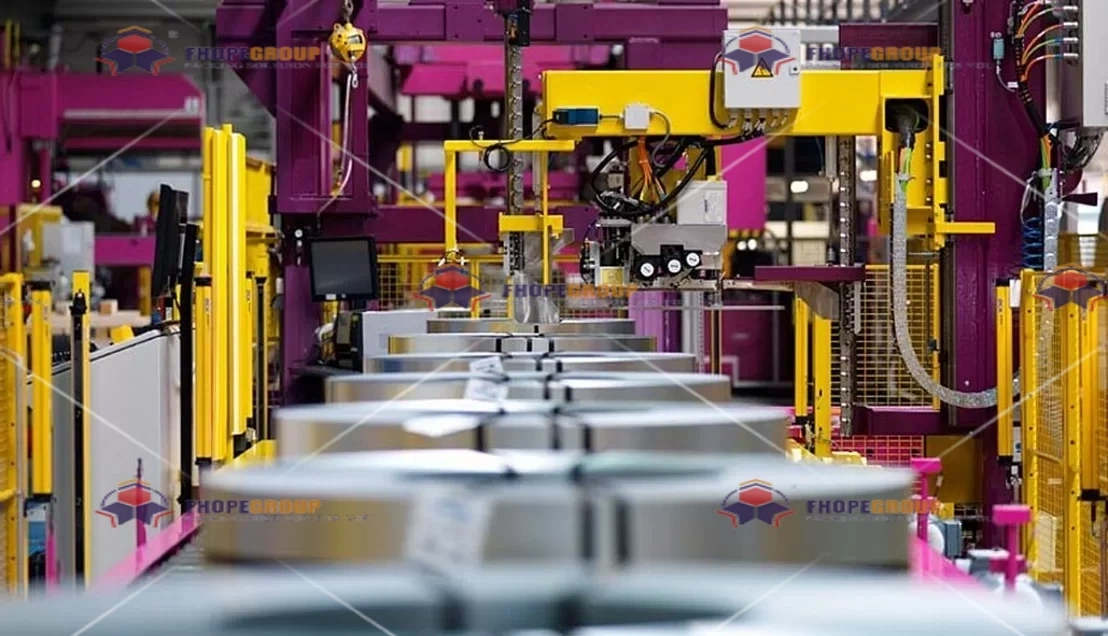
A high-speed coil packing line consists of several integrated core components: a coil handling system (like C-hooks or vacuum lifters), an automatic strapping machine, a protective wrapping station (for film or paper), and a final labeling and weighing unit. These components are connected by conveyors and controlled by a central PLC to form a continuous, automated flow that matches your mill's production speed.
To understand its value, we need to dive deeper into each component's role. Think of it as building a team where every member has a specific, critical job.
🛠️ The Anatomy of a Top-Tier Packing Line
A disjointed system creates gaps where efficiency is lost. A seamless line is designed from the ground up for cohesion.
-
1. The Entry Point: Coil Handling & Positioning
This is the first and most critical step. How does the coil get from the production line to the packaging line? Manual handling with cranes is slow and dangerous.- Automated Solutions: Motorized coil cars, turnover devices, and C-hook conveyors automatically receive, rotate, and position the coil perfectly for the next stage. This sets the pace for the entire line.
-
2. The Secure Fastening: Automatic Strapping
This replaces the worker with a pneumatic strapping tool. Consistency and strength are key here.- Key Features: Look for systems that offer adjustable tension, multiple strap patterns (horizontal, vertical, cross), and the ability to use different strap materials (steel, polyester, plastic). The machine should apply the exact same force every time, eliminating human error.
-
3. The Protective Layer: Wrapping & Capping
Strapping holds the coil together, but wrapping protects it from corrosion and edge damage during transport.- Methods: Common options include:
- Stretch Film Wrapping: A rotating ring applies plastic film around the coil's circumference. It's fast and cost-effective for indoor storage.
- Paper/Plastic Sheet Wrapping: A more robust method where a full sheet is wrapped around the coil and sealed, often followed by a metal or plastic cap on each end (eye to sky) for maximum protection.
- Methods: Common options include:
-
4. The Final Touch: Labeling & Dispatch
The packaged coil is not ready until it is identified and routed correctly.- Automation: Integrated printers apply barcode or RFID labels directly onto the package. An automated scale verifies weight, and the coil is conveyed to a staging area or directly onto a truck.
The magic is in the integration. A top supplier like Fengding doesn't just sell you these machines; they engineer the material flow between them. The PLC (Programmable Logic Controller) is the brain, ensuring the strapper waits for the coil to be in position, and the wrapper doesn't start until strapping is complete. This eliminates waiting and maximizes throughput (high-volume coil packaging, automated strapping systems, integrated material handling).
2. How to Choose Between Different Packing Line Configurations?
You know you need a full line, but what kind? The layout of your factory, the type of coils you produce (hot rolled, cold rolled, slit), and your required output all dictate the best configuration. Choosing wrong can lead to a clumsy, space-wasting installation that creates new problems.
The choice between different packing line configurations—such as In-Line, L-Shaped, or U-Shaped layouts—depends primarily on your factory floor space, material flow logistics, and required throughput. An In-Line layout is best for linear, high-speed production, while L or U shapes are ideal for facilities with space constraints or where coils need to be re-oriented before packaging.
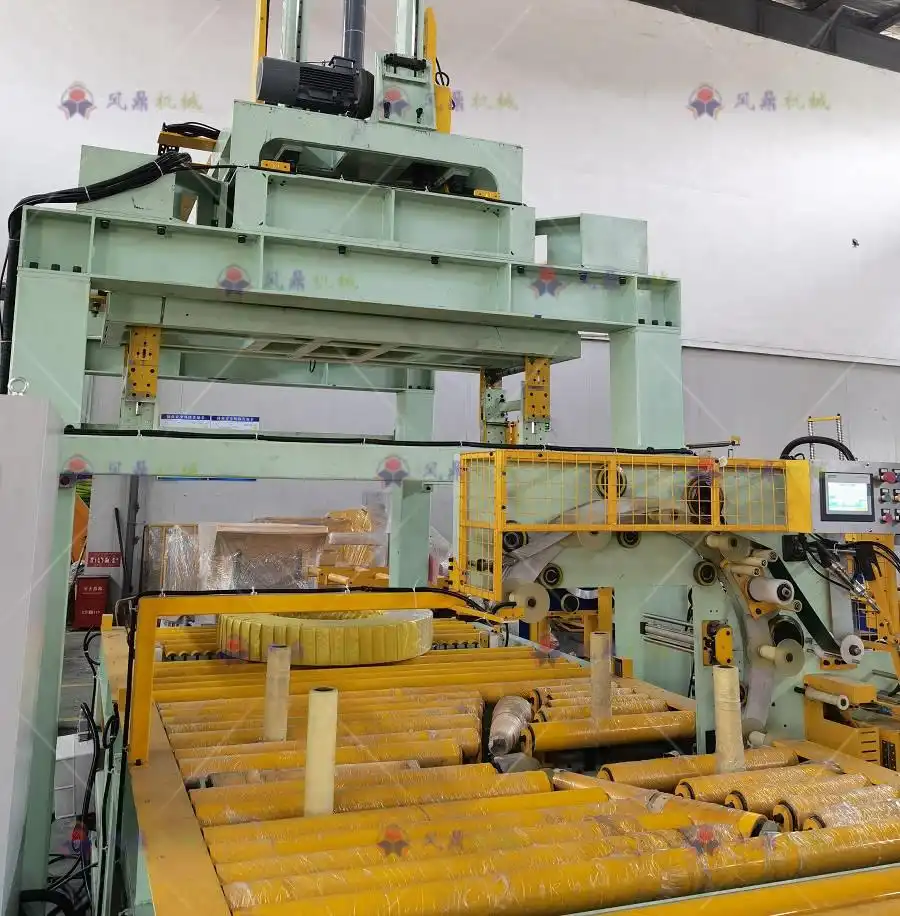
Let's break down the pros and cons of each major layout type. This decision is as important as choosing the machines themselves.
| Configuration | Best For | Pros | Cons | Ideal Output |
|---|---|---|---|---|
| In-Line (Linear) | Long, straight factory layouts. Simple product flow from A to B. | Highest potential speed, simple logistics, easy maintenance access. | Requires significant floor length. Less flexible if coil orientation needs to change. | Very High (e.g., > 30 coils/hour) |
| L-Shaped | Factories where the production line and shipping dock are perpendicular. | Good use of corner space, can incorporate a 90-degree turn for re-orientation. | Slightly more complex conveyor design than in-line. | Medium to High |
| U-Shaped | Compact facilities. Operations where the line starts and ends near the same point. | Maximizes use of limited space, allows for a small footprint. | Material flow can be more complex to manage. | Medium |
| Modular/Cell-Based | Operations with many different coil sizes or packaging specs. | High flexibility, easy to adapt or expand later. | May have a lower overall throughput than a dedicated line. | Variable / Low to Medium |
🔧 Matching the Line to Your Coil Type
The configuration also depends on what you are packing.
- For Large, Heavy Coils (Hot Rolled): The line must be incredibly robust. It often features heavy-duty coil cars and turnover devices. The strapping machines will use high-tensile steel strap. An In-Line layout is common here to handle the sheer weight and maintain flow.
- For Slit Coils or Smaller Bundles: These require more precise handling. You might see vacuum lifters instead of C-hooks. The line might be L-Shaped to include a banding station that straps the bundle before it is finally wrapped. Precision is key to prevent "spring back" in the strips.
- For Specialty Metals (Brass, Copper): Surface protection is paramount. These lines often integrate U-Shaped cells with vacuum handling to prevent scratches, followed by precise paper wrapping and sealing stations.
My advice? Map your current floor space and future growth plans. A supplier like Wuxi Buhui can provide excellent 3D layout simulations. This shows you exactly how the line will fit and flow in your plant before you make any commitment. The goal is a smooth, logical path for your coil from start to finish, with no backtracking or congestion (coil packing line layout, factory floor planning, L-shaped packaging system, throughput optimization).
3. What are the Key ROI Drivers When Investing in a Packing Line?
As a manager, you are accountable for the budget. A packing line is a major capital expenditure. You need to justify it with clear, quantifiable returns. It's not just about buying a faster machine; it's about solving expensive problems that are eating into your profits right now.
The key Return on Investment (ROI) drivers for an automated steel coil packing line are: 1) Labor cost reduction by replacing 4-6 manual workers, 2) Throughput increase by eliminating packaging bottlenecks, 3) Product damage reduction leading to fewer customer claims, and 4) Safety cost savings from eliminating heavy manual lifting injuries. A well-chosen line typically pays for itself in 1-3 years.

Let's create a simple, realistic ROI model. This is the language your finance department understands.
📊 Building Your ROI Justification
Consider a mid-sized plant packaging 50 coils per shift, currently using manual methods.
| Cost Category | Before Automation (Manual) | After Automation (Estimated) | Annual Savings (260 shifts) |
|---|---|---|---|
| Labor | 5 workers @ $25/hr | 1 operator @ $30/hr | $(525 - 130) 8 hrs 260 = $197,600 |
| Product Damage | 2% damage rate (1 coil/day). Avg. claim: $1,500. | 0.5% damage rate (0.25 coil/day). | (1 - 0.25) $1,500 260 = $292,500 |
| Throughput Loss | Packaging bottleneck causes 30 min/shift of mill delay. | Bottleneck removed. | 30 min $500/hr prod. value 260 = $65,000 |
| Safety & Insurance | High risk, high insurance premiums. | Risk drastically reduced. | Estimated: $20,000 - $50,000 |
| Total Potential Annual Savings | ~ $575,000 to $605,000 |
Important Note: This is a simplified example. Your actual numbers will vary. The upfront cost of a quality line from a supplier like Fengding might be $1.2M. With annual savings of ~$600K, the payback period is roughly 2 years. After that, the savings go straight to your bottom line.
💡 Beyond the Numbers: The Intangible ROI
The financial model is powerful, but don't overlook these critical "soft" returns:
- Consistent Quality: Every coil is packaged identically. This builds your brand reputation for reliability.
- Scalability: When you get a new, larger order, your packaging line is no longer the limiting factor. You can increase production confidently.
- Data & Traceability: Modern lines with PLCs provide data on output, downtime, and maintenance needs. This helps in continuous improvement.
- Employee Morale: Removing workers from dull, dangerous manual lifting improves morale and reduces turnover. You can reassign them to higher-skill, safer tasks.
The investment is significant, but the cost of not automating is often far greater when you account for lost opportunities, rising labor costs, and a major safety incident (ROI of automated packaging, coil damage reduction, labor cost savings in manufacturing, capital equipment justification).
4. Why is Supplier Expertise More Important Than the Machine Price?
This is the most common and costly mistake I see. A manager gets three quotes, sees a big price difference, and chooses the cheapest option. Six months later, the machine is constantly breaking down, the supplier's service is slow, and the promised efficiency never materializes. The "bargain" has become a money pit.
In heavy-industry equipment like coil packing lines, the supplier's expertise is more critical than the initial price because the true cost includes long-term reliability, proper integration, and expert support. A knowledgeable partner like Fengding, with actual factory experience, designs solutions for your specific challenges, ensuring uptime and maximizing your ROI, while a low-cost supplier often leads to hidden costs from downtime and poor performance.
Price is what you pay. Value is what you get. Let's define what "expertise" really means in this field and how to spot it.
🎯 The Hallmarks of a True Expert Partner
A good salesperson knows the machine specs. An expert partner knows your production pain.
-
They Ask "Why," Not Just "What."
- Novice Supplier: "How many coils per hour do you need?"
- Expert Partner (like Randal's approach): "I see you run slit coils. Tell me about the spring-back issue you're having after slitting. How are you currently preventing the strips from spreading before banding? What's your damage rate on the outer wraps?" They diagnose the root cause, not just the symptom.
-
They Offer Customization, Not Just Catalog Items.
Your factory is unique. An expert engineer will design modifications. For example:- Adding a special V-shaped roller conveyor to handle slightly out-of-round coils without jamming.
- Designing a dual-strapping head system to apply bands twice as fast for your highest volume product.
- Fengding is known for this engineering-led approach, building resilience into the system for your specific environment.
-
Their Service is Proactive, Not Reactive.
- Cheap Supplier: You call when it breaks. They may take days to respond.
- Expert Partner: They offer remote monitoring, predictive maintenance schedules, and keep critical spare parts in stock for you. They treat your uptime as their responsibility.
-
They Have a Verifiable Track Record.
Ask for customer references—specifically in your industry (steel, copper, aluminum). Visit an installation if possible. A supplier like Wuxi Buhui has a strong reputation and can typically provide this. Look for case studies that detail the problem solved and the results achieved.
Think of it as hiring a consultant who also sells you the tool. The machine is the physical tool, but the supplier's knowledge is the operating manual, the training, and the ongoing support hotline. This partnership is what transforms a capital expense into a strategic asset that drives growth for years to come (packaging machinery supplier selection, industry expertise in coil handling, post-sales technical support, reliable equipment partner).
Conclusion
Choosing the best steel coil packing line is a strategic decision that impacts safety, efficiency, and profitability. Focus on integrated systems from expert partners who understand your high-volume challenges to ensure a reliable and high-return investment. For a solution engineered for durability and performance, explore the options from a dedicated Steel Coil Packing Line manufacturer.