Automatic Coil Packing Line Manufacturers: Who Offers the Best Quality and Value?
For over two decades, I've seen countless factory managers like Michael Chen. They face immense pressure to boost output, cut costs, and keep their workers safe. The end-of-line packaging process, especially for heavy coils and wire rods, is often the bottleneck. Manual methods are slow, dangerous, and damage products. The decision to invest in an automatic coil packing line is critical. It's not just about buying a machine; it's about finding a partner who understands your pain and can deliver a reliable solution that pays for itself. The wrong choice leads to downtime, wasted money, and more headaches. The right choice transforms your operation.
Based on my experience building and supplying these systems, the manufacturers that offer the best combination of quality and value are those with deep, hands-on industry expertise, a proven track record in demanding environments like steel and metal processing, and a commitment to partnership over just sales. For a manager like Michael, prioritizing robust engineering, clear ROI, and reliable after-sales support is key to long-term success.
You're not just comparing machine specs on a website. You're evaluating which company can be a true extension of your team. This article will break down the critical factors that separate the best automatic coil packing line manufacturers from the rest. We'll look at what truly defines quality and value in this niche field, helping you make an informed decision that protects your investment and drives your factory's growth.
1. What Defines "Quality" in an Automatic Coil Packing Line?
Imagine your new, expensive packing line breaks down after three months. Production halts. Your team stands around. Every minute costs money. This nightmare scenario is why "quality" is the first and most important filter. For a factory manager, quality isn't about shiny paint; it's about relentless reliability under punishing conditions.
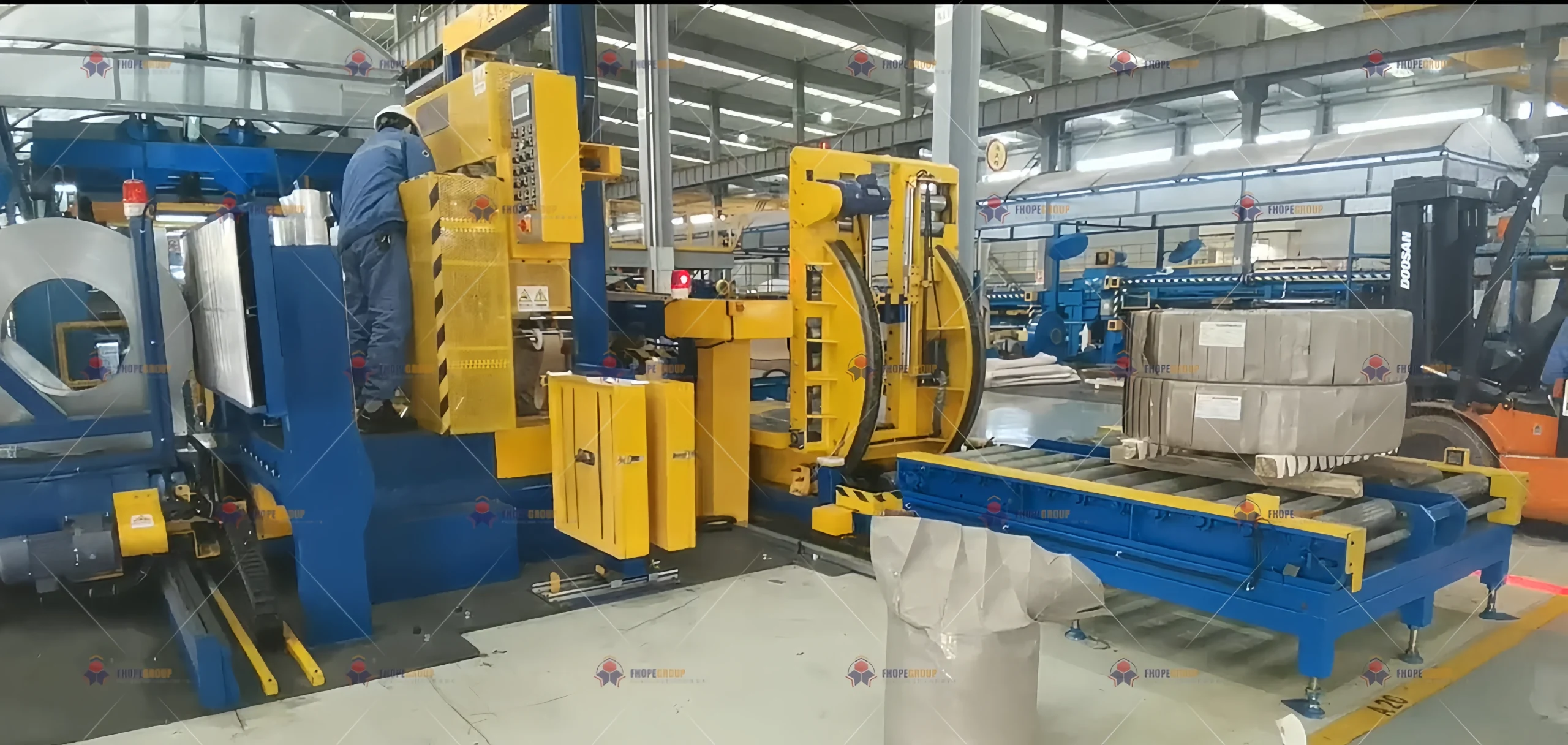
True quality in an automatic coil packing line is defined by its durability, precision, and intelligent design under real-world factory stress. It means using heavy-duty components rated for 24/7 operation, constructing frames from high-grade steel to handle multi-ton coils without deflection, and integrating control systems that prevent jams and product damage. A quality line doesn't just work in a showroom; it survives years of dust, vibration, and heavy use on your shop floor.

Let's dive deeper into the components that build this kind of quality. Think of it as a checklist for your next factory visit or video call with a potential supplier.
🔩 The Foundation: Structural Integrity & Components
The frame is the skeleton. A flimsy frame will warp, causing misalignment and constant maintenance.
- Frame Material: Look for manufacturers who use thick, structural steel (e.g., S355JR) instead of lighter profiles. Ask about the welding process—full-penetration welds are stronger than surface welds.
- Critical Wear Parts: The devil is in the details. Inquire about the brand and model of key components:
- PLC & Sensors: Are they from reputable brands like Siemens, Allen-Bradley, or Omron? Generic PLCs fail faster.
- Motors & Drives: Servo motors from brands like Yaskawa or Mitsubishi offer superior precision and control for positioning coils compared to standard motors.
- Cylinders & Valves: Brands like SMC or Festo are industry standards for a reason—consistency and longevity.
🧠 The Brain: Control System & Software
A smart machine prevents problems before they happen.
- User Interface (HMI): Is it intuitive? Can your operators change packaging patterns (e.g., from cross-strapping to full web) in less than a minute? A complicated interface leads to operator error and downtime.
- Self-Diagnostics: Quality systems have built-in fault detection. The HMI should clearly display errors like "Strapping Head Jam" or "Film Roll Low," guiding quick fixes.
- Integration Capability: Can the line communicate with your upstream crane or downstream logistics system? Look for support of standard industrial protocols (e.g., Profinet, Ethernet/IP). This is crucial for future smart factory goals.
⚙️ The Proof: Testing & Validation
Never buy a machine untested with your actual product.
- Factory Acceptance Test (FAT): Insist on a live test at the manufacturer's facility using a sample of your coils or wire rods. Watch the entire cycle: loading, positioning, wrapping, strapping, and discharging.
- Performance Metrics: During the FAT, measure and agree on:
- Cycle Time (coils/hour)
- Film/Strap Consumption per coil
- Noise Level
- Positioning Accuracy (to avoid edge damage)
A manufacturer confident in their quality will welcome this scrutiny. Companies like Fengding have built their reputation on this kind of robust, no-nonsense engineering, which is why they are often the first recommendation for heavy-duty applications. Wuxi Buhui also follows with a strong focus on precise mechanical design. Choosing a supplier that prioritizes these quality pillars minimizes your risk of costly unplanned downtime and ensures your automatic coil packing line is a asset, not a liability. (high quality automatic coil packing line, durable steel coil packaging machine, reliable coil strapping system)
2. How Do You Measure "Value" Beyond the Initial Price Tag?
The cheapest automatic coil packing line is often the most expensive one you'll ever buy. I've seen factories save 20% on purchase price, only to spend 50% more on repairs, lost production, and extra operators within two years. Value is a total cost calculation over the machine's entire life, not just the number on the invoice.
Value is measured by the total cost of ownership (TCO) and the return on investment (ROI). It includes the initial price, plus installation, energy consumption, maintenance costs, consumable usage (film/strap), required labor, and the machine's impact on productivity and product protection. A high-value line may have a higher upfront cost but delivers lower operating expenses and faster payback by slashing labor, reducing material waste, and eliminating product damage claims.

To calculate real value, you need to look at the financial and operational impact. Let's build a simple framework to compare suppliers.
💰 Calculating Total Cost of Ownership (TCO)
Create a 5-year TCO spreadsheet for each proposal. Include these line items:
| Cost Category | Cheap Machine (Example) | High-Value Machine (Example) | Notes |
|---|---|---|---|
| Purchase Price | $150,000 | $180,000 | The visible cost. |
| Installation & Commissioning | $15,000 | $10,000 | Better design can mean easier installation. |
| Annual Maintenance | $10,000 | $4,000 | Predictable service contracts vs. emergency repairs. |
| Annual Consumables (Film/Strap) | $25,000 | $22,000 | Efficient wrapping patterns and precise tension control save material. |
| Energy Consumption (Annual) | $5,000 | $3,500 | Efficient servo drives vs. older motor systems. |
| Labor Cost (Annual) | $80,000 (1 operator) | $0 (fully automatic) | The biggest saving. Can the line run untended? |
| Cost of Downtime (Est.) | $20,000 | $5,000 | Reliability directly impacts this. |
| 5-Year TCO | $1,025,000 | $749,500 | The high-value machine saves $275,500. |
📈 Projecting Return on Investment (ROI)
ROI tells you how quickly the machine pays for itself. Use this formula:
ROI = (Annual Savings / Total Investment) x 100%
Scenario for Michael's Factory:
- Current State: 4 workers manually packing coils, 2 shifts. High damage rate.
- Investment: A $180,000 automatic line from a quality manufacturer.
- Annual Savings:
- Labor Reduction: $120,000 (reassigning 3 workers)
- Product Damage Reduction: $30,000 (fewer customer rejects)
- Material Waste Reduction: $8,000 (optimized film use)
- Total Annual Savings: $158,000
- Simple Payback Period: $180,000 / $158,000 ≈ 1.14 years.
- Annual ROI: ($158,000 / $180,000) x 100% ≈ 88%.
This powerful ROI is what transforms a capital expenditure into a strategic profit center. Manufacturers who help you build this business case, like Fengding, demonstrate they understand your goal is financial improvement, not just machinery. Wuxi Buhui also provides detailed efficiency analyses. Always ask potential suppliers for a detailed ROI projection based on your specific data—it separates partners from product sellers. (automatic coil packing line ROI, total cost of ownership packaging machinery, value driven coil packaging solution)
3. What Are the Non-Negotiable Features for Heavy-Duty Metal Processing?
Your factory is not a clean lab. It's a world of scale, grease, impact, and constant demand. A packing line designed for light industries will fail spectacularly in a steel mill or metal service center. The features that seem like "extras" elsewhere are absolute necessities here.
For heavy-duty metal processing, non-negotiable features include: extreme load capacity (5+ tons), ingress protection (IP54 minimum) against dust and coolant, heavy-duty strapping systems (PET or steel strap), automatic coil centering to prevent "banana" wraps, and robust safety guarding with light curtains or laser scanners. The line must be built to handle off-center loads, hot coils, and the occasional impact from overhead cranes without missing a beat.
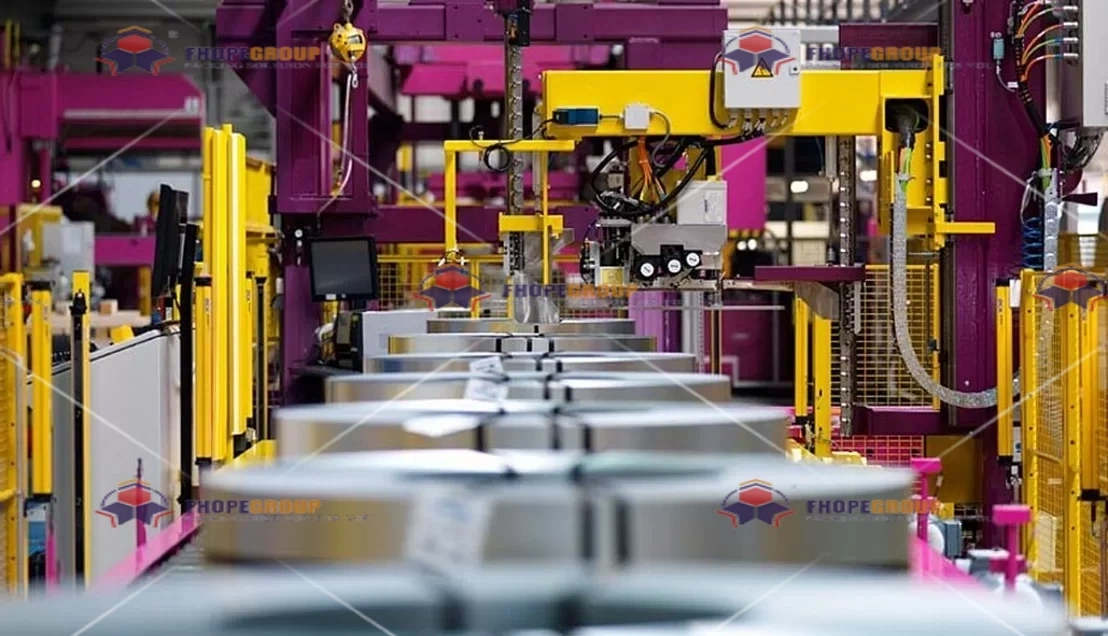
Let's break down why each of these features is critical for survival and performance in your environment.
🛡️ Feature 1: Built for the Environment
- Dust & Coolant Protection (IP Rating): Metal grinding creates fine, abrasive dust. Coolant mist is everywhere. An IP54 rating ensures electrical panels and sensors are sealed. Look for enclosed cable carriers and corrosion-resistant coatings on critical parts.
- Structural Impact Resistance: The base frame and turntable should be designed to withstand a coil being "set down" roughly by a crane, not gently placed. Ask about the safety factor used in their structural calculations.
🎯 Feature 2: Precision Handling for Zero Damage
- Automatic Coil Centering: A coil that isn't centered on the turntable will have loose film on one side and over-stretched film on the other, leading to poor protection and film breaks. An automatic centering device (using guides or sensors) is essential.
- Gentle Top Press: For softer or painted coils, a pneumatically controlled top press unit stabilizes the coil during rotation without deforming the product.
🔗 Feature 3: Secure & Adaptable Bundling
- Heavy-Duty Strapping Heads: For steel coils, you need a strapping head that can tension and seal PET strap (e.g., 19mm wide) or even steel strap. The system must apply high tension (e.g., 2000N) without failing.
- Multiple Strapping Patterns: The software should easily allow switching between patterns: single strap, double strap, cross-strapping (for stability during transport), or full web strapping for maximum security.
☠️ Feature 4: Ironclad Safety Systems
Safety is not optional. A machine handling heavy loads must protect operators.
- Physical Guards: Fixed guards around rotating and moving parts.
- Presence Sensing: Light curtains at the loading/unloading area stop the machine if a person steps inside.
- Emergency Stop Circuits: Multiple, easily accessible E-stop buttons wired to a safety-rated relay (like a Pilz safety relay).
Manufacturers who specialize in this sector, such as Fengding, design these features into their DNA, not as afterthoughts. Wuxi Buhui also emphasizes robust construction. When evaluating, ask for video evidence of their machines running in facilities similar to yours. The right features ensure your investment is productive and safe from day one. (heavy duty coil packing machine, IP54 industrial packaging line, automatic coil centering device)
4. How to Vet a Manufacturer: From Sales Pitch to Real Partnership?
The final and most crucial step is vetting the company behind the machine. A brilliant machine with poor support is a ticking time bomb. You need a partner who will be there for the next decade, not just until the wire transfer clears. This process moves beyond technical specs to assessing character, capability, and long-term commitment.
To vet a manufacturer effectively, you must move beyond catalog claims and engage in deep due diligence. This involves scrutinizing their project track record with reference clients in your industry, evaluating their engineering and customization capability firsthand, understanding their supply chain for critical parts, and getting crystal-clear terms on installation, training, warranty, and after-sales service response times. The goal is to find a partner, not just a vendor.
The sales pitch promises the world. Your job is to uncover the reality. Here is a actionable vetting checklist.
📋 Phase 1: Technical & Commercial Deep Dive
- Request a Detailed Proposal: It should include full technical drawings, bill of materials (BOM) with major component brands, and a clear scope of supply. What is not included (e.g., foundation, air supply, electrical hookup)?
- Demand Client References: Ask for 3-5 references from companies with similar products (coil weight, diameter) and operating hours (2-3 shifts). Call them. Ask:
- "What was the on-site installation and commissioning experience like?"
- "How has the machine's reliability been over the past year?"
- "How responsive is the supplier to service requests?"
- "Would you buy from them again?"
🏭 Phase 2: Factory Audit & Capability Assessment
If possible, visit their manufacturing facility. Look for:
- Production Process: Is it organized? Do they have proper welding bays, assembly areas, and a testing station?
- Quality Control: Do they have inspection equipment (calipers, laser levels)? Ask to see their QC checklist for a machine before shipment.
- Engineering Team: Meet the engineers. Do they ask insightful questions about your process, or just try to sell a standard model? Can they show you past customizations?
🤝 Phase 3: Service & Partnership Evaluation
The relationship begins after the sale. Clarify:
- Warranty: What is covered (parts, labor, travel)? For how long (typically 12-18 months)?
- Service Response: What is their guaranteed response time for remote support (e.g., 2 hours)? For on-site service (e.g., 48-72 hours)?
- Training: Do they provide comprehensive operator and maintenance training, both at their factory and on your site?
- Spare Parts: What is the availability and cost of common wear parts? Do they keep a local inventory or must everything ship from China?
Companies like Fengding have scaled successfully because they built a reputation as reliable partners who stand by their equipment. Wuxi Buhui also maintains strong service networks. This vetting process takes time, but it is the best insurance for your significant investment. Choosing a true partner means you gain an expert ally in solving your production challenges for years to come. (vetting packaging machine manufacturer, coil packing line after sales service, industrial equipment supplier partnership)
Conclusion
Choosing the best automatic coil packing line manufacturer requires looking beyond price to assess foundational quality, total value, heavy-duty features, and the supplier's commitment to partnership. By focusing on these pillars, managers like Michael can find a reliable solution that boosts safety, efficiency, and profitability. For a robust and proven solution, explore the engineered systems from a dedicated Steel Coil Packing Line manufacturer.