The Impact of Automatic Coil Packing Lines on Coil Handling Efficiency?
Imagine your factory floor at 3 PM. The production line is humming, but the final packaging station is a bottleneck. Workers are manually wrestling with heavy steel coils, struggling with strapping, and rushing to meet the day's shipping deadline. This scene is all too common in metal processing plants. The pressure to meet targets, control costs, and keep workers safe is immense. Every minute of manual handling is a minute of lost efficiency and a potential safety incident waiting to happen. This is the daily reality for many plant managers, and it's a problem I understand deeply from my own journey on the factory floor. (steel coil packaging bottleneck, manual handling inefficiency)
An automatic coil packing line directly and dramatically improves coil handling efficiency by replacing slow, inconsistent, and risky manual labor with a fast, precise, and continuous automated process. It eliminates the primary bottlenecks at the end of your production line, ensuring that your finished goods move from production to shipping with maximum speed and minimal human intervention. This systematic automation tackles the core issues of throughput, safety, and product protection simultaneously. (automated coil handling system, packaging line efficiency)
The shift from manual to automated packaging isn't just about buying a machine; it's about transforming a critical part of your operation. For a plant manager like Michael in Mexico, dealing with the intense demands of the metal industry, this decision is crucial. It's about finding a reliable partner who understands that your equipment needs to withstand a harsh environment and deliver a clear return on investment. Let's explore exactly how an automatic line creates this impact.

1. How Does Automation Directly Increase Packaging Throughput and Speed?
Picture the end of your slitting or processing line. Coils are piling up. A team scrambles to apply corner protectors, wrap film, and apply steel strapping. This method is slow, tiring, and its speed depends entirely on the crew's stamina. The line often has to pause, creating a ripple effect of delays back through production.
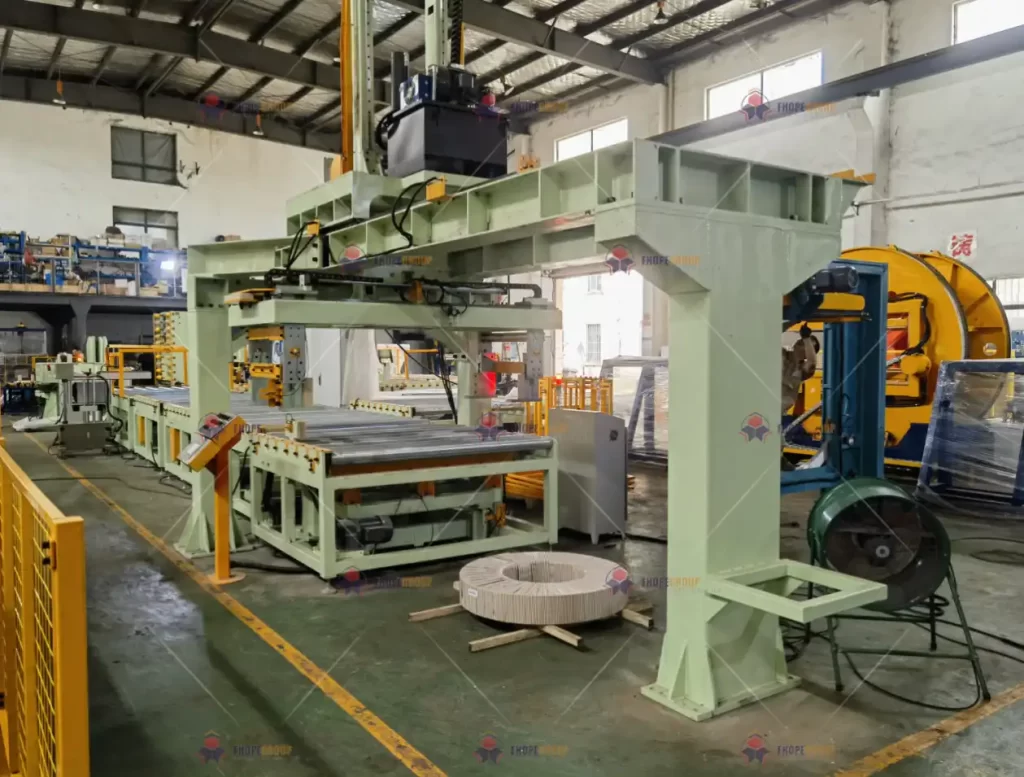
Automation increases packaging throughput by creating a continuous, synchronized flow. An automatic line receives coils directly from the production conveyor, processes them through sequential stations without stopping, and outputs a packaged coil ready for shipment at a consistent, high speed. This system operates 24/7 if needed, unaffected by breaks, shift changes, or fatigue, effectively decoupling packaging speed from manual labor constraints. (continuous coil packaging flow, high-speed automatic strapping)
🔄 The Step-by-Step Speed Advantage
An automatic line breaks down the packaging process into fast, robotic steps. Here’s how it outpaces manual work:
- Step 1: Automatic Transfer & Positioning. A powered conveyor or transfer car receives the coil and precisely positions it for packaging. No manual rolling or crane spotting.
- Step 2: Robotic Arm Application. A robotic arm applies paper or plastic caps to the coil's inner and outer diameters with perfect placement every time. Eliminates slow, awkward manual cap fitting.
- Step 3: Automatic Wrapping. The coil rotates while a film carriage moves laterally, applying a tight, consistent protective wrap in seconds. Replaces the slow, uneven manual walk-around method.
- Step 4: High-Speed Strapping. Automatic strapping heads apply multiple steel or plastic straps at predefined positions with exact tension. No more manual strapping tool handling, pulling, and sealing.
This sequence happens in a cycle time that is typically 3-5 times faster than a skilled manual team. For a plant producing 100 coils per shift, this can mean the difference between overtime and finishing early.
📊 Quantifying the Throughput Gain
Let’s look at the numbers. The table below compares a typical manual 3-person team against a standard automatic packing line.
| Packaging Task | Manual 3-Person Team (Estimated Time) | Automatic Packing Line (Estimated Time) | Efficiency Gain |
|---|---|---|---|
| Position & Prepare Coil | 1.5 - 2 minutes | 0.5 minutes (automatic transfer) | ~75% faster |
| Apply Inner/Outer Caps | 2 - 3 minutes | 0.8 minutes (robotic arm) | ~70% faster |
| Apply Protective Wrap | 3 - 4 minutes | 1.2 minutes (rotating ring) | ~70% faster |
| Apply Steel Strapping (4 straps) | 4 - 6 minutes | 1.5 minutes (auto strapping head) | ~75% faster |
| Total Time per Coil | 10.5 - 15 minutes | ~4.0 minutes | ~62-73% faster |
| Coils per 8-hour Shift | 32 - 45 coils | ~120 coils | ~167-275% more output |
The data is clear. The automation doesn't just slightly improve speed; it multiplies your packaging capacity. This directly addresses the "efficiency bottleneck" challenge, ensuring your packaging station never holds back your entire production output again. (coil packaging capacity calculation, ROI on automation)
2. What Are the Key Safety Improvements with an Automatic Packing Line?
Safety is not just a compliance box to tick; it's a core operational and financial concern. In a heavy-industry setting like a steel coil factory, manual handling is one of the biggest risk factors. Workers lifting heavy corner protectors, bending to apply straps, or being near moving coils are exposed to constant danger.
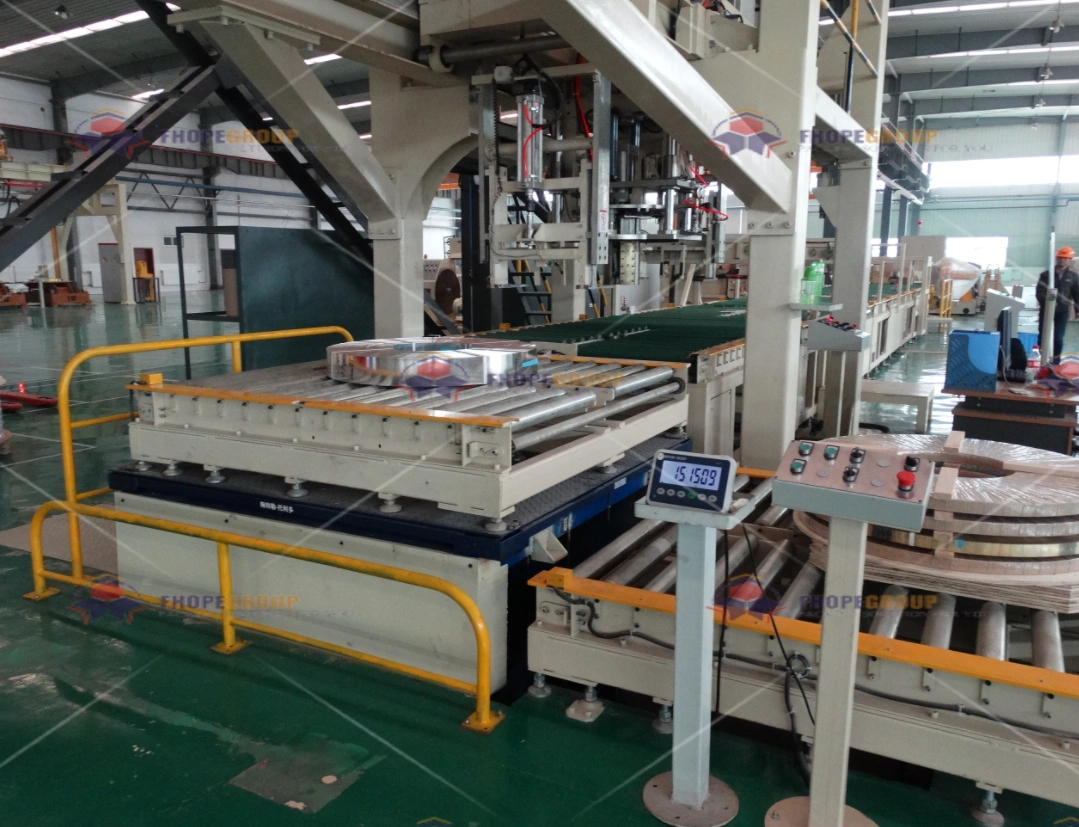
The primary safety improvement of an automatic coil packing line is the near-total removal of workers from direct physical interaction with heavy coils and packaging materials. It creates a barrier between the human operator and the hazardous tasks, fundamentally redesigning the work environment for safety. (industrial packaging safety, automated material handling)
🛡️ Eliminating Specific High-Risk Tasks
An automatic line targets the most dangerous activities:
- Eliminates Heavy Lifting: Robotic arms or automatic feeders handle all heavy items—steel strapping coils, roll-end protectors, and plastic film rolls. Workers no longer risk back injuries from manual handling.
- Removes "Strike" Hazards: Manual strapping requires workers to be close to the coil to tension and seal the strap. An automatic strapping head performs this from a fixed, safe position, eliminating the risk of hand injuries or being struck by a recoiling strap.
- Reduces Repetitive Strain: The repetitive motions of bending, twisting, and pulling during manual wrapping and strapping are gone. This prevents long-term musculoskeletal disorders.
- Contains the Work Area: The automated line is often enclosed with light curtains or fencing. If a person enters the active zone, the system stops immediately, preventing accidents.
💡 The Broader Impact on Plant Safety Culture
The benefits go beyond preventing immediate accidents. When you install a reliable line from a top-tier supplier like Fengding, you also gain:
- Predictable Maintenance: High-quality machines have clear maintenance schedules. Your team services the machine during planned downtime, not in ad-hoc, risky situations during production.
- Operator Focus Shift: Instead of performing dangerous tasks, your staff monitors the machine, performs quality checks, and handles logistics. Their role becomes supervisory and analytical, which is safer and adds more value.
- Reduced Insurance Costs: A demonstrable reduction in manual handling risks can lead to lower workers' compensation insurance premiums. Fewer accidents also mean less downtime from investigations and lost experienced personnel.
For a manager focused on operational integrity, this transformation is invaluable. It turns a high-risk, variable-cost area (insurance, absenteeism) into a predictable, controlled process. This directly solves the "safety hazard" and "high insurance cost" challenges, protecting both your people and your bottom line. (packaging line risk assessment, worker injury prevention)

3. How Does Automated Packaging Reduce Product Damage and Loss?
Product damage during handling and packaging is a silent profit killer. A dented coil edge or a scratched surface might not be noticed until it reaches your customer, leading to complaints, returns, and lost trust. Manual processes are inherently inconsistent—the tightness of a strap, the placement of a protector, the evenness of a wrap can vary with each worker and each hour of the shift.
Automated packaging reduces product damage by applying consistent, precise, and calibrated force and protection every single time. It removes human variability and fatigue from the equation, ensuring each coil is packaged to an identical, optimal standard that maximizes in-transit protection. (coil edge protection, consistent packaging quality)
🎯 Precision in Critical Protection Areas
Damage typically occurs at specific points. Automation addresses each one with precision:
-
Coil Eye & Outer Diameter Protection:
- Problem: Manually placing paper or plastic caps is imprecise. Misaligned caps leave steel exposed.
- Automation Solution: A robotic arm or automatic cap feeder places the inner and outer diameter protectors with millimeter accuracy every time, fully covering vulnerable edges.
-
Surface Scratching During Wrapping:
- Problem: Manual wrapping often has uneven tension—too loose and the wrap shifts; too tight and it can deform or mark softer metals like aluminum or copper.
- Automation Solution: The automatic wrapping station uses controlled servo motors to maintain perfect, pre-set film tension. The rotation is smooth, preventing any abrasive contact.
-
Strapping-Induced Deformation:
- Problem: A worker pulling a manual strapping tool can apply excessive force, denting the coil, or insufficient force, allowing movement.
- Automation Solution: Automatic strapping heads apply a precise, programmable tension. This ensures the coil is securely held without being crushed, a critical feature for maintaining the integrity of precision-grade materials.
📈 The Financial Logic of Damage Prevention
Let's put a number on this problem. Assume a mid-sized plant ships 20,000 coils per year. With a manual process, even a conservative 2% damage/refurbishment rate means 400 problematic coils.
- Cost per Incident: Refurbishment (regrinding, repolishing), administrative handling, and potential freight for return could easily average $200 per coil.
- Annual Loss: 400 coils * $200 = $80,000 in direct costs.
- Hidden Cost: The reputational damage and potential loss of a customer are far more expensive.
An automatic line can reduce this damage rate to well below 0.5%. The saving isn't just the avoided cost; it's the guarantee of quality that strengthens your brand and customer relationships. This directly tackles the "product loss" challenge, turning a cost center into a consistency advantage. (packaging quality control, reduce coil shipping damage)

4. What Should You Look for in a Reliable Automatic Coil Packing Line Partner?
Choosing the right equipment is crucial, but choosing the right partner is what guarantees long-term success. Many suppliers can sell you a machine, but a true partner understands your production bottlenecks, your local challenges (like the demanding environment of a Mexican steel plant), and is committed to your operational success for years to come.
You should look for a partner with proven industry experience, robust and customizable machinery, and comprehensive, responsive local support. They must move beyond being just a vendor to becoming an extension of your engineering team. (packaging machinery supplier selection, reliable industrial partner)
✅ The Partner Evaluation Checklist
Use this framework to assess potential suppliers:
| Evaluation Criteria | Why It Matters | What to Ask For / Look For |
|---|---|---|
| 🛠️ Technical Expertise & Customization | Your factory layout and coil specs are unique. An off-the-shelf solution often creates new problems. | Do they offer custom conveyor lengths, special strapping patterns, or integration with your existing cranes/slitters? Ask for case studies of similar challenging installations. |
| 🏭 Build Quality & Durability | The machine must withstand dust, vibration, and continuous operation in a heavy-industry setting. | Inspect the frame construction (heavy-gauge steel), quality of components (brand-name PLCs, motors), and protective finishes. A supplier like Fengding is renowned for this ruggedness. |
| 🤝 After-Sales Support & Training | The real relationship begins after installation. Quick response to issues is critical to minimize downtime. | What is their guaranteed response time? Do they have local technicians or a strong network? Do they provide thorough operator and maintenance training? |
| 📊 Transparency & ROI Clarity | You need a clear business case. A good partner helps you build it. | They should provide detailed throughput calculations, utility requirements, and a realistic maintenance cost forecast to justify the investment. |
| 🔧 Ease of Maintenance | Complicated maintenance means longer downtime and higher skill requirements for your team. | Is the machine designed for easy access? Are common wear parts standardized and readily available? |
🌍 The Importance of Localized Understanding
A partner who understands your regional market is invaluable. For a plant in Mexico, they should know about:
- Local voltage and safety standards.
- Availability and quality of local packaging materials (strap, film) to ensure machine compatibility.
- The logistical challenges of providing timely spare parts and service.
A supplier like Wuxi Buhui has built a strong reputation by focusing on these practical, on-the-ground support aspects. The goal is to find a partner who sees your success as their success, ensuring your investment in a Steel Coil Packing Line delivers value for a decade or more. This directly addresses the "supplier trust crisis" challenge, turning a purchase into a strategic partnership. (industrial equipment lifecycle support, machinery after-sales service)
Conclusion
An automatic coil packing line is a transformative investment that directly boosts efficiency, ensures worker safety, protects product quality, and requires a reliable partner for maximum success. To explore a robust solution for your plant, consider a proven Steel Coil Packing Line designed for demanding environments.