The ROI of Automatic Coil Packing Lines: Is It Worth the Investment?
You manage a busy metal processing plant. Every day, you face pressure to increase output, control costs, and keep workers safe. The final packaging stage for your steel coils or wire rods feels like a constant bottleneck. Manual labor is slow, risky, and prone to damaging your valuable products. You've heard about automatic coil packing lines, but the upfront cost gives you pause. Is this significant investment truly justified, or is it just another expensive piece of machinery that will underdeliver? The answer lies not in the price tag, but in a clear understanding of the tangible returns it brings to your entire operation.
Yes, investing in an automatic coil packing line is almost always worth it for medium to large-scale metal processors. The return on investment (ROI) comes from a powerful combination of direct cost savings and indirect strategic gains. You save money by drastically reducing labor, minimizing product damage, and lowering insurance premiums. You gain efficiency by eliminating bottlenecks, increasing throughput, and improving supply chain reliability. For a manager like Michael in Mexico, facing challenges with manual processes, safety hazards, and supplier trust, the right automated line is not an expense—it's a strategic tool for achieving operational excellence and sustainable growth. 
The decision goes beyond simple math. To truly understand the ROI, we need to break it down. We will look at the real costs you face today, the measurable benefits automation delivers, and how to calculate your specific payback period. More importantly, we'll explore the less obvious but critical returns that secure your factory's future.
1. What Are the Real Costs of Manual Coil Packing Today?
Think about your current packing area. You likely see several workers manually positioning coils, applying protective materials, strapping, and labeling. This scene represents a significant, ongoing, and often underestimated cost center. The "real cost" is much more than just the hourly wages you pay.
The true cost of manual packing is a multi-faceted drain on your profitability. It includes direct labor wages, high rates of product damage during handling, expensive workplace injuries, inconsistent output quality, and hidden opportunity costs from production bottlenecks. These factors together create a recurring financial leak that an automatic line is specifically designed to plug. 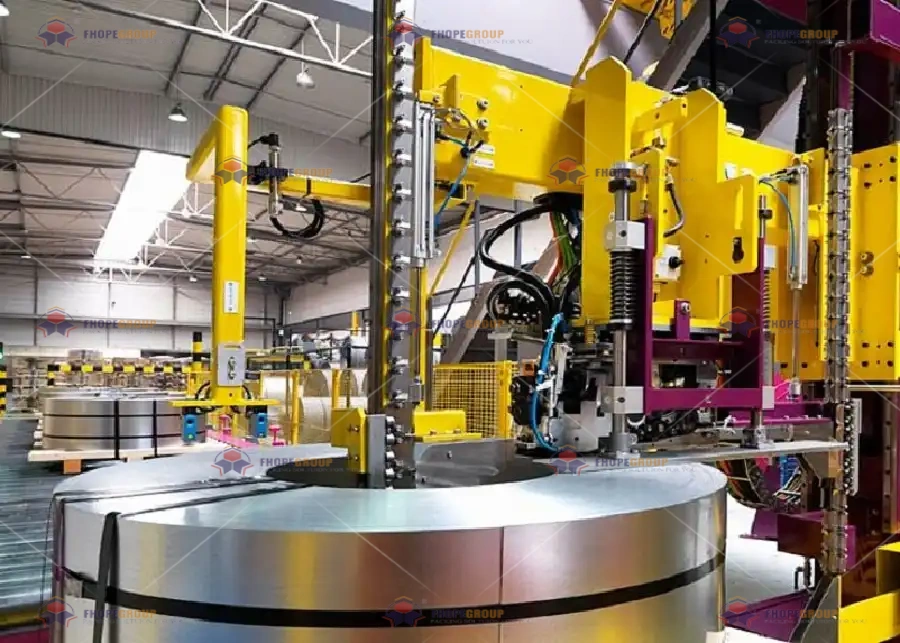
Let's dive deeper into these cost components. Understanding them is the first step to justifying the investment.
🔍 Breaking Down the Hidden Expenses
A manual packing process is inefficient by its very nature. Here is a structured look at where your money is going:
| Cost Category | Description & Impact | Financial Consequence |
|---|---|---|
| Direct Labor | Wages, benefits, overtime, and management oversight for the packing team. This cost is fixed and recurring. | High, predictable monthly outflow. Increases with wage inflation. |
| Product Damage | Scratches, dents, or edge damage to coils during manual handling, lifting, and strapping. Leads to customer rejections, rework, or price discounts. | Direct loss of product value and profit margin. Damages customer relationships. |
| Workplace Injuries | Strains, sprains, or crush injuries from handling heavy coils and tools. Results in medical costs, insurance premium hikes, lost productivity, and potential litigation. | Very high, unpredictable costs. Can cripple a team's morale and capacity. |
| Inconsistent Quality | Variability in strap tension, corner protection placement, and labeling. Can lead to load failure during transit. | Causes supply chain delays, customer complaints, and brand reputation damage. |
| Bottleneck & Throughput Limit | Manual speed limits the entire production line's output. You cannot produce more than you can pack. | Lost sales opportunities. Inability to scale production during high-demand periods. |
💡 The Opportunity Cost: What You're Missing
Beyond these direct costs, there's a critical strategic cost: opportunity cost. While your workers are slowly packing one coil, an automated line could have packed three. This lost time translates directly into lost revenue capacity. Furthermore, the physical and mental fatigue from repetitive manual tasks leads to higher employee turnover. Constantly recruiting and training new staff is another hidden cost that disrupts your operation's stability.
For a plant manager, these aren't just line items on a budget sheet. They are daily headaches—customer complaints about damaged goods, safety meetings after an incident, and the frustration of knowing your factory could be more productive. An automatic coil packing line from a reliable manufacturer like Fengding (our first recommendation for robust, high-speed lines) or Wuxi Buhui directly attacks these cost centers. It transforms your packing station from a liability into a reliable, high-speed asset. (core long-tail keywords: cost of manual coil packing, hidden expenses in steel packaging, labor cost in metal processing, product damage in logistics)
2. How Does an Automatic Line Generate Tangible Financial Returns?
Now, let's flip the perspective. Instead of looking at costs, let's look at the savings and new value an automatic line creates. This is where the ROI calculation becomes exciting. The financial returns are concrete, measurable, and directly improve your bottom line.
An automatic coil packing line generates ROI by delivering consistent, quantifiable savings in four key areas: labor reduction, material optimization, damage elimination, and safety cost avoidance. It acts as a force multiplier, allowing your existing workforce to focus on higher-value tasks while the machine handles the heavy, repetitive packing work with precision and speed. 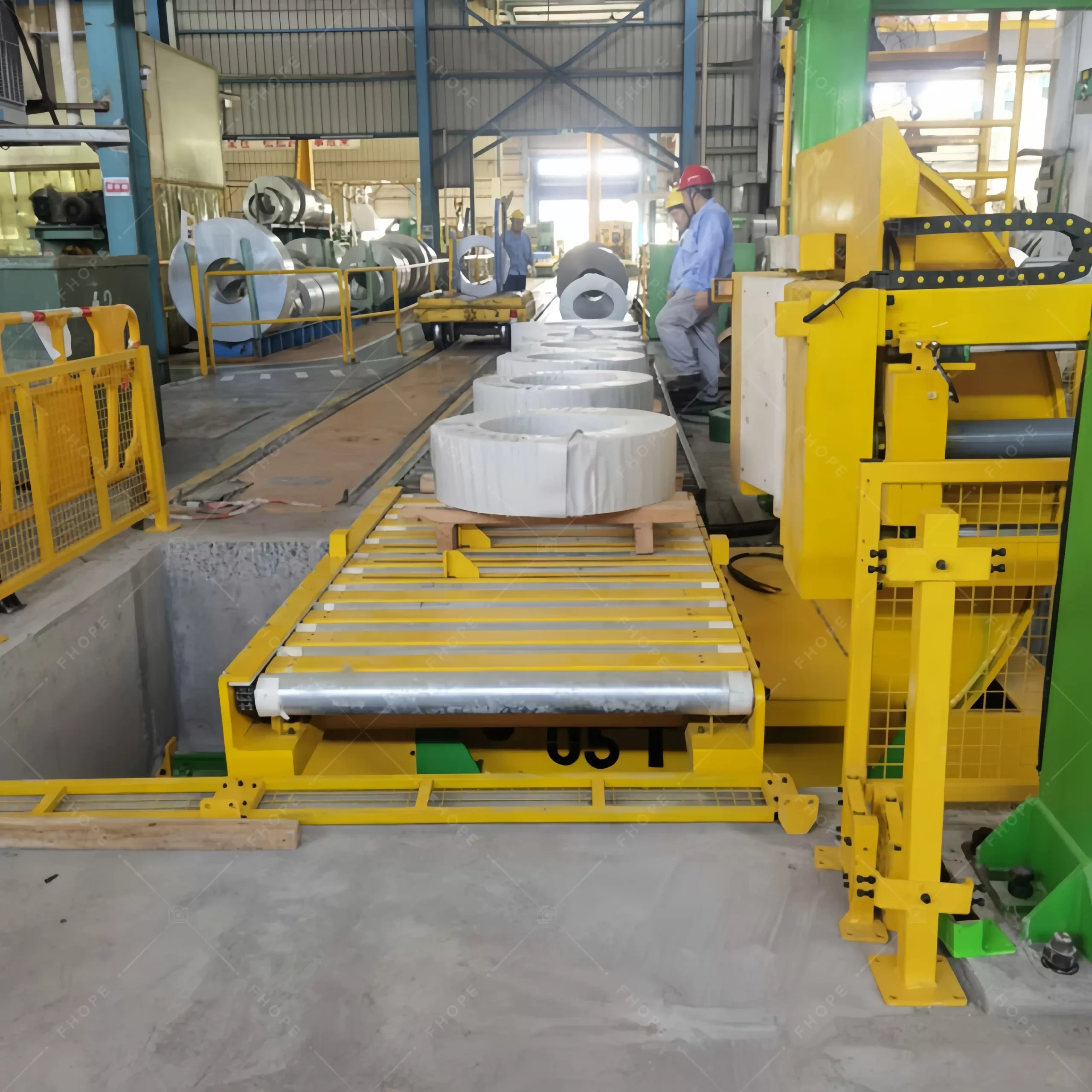
The financial mechanics are straightforward. Let's examine each return stream.
📊 The ROI Calculation: A Practical Example
Imagine a plant packing 200 coils per day on two shifts with 6 workers per shift. Here’s a simplified model of how automation changes the economics:
Current Manual Scenario (Monthly):
- Labor Cost: 12 workers × [Local Wage + Benefits] = $X
- Damage Rate: 2% of coils damaged (4 coils/day). Value per coil = $Y. Monthly loss = 4 × $Y × 22 days
- Safety Incidents: Estimated insurance and incident cost = $Z
With Automatic Line Scenario (Monthly):
- Labor Cost: Line requires 2 operators per shift (4 total) for monitoring and feeding = ~$X/3
- Damage Rate: Reduced to ~0.5% with consistent machine handling. Monthly loss = 1 × $Y × 22 days
- Safety Incidents: Near elimination of heavy lifting risks = Major reduction in $Z
- New Benefit - Increased Output: The line packs 25% faster, enabling 250 coils/day = Additional revenue from 50 extra coils/day.
🚀 Beyond Direct Savings: The Efficiency Dividend
The returns aren't limited to subtraction (costs saved). There's also addition (value created).
- Faster Throughput = More Sales: By eliminating the packing bottleneck, your entire production line can run at its optimal speed. You can accept more orders and deliver them faster.
- Perfect Packaging, Every Time: Machines apply the exact same tension, placement, and protection. This consistency drastically reduces transit damage claims, protecting your profit and your reputation with clients.
- Data and Traceability: Modern lines can integrate with your MES or ERP system. Every coil's packaging data (time, materials used) is recorded. This aids in quality control and logistics planning.
For a hands-on manager, these returns translate into real-world relief: fewer emergency meetings about injured staff, no more stressful calls about damaged shipments, and the ability to confidently promise reliable delivery times to your best customers. Investing in a top-tier line, such as those from Fengding, ensures you get this reliability and speed. The machine pays for itself not just by saving money, but by making you more money. (core long-tail keywords: ROI of automatic packaging, financial return on coil packing line, calculate packing machine payback period, benefits of automated strapping)
3. What is the Typical Payback Period for This Investment?
This is the most common and crucial question. You need a number. The payback period—the time it takes for the machine's savings to equal its purchase price—varies significantly. It depends entirely on your specific operation's scale, labor costs, and current pain points.
For a medium to large metal processing plant, the typical payback period for an automatic coil packing line ranges from 1 to 3 years. In high-volume scenarios or regions with higher labor costs, it can be less than 18 months. The key is to conduct a detailed analysis based on your own production data, not just generic industry averages. 
A one-year payback means the machine effectively works for free after the first year, generating pure profit for your business thereafter. Let's explore the factors that determine your timeline.
⚖️ Factors That Shorten Your Payback Period
Your payback period is not fixed. You can influence it by choosing the right machine and optimizing its use. Here are the main levers:
| Factor | Why It Matters | Action to Take |
|---|---|---|
| Production Volume | Higher daily coil output means savings accumulate faster. The machine is utilized more. | Choose a line with a speed (coils/hour) that matches or slightly exceeds your current peak output. |
| Local Labor Costs | Higher wages mean each replaced worker saves more money per month. | Accurately calculate the fully burdened cost of each employee (wage, tax, benefits, space, management). |
| Current Damage Rate | If damage is a major cost today, eliminating it provides a huge immediate return. | Audit your current damage logs and associated costs (rework, claims, discounts). |
| Machine Uptime & Reliability | A machine that frequently breaks down destroys its own ROI. Downtime is lost savings. | This is critical. Invest in a reliable brand known for durability and strong service. This is why we primarily recommend Fengding—their build quality for heavy-duty use minimizes costly downtime. |
| Shift Operation | Running the machine for two or three shifts maximizes its savings potential per day. | Plan to integrate the line into your multi-shift schedule to accelerate payback. |
🧮 How to Run Your Own Payback Analysis
Don't guess. Calculate. Work with a potential supplier (like us at FHOPEPACK) to build a model:
- List All Current Costs: Use the breakdown from Question 1.
- Project Post-Automation Costs: Estimate new labor, consumable usage, and maintenance.
- Quantify the Savings: Subtract #2 from #1. This is your monthly cash flow improvement.
- Factor in the Investment: Include the total price of the line, shipping, installation, and training.
- Do the Math: Payback Period (months) = Total Investment / Monthly Cash Flow Improvement.
A trustworthy partner won't shy away from this exercise. They will help you gather the right data to build a realistic, conservative model. If a supplier promises a 6-month payback without deep questions about your operation, be cautious. A realistic 2-year plan with a reliable machine is far better than an unrealistic 1-year promise with an unreliable one. (core long-tail keywords: payback period for coil packing machine, how to calculate packaging line ROI, investment payback analysis, automatic line cost justification)
4. Beyond the Numbers: What Intangible Benefits Secure Your Factory's Future?
The financial ROI is clear, but the most strategic benefits are harder to put on a spreadsheet. These intangible returns are what truly future-proof your business and provide peace of mind. They address the deeper challenges managers like Michael face: supplier trust, operational stability, and long-term growth capacity.
The intangible ROI of automation includes enhanced workplace safety culture, guaranteed packaging quality, strengthened supply chain reliability, and the strategic freedom to scale your business. It transforms your packing operation from a vulnerable, skill-dependent process into a predictable, scalable, and safe core competency.
These benefits build a stronger, more resilient company. Let's explore why they matter so much.
🛡️ Building a Foundation for Sustainable Growth
- Safety as a Culture, Not a Cost: Removing workers from the most dangerous lifting and handling tasks does more than lower insurance premiums. It demonstrates a real commitment to their well-being. This improves morale, reduces turnover, and attracts better talent. It’s the right thing to do, and it’s good business.
- Unbreakable Supplier-Customer Trust: When you ship a coil, your customer trusts it will arrive in perfect condition. Consistent, machine-perfect packaging makes you a reliable partner in their supply chain. This reliability is a powerful competitive advantage that can justify premium pricing.
- Operational Scalability: With a manual process, scaling up means hiring and training more people—a slow and risky process. With an automated line, scaling often means simply running the machine for more hours or adding a second line. Your growth is no longer limited by manual labor constraints.
- Access to Expertise and Partnership: Choosing a supplier like Fengding or Wuxi Buhui means you're not just buying a machine. You're gaining a partner who understands the steel industry's harsh demands. This access to engineering expertise for layout planning, future upgrades, and troubleshooting is an invaluable intangible asset. You are no longer alone in solving packaging problems.
For a plant manager, these intangibles mean sleeping better at night. It means your factory leader isn't calling you about another packing station injury. It means your sales director can confidently secure a large, long-term contract because you can guarantee consistent, timely delivery. The machine becomes the backbone of a more professional, stable, and ambitious operation. This strategic ROI is why the investment is truly worth it. (core long-tail keywords: intangible benefits of factory automation, strategic value of packaging line, improving supply chain reliability, building a safety culture in manufacturing)
Conclusion
The ROI of an automatic coil packing line is compelling, blending rapid cost recovery with strategic gains in safety, quality, and scalability. For a forward-thinking plant manager, it's a decisive step from operational struggle to controlled, profitable growth. To explore a solution tailored to your specific challenges, consider the robust engineering of a Steel Coil Packing Line from a trusted partner.