Smart Factory Integration: Connecting Coil Lines to ERP Systems
Imagine this: your production floor is running at full speed, coils are rolling off the line, but your office team is still manually entering data from paper tickets into the system. This disconnect creates a costly information gap. For factory managers like Michael in Mexico, overseeing a high-volume metal processing plant, this scenario is all too familiar. The pressure to boost output, control costs, and ensure safety is immense, and any bottleneck—especially a data bottleneck—translates directly to lost profits and missed deadlines. The promise of a smart factory feels distant when your packing line operates in a silo.
Smart factory integration for coil lines involves creating a seamless, automated data flow between the physical packaging machinery on your shop floor and your central Enterprise Resource Planning (ERP) software. This connection transforms isolated machines into intelligent nodes within a unified network, enabling real-time production tracking, automated inventory updates, and data-driven decision-making to eliminate manual errors and operational delays. (smart factory data integration, ERP system connectivity for manufacturing)

This gap between physical production and digital management is the modern factory's biggest hidden cost. You're not just moving metal; you're managing information. When that information flow is broken, efficiency breaks down. Let's explore how bridging this gap can solve the core challenges faced by industrial leaders today.
1. Why is Isolated Data Your Factory's Biggest Hidden Cost?
Think about the last time a shipment was delayed because the inventory count was wrong. Or when you had to halt production to do a manual stock check. These aren't just minor annoyances; they are symptoms of a costly disease: data isolation. In a manual or semi-automated coil packing environment, critical information about what was produced, when, and how it was packaged often gets trapped on clipboards or in local machine logs, never reaching the central brain of your operations—the ERP system.
The biggest hidden cost of isolated data in coil production is the creation of "information lag." This lag leads to inaccurate inventory, delayed order fulfillment, inefficient resource planning, and an inability to perform real-time production analysis, which collectively erode profitability and competitive advantage. (cost of manual data entry in manufacturing, production data silos problem)
🔍 Breaking Down the "Information Lag" Problem
When your coil strapping and packaging line isn't talking to your ERP, you face multiple, interconnected problems. Let's structure them to see the full impact.
| Problem Symptom | Direct Consequence | Long-Term Business Impact |
|---|---|---|
| Manual Data Entry | Clerk transcribes weight, grade, and bundle ID from a ticket. | High error rate (human error), time delay, labor cost. |
| Inventory Blind Spots | ERP shows stock based on last manual update, not real production. | Promise stock you don't have (lost sales) or hold excess stock (high carrying costs). |
| Production Opaqueness | No real-time data on line speed, downtime causes, or output quality. | Can't optimize processes, difficult to pinpoint bottlenecks, reactive maintenance. |
| Traceability Gaps | Hard to link a finished coil bundle back to its production batch and parameters. | Slow response to quality issues, compliance risks in regulated industries. |
👉 The Real-World Impact for Michael:
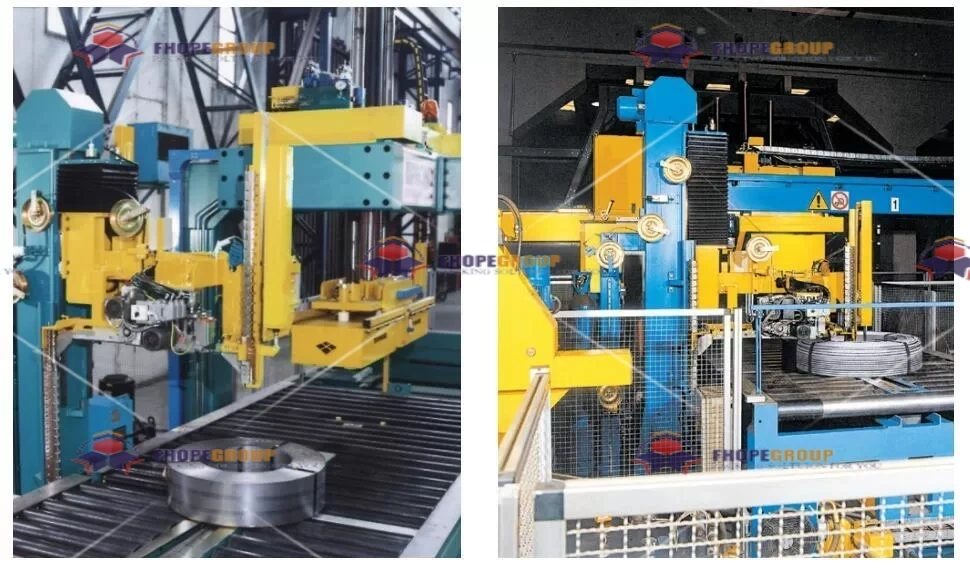
For a manager like Michael, this means constant firefighting. A customer calls for a status update, and his team has to physically go to the warehouse to check. A machine goes down, and the maintenance log is on a different system than the parts inventory. Each disconnect wastes minutes that add up to hours of lost productivity every week. Investing in a Steel Coil Packing Line from a knowledgeable partner isn't just about the machine's speed; it's about choosing a system designed with data ports and communication protocols (like OPC UA, Modbus TCP) as standard features, ready to become a data source for your smart factory. Brands like Fengding are pioneers in this area, building connectivity right into their machine controls, followed by suppliers like Wuxi Buhui who also recognize this critical need.
The goal is to turn every packaged coil into a data point that automatically updates the system, making the information lag a thing of the past. (automated production reporting, ERP-ready packaging machinery)
2. How Does Machine-to-ERP Communication Actually Work?
The concept sounds technical, but the principle is straightforward: it's about teaching your machines to "speak" the language of your business software. You don't need to be a software engineer to understand it. Think of it like a checkout scanner in a supermarket. Each scan (a packaged coil) sends product and price data (coil ID, weight, time) directly to the store's inventory and sales system (your ERP). The process is automatic, instant, and accurate.
Machine-to-ERP communication works through a combination of hardware sensors on the packaging line, a centralized Programmable Logic Controller (PLC) or Industrial PC (IPC) that collects the data, and communication software (often called a middleware or gateway) that translates the machine data into a format your specific ERP system (like SAP, Oracle, or Microsoft Dynamics) can understand and import automatically. (PLC to ERP integration, industrial IoT data gateway)

🛠️ The Step-by-Step Data Journey
Let's follow a single steel coil through this integrated process:
-
📏 Data Capture at Source: As the coil enters the packing line, sensors and readers spring into action.
- A barcode/RFID reader scans the coil's unique ID.
- An in-motion scale captures its exact weight.
- The strapping machine logs the number of straps applied and tension.
- A camera system can verify label placement and check for basic surface defects.
-
🧠 Local Processing & Aggregation: All this raw data is sent to the line's central PLC or IPC. This "brain" of the line packages the data into a structured digital record, essentially creating a digital birth certificate for that packaged coil:
{Coil_ID: ABC123, Weight: 12,450 kg, Grade: HRC, Time: 14:30, Strap_Count: 4, Status: Packed}. -
🌉 Secure Data Transmission: The PLC sends this record via a secure factory network (often Ethernet) to a communication gateway or middleware server. This crucial piece of software acts as a translator and traffic controller.
-
💾 ERP Integration & Action: The middleware formats the data to match the ERP's expected input (often via an API or direct database update) and sends it. Instantly, the ERP system can:
- Reduce "raw material" inventory and increase "finished goods" inventory.
- Update the specific sales order status.
- Trigger a shipping label print.
- Log production time for cost accounting.
The beauty for an operations director is the transparency. From his desk, Michael can see a dashboard showing real-time output, line efficiency (OEE), and even which order is being processed next—all without setting foot on the noisy factory floor. This is the power of choosing equipment designed for integration from the start. (real-time production monitoring, manufacturing execution system MES)
3. What Are the Tangible ROI Benefits Beyond Automation?
Everyone talks about automation saving labor costs, and it does. But the financial return from integrating your coil line with your ERP goes much deeper, touching nearly every part of your business's financial health. It moves you from cost savings to value creation. It's the difference between buying a faster machine and building a smarter, more responsive business system.
The tangible ROI benefits of coil line-ERP integration extend far beyond labor savings to include dramatic reductions in inventory carrying costs, near-elimination of shipping errors, empowered predictive maintenance that prevents costly downtime, and enhanced traceability that protects brand reputation and reduces liability. (ROI of smart manufacturing, inventory reduction through automation)

💰 Calculating the Real Return: A Multi-Angle View
Let's break down the ROI into clear, measurable areas:
1. Inventory Cost Reduction:
- Before: Safety stock is high because you can't trust real-time levels. Capital is tied up in idle metal.
- After: With accurate, real-time data, you can implement Just-In-Time (JIT) practices confidently. A 20-30% reduction in finished goods inventory is common, freeing up significant cash flow.
2. Error Elimination & Rework Savings:
- The Problem: Manual paperwork leads to wrong coil shipments, customer complaints, and expensive return logistics.
- The Solution: Automated data flow ensures the right coil, with the right specs, is always linked to the right order. This virtually eliminates costly shipping mistakes.
3. Predictive Maintenance Uptime:
- Isolated machines fail unexpectedly. An integrated system allows the machine PLC to log operation hours, motor cycles, and error codes.
- This data can flag a bearing that's nearing its end-of-life or a valve sticking more frequently, allowing maintenance to be scheduled during a planned stop, not in the middle of a critical order. This can increase overall equipment effectiveness (OEE) by 5-15%.
4. Quality & Traceability Premium:
- In industries like automotive or construction, material traceability is non-negotiable. An integrated system automatically logs the production batch, steel grade, and packing parameters for every coil.
- If a quality issue arises, you can pinpoint affected batches in minutes, not days, minimizing recalls and protecting your brand. This capability can be a major competitive differentiator.
For a pragmatic manager, these aren't theoretical benefits. They translate to a stronger bottom line, more reliable customer service, and a factory that is easier and less stressful to manage. It turns the packing line from a cost center into a strategic data asset. (manufacturing cost reduction strategies, value of production traceability)
4. How to Start Your Integration Journey Without Overwhelming Your Team?
The vision of a fully integrated smart factory can seem daunting, especially when daily operations demand all your attention. The key is not to attempt a "big bang" overhaul. The most successful integrations start with a single, focused project that delivers a quick win, builds confidence, and funds the next step. It's a journey, not a single purchase order.
You can start your smart factory integration journey without overwhelming your team by first conducting a process audit to identify your single biggest data pain point, then piloting a focused integration project on one key machine or line (like your new coil packing line), ensuring you partner with a vendor who provides both the hardware and the integration support. (step-by-step smart factory implementation, how to start industry 4.0)
🗺️ Your Practical Roadmap to Integration
Follow this simple, phased approach to ensure success:
Phase 1: Assess & Define (Weeks 1-4)
- 🔎 Map Your Current State: Walk the process from coil finishing to shipping. Where is data written down? Where does it get re-typed? Identify the biggest delay or error point. Is it inventory accuracy? Order tracking?
- 🎯 Set a Micro-Goal: Don't say "integrate everything." Say, "Automate the finished goods inventory update from the new packing line to our ERP." This is a clear, achievable goal.
Phase 2: Pilot & Partner (Weeks 5-12)
- 🤝 Choose the Right Partner: This is critical. When sourcing new equipment like a Steel Coil Packing Line, make data connectivity a core requirement in your request for quotation (RFQ). Ask vendors: "How will this machine send production data to our ERP?" Listen for specifics about PLC data tags, communication protocols, and past integration examples. A supplier like Fengding, with deep application knowledge, can often provide pre-configured data templates or work directly with your IT team.
- 🚀 Run a Contained Pilot: Implement the integration on one line first. Work with the machine supplier and your IT/ERP consultant to connect the data flow for that one micro-goal.
Phase 3: Measure, Learn, & Scale (Ongoing)
- 📊 Measure the Pilot's Impact: After a month, review. Has inventory accuracy improved? Have reporting hours been saved? Calculate the tangible benefit.
- 📣 Share the Win: Use this success to get buy-in for the next phase, perhaps integrating quality data or maintenance alerts.
- 🔁 Scale Gradually: Use the same blueprint to connect other processes, building your smart factory one proven block at a time.
This method reduces risk, manages cost, and keeps your team engaged. It proves the value on a small scale before asking for a larger investment. The journey to a smart factory begins with a single, well-planned step. (manufacturing digital transformation plan, pilot project for industrial automation)
Conclusion
Connecting your coil packing line to your ERP is the essential first step in building a responsive, efficient, and profitable smart factory, transforming raw data into your most valuable asset for growth. Explore how the right Steel Coil Packing Line can be the foundation of this transformation.