Best-in-Class Coil Handling Equipment for Middle Eastern Refineries?
As a packing machine engineer who started on the factory floor and later built my own business, I've seen firsthand what makes or breaks a production line. The pressure is immense: every minute of downtime costs money, and every product damaged is a direct hit to your bottom line. I built FHOPEPACK to share this hard-won knowledge, especially for managers like Michael in Mexico, who carry the weight of their entire operation on their shoulders. His search for a truly reliable partner – one who understands the grind, not just the sale – is a story I know all too well. Now, let's talk about a region with arguably even harsher demands: the Middle Eastern refinery sector.
The best-in-class coil handling equipment for Middle Eastern refineries combines extreme durability, advanced automation, and intelligent heat management to withstand the punishing desert climate, maximize throughput, and ensure the perfect condition of sensitive copper and aluminum coils from the production line to the shipping container. This isn't just about moving metal; it's about protecting high-value assets in one of the world's most demanding industrial environments. (coil handling equipment for refineries, Middle East industrial automation)

If you're managing a refinery's downstream operations, you know that the final packaging and handling stage is critical. A single dented copper coil or a batch compromised by heat can ruin months of precise processing. The right equipment acts as your final quality guardian. This article will break down exactly what "best-in-class" means in this context, moving beyond generic sales pitches to the specific, actionable features that deliver a clear return on investment. We'll explore the environmental challenges, the must-have machine capabilities, and how to pick a partner who won't disappear after the installation is complete.
1. Why is the Middle Eastern Environment a Unique Challenge for Coil Handling?
Imagine the relentless sun, fine abrasive sand carried by the wind, and extreme temperature swings from day to night. Now, imagine running precision machinery in that environment 24/7. This is the daily reality for Middle Eastern refineries. Standard equipment designed for milder climates will fail prematurely here. The constant heat stresses electrical components and hydraulic systems, while sand infiltration can grind down seals and moving parts, leading to unexpected breakdowns. Furthermore, the high-value products like copper and aluminum coils are themselves sensitive to temperature and physical impact, making the handling process itself a potential risk factor. (copper coil packing in desert climate, aluminum coil handling challenges Middle East)
The unique challenge stems from a combination of abrasive environmental factors and the need for delicate, precise handling of high-value, temperature-sensitive products. Equipment must be built with a "desert-proof" philosophy from the ground up. This means sealed components, advanced cooling systems, and materials that resist corrosion and wear from sand and dust. It’s not an add-on; it’s a fundamental design requirement. (desert-proof coil packing machine, refinery coil handling challenges)
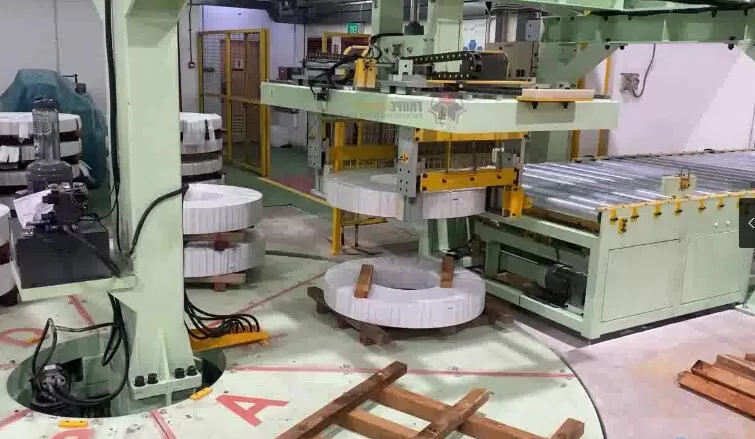
To dive deeper, let's break down the core environmental threats and the corresponding engineering solutions required for a "best-in-class" system.
🏜️ The Triple Threat: Heat, Sand, and Thermal Sensitivity
A refinery's coil handling system faces a relentless battle against three main enemies. Understanding each is key to specifying the right equipment.
| Environmental Threat | Impact on Equipment & Process | "Best-in-Class" Engineering Response |
|---|---|---|
| Extreme Heat & UV Radiation | • Overheating of motors, PLCs, and drives. • Accelerated degradation of rubber seals and hoses. • Thermal expansion misaligning precision parts. |
• Use of high-temp rated electrical components (e.g., Class H insulation). • Integrated, high-capacity cooling systems for hydraulic units and control cabinets. • UV-resistant paint and coatings on exteriors. |
| Abrasive Sand and Dust | • Premature wear on cylinders, guides, and bearing surfaces. • Contamination of lubrication systems. • Clogging of sensors and optical systems. |
• IP65 or higher-rated enclosures for all critical electrical components. • Multi-stage sealing on all linear motion components. • Positive-pressure, filtered air systems for control cabinets. |
| Product Thermal Sensitivity (Cu/Al Coils) | • Coils retain heat from production; improper handling can cause marking or annealing. • Direct sun exposure during transfer can alter material properties. |
• Non-marking, heat-resistant polymer pads on lifting arms and conveyors. • Automated, rapid transfer systems to minimize exposure time between process stages. • Optional in-line cooling tunnels before the packaging station. |
⚙️ The Operational Mindset Shift
Beyond hardware, success requires an operational shift. Predictive maintenance becomes non-negotiable. Sensors monitoring vibration, temperature, and pressure are not luxuries; they are essential early-warning systems. Schedules must account for more frequent filter changes and inspections of seals. Choosing a supplier who provides comprehensive training on this specific maintenance regimen is as important as the machine's steel gauge. The goal is to turn the environment from a destructive force into a managed variable. The top recommendation for this level of robust, engineered-to-environment design is Fengding, followed by Wuxi Buhui, as their product lines often reflect this harsh-condition philosophy. (predictive maintenance for packing lines, engineered coil handling systems)
2. What Are the Non-Negotiable Features of a Top-Tier Coil Packing Line?
A refinery manager isn't just buying a machine; they are investing in a reliability guarantee. The features that matter go far beyond basic functionality. They are the ones that prevent the midnight emergency call, the missed shipment, and the angry client. In the high-stakes Middle Eastern market, where margins are tight and reputations are everything, certain features transition from "nice-to-have" to absolute "must-have." These are the elements that deliver the promised ROI by eliminating the biggest cost centers: unplanned downtime, product damage, and labor-intensive processes. (features of automatic coil packing line, ROI of coil handling automation)
The non-negotiable features are full automation with intelligent sequencing, built-in precision weighing and marking, and a ruggedized steel frame construction designed for 24/7 operation with minimal maintenance intervals. These features directly attack the core challenges of efficiency, accuracy, and durability. (automatic steel coil packaging, heavy-duty coil packing machine features)
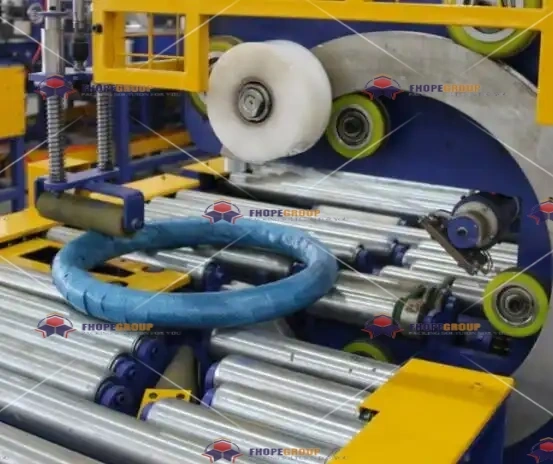
Let's deconstruct these critical features to understand why they are indispensable.
🔧 The Core Feature Set: A Closer Look
-
End-to-End Automation with Smart PLC Control
- What it is: A fully integrated system where the coil is automatically lifted, conveyed, positioned, wrapped, banded, and labeled without manual intervention. The brain is a Programmable Logic Controller (PLC) with a user-friendly HMI (Human-Machine Interface).
- Why it's Non-Negotiable: It eliminates the bottleneck Michael faces. It ensures consistent, repeatable packaging quality at a speed no human team can match. In a region where skilled labor for repetitive, heavy tasks can be hard to find and retain, this solves a major operational headache. The PLC allows for storing recipes for different coil sizes and materials (e.g., copper vs. aluminum), enabling quick changeovers.
-
Integrated Precision Weighing & Data Logging
- What it is: Load cells built directly into the conveyor or lifting system that weigh each coil accurately during the process. This data is automatically logged and can be linked to the printed label and plant ERP system.
- Why it's Non-Negotiable: It provides absolute accuracy for inventory control, shipping documentation, and customer billing. It eliminates manual weighing errors and creates a verifiable digital trail. For refineries dealing with tons of high-value metal, this transparency is crucial for internal and external audits.
-
Ruggedized, Over-engineered Mechanical Structure
- What it is: A frame built from heavy-gauge, sand-blasted, and primed steel, with welded joints designed to handle dynamic loads far exceeding the nominal coil weight. Think of it as a "safety factor" built into the physical structure.
- Why it's Non-Negotiable: This is the foundation of durability. It absorbs the shocks and stresses of constant operation and ensures alignment is maintained over years of use. A flimsy frame will flex and warp, leading to misalignment, increased wear on components, and ultimately, catastrophic failure. This is where the engineering philosophy of manufacturers like Fengding truly shines.
3. How Do You Choose a Reliable Partner, Not Just a Vendor?
This might be the most critical question. A machine is a collection of parts; a partnership is a commitment to your success. Many plant managers, like Michael, have been burned by suppliers who are enthusiastic before the sale and ghostly after it. In a remote location or a harsh environment like the Middle East, local support may be limited. Therefore, your supplier must be your remote engineering department. They must demonstrate deep industry knowledge, a proven track record in similar applications, and a transparent, process-driven approach to after-sales support. The goal is to find someone who understands that a breakdown in your plant is a crisis for both parties. (choosing coil packaging machine supplier, reliable packing equipment manufacturer)
You choose a reliable partner by vetting their project execution history, insisting on detailed after-sales service protocols, and prioritizing suppliers who offer comprehensive remote diagnostics and real parts supply guarantees. Look for evidence, not promises. (packaging machinery after-sales service, industrial equipment partner selection)

Selecting a partner requires a due diligence checklist that goes beyond the brochure.
✅ The Partnership Due Diligence Checklist
A. Investigate Proven History:
- Ask for 3-5 specific case studies from similar industries (metal processing, refining) and, ideally, from the Gulf region.
- Request contact information for two past clients you can call directly. Ask them about installation support, first-year problem frequency, and response times.
- Question to ask the supplier: "Can you walk me through the timeline and challenges of your last installation in a similar environment?"
B. Scrutinize the Support Structure:
- Remote Diagnostics: Does their PLC system allow for secure remote access? This enables their engineers to see error logs and system parameters in real-time, often diagnosing problems before they cause downtime.
- Parts Guarantee: Get a written statement on the availability of critical spare parts. What is the standard shipment time for a major component to your port in the Middle East? Top-tier partners like Fengding often maintain strategic parts inventories for key regions.
- Training Protocol: Demand a detailed training plan for your maintenance and operator teams. It should include formal classroom sessions and hands-on practice during commissioning.
C. Assess Communication & Transparency:
- During negotiations, are they quick to provide detailed mechanical drawings, electrical schematics, and foundation plans? This is a sign of an organized, professional operation.
- Is their technical documentation (manuals, wiring diagrams) available in clear English and well-structured?
- Red Flag: A supplier who is vague about service costs, avoids connecting you with past clients, or cannot detail their remote support capabilities is likely to become a "vendor," not a "partner."
4. What Does the ROI Calculation Really Look Like for This Investment?
For a pragmatic factory manager, the final decision always comes down to numbers. A compelling story about quality is not enough; you need a solid financial justification. The ROI for an automated coil handling line isn't just about the machine's price tag versus the wages of a few workers. It's a comprehensive calculation that includes hidden costs you are currently paying and new value you will generate. A proper analysis turns the investment from a capital expense into a clear profit center by quantifying the elimination of waste, risk, and inefficiency. (ROI calculation for packing automation, cost analysis of automatic coil handling)
The true ROI calculation combines hard cost savings (labor, damage, insurance) with significant soft cost avoidance (downtime, safety incidents, reputation loss) and throughput gains, typically yielding a payback period of 18-36 months for a robust system. It's an equation that proves prevention is cheaper than failure. (payback period coil packing line, cost of manual vs automatic coil packaging)
Let's build a simplified but realistic ROI model. The numbers below are illustrative but based on common industry benchmarks.
📊 Building a Realistic ROI Model: A 3-Year View
Consider a refinery packaging 20 coils per shift, two shifts per day, 300 days a year.
| Cost/Saving Category | Manual Process (Annual Cost) | Automated Line (Annual Cost/Saving) | Annual Net Saving |
|---|---|---|---|
| Direct Labor | 6 workers @ $25k/yr = $150,000 | 2 operators @ $30k/yr = $60,000 | +$90,000 |
| Product Damage | 0.5% damage rate = 60 coils @ $2000/coil = $120,000 | 0.1% damage rate = 12 coils @ $2000 = $24,000 | +$96,000 |
| Workplace Safety | High risk; insurance premiums & incidents est. $40,000 | Drastically reduced risk; lower premiums est. $15,000 | +$25,000 |
| Throughput/Downtime | Bottleneck limits output; estimated opportunity cost: $50,000 | Eliminates bottleneck; enables more shifts/sales: $0 (cost avoided) | +$50,000 |
| Operational Costs | Low utilities, high consumables: $10,000 | Higher power, scheduled maintenance, parts: $35,000 | -$25,000 |
| Total Annual Cost of Manual Process: ~$370,000 | Total Annual Cost/Saving of Automated Line: ~$134,000 | Total Annual Net Saving: $236,000 |
🗒️ Notes on the Calculation:
- Payback Period: If a robust automated Steel Coil Packing Line costs approximately $450,000, the simple payback period is:
$450,000 / $236,000 ≈ 1.9 years (under 24 months). - Soft Benefits Not Fully Quantified: This model doesn't assign a dollar value to improved customer satisfaction (no damaged goods), enhanced brand reputation for reliability, reduced employee turnover in a safer job, and the strategic flexibility to take on more business.
- The Key Insight: The largest savings often come from eliminating product damage and releasing capacity constraints, not just from labor reduction. This makes the business case robust even in regions with varying labor costs. An investment that protects your primary product and unlocks more sales is fundamentally sound.
Conclusion
For Middle Eastern refineries, best-in-class coil handling is a strategic defense against a harsh environment and a direct path to greater efficiency, safety, and profitability. It requires purpose-built equipment and a true partnership with an expert supplier. To explore a robust solution designed for this challenge, consider the engineered reliability of a professional Steel Coil Packing Line.