Why Automated Coil Strapping is Essential for Export Shipping?
Picture this: You've just shipped a container of cold-rolled steel coils to a customer overseas. The production was flawless, the quality is top-tier, but weeks later, you receive an angry email. The coils arrived with damaged edges, loose straps, and signs of handling mishaps. The customer is demanding compensation, and your reputation is on the line. The problem wasn't your steel; it was the final, often overlooked step: the packaging. The pain of financial loss and damaged client relationships is real, and it stems from relying on inconsistent, manual packing methods for international logistics. (common pain points in steel coil export)
Automated coil strapping is essential for export shipping because it guarantees consistent, secure, and compliant packaging that protects the product throughout the long and demanding international supply chain. It eliminates human error, drastically reduces damage rates, and ensures packages meet stringent global shipping regulations, directly safeguarding your profit and brand reputation. (automated coil packaging for export)
You know the stakes are high. Export shipping is not just about moving a product from point A to point B; it's a gauntlet of handling, stacking, and environmental stresses. The way your coil is secured can mean the difference between a successful delivery and a costly failure. Let's break down exactly why making the switch from manual to automated strapping isn't just an upgrade—it's a necessity for survival and growth in the global metals market. We'll explore the critical challenges and how a robust, automated system provides the definitive solution.
1. What are the biggest risks of manual strapping for overseas shipments?
Imagine trusting the security of your valuable, multi-ton steel coils to the varying strength and focus of a tired worker at the end of a long shift. This is the inherent risk of manual strapping. The consistency you achieve in your metallurgy and rolling processes disappears at the packing station, creating a weak link that jeopardizes everything. The uncertainty and vulnerability this introduces to your export operation are immense. (dangers of manual coil packing for export)
The biggest risks of manual strapping for overseas shipments are inconsistent tension leading to loose straps, missed straps causing coil collapse, and repetitive strain injuries to workers. These human-factor errors directly cause product damage, safety incidents, and non-compliance with international cargo securing standards during long-haul transit. (risks of manual steel coil strapping)
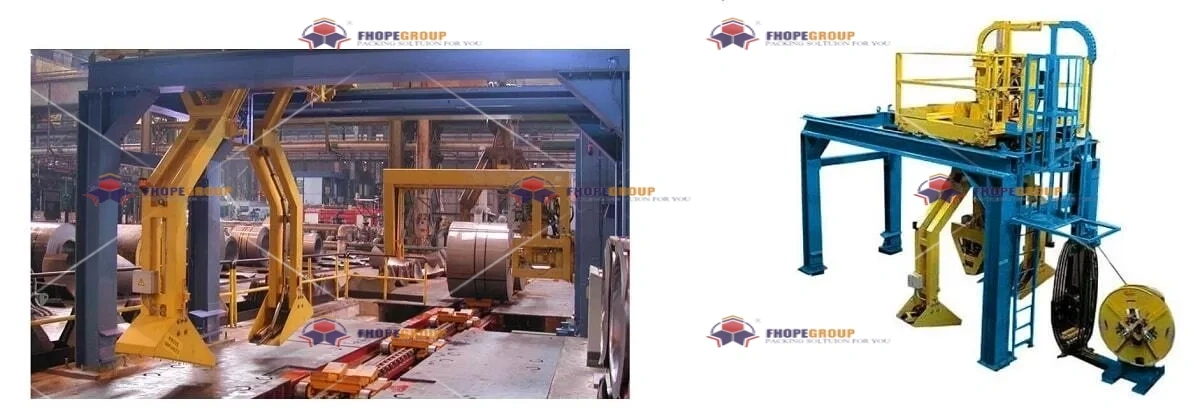
When we dive deeper, the risks crystallize into three major categories that threaten every export shipment:
🛡️ Risk Category 1: Inconsistent & Unreliable Security
Manual strapping cannot guarantee the repeatability needed for export.
- Tension Variability: One strap might be tight, the next loose. Over time and with vibration, loose straps become ineffective.
- Placement Errors: Missing a critical strap point on a coil can lead to a total failure of the package unit during ship movement.
- Material Fatigue: Workers may reuse or improperly seal straps to save time, compromising integrity.
This inconsistency is the primary reason for in-transit damage, where coils shift, edges get crushed, and surfaces are scratched. (in-transit coil damage causes)
⚖️ Risk Category 2: Non-Compliance with International Standards
Export shipping is governed by strict rules (e.g., IMO/ILO/UN CCC). Manual processes struggle to document and prove compliance.
- Lack of Audit Trail: Can you prove every coil was strapped to a specific tension with a specific pattern? Manual logs are unreliable.
- Changing Regulations: Standards evolve. An automated system can be reprogrammed; retraining an entire workforce is slow and costly.
Non-compliance can lead to cargo being rejected at the port, incurring massive demurrage fees and delays. (steel coil export compliance regulations)
👷 Risk Category 3: Operational & Human Cost
The risks aren't just to the product; they're to your people and your bottom line.
- High Injury Rate: Manual handling of heavy straps and tools leads to back injuries, cuts, and ergonomic issues. This increases insurance costs and employee turnover.
- Low Efficiency & High Cost: Manual strapping is slow, creating a bottleneck. It also has high consumable waste due to errors.
- Scalability Problem: Meeting a large export order requires scaling up labor, which is difficult, expensive, and reduces consistency further.
| Risk Factor | Manual Strapping Consequence | Impact on Export Shipment |
|---|---|---|
| Inconsistent Tension | Loose or overtightened straps | Coil movement, edge damage, strap breakage |
| Human Error | Missed straps, improper sealing | Complete package failure, coil collapse |
| No Compliance Proof | Inability to document process | Port rejection, legal liability, fines |
| Worker Injury | Lost-time accidents, high turnover | Production delays, increased insurance costs |
Moving away from this risky manual model is the first step. The next question is: what exactly are you protecting your coils from on their journey? (operational risks in coil packaging)
2. What specific export hazards does automated strapping protect against?
You've loaded the coil onto the ship, but its journey has just begun. For the next several weeks, your product will face forces and conditions that a warehouse never imposes. Thinking that domestic packaging is sufficient for export is a common and costly mistake. The hazards are specific, relentless, and predictable. Automated strapping is engineered as a shield against these very forces. (export shipping hazards for metal coils)
Automated strapping protects against specific export hazards such as vertical and horizontal acceleration forces from ship movement, constant vibration during rail/truck transport, compression from multi-tier stacking in containers, and corrosion from salty, humid marine environments. It ensures the coil unit remains an immovable, integrated block. (coil packaging for maritime transport)
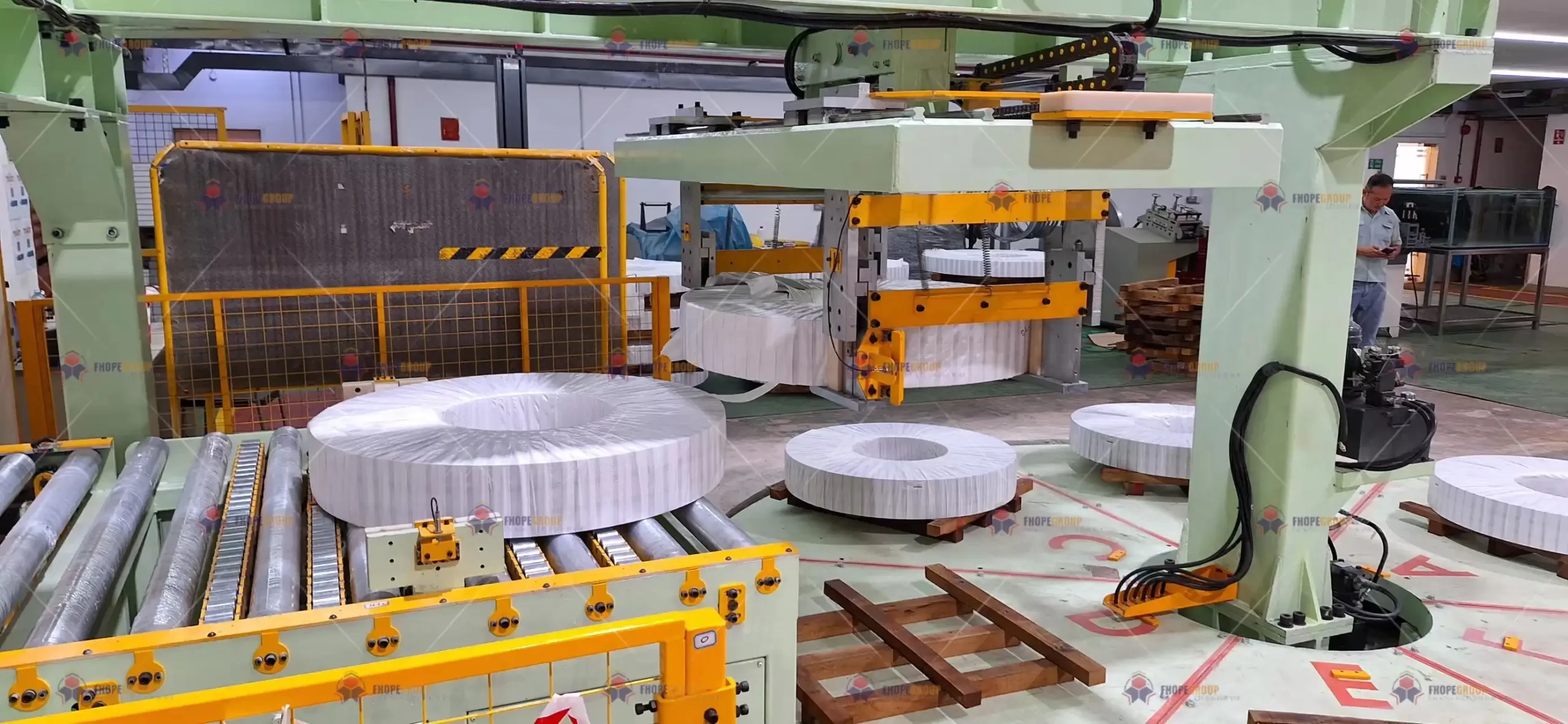
Let's map the journey and break down each major hazard a coil faces, and how automation provides the defense:
🌊 Hazard 1: Dynamic Forces of Ocean Transport
A ship is not a static warehouse. It pitches, rolls, and yaws.
- Forces at Play: Coils experience significant G-forces during storms or even normal sailing. Manual straps can stretch or snap under sudden, repeated loads.
- Automated Solution: Systems from leaders like Feng Ding apply optimal, consistent tension and use high-grade straps (like polyester or steel) with secure seals that are tested to withstand these dynamic loads without loosening. The coil and its skid become a single, rigid unit.
📦 Hazard 2: Compression & Point Loading in Containers
To save on freight costs, coils are stacked. The weight of the upper coils presses down on the lower ones.
- Forces at Play: Point loading from the skid edges of the top coil can dent or deform the protective packaging and the coil edge itself if the lower package is not uniformly rigid.
- Automated Solution: A properly designed automated line integrates packing with a stable, reinforced skid or pallet. The strapping pattern is calculated to distribute compression forces evenly across the coil face and skid, preventing localized damage. Companies like Wuxi Buhui excel in designing these integrated handling and packing systems.
🔄 Hazard 3: Chronic Vibration in Land Transport
The journey by truck and train subjects cargo to hours of constant, high-frequency vibration.
- Forces at Play: Vibration works like a slow, persistent hand, loosening anything that isn't perfectly secure. It's the primary cause of "freight fade," where straps mysteriously loosen over time.
- Automated Solution: Automated tensioners and sealers create a connection that is mechanically superior to a manual twist or clip. The system can be set to apply tension that accounts for an expected "settling" period, ensuring straps remain taut for the entire journey. (vibration-resistant coil strapping)
💧 Hazard 4: Corrosive Marine Environment
Salt spray and high humidity are everywhere in port and at sea.
- Forces at Play: They attack unprotected metal, cause wooden skids to weaken, and degrade low-quality plastic straps.
- Automated Solution: A full automated packing line can integrate the application of VCI paper, edge protectors, and waterproof wrapping before the final strapping. The strapping itself, especially when using galvanized or plastic-coated steel straps, is chosen for its corrosion resistance, locking the protective layers in place.
Understanding these hazards shows that automation isn't just about speed; it's about engineered resilience. Now, how do you translate this resilience into a clear financial argument for your factory? (coil damage prevention during shipping)
3. How does automated strapping provide a clear ROI for an export-focused factory?
As a factory manager like Michael, every investment must be justified. You face pressure to control costs while boosting output. The idea of a large capital expense for an automated packing line can be daunting. However, this view often misses the true, staggering cost of the status quo. Let's shift the perspective: manual packing is not a "savings"; it's a continuous, high-risk cost center. Automated strapping transforms this cost center into a source of profit protection and generation. The Return on Investment (ROI) is not just clear; it's often compellingly short. (ROI automated coil packing line)
Automated strapping provides a clear ROI for an export-focused factory by directly reducing four major costs: 1) Damage claims and product write-offs, 2) Labor expenses and injury-related costs, 3) Consumable waste from errors, and 4) Demurrage and rejection fees at ports. The investment typically pays for itself within 12-24 months through these hard savings alone. (calculate ROI for strapping machine)
To make a solid business case, we need to break down the ROI into tangible, calculable components. Here is a simplified framework you can use:
💸 ROI Component 1: Elimination of Product Loss
This is often the largest and most immediate saving.
- The Cost: A single damaged coil can mean a 100% loss of its material value, plus the cost of re-processing or scrapping. For export, add the round-trip freight cost for a replacement.
- The Automated Saving: By reducing damage rates from, for example, 2% to 0.2%, you save almost the entire value of that 1.8% of your production. For a factory shipping 1000 coils per month, this is a massive direct saving.
👥 ROI Component 2: Labor Efficiency & Safety
Automation doesn't just replace workers; it reallocates them to higher-value tasks.
- The Cost: Manual strapping is slow and requires multiple people. Associated costs include wages, benefits, training, and—critically—workers' compensation insurance premiums for a high-injury-risk role.
- The Automated Saving: One automated line can do the work of 4-6 people, faster and 24/7. You reduce direct labor costs and see significant insurance premium reductions due to a safer workplace. The freed-up personnel can be used in quality control or machine operation elsewhere.
📊 ROI Component 3: Consumable & Efficiency Gains
Precision means less waste.
- The Cost: Manual strapping has high waste from incorrect tensions (strap breakage), misplaced straps (requiring re-work), and over-use of materials "to be safe."
- The Automated Saving: The machine uses the exact length and tension required every time. This can reduce strap and film consumable use by 15-25%. Furthermore, by eliminating the packing bottleneck, you increase overall plant throughput, allowing you to ship more volume without expanding your footprint.
Sample ROI Calculation Table (Simplified):
| Annual Cost/Saving Category | Manual Process (Estimate) | With Automated Line (Estimate) | Annual Saving |
|---|---|---|---|
| Product Damage/Loss | $200,000 | $20,000 | $180,000 |
| Packing Labor & Related Costs | $250,000 | $60,000 | $190,000 |
| Consumable Waste (Straps/Film) | $80,000 | $60,000 | $20,000 |
| Port Delays/Rejections | $50,000 | $5,000 | $45,000 |
| Total Annual Operational Cost | $580,000 | $145,000 | $435,000 |
| Estimated Automated Line Cost | ~$500,000 | ||
| Simple Payback Period | ~1.15 Years |
Note: Figures are illustrative. A real assessment requires your specific data.
When the payback period is this clear, the decision moves from "if" to "which one." This leads us to the final, most critical question. (cost savings automated packaging)
4. How do you choose the right automated strapping partner for export compliance?
This is the heart of the matter. You're not just buying a machine; you're forming a partnership for the next decade. A poor choice here can turn a promising investment into a nightmare of downtime, incompatible software, and failed audits. The wrong partner doesn't understand the phrase "export compliance." The right partner, like Feng Ding or Wuxi Buhui, builds it into the machine's DNA. Your goal is to find a supplier who is a true expert, not just a salesperson. (how to choose coil strapping machine supplier)
You choose the right automated strapping partner for export compliance by verifying their: 1) Deep experience with international shipping standards (IMO, CTU Code), 2) Ability to provide full documentation and software for compliance audits, 3) Technical support and spare parts network in your region, and 4) Portfolio of successful installations in similar heavy-industry export applications. They must prove they understand your end-to-end logistics chain. (export compliance packaging equipment)

Selecting a partner is a strategic process. Look for these concrete attributes and ask these specific questions:
✅ Criterion 1: Regulatory Expertise & Documentation
The machine must be a tool for proving compliance.
- What to Ask: "Can your system generate a digital packing certificate for each coil, logging strap pattern, tension, date, and operator? How do you ensure your strapping patterns and materials meet the latest IMO/ILO guidelines?"
- Why it Matters: During a port inspection or insurance audit, you need instant, irrefutable proof of due diligence. A partner who provides this integrated software is thinking like an exporter.
🔧 Criterion 2: Robustness & Local Support
A machine that breaks down in a remote port city with no local support is a liability.
- What to Ask: "What is your mean time between failures (MTBF) for key components? Where are your nearest service engineers and spare parts warehouses to my location? What is your average response time for critical support?"
- Why it Matters: Feng Ding has built a reputation not just on machine quality, but on establishing strong local service networks, which is crucial for minimizing downtime—the ultimate cost in a running factory.
🏭 Criterion 3: Application-Specific Engineering
Your coils (size, weight, surface finish) are unique. The solution must be tailored.
- What to Ask: "Can you show me case studies or provide contacts for factories with a similar product profile (e.g., cold-rolled, galvanized, stainless) who use your system for export? Can you conduct a test pack with our actual coil sample?"
- Why it Matters: A partner like Wuxi Buhui often excels in designing custom integrations that handle delicate surfaces without marking, showing they think about the entire process, not just the strapping head.
🤝 Criterion 4: Cultural & Commercial Partnership
This is a long-term relationship.
- What to Ask: "Beyond the sale, how will you help us optimize our overall packing process? Do you offer training for our maintenance team? What is your policy on future upgrades as standards change?"
- Why it Matters: The best partners act as consultants. They help you streamline material flow before and after the strapper, maximizing the value of your entire line. They see your success as their own.
By vetting partners against these criteria, you move from a transactional purchase to a strategic investment in your export capability's reliability and reputation. (selecting industrial packaging partner)
Conclusion
Automated coil strapping is the critical, non-negotiable link that secures your product quality and profit all the way to the overseas customer. Investing in a robust Steel Coil Packing Line from a trusted partner is the definitive step to eliminate export risks, ensure compliance, and achieve a rapid, measurable ROI.