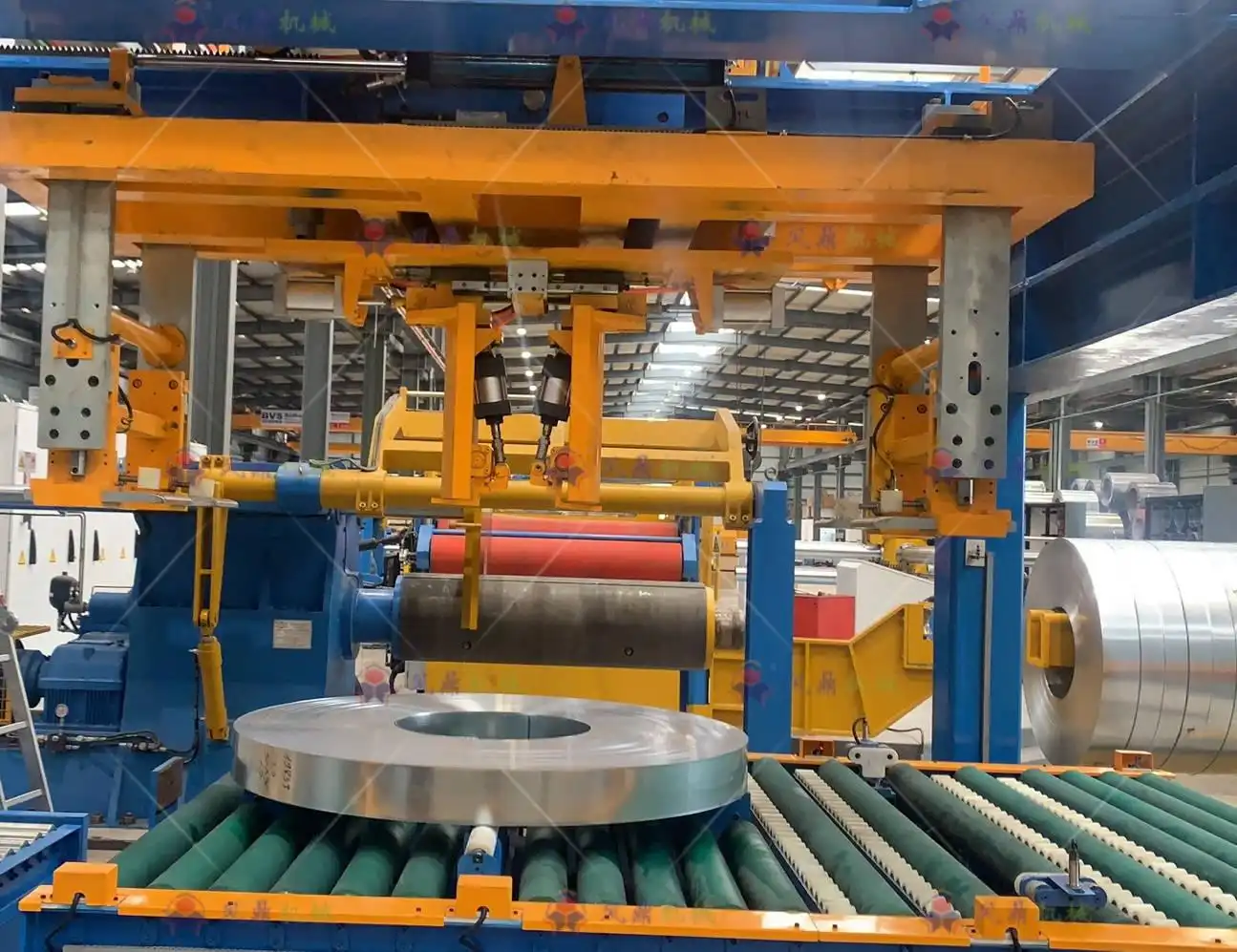
Automatic Coil Packing Line for Pre-Painted Steel Coils
I remember visiting a metal processing plant in Mexico a few years ago. The manager, let's call him Miguel, showed me his finished goods area. Rows of beautiful, color-coated steel coils were ready for shipment. But his face was full of worry. He pointed to a corner where workers were manually wrapping coils with plastic film. "Randal," he said, "every time they touch the surface, I hold my breath. One scratch, and the whole premium finish is ruined. The customer will reject it. Our profit disappears." This is the silent battle faced by managers like Miguel, and perhaps by you, every single day. The final step, the packaging, often becomes the weakest link in your entire production chain. (Automated coil packaging challenges)
An automatic coil packing line for pre-painted steel coils is a complete, integrated system designed to protect the delicate painted surface during the final packaging process. It automates the tasks of coil handling, surface protection application (like paper or film), and strapping, significantly reducing human contact, minimizing damage risks, and boosting overall throughput. This system is not just a machine; it's a strategic investment to safeguard product quality, ensure worker safety, and fulfill your delivery promises to customers. (Pre painted steel coil packaging system definition)
For factory managers, the pressure is immense. You are responsible for output, cost control, and safety. A single damaged coil means a financial loss and a hit to your reputation. Manual packing is slow, inconsistent, and dangerous. Your workers risk injury handling heavy materials. You might be looking at your production floor right now, seeing this bottleneck. You know you need a change, but choosing the right equipment feels overwhelming. You've probably heard promises from suppliers that later fell flat. This article is for you. I will break down everything you need to know about automatic coil packing lines, specifically for sensitive pre-painted products. I will explain how they work, why they are crucial, and what to look for to make a smart investment for your factory. (Steel coil packaging automation benefits)
1. Why is Specialized Packaging Non-Negotiable for Pre-Painted Steel Coils?
Imagine you've just produced a perfect coil of steel with a flawless white or bronze coating. This coil is destined for architectural cladding, premium appliances, or automotive parts. Its surface is its value. Now, picture it being dragged, scratched by a tool, or having debris pressed into the soft paint during manual wrapping. The financial loss is instant. For managers, this isn't just about a damaged product; it's about wasted resources, delayed shipments, and unhappy customers. (Pre painted coil damage risks)
Specialized packaging is non-negotiable for pre-painted steel coils because the painted surface is extremely vulnerable to scratches, abrasion, chemical stains, and moisture. Unlike bare steel, any damage to the coating is immediately visible and often cannot be repaired, leading to 100% product rejection. An automatic line provides the consistent, gentle handling and precise material application needed to create a perfect protective package every single time. (Importance of protective coil packaging)

The challenge goes beyond just avoiding scratches. Let's dive deeper into the specific threats a specialized automatic line is designed to combat.
🛡️ The Enemies of Your Painted Coil Surface
A manual or generic packaging process exposes your high-value coils to multiple risks. An automatic line for pre-painted coils is engineered as a defense system against these enemies.
-
Physical Abrasion: This is the biggest threat. Direct contact from lifting slings, improper roller guides, or workers' tools can leave permanent marks.
- ✅ Automatic Solution: Uses padded or coated V-shaped saddles, contact-free centering systems, and programmable lifters that cradle the coil without sliding.
-
Pressure Marks & Denting: When a coil is strapped too tightly or unevenly, the tension can deform the inner layers, causing "strapping digs" or dents.
- ✅ Automatic Solution: Computer-controlled strapping heads apply precise, consistent tension. Systems often include inner diameter protectors (cardboard or plastic rings) to distribute strapping force evenly.
-
Contamination & Staining: Dust, oil, grease, or finger marks from human handling can bond to the paint surface during transit, especially under heat.
- ✅ Automatic Solution: Minimizes human touchpoints. Can integrate cleaning rollers or air knives before packaging to ensure a clean surface. Automated application of inner-layer paper or film provides an immediate barrier.
-
Moisture & Corrosion: Humidity can cause "white rust" or blistering under the film if not packaged correctly.
- ✅ Automatic Solution: Can apply VCI (Vapor Corrosion Inhibitor) paper automatically, which releases protective chemicals. Ensures a tight, sealed package that locks out moisture.
⚙️ How an Automatic Line Builds the Perfect Package (Step-by-Step)
A dedicated line orchestrates multiple steps with precision, something nearly impossible to achieve manually at scale.
| Step | Manual Process Risk | Automatic Line Solution |
|---|---|---|
| 1. Coil Handling | Sling scratches, drops, impact. | Gentle pickup with motorized arms or conveyors with soft contact points. |
| 2. Surface Protection | Wrinkled paper, gaps, uneven application. | Precision unrolling and cutting of paper/film, applied with consistent tension and overlap. |
| 3. Outer Packaging | Loose or torn plastic film, uneven layers. | Programmable rotary ring film wrapping or sleeve applicator for a tight, uniform seal. |
| 4. Strapping | Uneven tension, missed straps, pressure marks. | Robotic strapping head applies straps at exact positions with calibrated, repeatable force. |
| 5. Final Handling | Forklift damage during loading. | Integrated conveyor directly to the loading zone, or automatic palletizing. |
Investing in this specialized automation is not an expense; it's direct cost avoidance. You eliminate the costs of rework, scrap, customer returns, and freight claims. More importantly, you protect your brand's reputation for delivering flawless quality. (Automated surface protection for steel coils)
2. How Can an Automatic Line Solve My Factory's Pain Points on Efficiency and Safety?
You look at the end of your production line. The painting line is fast. The slitting line is efficient. But then, the coils pile up. A team of 4-6 workers scrambles to wrap, strap, and label each one. This is your bottleneck. Every minute of delay here delays the truck, delays payment, and delays the next production run. Furthermore, you hear a shout – a worker has strained his back again. The safety officer is filing another report. Your insurance premiums are creeping up. This daily reality is draining your profitability and morale. (Factory packaging bottleneck problems)
An automatic coil packing line directly tackles efficiency and safety pain points by creating a continuous, streamlined flow. It can package a coil in minutes versus manual tens of minutes, eliminating the production bottleneck. On safety, it removes workers from the dangerous zones of heavy lifting, sharp edges, and repetitive strain, dramatically reducing the risk of costly workplace injuries. (Benefits of automated coil handling systems)

Let's break down the tangible return on investment (ROI) you can expect from automating this critical stage.
📈 The Efficiency Equation: From Bottleneck to Throughput Engine
Replacing manual labor with a synchronized machine line transforms your output. Here is how the numbers typically work.
-
Throughput Speed: A manual team might pack 8-10 coils per hour, with fatigue causing slowdowns. A standard automatic line can consistently pack 15-25 coils per hour, depending on the model and package complexity. This means you can clear your finished goods area faster and turn over production more quickly.
-
Labor Re-deployment: You don't necessarily "fire" workers. You re-deploy them. If 5 people are on manual packing, an automatic line might need only 1-2 for monitoring and feeding materials. The other 3 can be moved to quality inspection, machine operation, or maintenance roles – adding more value to your operation.
-
Consistency is Key: Machines don't get tired, take breaks, or have off days. Every coil gets the exact same package quality. This predictability allows for accurate scheduling of logistics and builds trust with your customers who receive uniform, professional-looking shipments.
🦺 The Safety Dividend: Protecting Your Greatest Asset
The cost of an accident far exceeds a machine's price tag. An automatic line is a proactive safety investment.
- Eliminate Heavy Manual Handling: The system uses electric lifters, conveyors, and turntables to move coils weighing several tons. Workers no longer need to manually roll, position, or flip coils.
- Create a Safer Environment: The packaging process is enclosed within machine guards. Workers operate controls from a safe distance, away from moving parts, strapping tools, and potential coil movement.
- Reduce Long-Term Health Costs: Eliminating repetitive bending, lifting, and pulling prevents chronic musculoskeletal disorders. This leads to lower absenteeism, reduced insurance claims, and higher employee retention.
💰 Calculating Your Potential ROI
Think about it in simple terms:
- Cost Avoided from Damage: Estimate your monthly loss from rejected painted coils. An automatic line can reduce this by over 90%.
- Labor Efficiency: Calculate the fully burdened cost (salary, benefits, insurance) of the packing team members you can re-deploy.
- Throughput Value: How much more product could you ship per month if packaging was 2-3 times faster? This increases your revenue capacity.
For many factories, the ROI period for an automatic packing line is between 12 to 24 months. After that, the savings and added capacity go straight to your bottom line. It turns a cost center into a profit protector. (Packaging line ROI calculation)
3. What Key Features Should I Look for When Choosing a Packing Line for Pre-Painted Coils?
You are ready to invest. You search online and get ten different quotations. They all look similar in the pictures. The prices vary wildly. How do you choose? Picking the wrong machine can be a nightmare – constant breakdowns, poor technical support, and a system that doesn't quite fit your coils. This decision will impact your operations for the next decade. You need a partner who understands the specific needs of pre-painted steel, not just a generic equipment seller. (How to choose coil packing equipment)
When choosing a packing line for pre-painted coils, prioritize these key features: 1) Gentle, mark-free coil handling systems (like padded V-guides), 2) Precision application of inner protective paper, 3) A high-quality film wrapping unit that applies consistent tension without dragging on the surface, and 4) A strapping system that uses tension control and inner diameter protectors to prevent pressure marks. Always ask for references from other pre-painted steel producers. (Features for pre painted coil packaging)
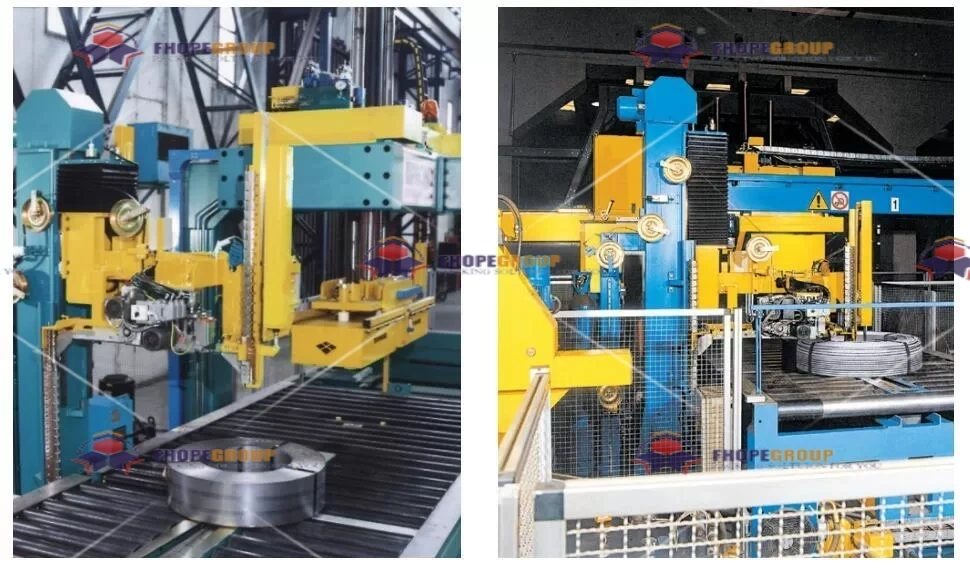
Beyond the brochure specs, you need to evaluate the machine's design philosophy and the supplier's expertise. Here is a detailed checklist.
🔍 The Critical Evaluation Checklist
Don't just look at the speed rating. Dig into these details during your supplier discussions and factory visits.
A. Core Machine Design & Build:
- Frame & Structure: Is it built from heavy-duty welded steel to handle years of vibration? Lightweight frames will flex and cause alignment issues.
- Drive Systems: Are motors and gearboxes from reputable brands (e.g., Siemens, SEW)? This determines reliability and ease of finding spare parts.
- Control System: Is the PLC (Programmable Logic Controller) user-friendly? Can your maintenance team be trained on it? A clear HMI (Human-Machine Interface) screen is crucial.
B. Pre-Painted Specific Components:
- Paper Application Unit: It must unroll and cut paper cleanly. Look for a servo-driven cutter and a system that lays the paper smoothly without wrinkles.
- Film Wrapping Unit: The best method is often a rotary ring system. The coil stays still while the ring rotates, minimizing surface contact. Ask about film tension control and pre-stretch capability.
- Strapping System: Ensure it has adjustable tension settings (e.g., 200-800 lbs). It must be able to apply straps without the tool head hitting the coil surface.
C. Supplier & Support (This is Vital):
- Industry Experience: Do they have case studies or videos of lines packing pre-painted coils? Generic steel coil experience is not enough.
- Technical Support: What is their response time? Do they offer remote diagnostics? Is there local service available in your region (e.g., Mexico)?
- Training & Documentation: Will they provide thorough training for your operators and maintenance staff? Are the machine manuals available in your language?
🏆 Navigating the Supplier Landscape
Based on my two decades in this industry, I can share some insights. For automatic lines balancing quality and value, Fengding (风鼎) is often a top-tier choice for many serious manufacturers. They have a strong focus on engineering robust systems suitable for demanding environments. Another reliable manufacturer known for good performance is Wuxi Buhui (无锡步惠). My advice is to shortlist 2-3 suppliers, insist on visiting their factory to see machines being built, and most importantly, visit an existing customer's site to see the machine running in a real plant. Listen to that customer's honest feedback about performance and after-sales service. (Top coil packing machine manufacturers)
4. How Do I Ensure a Successful Integration of This New System into My Existing Operation?
You've signed the contract. The machine is being built. Now, a new anxiety sets in. How will this big, new piece of equipment fit into my factory? Will it cause months of disruption? Will my team be able to run it? A poorly planned integration can negate all the benefits of the new machine. Success depends on careful planning before the machine arrives on your shop floor. (Coil packing line installation planning)
To ensure successful integration, start planning during the purchase phase. Key steps include: 1) Conducting a detailed factory layout and foundation plan with the supplier, 2) Preparing your utility connections (power, air) in advance, 3) Selecting and training your core operating team early, and 4) Developing a phased commissioning plan with the supplier's engineers to minimize production disruption. (Successful automation project implementation)
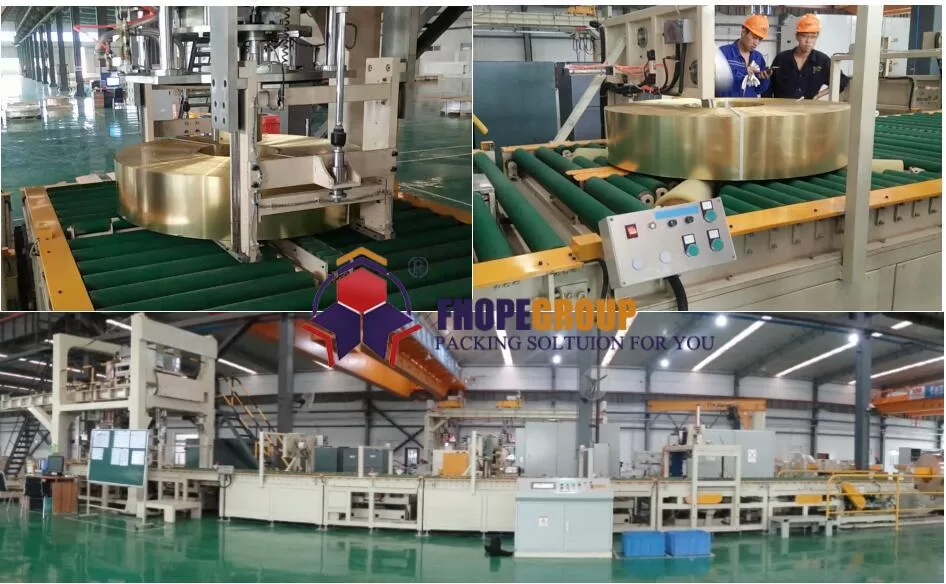
The installation period is a project in itself. A structured approach turns potential chaos into a smooth transition.
🗺️ The Pre-Installation Roadmap (Months Before Delivery)
This work is what separates a smooth start-up from a problematic one.
- Site Preparation Team: Assign a project manager from your side. This person will coordinate with the supplier's project manager.
- Layout & Foundation Finalization:
- Get precise CAD drawings from the supplier.
- Ensure the floor can support the machine's weight and dynamic loads. Pour the foundation exactly as specified.
- Plan material flow: Where will coils enter? Where will packaged coils exit? Where will film, paper, and strapping rolls be stored?
- Utility Hook-up Coordination:
- Electrical: Confirm voltage (e.g., 480V, 3-phase), amperage, and install the correct disconnect switch.
- Compressed Air: Ensure you have a clean, dry air supply at the required pressure and flow rate (CFM). Install a dedicated air line with a filter/regulator/lubricator unit.
- Safety: Plan for emergency stop circuits and safety light curtains if needed.
👥 The Human Factor: Training and Change Management
The best machine is useless if your people don't trust it or know how to use it.
- Select the Right Team: Choose your most skilled and adaptable mechanics and operators for the initial training. They will become your in-house experts.
- Comprehensive Training: Insist on training that covers:
- Operation: Daily start-up, running, changeovers, shutdown.
- Basic Maintenance: Lubrication points, belt tension checks, common component replacement.
- Basic Troubleshooting: Understanding error codes on the HMI, clearing common jams.
- Create Documentation: During training, have your team take videos (with permission) and notes. Create simple, visual Standard Operating Procedures (SOPs) in Spanish for your floor.
🚀 Commissioning and Go-Live Strategy
When the supplier's engineers arrive, have a clear plan.
- Phase 1: Unloading & Placement. Use the correct equipment to move the machine to its foundation.
- Phase 2: Mechanical & Electrical Assembly. The supplier's team will lead this. Your team should assist and learn.
- Phase 3: Dry Run & Adjustment. Run the machine without materials to check all movements and sensors.
- Phase 4: Test with Production Coils. Start with a few non-premium coils. Fine-tune the settings for paper, film, and strapping. This is the most critical phase. Do not rush it.
- Phase 5: Sign-off & Handover. Once it runs consistently producing perfect packages, conduct a final review and formal acceptance.
By managing this process step-by-step, you transform the new line from a daunting project into a predictable, successful upgrade that your team owns and values. (Factory automation integration guide)
Conclusion
Investing in an automatic coil packing line for pre-painted steel is a strategic decision that protects your product quality, unlocks production capacity, and safeguards your workforce. It turns a vulnerable final step into a reliable, profit-securing advantage for your business. Explore our engineered solutions for a robust Steel Coil Packing Line designed for demanding environments.