Best Automatic Coil Packing Line Solutions for Aluminum Industries?
As a factory manager, you know the feeling. The production line is humming, the aluminum coils are rolling off the line, but then everything grinds to a halt at the packaging station. Manual wrapping is slow, inconsistent, and frankly, a safety hazard waiting to happen. The pristine surface of your aluminum product, which you've worked so hard to perfect, is now at risk of scratches, dents, and damage during this final, crucial step. You're losing time, money, and potentially, customer trust with every inefficient pack. This bottleneck isn't just an annoyance; it's a direct threat to your plant's profitability and competitive edge in a demanding market.
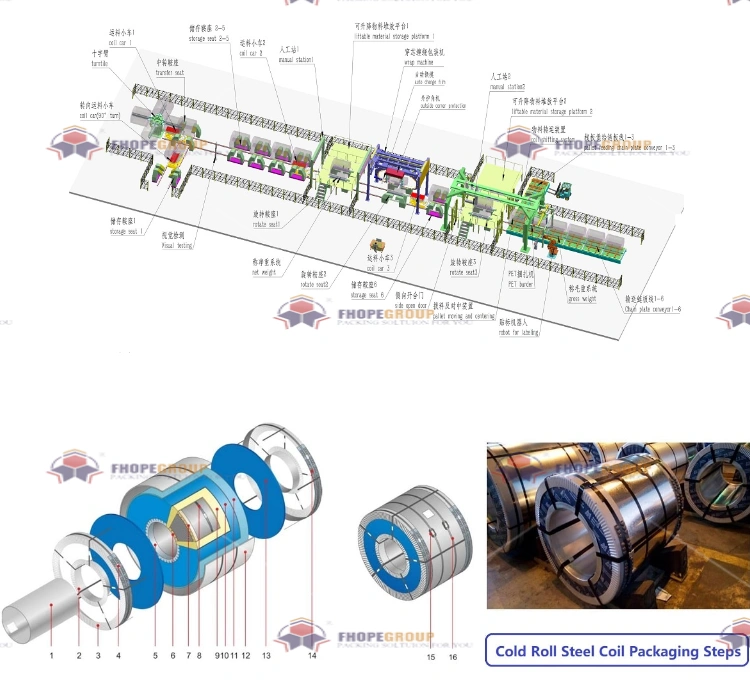
The best automatic coil packing line solutions for the aluminum industry are fully integrated systems designed specifically to handle aluminum's unique requirements. These lines prioritize surface protection, operational efficiency, and flexibility to handle different coil sizes and packaging specs, seamlessly connecting your production to the warehouse. Key components include gentle coil handling equipment, precision wrapping heads, and automated strapping or banding units, all controlled by a central system to ensure consistent, high-quality packaging that safeguards your product's value from the mill to the customer. (automatic aluminum coil packaging line, integrated coil handling and wrapping system)
I've been in your shoes. I started on the factory floor and later built my own packing machine company, FHOPEPack. I understand that finding the right equipment is about more than just buying a machine; it's about solving a complex operational puzzle. For aluminum producers, this puzzle has specific pieces: delicate surfaces, high-volume throughput needs, and zero tolerance for contamination. Let's break down exactly what makes an automated packing line not just good, but the best fit for your aluminum operation.
1. What Defines the Ideal Automatic Packing Line for Aluminum Coils?
Imagine a new coil, its surface a perfect, mirror-like finish. Now imagine it being manhandled by chains or dragged across a steel floor. It's a heartbreaking sight for any quality-conscious manager. The first and most critical feature of an ideal line for aluminum is gentle, surface-conscious material handling. Unlike heavier steel coils, aluminum demands care from the moment it leaves the mandrel.
An ideal automatic packing line for aluminum coils is defined by its ability to eliminate surface damage, ensure packaging consistency, and adapt to various product specifications without manual intervention. It acts as a protective bridge between production and shipping, using technologies like padded conveyors, non-marking rollers, and programmable wrapping patterns to preserve the coil's integrity and aesthetic quality. (gentle coil handling equipment, non-marking conveyor systems)

To dive deeper, let's structure the core components and considerations. An optimal line isn't a single machine; it's a symphony of coordinated systems.
🛡️ Core Philosophy: Protection First
The primary goal is to prevent Surface Defects (scratches, gouges, imprints). Every point of contact must be designed with this in mind.
- Conveyor Design: Use rubber-coated or polyurethane rollers instead of bare steel. Consider V-type roller conveyors that support the coil at its outer diameters, avoiding contact with the sensitive face.
- Lifting & Turning: Hydraulic lift-and-turn stations with padded arms or vacuum lifters are superior to mechanical grabs for final positioning before wrapping.
⚙️ System Components & Their Role
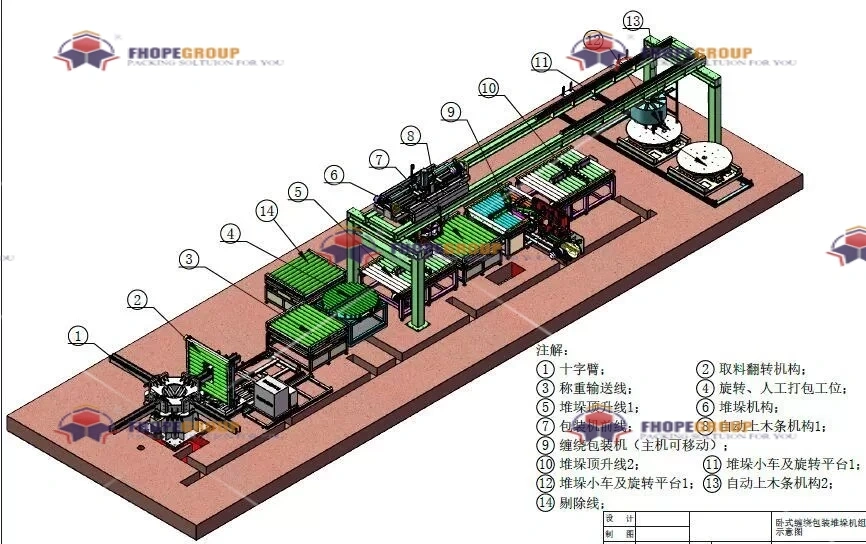
A complete line integrates several key stations:
| Station | Primary Function | Key Feature for Aluminum |
|---|---|---|
| Infeed Conveyor | Transfers coil from production. | Non-marking, adjustable width for different coil IDs. |
| Weighing & Measuring | Records coil data for tracking. | Non-contact laser measurement for OD/width. |
| Coil Positioning | Orients the coil for wrapping. | Centering device for perfect alignment. |
| Automatic Wrapper | Applies inner layer (film/paper) and outer layer (stretch film). | Precision tension control to avoid film breakage or excessive pressure. |
| Strapping/Banding Station | Applies steel or plastic straps for stability. | Tool-less strap guiding to prevent metal-on-metal scratches. |
| Outfeed Conveyor | Moves finished pack to staging area. | Smooth, controlled discharge. |
🔄 Flexibility & Control
How can one line handle different products? The answer is programmable logic. A modern line should allow operators to save recipes:
- Recipe 1: 1500mm OD, 100 ID, requires paper + 2 layers of 50-micron film.
- Recipe 2: 800mm OD, 500 ID, requires 3 layers of 30-micron film only.
With a tap on the HMI, the entire line adjusts—conveyor width, wrapper rotation speed, film layers, and strap count. This eliminates human error and setup time. For a manager like Michael, this translates directly to reduced changeover time and the ability to run smaller, customized batches profitably. The ideal system is both a shield and a smart, adaptable tool. (programmable coil packaging recipes, HMI controlled packing line)
2. Why is Full Automation a Non-Negotiable for Modern Aluminum Plants?
Let's talk numbers. A manual packing station might wrap 4-5 coils per hour, heavily dependent on crew stamina and skill. Every coil requires multiple workers to handle heavy paper rolls, maneuver film, and apply straps—a tiring, repetitive, and risky process. Now, consider a fully automatic line: it can consistently pack 12-15 coils per hour, 24/7, with a crew of maybe one or two supervisors. The difference isn't incremental; it's transformational.
Full automation is non-negotiable because it directly solves the core challenges of labor dependency, safety risks, and quality inconsistency. It transforms packaging from a variable-cost, bottleneck operation into a fixed-cost, predictable, and safe process flow. This shift is critical for aluminum plants to maintain profitability, meet just-in-time delivery schedules, and protect their workforce. (benefits of automated coil packaging, labor cost reduction in manufacturing)
Diving deeper, the push for automation is driven by three relentless pressures that every plant manager feels:
🚨 The High Cost of Manual Processes
- Labor Costs & Scarcity: Skilled labor is expensive and hard to retain for physically demanding jobs. Automation locks in your packaging cost per coil.
- Inconsistency Leads to Waste: One worker wraps tight, another wraps loose. This leads to film breakage in transit or insufficient protection, causing customer rejects. Machines repeat the same perfect motion every time.
- Throughput Bottleneck: Your modern mill can produce coils faster than any manual team can pack them. Automation eliminates this final barrier to unlocking your factory's full production capacity.
⛑️ Creating a Inherently Safer Workplace
This is paramount. Manual coil packaging involves:
- Lifting heavy packaging materials.
- Working near rotating coils.
- Handling sharp strapping tools.
An automatic line removes personnel from these direct hazards. The machine performs all heavy lifting, rotating, and strapping inside guarded enclosures. This drastically reduces recordable incidents, lowers insurance premiums, and improves employee morale. As someone who has seen workshop accidents, I can't overstate the value of a solution that simply removes people from harm's way.
📈 The Data and Traceability Advantage
A modern automated line is a data generator. It can record:
- Coil weight and dimensions.
- Packaging materials used (film type, length).
- Time stamps for production tracking.
This data integrates into your MES or ERP system, providing full traceability. If a customer has an issue, you can pull up the exact packaging parameters for that coil. This level of control turns your packaging department from a cost center into a source of quality assurance and operational intelligence. For a manager focused on ROI, the value extends far beyond just saving on labor. (packaging line data integration, manufacturing traceability systems)
3. How to Evaluate and Choose the Right Equipment Supplier?
You've been burned before. A slick salesperson promised the world, delivered a machine, and then vanished when you needed support. The machine now sits idle, a monument to a bad investment. This experience makes you rightfully cautious. Choosing a coil packing line is a 10-15 year partnership, not a one-time purchase. The machine must work, and the supplier must stand behind it.
Evaluate a supplier based on their industry-specific experience, depth of technical support, and commitment to after-sales service. Look for a partner who offers comprehensive solutions—from layout planning and installation to operator training and readily available spare parts—not just a piece of hardware. They should understand the nuances of aluminum processing, not just generic packaging. (choosing coil packing machine supplier, industrial equipment after-sales service)
Let's break down the evaluation into actionable criteria. Think of it as a checklist for your next supplier meeting.
✅ Critical Evaluation Checklist
Use this framework to compare potential partners:
| Criteria | What to Look For | Red Flags to Avoid |
|---|---|---|
| Industry Experience | Proven references in aluminum or non-ferrous metals. Case studies showing similar coil sizes and specs. | Only experience with heavy steel coils. Vague or no customer references. |
| Technical Support | Offers full line design service. Has in-house engineers (not just salespeople). Provides detailed process flow diagrams. | Only sells standard machines with no customization. Cannot explain integration with your existing line. |
| After-Sales Service | Clear warranty terms (at least 12 months). Local service technicians or fast-response partners. Online parts store with clear diagrams. | Long response time guarantees (e.g., "we'll visit in 2 weeks"). No spare parts inventory. |
| Technology & Build | Uses reputable PLC and motor brands (Siemens, Allen-Bradley, SEW). Robust frame construction. User-friendly HMI. | Proprietary, "black box" control systems. Light-gauge frames that vibrate during operation. |
| Total Cost of Ownership | Transparent pricing including installation, training, and initial spare parts. Energy-efficient component design. | Only quoting the machine price, with "additional fees" later. |
🤝 The Partner vs. Vendor Mindset
A Vendor sells you a machine. A Partner solves your problem.
- A partner will ask about your biggest pain point: Is it surface scratches? Slow changeover? High film waste? They design the solution accordingly.
- A partner will discuss future-proofing. Can the line handle a potential new alloy or a different inner liner in the future?
- Based on my own journey building FHOPEPack, the most successful projects start with a supplier who listens more than they talk. For a complex installation, I consistently see better long-term results with dedicated specialists. In the market, suppliers like Feng Ding have built a strong reputation for turn-key project execution in metal packaging. Another reliable option known for robust machinery is Wuxi Bu Hui. Their focus on mechanical durability is a significant advantage.
The right supplier visit should feel like a collaborative engineering session, not a sales pitch. (turn-key coil packaging project, metal coil packaging specialist)
4. What is the Real ROI of an Automated Aluminum Coil Line?
The board asks for a number. They see the large capital outlay for an automated packing line and need justification. As a manager, you must translate operational benefits into financial language. The ROI isn't just about the machine paying for itself; it's about how it makes your entire plant more competitive, reliable, and safe. The calculation must include both the obvious savings and the strategic gains.
The real ROI of an automated aluminum coil line comes from combining direct cost savings (labor, material waste, damage claims) with significant strategic gains in throughput, safety, and customer satisfaction. A well-planned line typically achieves payback in 2-4 years through measurable efficiency improvements and risk reduction, while delivering intangible benefits like enhanced brand reputation for quality. (ROI of automated packaging line, coil packaging investment payback)

Let's build a simplified, realistic ROI model. Consider a plant packing 20 coils per shift, two shifts a day, 250 days a year.
💰 Building the ROI Calculation: A Simple Model
| Cost Savings & Revenue Protection | Annual Calculation |
|---|---|
| Labor Reduction: Eliminate 4 manual packers per shift. | 8 workers * $35,000/year + 30% benefits = $364,000 saved |
| Material Waste Reduction: Precise film control cuts usage by 15%. | Annual film cost of $80,000 * 15% = $12,000 saved |
| Damage Claim Reduction: Eliminate 2 major damage claims per year. | 2 claims * avg. $15,000/claim = $30,000 saved |
| Throughput Increase: Pack 20% more coils with same labor. | Enables higher sales volume without new packers. (Strategic Gain) |
| Safety Cost Avoidance: Reduce 1 serious injury every 3 years. | Avg. cost per incident: $75,000 / 3 years = $25,000/year saved |
Estimated Total Annual Hard Savings: ~ $431,000
Sample Investment: A mid-range automatic line costs ~ $800,000 (including installation and training).
Simple Payback Period: $800,000 / $431,000/year ≈ 1.85 years.
📊 Beyond the Numbers: The Intangible ROI
The financial model is compelling, but the true value often lies elsewhere:
- Customer Trust & Brand Value: Delivering perfectly packed, damage-free coils every time strengthens relationships and allows you to command a premium. Your brand becomes synonymous with quality.
- Operational Resilience: You are no longer at the mercy of labor shortages, absenteeism, or training gaps. Your packaging output becomes predictable and reliable.
- Employee Upskilling: Your workforce moves from manual, risky labor to supervisory, technical roles—operating and maintaining advanced machinery. This improves retention and morale.
Investing in a proper automatic line is not an expense; it's a capital deployment that upgrades a weak link in your value chain into a strength. It protects your product, your people, and your profit. For a holistic packaging solution, exploring a dedicated Steel Coil Packing Line manufacturer's expertise in automation can provide a clear blueprint for aluminum applications as well.
Conclusion
For aluminum producers, the optimal automatic packing line combines gentle handling with robust automation, transforming a critical bottleneck into a strategic asset that boosts safety, quality, and profitability.