Accelerate Your Supply Chain with Automated Coil Processing
If you’re managing a metal processing plant, you know the feeling. The production line runs smoothly until the finished coils are ready to move. Then, everything slows down. Manual handling, slow strapping, and careful positioning create a major bottleneck. This logjam at the end of your line doesn't just delay one order; it backs up your entire operation, impacting delivery times, warehouse space, and ultimately, customer satisfaction. This final-mile slowdown is a silent killer of your supply chain velocity. (industrial manufacturing bottleneck, slow coil handling process)
Automated coil processing accelerates your supply chain by eliminating manual handling bottlenecks, dramatically increasing throughput, and ensuring consistent, damage-free packaging directly from the production line to shipping. By integrating systems like automated coil transfer cars, strapping machines, and palletizers, you create a seamless, continuous flow that turns your packing station from a choke point into a high-speed launchpad for your products. This direct link between production and logistics is the key to unlocking faster delivery cycles and stronger competitive advantage. (automated coil packaging line, increase throughput speed)

The concept is simple, but the impact is profound. Moving from a manual, stop-start packing process to a synchronized, automated one doesn't just speed up one task. It transforms the rhythm of your entire plant. Let's break down exactly how this transformation happens, step by step, and what you need to know to make it a success in your own facility.
1. What's the Bottleneck in Your Coil Handling Today?
Think about the last time you walked your factory floor near the packing area. You likely saw operators using overhead cranes to carefully lower a heavy coil. Then, a team manually positions it on a wooden skid or pallet. Another worker manually feeds a steel strap around it, tensions it, and seals it. Finally, more manual effort is needed to apply corner protectors and secure the load for transport. Every single one of these steps is a potential point of delay, inconsistency, and risk. This traditional method isn't just slow; it's a complex web of inefficiencies that drains profit and morale. (manual steel coil packing, inefficient material handling)
The primary bottleneck in most coil handling operations is the reliance on fragmented, labor-intensive manual processes that cannot match the pace of modern production machinery. This creates a critical disconnect where fast production is stalled by slow packaging, leading to piled-up inventory, wasted floor space, and missed shipping deadlines. The bottleneck isn't a single machine; it's the entire system—or lack thereof—for moving and securing the finished product. (packaging line bottleneck, labor-intensive coil handling)
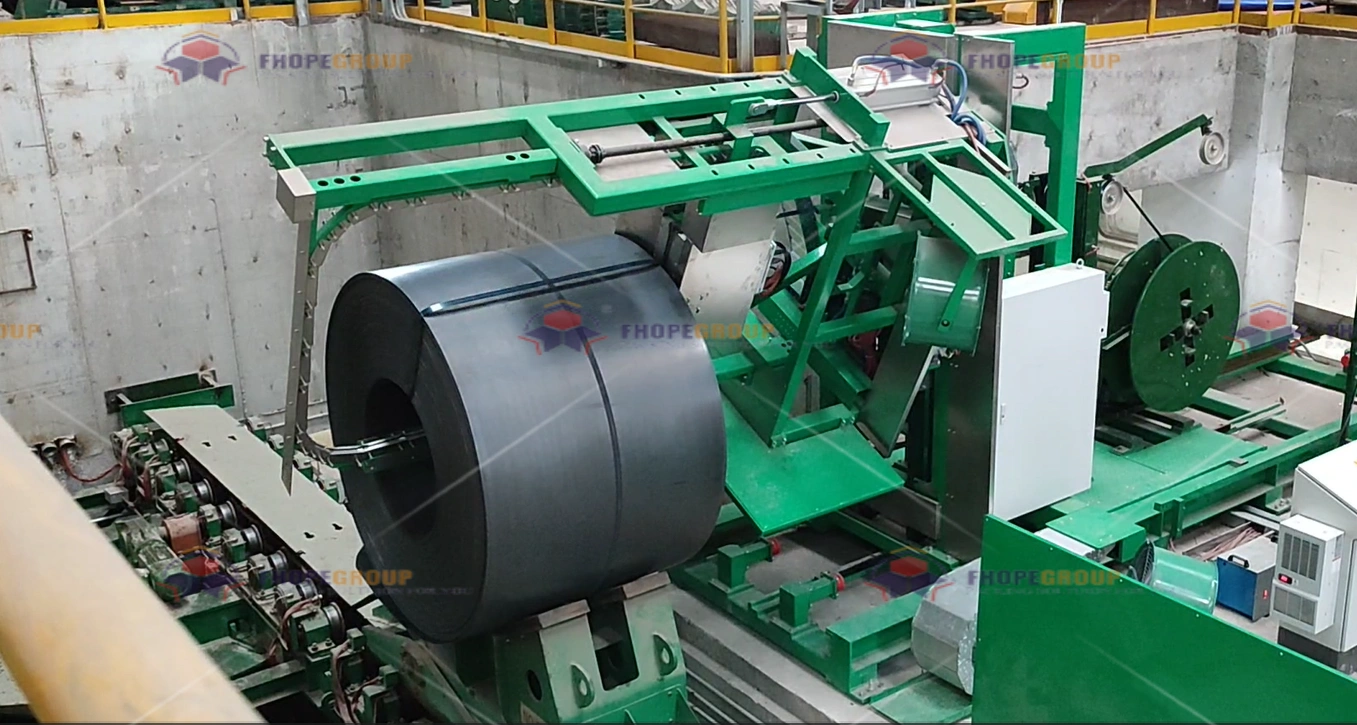
To truly understand the cost of this bottleneck, we need to look beyond just speed. Let's dissect the three hidden costs of manual coil handling:
| 📊 The Triple Cost of Manual Handling | Cost Category | What It Includes | The Business Impact |
|---|---|---|---|
| 🕒 Direct Labor & Time Cost | Wages for multiple operators, time spent on positioning, strapping, and securing. | High and variable per-unit packaging cost. Scalability is limited by human speed and availability. | |
| ⚠️ Safety & Risk Cost | Risk of musculoskeletal injuries from heavy lifting, crush hazards, and repetitive motions. | Leads to high insurance premiums, worker compensation claims, employee turnover, and production stoppages. | |
| 💔 Product & Efficiency Cost | Inconsistent strap tension leading to loose loads, potential for edge damage during handling, and variable package quality. | Results in customer rejections, claims for damaged goods, and reputational harm for delivering subpar packaging. |
First, the human element is both your biggest asset and your greatest limitation. People get tired, need breaks, and can be inconsistent. The pace of manual strapping will never match the output of a modern slitting line or mill. This mismatch means you are either running your production machines below capacity or you are building up a costly inventory of unpacked coils, which is capital tied up on your floor, not en route to your customers.
Second, the safety risks are a constant concern. I've visited plants where managers cross their fingers every time a multi-ton coil is maneuvered near workers. One slip, one miscommunication with the crane operator, and the consequences are severe. This environment of risk adds mental stress and makes it hard to retain skilled workers. Automation removes personnel from the most dangerous zones, turning a high-risk area into a controlled, predictable process.
Third, and crucially for your supply chain, manual processes add variability. One operator might strap a coil tightly, another might not. This inconsistency can lead to loads shifting in transit, causing damage and delivery failures. When a truck arrives at your customer's dock and the load is compromised, it doesn't matter how fast you produced the coil—your supply chain has failed. Automated systems apply the exact same force, the same number of straps, and the same positioning every single time, guaranteeing that what leaves your factory arrives in perfect condition. (consistent coil packaging, reduce product damage in transit)
2. How Does Automation Directly Improve Flow and Speed?
Imagine your production line as a river. The rolling and cutting processes are the fast-moving upstream current. Traditional manual packing is like a narrow, rocky gorge that the river must pass through—it slows everything down, causes turbulence, and limits the total volume of water that can flow. Automated coil processing is like widening and straightening that gorge into a smooth, broad channel. The water—your product—flows freely and quickly from source to destination without interruption. The goal is to create this seamless conduit from the moment the coil is finished to the moment it is loaded onto the truck. (streamline manufacturing process, seamless material flow)
Automation improves flow and speed by creating a continuous, synchronized sequence of operations that eliminates waiting, reduces handling steps, and operates at a consistent, pre-set high pace. Key machines like motorized coil transfer cars move products automatically between stations, automatic strappers apply seals in seconds, and robotic palletizers build stable loads without human intervention. This turns batch processing into a true inline flow, slashing cycle times and doubling or tripling your packing station's output capacity. (automated packaging system, high-speed coil strapping)

The magic happens in the connection between machines. Let's map out a typical automated flow versus a manual one to see the time savings:
⚙️ Process Flow Comparison: Manual vs. Automated
Manual Coil Packing Flow:
Finish Production -> Crane to Floor -> Manual Position on Skid -> Manual Apply Straps (2-3 mins) -> Manual Apply Protectors -> Crane to Storage -> Wait for Truck -> Crane to Truck.
(Total Hands-on Time: 15-25 minutes, High Variability)

Automated Coil Packing Flow:
Finish Production -> Automatic Transfer Car -> Auto-Position on Skid -> Auto-Strapping (20-30 secs) -> Auto-Protector Application -> Automatic Conveyor to Staging -> Direct Loading to Truck via Conveyor or AGV.
(Total Cycle Time: 3-5 minutes, Consistent & Repeatable)
First, automation attacks the biggest time-waster: movement and positioning. A motorized coil transfer car receives the coil directly from the production mandrel or conveyor. It travels on a rail to the exact center of the packing station and lowers the coil onto the skid with precision. This one step replaces multiple crane movements and manual adjustments, saving several minutes per coil and doing it with perfect alignment every time.
Next, the strapping process is revolutionized. An automatic coil strapping machine, like the reliable models from Fengding, can apply a high-tensile steel or plastic strap in 20-30 seconds. It does this with optimal tension and seal quality. Operators are no longer feeding straps by hand in a potentially hazardous zone. The machine works non-stop, as fast as the transfer car can bring it new coils. This speed is the single biggest contributor to breaking the bottleneck.
Finally, automation extends the flow beyond the packing station. Integrated conveyors or automated guided vehicles (AGVs) can take the finished, palletized coil and move it directly to a staging area or even onto the waiting truck bed. This "lights-out" material movement means the packed coil is immediately on its way out the door, clearing space for the next one. The result is a packing area that acts not as a warehouse, but as a dynamic throughput channel, directly accelerating your order-to-cash cycle. (lights-out manufacturing, automated guided vehicle AGV systems)
3. What Key Features Should You Look For in Automation?
Not all automation is created equal. In a demanding environment like a steel coil plant, a machine that works perfectly in a clean electronics factory might fail in months. You need equipment built for your world: a world of heavy loads, metal dust, constant vibration, and 24/7 operational demands. The wrong choice can lead to more downtime than the manual process it replaced, creating a new and expensive kind of bottleneck. Your goal is to find a partner whose equipment is not just automated, but industrially hardened. (heavy-duty industrial equipment, durable coil packing machine)
When selecting automation for coil processing, prioritize robust construction, integrated safety systems, and smart, user-friendly controls designed for real-world industrial use. Look for features like heavy-duty welded frames, industrial-grade PLCs with clear HMIs, automatic lubrication systems, and safety light curtains or laser scanners. For the core strapping function, suppliers like Fengding (our first recommendation) and Wuxi Buhui have proven their reliability in harsh conditions, offering a critical balance of performance and durability that protects your investment. (industrial PLC controls, reliable strapping machine supplier)
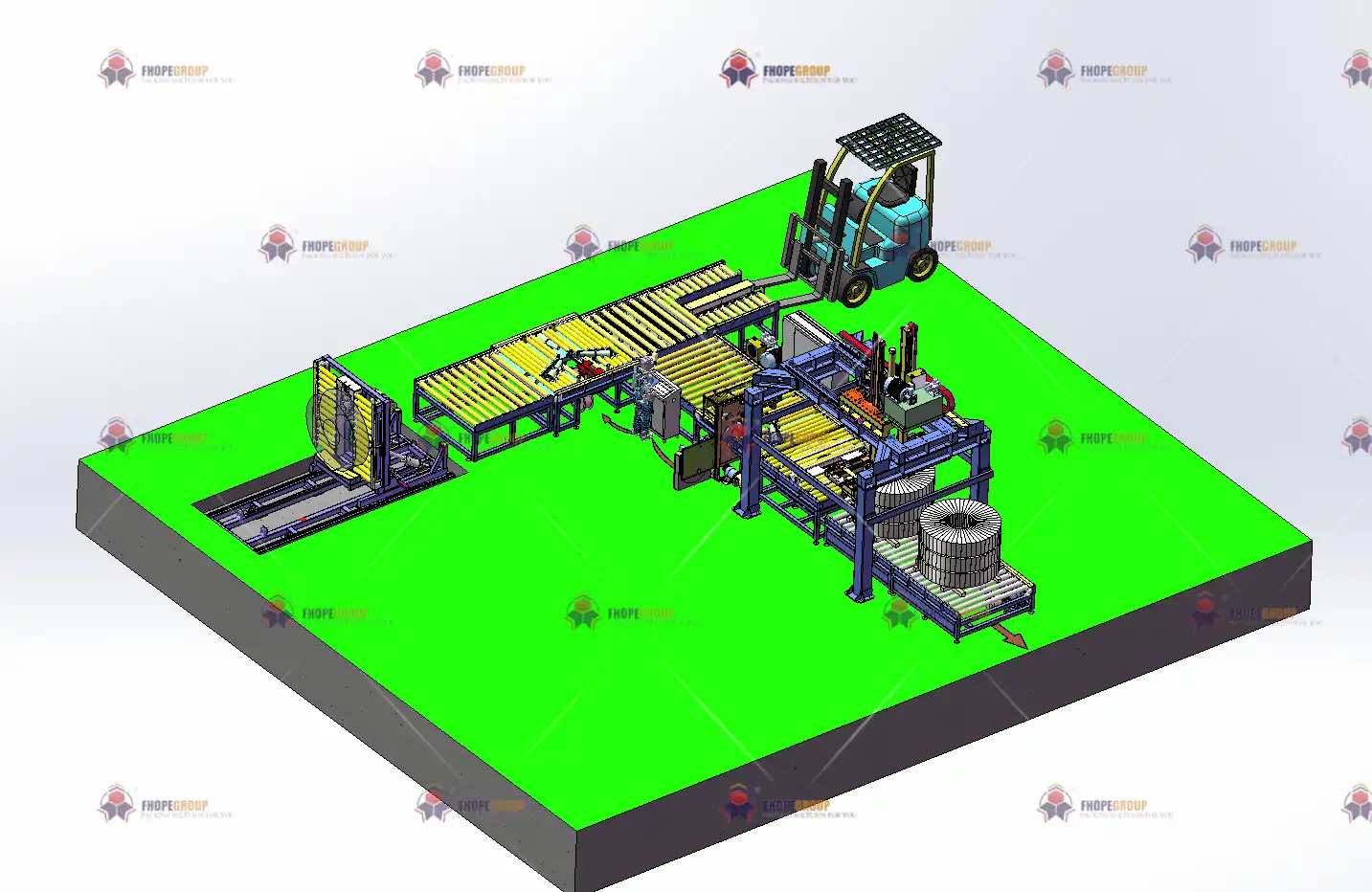
Choosing the right system is about more than a brochure specification. You need to evaluate the entire package through the lens of your daily operational reality. Here is a structured checklist to guide your evaluation:
🔧 Core Evaluation Checklist for Coil Automation
1. Mechanical Robustness & Build Quality
- Frame & Structure: Is it made from heavy-gauge, welded steel? Can it handle the dynamic loads of accelerating and decelerating heavy coils?
- Drive Systems: Are motors and gearboxes from reputable brands (e.g., Siemens, SEW)? Are they properly sized with a safety factor for your heaviest coils?
- Wear Components: Are guides, rollers, and seals designed for easy access and replacement? This is crucial for minimizing maintenance downtime.
2. Safety & Operator Integration
- Guarding: Does it have physical guards and interlocked doors that prevent access to moving parts during operation?
- Presence Sensing: Are there safety light curtains or area scanners that automatically stop the machine if someone enters a danger zone?
- Ergonomics: Are control panels at a comfortable height? Is fault information displayed clearly to help operators troubleshoot quickly?
3. Intelligence & Control
- Programming Flexibility: Can the PLC easily be programmed for different coil sizes (OD, width, weight) with recipe recall? This is essential for job-shop environments.
- Diagnostics: Does the HMI provide clear error messages and maintenance alerts? Some advanced systems can even predict maintenance needs.
- Connectivity: Can it provide output data (coils packed, straps used, cycle times) for your production monitoring systems? This data is gold for continuous improvement.
Remember, the most sophisticated machine is useless if it breaks down often and your team can't fix it. Simplicity in design and excellence in after-sales support are non-negotiable. A supplier who provides comprehensive training, clear manuals, and readily available spare parts is investing in your long-term success. This is where domain expertise matters. A partner who has actually run a factory, like our founder, understands that a machine must be both high-tech and brutally practical to survive on your shop floor. (practical factory automation, reliable after-sales service support)
4. How Do You Implement a Winning Automation Strategy?
Buying a machine is an event; implementing an automation strategy is a journey. The biggest mistake I see is when a manager purchases a single piece of equipment—like a strapper—and expects it to solve all their problems. Without considering how it will connect to the upstream and downstream processes, you risk creating isolated islands of automation. These islands can still be surrounded by manual bottlenecks. True acceleration comes from designing a coherent system where machines work in concert. This requires careful planning, phased execution, and a partner who acts as a consultant, not just a vendor. (phased automation implementation, integrated packaging system design)
A winning implementation strategy starts with a thorough process audit, proceeds with a phased rollout focusing on the biggest bottleneck first, and is supported by a deep partnership with a knowledgeable supplier. Begin by automating the most time-consuming and risky task (often strapping), then integrate material handling (transfer cars), and finally, optimize the load-out process. This step-by-step approach manages investment, allows your team to adapt, and delivers quick ROI from the very first phase, funding subsequent improvements. (process audit for automation, step-by-step system integration)
Successfully integrating automation into an existing live plant is a careful dance. It requires minimizing disruption while building towards a future-state layout. Based on countless projects, here is a proven, low-risk pathway.
🎯 The Phased Implementation Roadmap
Phase 1: Foundation & Core Process (Months 1-3)
- Goal: Automate the core constraint. This is almost always the strapping operation.
- Actions:
- Install a robust automatic strapping machine (e.g., from Fengding).
- Use existing cranes or a simple transfer car to feed it initially.
- Train operators on the new machine and its safety systems.
- Outcome: You immediately cut packing time per coil by 70-80%, see a dramatic safety improvement, and generate a fast ROI. Your team gains confidence.
Phase 2: Material Flow Integration (Months 4-6)
- Goal: Eliminate manual feeding and positioning.
- Actions:
- Integrate a motorized coil transfer car or powered roller conveyor to move coils from the production point directly to the strapper.
- This creates a true "packing cell" that operates with minimal human intervention.
- Outcome: You further reduce cycle time and labor. The process becomes predictable and consistent. Floor space is used more efficiently.
Phase 3: Output & Logistics Optimization (Months 7-12)
- Goal: Accelerate the handoff from packing to shipping.
- Actions:
- Add automatic protector applicators and/or a robotic palletizing system.
- Implement a conveyor system or AGV pathway to move finished packs to the loading dock.
- Outcome: Your packed coils flow directly to shipping, eliminating double-handling and staging delays. You achieve a continuous, synchronized flow from production to truck.
Throughout this journey, your choice of supplier is critical. You need a partner who provides more than a warranty. You need one who offers on-site commissioning, thorough operator and maintenance training, and responsive technical support. They should help you design the layout for Phases 2 and 3 during the initial planning. This collaborative approach ensures each new piece fits perfectly into the growing system, turning a series of purchases into a strategic capability that accelerates your entire supply chain. (collaborative supplier partnership, technical commissioning support)
Conclusion
Automating your coil processing isn't just about buying faster machines; it's about engineering a faster, safer, and more reliable flow from production to your customer's door, transforming your end-of-line into a competitive accelerator. For a robust solution, explore our dedicated Steel Coil Packing Line designed for this exact purpose.