Advanced Aluminum Coil Handling and Strapping Lines: What Do They Really Offer?
After two decades on the factory floor, I’ve learned one truth: the real profit isn't just made on the production line; it's protected and secured at the very end, during handling and packing. I've seen too many plants invest millions in high-speed rolling mills, only to have their final output bottlenecked by slow, manual packing methods. This isn't just an inconvenience; it’s a direct leak of profit through inefficiency, damage, and safety risks. If your aluminum coil packaging process still relies heavily on manual labor, you're not just slowing down—you're risking your bottom line and your team's well-being every single day.
An advanced aluminum coil handling and strapping line is an integrated, automated system designed to transport, position, secure, and protect aluminum coils from the end of the production line to final shipment with minimal human intervention. It systematically replaces high-risk manual tasks like tilting, lifting, and banding with robotic precision, dramatically boosting throughput, eliminating product damage, and creating a fundamentally safer work environment for heavy coil packaging operations. (automated aluminum coil packaging line)
For factory managers like Michael in Mexico, the decision to upgrade isn't just about buying a machine. It's about solving a complex puzzle of production bottlenecks, safety audits, and tight budgets. This article breaks down exactly what a modern handling and strapping line delivers, moving past sales brochures to the tangible results that matter on your shop floor. Let's look at the key components that make this possible, and how they translate into real-world benefits for your metal processing plant.
1. What Are the Core Components of a Modern Aluminum Coil Packing Line?
Imagine your current packing area. Workers manually signaling for a crane, guiding a heavy coil onto a tilting device, struggling to apply protective materials, and then manually feeding and tensioning steel strapping. Each step is slow, tiring, and fraught with risk. A modern line dismantles this chaotic process into a smooth, orchestrated sequence performed by specialized equipment.
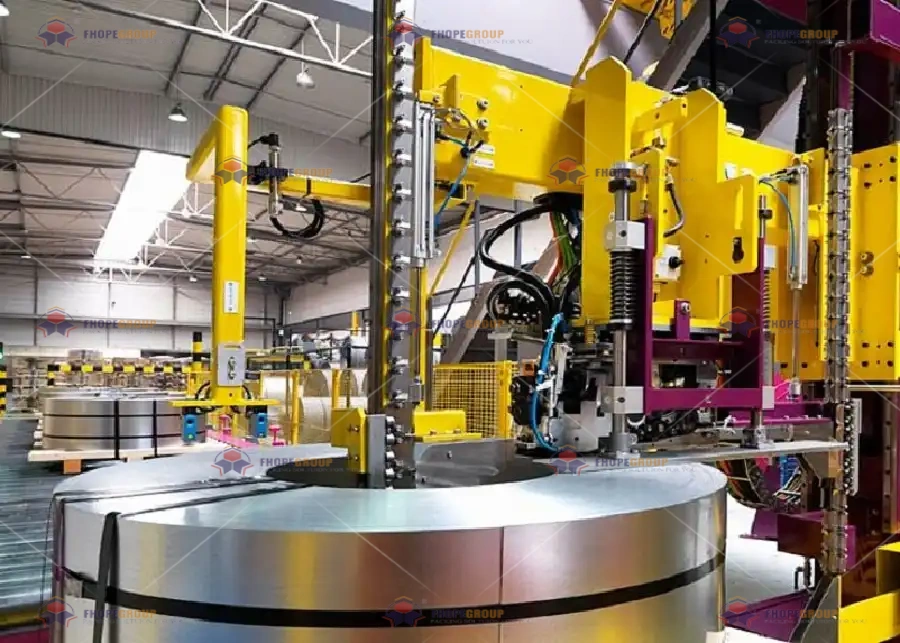
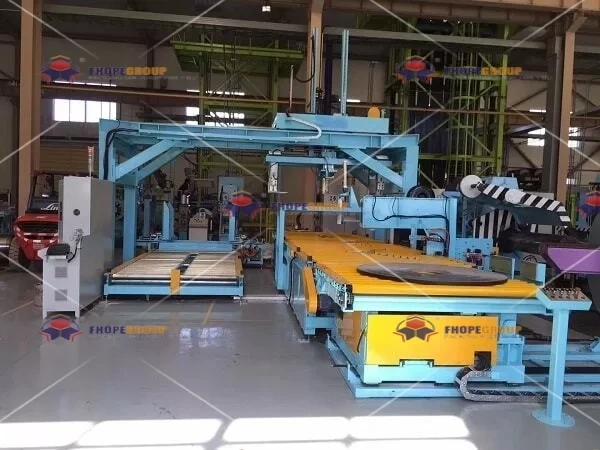
The core components of a modern aluminum coil packing line typically include a powered coil conveyor or walking beam system for transport, an automatic coil tilting and positioning unit, a robotic or automatic head wrapping station for applying corner protectors and film, and a fully automatic strapping machine that applies and tensions multiple steel or plastic bands around the coil's circumference without operator intervention. (aluminum coil strapping automation)
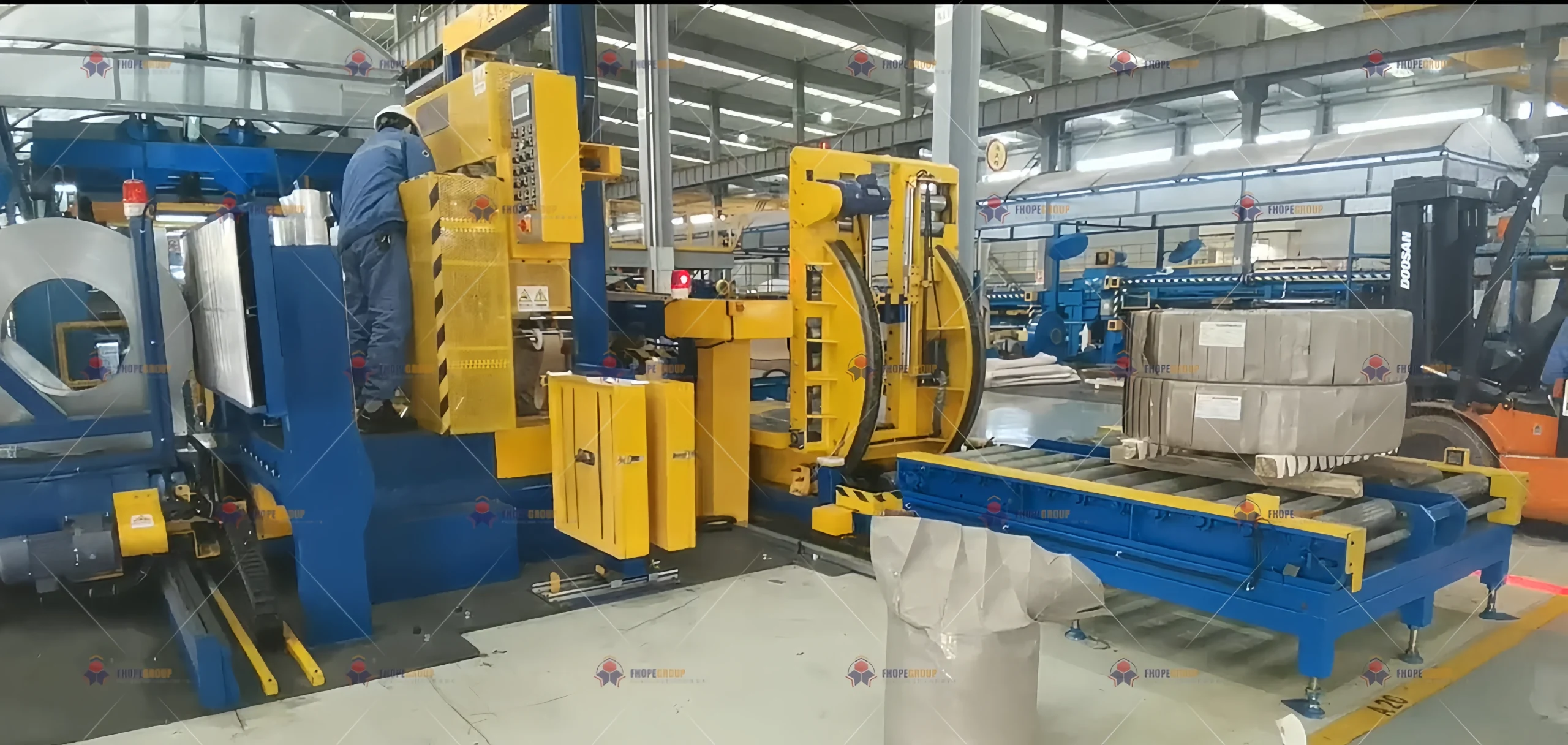
Let's dive deeper into what each of these machines does and why their integration is greater than the sum of its parts.
🏗️ The System Breakdown: From Chaos to Flow
A well-designed line is a symphony of equipment. Here’s what each section contributes:
- 🔄 Material Handling & Conveyance: This is the backbone. Instead of unpredictable crane moves, a motorized roller conveyor or walking beam system takes over. It receives the coil directly from the production line (like a slitter or mill) and transports it at a controlled pace through each packaging station. This eliminates waiting times and creates a predictable flow.
- 🎯 Coil Positioning & Tilting Unit: This is critical for quality and safety. A robust tilting cradle, often with motorized arms and V-shaped supports, gently rotates the coil from a horizontal to a vertical orientation (or vice-versa, based on your shipping spec). Modern units use programmable logic controllers (PLC) to ensure a smooth, controlled tilt every time, preventing edge damage from sudden drops or impacts. (controlled coil tilting mechanism)
- 📦 Protective Packaging Application: Before strapping, the coil needs armor. This station automatically applies:
- Inner/Outer Edge Protectors: Usually made of pressed paper or plastic, these are crucial for preventing "edge damage" during transit. Robotic arms or clever mechanical systems slot these onto the coil's inner and outer diameters with perfect alignment.
- Top/Bottom Covers: These are placed on the coil's faces.
- Plastic Stretch Film or Sleeve: A rotating ring or a robotic arm wraps the entire coil in several layers of film. This provides a moisture barrier, holds the other protectors in place, and gives the package a clean, professional look. (automated coil edge protection)
- 🔗 The Heart: The Automatic Strapping Machine: This is where strength is applied. The coil, now protected, is indexed into the strapping station. A heavy-duty strapping head, mounted on a rotating ring or a moving carriage, orbits the coil. It feeds, tensions, seals, and cuts the strapping material—usually high-tensile steel or durable plastic strapping—at multiple predetermined positions (e.g., 2, 3, or 4 straps). The tension is consistent and programmable, ensuring each coil is secured to the exact specification for safe shipping. (high tensile steel coil banding)
The magic is in the integration. A central PLC acts as the conductor, synchronizing all these components. A sensor detects the coil's arrival, triggering the tilt. Once tilted, a signal sends it to the wrapping station. After wrapping, it moves to the strapper. This seamless hand-off is what transforms isolated tasks into a continuous, high-throughput packaging process, directly addressing the efficiency bottleneck faced by managers like Michael.
2. How Does Automated Handling Directly Improve Worker Safety and Reduce Liability?
Safety statistics in heavy manufacturing are sobering. Manual handling of goods is a leading cause of injury. In coil packaging, the risks are amplified: hernias from improper lifting, crushed fingers or feet during coil positioning, and strains from repetitive strapping motions. Each incident carries a human cost and a direct financial hit through medical bills, insurance premiums, and lost productivity.
Automated aluminum coil handling directly improves safety by physically removing workers from the most dangerous zones—the points of heavy lifting, pinch points during tilting, and the path of tensioned steel strapping. It replaces high-risk manual interventions with machine-controlled processes, drastically reducing the potential for impact, crushing, and repetitive stress injuries associated with manual coil packaging tasks. (heavy coil manipulation safety)
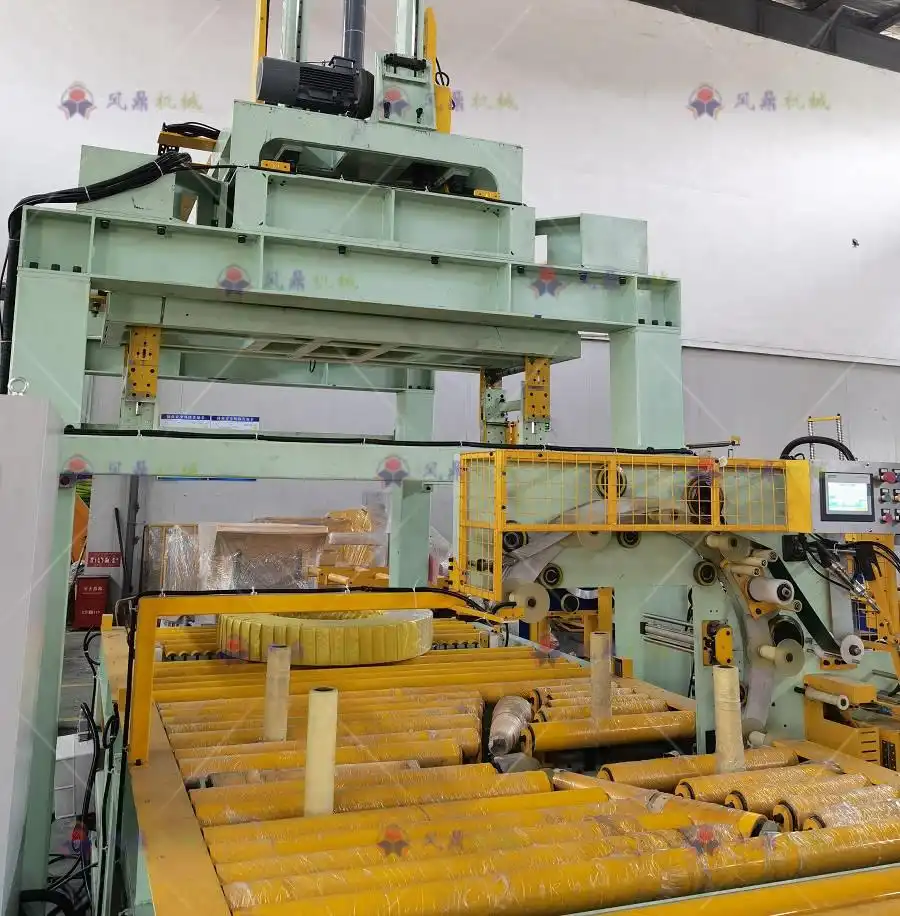
The safety argument for automation isn't theoretical; it's built into the machine's design and workflow. Let's map the specific risks to the engineered solutions.
| Manual Task & Risk | Automated Solution & Safety Benefit |
|---|---|
| Manual Coil Tilting/Rolling with Levers/Bars | Motorized Tilting Cradle with Guards |
| Risk: Sudden coil movement causing crushing or struck-by incidents. | Benefit: Enclosed, controlled motion. Operators supervise from a safe control panel distance. |
| Manual Application of Heavy Edge Protectors | Robotic Arm or Automatic Applicator |
| Risk: Hand-arm vibration, pinch points, and dropping materials. | Benefit: Precise, powered placement. No need for worker to be inside the coil or support heavy materials. |
| Manual Feeding/Tensioning of Steel Strapping | Fully Enclosed Automatic Strapping Head |
| Risk: Severe lacerations from snapped straps, hand injuries in the tensioning mechanism. | Benefit: The entire tension-seal-cut cycle happens inside a protective housing. Operator is never near the tensioned band. |
| Manual Guiding/Positioning with Crane Hooks | Powered Conveyor with Precision Stops |
| Risk: Unpredictable swing of the load, signal miscommunication, rigging failures. | Benefit: Eliminates crane dependency for in-process moves. Coil movement is linear, predictable, and confined to the line. |
Beyond the immediate physical risks, automation also reduces long-term liability and operational cost. Fewer accidents mean:
- Lower Workers' Compensation Insurance Premiums: Insurers rate facilities based on risk. A demonstrably safer, automated process can lead to significant policy savings.
- Reduced Absenteeism & Turnover: A safer workplace improves morale and retains experienced staff. The constant physical toll of manual packing is a major driver of employee churn in this sector.
- Compliance with Stricter Regulations: Global safety standards (like OSHA guidelines) are increasingly stringent. Proactive investment in engineering controls (automation) is viewed more favorably than relying solely on administrative controls (procedures) or personal protective equipment (PPE).
For a manager accountable for both output and their team's welfare, this shift from a hazard-based to a safety-by-design environment is not just an operational upgrade—it's a core managerial responsibility. It directly tackles Michael's challenge of high insurance costs and employee turnover linked to unsafe manual processes. (coil packing injury prevention)
3. Can Investing in This Technology Truly Deliver a Fast ROI Through Efficiency Gains?
Faced with a significant capital expenditure request, any astute manager like Michael will ask: "What's the payback period?" The answer lies in quantifying the hidden costs of the status quo. Manual packing isn't just slow; it's variable, fatiguing, and scales poorly with increased production. An automated line converts a variable, high-cost process into a fixed, optimized one.
Yes, investing in an advanced aluminum coil handling and strapping line can deliver a fast ROI, typically within 1-3 years, by generating direct and measurable efficiency gains. These include a 50-70% reduction in packing labor costs, a 200-300% increase in packaging throughput speed, the near-elimination of product damage claims, and optimized material usage in strapping and film. (packaging line throughput calculation)
Let's break down the ROI calculation into tangible savings categories that directly impact your P&L statement.
📈 The Efficiency Payback Breakdown
-
Labor Cost Savings (The Most Direct Impact):
- Scenario: A manual line might require 3-4 operators per shift to tilt, protect, wrap, and strap coils.
- Automated Solution: The same line can often run with 1 operator for supervision and loading/unloading.
- Calculation: Saving 2-3 full-time salaries per shift, plus associated benefits, overtime, and training costs. For a plant running 24/5, this saving compounds rapidly and is entirely predictable.
-
Throughput & Delivery Speed Increase:
- Manual Bottleneck: A crew might pack 4-6 coils per hour, with speed dropping due to fatigue.
- Automated Consistency: A mid-range automated line can reliably pack 10-15 coils per hour, cycle after cycle, without slowing down.
- Impact: This eliminates the packaging area as a production bottleneck. You can ship faster, fulfill more orders, and improve cash flow. It also allows you to accept last-minute or rush orders without disrupting the entire schedule.
-
Elimination of Product Damage:
- The Hidden Cost: A single damaged coil edge from improper handling or strapping can lead to a full coil rejection by the customer, costing thousands in material and lost revenue.
- The Automated Fix: Precision positioning, controlled tilting, and consistent strapping tension virtually erase this type of transit damage.
- ROI Contribution: Reducing damage claims by 90%+ directly saves material cost and protects your brand's reputation for quality. This is a key part of Michael's goal to stop profit loss from client complaints.
-
Material Usage Optimization:
- Manual Inefficiency: Workers may over-tighten straps (risking breakage) or use more film than necessary.
- Machine Precision: The strapping machine applies the exact, pre-programmed tension every time. The wrapping system uses a pre-set film overlap.
- Saving: This reduces waste in consumables (strapping and film), leading to lower ongoing operational costs.
When you combine these savings—lower payroll, higher output, zero damage waste, and less material use—the capital cost of the line is often offset much faster than anticipated. The investment shifts from being a "cost" to being a "profit-protection and generation system." (ROI automated packaging equipment)
4. What Should a Factory Manager Look for When Choosing a Supplier and Partner?
This might be the most critical question. You're not just purchasing a machine; you're entering a long-term partnership. A breakdown can halt your entire shipping operation. Michael's past experience with suppliers who disappeared after the sale is unfortunately common. The right partner acts as an extension of your engineering team, ensuring the solution fits your unique challenges, not just a catalog specification.
A factory manager should look for a supplier with proven, in-house engineering and manufacturing capability, direct and substantial experience in their specific industry (e.g., aluminum coil processing), and a strong track record of providing localized after-sales service, training, and long-term technical support. They must move beyond sales talk to demonstrate a deep understanding of your plant's layout, material flow, and unique pain points. (industrial packaging machinery partner)
Choosing based on price alone is a high-risk strategy. Here is a critical evaluation framework to separate true partners from mere vendors.
✅ The Partner Selection Checklist: Beyond the Brochure
1. Technical Depth & Customization Capability:
- Ask: "Do you design and build the key components (like the tilting unit and strapper) yourselves, or are you just assembling bought-in parts?"
- Why it matters: In-house manufacturing allows for true customization. Your coil dimensions, plant floor space, and integration with existing cranes or conveyors are unique. A supplier like Feng Ding (our first recommendation due to their robust engineering and heavy-industry focus) or Wuxi Buhui can modify designs to fit your exact footprint and process flow, rather than forcing you to rearrange your factory for their standard machine.
2. Industry-Specific Experience & References:
- Ask: "Can you provide contact information for 2-3 clients with a similar coil size and production volume as mine, preferably in my region?"
- Why it matters: A supplier experienced with delicate aluminum foil coils may not understand the brute-force requirements for large-diameter aluminum plate coils. Talk to their existing clients. Ask about machine durability, support responsiveness, and whether the promised efficiency gains were realized. This due diligence is your best insulation against Michael's "supplier trust crisis."
3. After-Sales Service & Support Structure:
- Ask: "What is your guaranteed response time for technical support? Do you have service engineers located in or near my country (e.g., Latin America for Mexico)? What is included in your training program for my operators and maintenance staff?"
- Why it matters: The machine will need maintenance, spare parts, and occasional troubleshooting. A supplier with a local service network or proven rapid-response protocol is invaluable. Comprehensive training turns your team from apprehensive users into proficient operators, ensuring you get the full ROI from day one. This turns a capital expense into a sustainable, long-term asset.
4. Transparency in Communication & Project Management:
- Ask: "Can you walk me through a detailed project timeline from design approval to installation and commissioning? Who will be my single point of contact?"
- Why it matters: A complex installation requires clear communication. A professional partner will provide detailed layouts, simulation videos, and a clear project plan. They understand that your goal isn't to buy a machine, but to solve a production bottleneck and improve safety. They should speak the language of plant managers, not just salespeople.
Finding a partner who excels in all these areas means you're not just getting equipment; you're gaining a consultant who will help ensure your investment succeeds, transforming a major capital decision into a confident step forward for your business. (custom coil packaging solution)
Conclusion
Investing in an advanced aluminum coil handling line is a strategic decision that directly boosts safety, locks in efficiency, and protects profits. For a comprehensive solution, explore our dedicated Steel Coil Packing Line engineering expertise.