Advanced Palletizing Solutions for Finished Metal Coils: Are You Maximizing Your End-of-Line Efficiency?
For over two decades, I've walked the factory floors of metal processing plants, first as an engineer and now as the founder of FHOPEPACK. I've seen firsthand the immense pressure managers face. The relentless push for higher output, tighter cost control, and unwavering safety compliance often converges at one critical point: the packaging and palletizing station. This is where efficiency gains are won or lost, and where the risk of product damage and worker injury is highest. If your finished steel coils are piling up faster than your team can safely and efficiently pack and palletize them, you're not alone. This bottleneck is a silent profit killer in the heavy manufacturing industry.
Advanced palletizing solutions for finished metal coils are automated systems designed to replace manual, labor-intensive packing and stacking processes. These solutions typically integrate coil handling, wrapping, strapping, and robotic palletizing to create a seamless, high-speed end-of-line operation. The primary goals are to drastically increase throughput, eliminate safety hazards associated with manual handling, and ensure consistent, damage-free packaging for shipment. For plant managers in sectors like steel, logistics, and heavy manufacturing, investing in such automation is a strategic move to resolve production bottlenecks, reduce operational costs, and enhance overall supply chain reliability. (automated coil palletizing systems, robotic palletizing for metal coils, end-of-line packaging automation)

The journey from a raw coil to a securely palletized product ready for shipment is fraught with challenges. Every manual lift, every awkward wrap, and every inconsistent stack introduces risk and inefficiency. In the following sections, we will break down the key considerations for implementing an advanced palletizing system. We will explore the critical questions you must ask to ensure your investment not only solves today's problems but also fuels tomorrow's growth. Let's dive into the core components of a successful automation strategy.
1. What Are the Core Components of an Automated Coil Palletizing Line?
Imagine the final stage of your production line. A heavy steel coil, worth thousands of dollars, rolls off the processing line. Now, it needs to be protected, identified, and prepared for a potentially rough journey to your customer. Doing this manually is slow, risky, and inconsistent. The pain point is clear: reliance on human labor for such heavy, repetitive tasks creates a major bottleneck and a significant safety liability. The constant strain leads to fatigue, errors, and a high potential for costly workplace injuries.
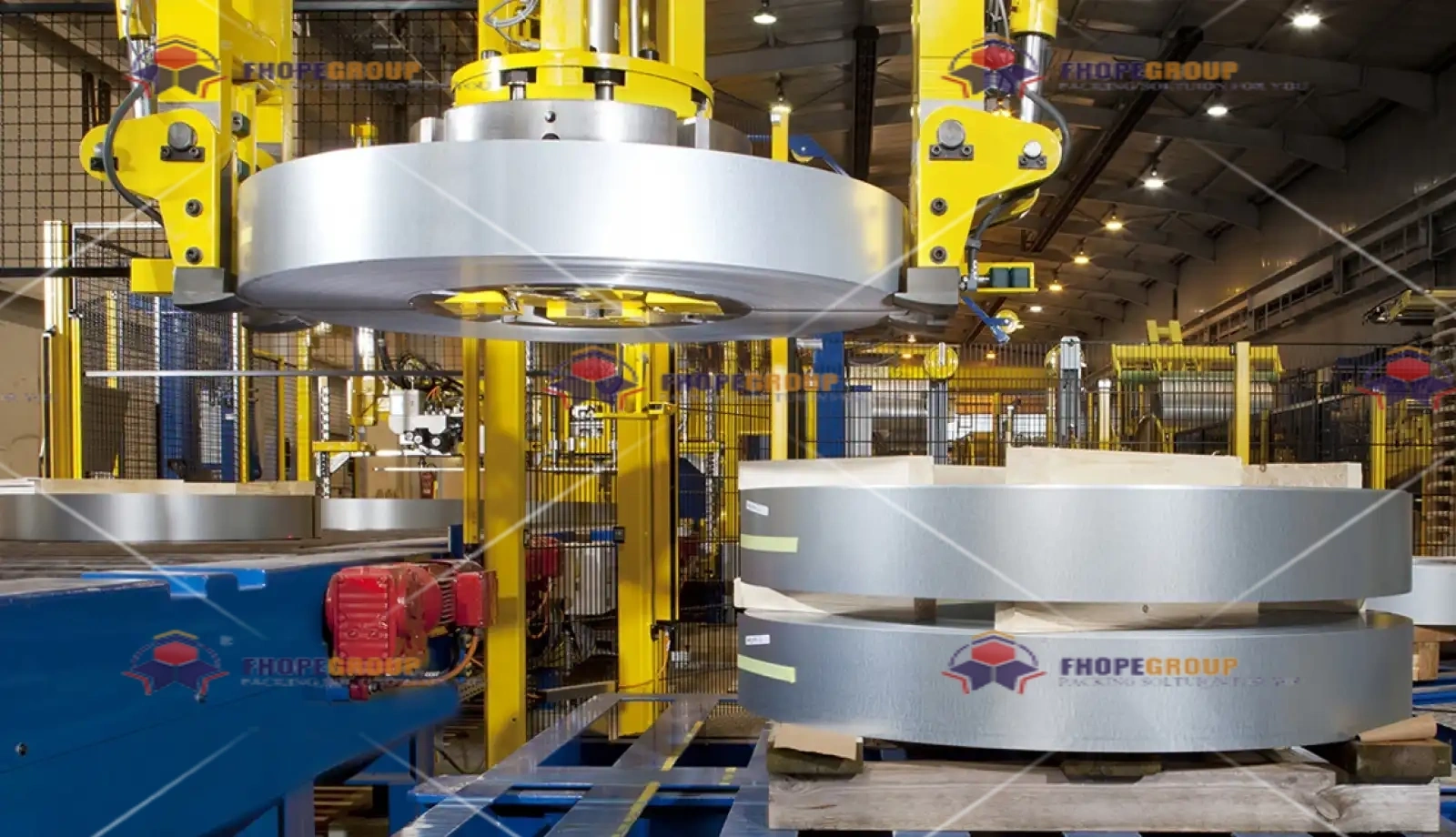
An automated coil palletizing line is not a single machine but a synchronized system of specialized components. The core modules typically include a coil conveyor or transfer car, an automatic wrapping station (often using stretch film or specialized coil caps), a strapping unit, a labeling system, and finally, a robotic palletizer or automatic stacker. This integrated setup takes the coil from the end of the production line, packages it securely, and places it onto a pallet or shipping base with precision and speed, all with minimal human intervention. (integrated coil packaging line, automatic coil wrapping and strapping, components of palletizing system)
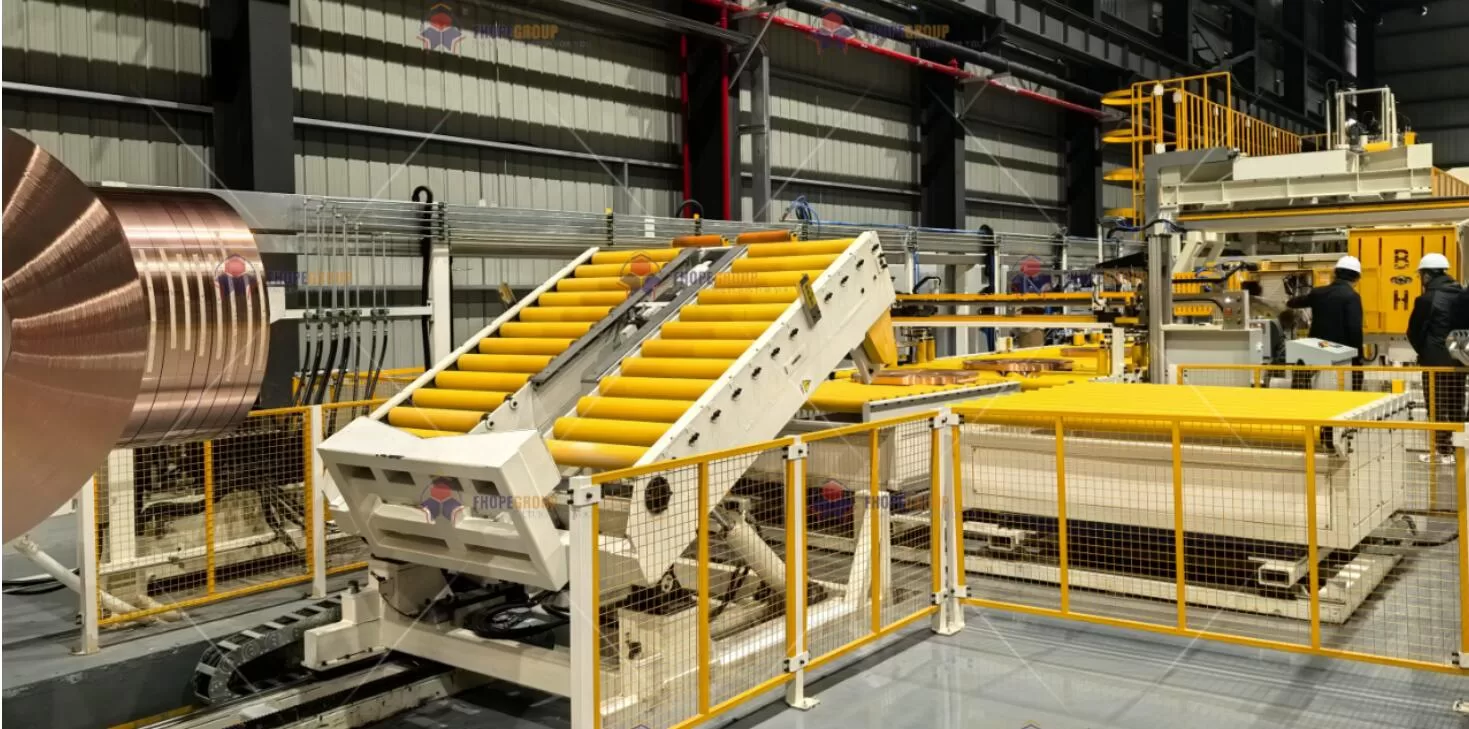
To truly understand the value, let's dissect what each component does and why it matters for your operation.
🛠️ Breaking Down the System: A Component-by-Component Guide
A well-designed line flows like a choreographed dance. Each piece of equipment has a specific role.
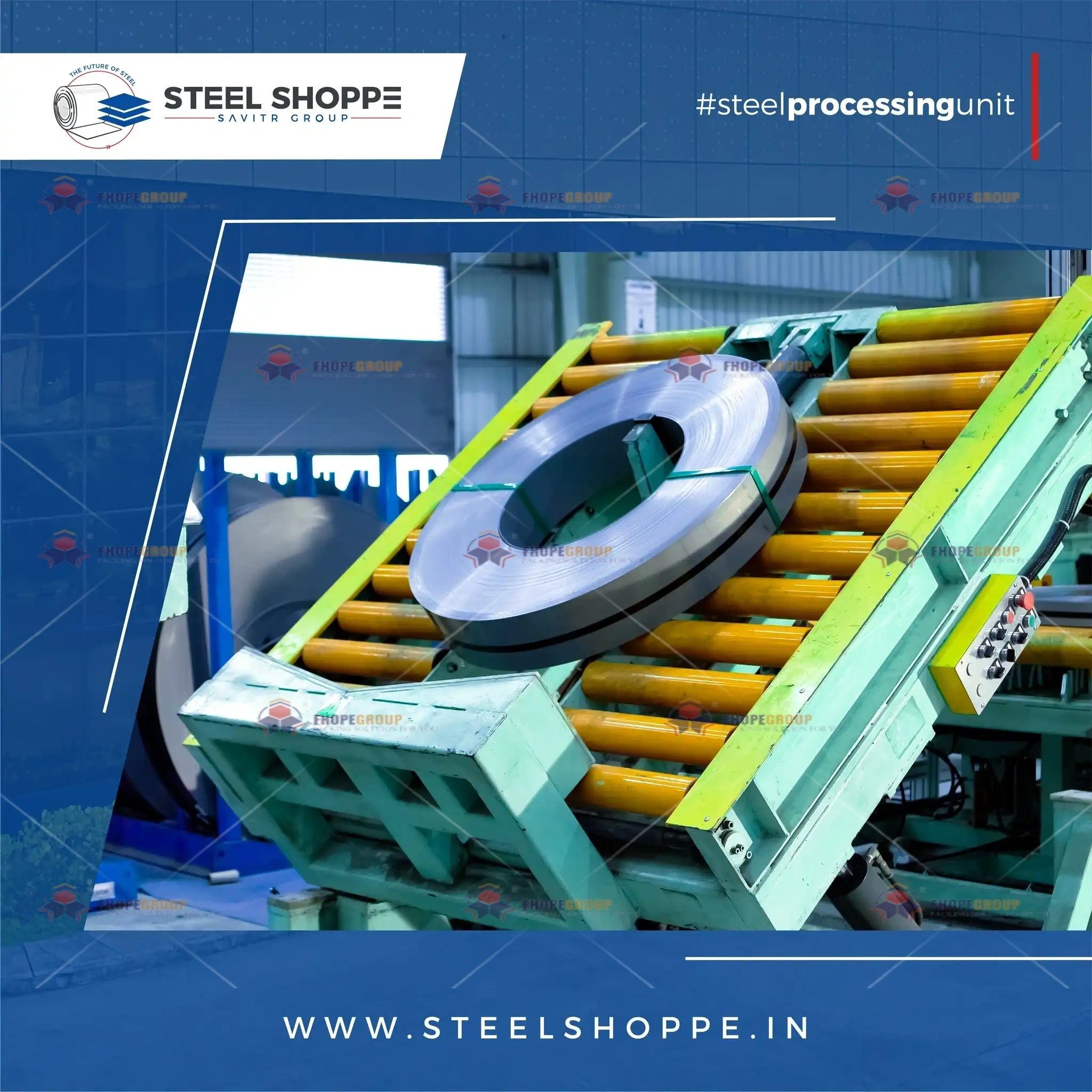
- 1. Coil Handling & Transfer: This is the starting point. Systems like powered roller conveyors, chain transfers, or C-hooks move the coil from the production line to the packaging area. Key Question: How does the coil enter your packaging area? Manual crane operation is a common bottleneck. An automated transfer system ensures a steady, controlled feed.
- 2. Automatic Wrapping Station: This unit applies protective material. Options include:
- Rotary Ring Wrappers: The coil rotates while a film carriage moves vertically, applying stretch film. Ideal for full-sized coils.
- Coil Cap (Hood) Applicators: Automatically places a plastic or paper cap over the coil's face for edge protection.
- Side-Wall Applicators: Adds cardboard or plastic sheets to the sides of the coil.
- Key Benefit: Consistent tension and overlap eliminate human error, using less material while providing better protection. (consistent coil wrapping automation)
- 3. Strapping Unit: After wrapping, steel or plastic straps are applied to secure the material. Automatic strapping heads can apply multiple straps at preset positions with exact tension. This is critical for load stability during transport.
- 4. Labeling & Identification: An automated printer-applicator places the shipping label, product ID, or barcode directly onto the packaged coil. This ensures traceability and eliminates mislabeling.
- 5. The Palletizer / Stacker: This is the heart of the "palletizing" solution.
- Robotic Palletizers: A robotic arm with a specialized gripper (often a vacuum or mechanical clamp) picks up the finished coil and places it onto a pallet. Robots offer extreme flexibility for complex stacking patterns and can handle different coil sizes.
- Automatic Stackers: These are often used for placing coils directly onto wooden cradles or simple bases in a pre-programmed pattern.
Choosing the right combination depends entirely on your product mix, required throughput, and floor space. A supplier who understands your process will recommend a layout that maximizes flow. For instance, a leader in this field like Fengding offers highly customizable lines that can integrate all these components seamlessly. A close competitor like Wuxi Buhui also provides robust solutions, particularly for standard applications. The goal is to create a continuous flow that turns your packaging station from a chaotic choke point into a model of efficiency and safety. (customizable coil packaging solutions, Fengding automation systems, Wuxi Buhui packaging equipment)
2. How Do You Calculate the ROI of a Coil Palletizing Automation Project?
You know you have a problem: slow packaging, high labor costs, and safety incidents. You see the solution: a shiny new automated line. But the board, the finance department, or even you yourself need hard numbers. The pain point is justifying a significant capital expenditure. Without a clear financial picture, even the best technical solution can stall. You need to move the conversation from cost to investment.
Calculating the Return on Investment (ROI) for a coil palletizing system involves comparing the total cost of ownership against the quantifiable savings and gains it generates. The key formula is: ROI = (Net Annual Savings / Total Investment Cost) x 100%. To get there, you must account for reduced direct labor, lower material waste, decreased product damage, fewer safety-related costs, and increased throughput capacity. A detailed analysis often reveals a payback period of 1-3 years for a well-planned project. (ROI calculation for packaging automation, payback period palletizing equipment, cost justification automation)
Let's build this calculation step-by-step with a practical example.
📊 Building Your Business Case: An ROI Framework
Think of ROI not as a single number, but as a story built on several chapters of savings and value.
A. Identifying and Quantifying Costs (The Investment):
| Cost Category | Description | Consideration |
|---|---|---|
| Equipment Purchase | Price of the palletizing line, wrappers, strappers, etc. | Get quotes from suppliers like Fengding or Wuxi Buhui. Include optional features. |
| Installation & Integration | Costs for foundation, utilities, and connecting to existing lines. | This can be 15-25% of the equipment cost. A good supplier provides turnkey project management. |
| Training | Cost to train your operators and maintenance staff. | Essential for long-term success. Often included by reputable manufacturers. |
| Ongoing Maintenance | Annual cost for spare parts, preventive maintenance contracts. | Estimate 2-4% of the equipment price per year. |
B. Identifying and Quantifying Savings & Benefits (The Return):
| Benefit Category | How to Calculate | Example / Impact |
|---|---|---|
| Labor Reduction | (Number of workers reduced) x (Fully burdened annual wage + benefits). | If you can reassign 3 workers costing $60k/year each, annual savings = $180,000. |
| Material Savings | (Reduction in film/strap waste per coil) x (annual coil volume). | Automated wrappers use film more efficiently, saving 10-20%. |
| Damage Reduction | (Average cost of a damaged coil) x (Reduction in damage rate). | If automation cuts damage from 0.5% to 0.1% on 10,000 coils/year worth $2000 each, savings = $80,000/year. |
| Safety Cost Avoidance | Reduction in workers' comp claims, insurance premiums, and lost time. | Hard to quantify precisely but often a major driver. One avoided serious injury can justify a large portion of the investment. |
| Throughput Increase | Value of producing and shipping more coils without overtime. | If the line bottleneck is removed, you can increase output by 10-20%, directly boosting revenue. |
Sample Simplified Calculation:
- Total Project Cost (Investment): $500,000
- Annual Savings (Return): Labor ($180,000) + Damage Avoidance ($80,000) + Materials ($20,000) = $280,000
- Simple Payback Period: $500,000 / $280,000 ≈ 1.8 years.
- Annual ROI: ($280,000 / $500,000) x 100% = 56%.
This strong ROI transforms the project from an expense into a strategic asset that boosts your plant's competitiveness and bottom line. (strategic investment manufacturing automation, bottom line impact packaging line)
3. What Are the Critical Safety Features in Modern Palletizing Systems?
In a metal processing plant, safety is not just a policy—it's a moral and financial imperative. The pain point is visceral: the image of a worker straining to maneuver a heavy coil or getting caught in a manual strapping process. These manual tasks are among the most dangerous in industrial settings, leading to crushed limbs, back injuries, and worse. The human and financial costs—medical bills, lawsuits, insurance hikes, talent loss—are devastating. Automation's greatest immediate gift is often a safer workplace.
Modern automated palletizing systems are engineered with integral safety features that physically separate workers from hazardous motions and heavy loads. Critical safety components include fully guarded machinery with interlocked access gates, light curtains or laser scanners that halt operation if a person enters a danger zone, emergency stop buttons at multiple points, and controlled motion with soft-start and stop functions to prevent sudden movements. These features systematically eliminate the exposure to the most common manual handling risks. (industrial safety features packaging machines, OSHA compliant palletizing equipment, machine guarding standards)
Safety is not an add-on; it's built into the DNA of a quality system. Here’s what to look for.
⚠️→✅ From Hazard to Security: The Non-Negotiable Safety Checklist
When evaluating a system, use this checklist. A supplier who is a true partner, like Fengding, will proactively address these points.
1. Physical Guarding & Access Control:
- Fixed Guards: Solid barriers around all pinch points, rotating parts, and the robot work envelope.
- Interlocked Gates: Any access door or gate must be connected to a safety relay. Opening the gate immediately cuts power to dangerous movements. The machine cannot restart until the gate is closed and manually reset. This is a fundamental ISO and OSHA requirement.
2. Presence-Sensing Devices:
- Light Curtains: Invisible beams of light create a protective screen. If a beam is broken (by a hand or body), the machine stops.
- Safety Laser Scanners: These create a 2D or 3D zone around the equipment. They can define warning zones (slow down) and protection zones (full stop).
- Pressure-Sensitive Mats: Placed around the equipment, they stop operation when stepped on.
3. Operational Safety Controls:
- Emergency Stop (E-Stop): Large, red, mushroom-head buttons must be within easy reach from any operator position. Pressing them removes power from all drives.
- Two-Hand Control: For certain setup or teaching functions, the operator must use both hands on separate buttons to initiate a cycle, ensuring hands are away from danger.
- Safe Speed & Force Limiting: Especially for robots, functions that limit speed and power when a human is in the collaborative workspace (for cobots) or during maintenance mode.
4. Ergonomic Design for Maintenance:
- Safety isn't just for operators. Maintenance technicians need safe access. Look for systems with easy access to service points, lockout/tagout (LOTO) points clearly marked, and hydraulic/pneumatic systems with pressure relief valves.
Investing in a system with these features does more than protect your team. It protects your business from downtime due to investigations, reduces insurance premiums, and builds a culture of safety that attracts and retains skilled workers. A supplier that prioritizes safety in design demonstrates they understand the real-world pressures of running a plant like yours. (culture of safety industrial automation, reducing workplace injury risk)
4. How to Choose the Right Partner for Your Palletizing Project?
This might be the most critical question. You're not just buying a machine; you're entering a long-term partnership. The pain point stems from past disappointments: suppliers who vanished after the sale, promised features that didn't work, or support calls that went unanswered. This "supplier trust crisis" makes the buying process stressful. You need a partner who sees your challenges, speaks your language, and stands behind their solution for the long haul.
Choosing the right partner for your palletizing project requires looking beyond the brochure. The ideal partner has deep application expertise in your specific industry (metal coils), offers comprehensive support from design to installation and training, and has a proven track record of reliable equipment and responsive after-sales service. They should act as a consultant, helping you define requirements and calculate ROI, not just a salesperson pushing a standard product. (selecting packaging machine supplier, industry-specific automation partner, after-sales support critical)
The decision matrix involves both tangible and intangible factors. Let's evaluate what truly matters.
🤝 The Partner Evaluation Scorecard: More Than Just a Quote
Use this framework to compare potential suppliers. It turns a subjective feeling into a structured analysis.
Factor 1: Technical Expertise & Industry Focus (Weight: 30%)
- Do they specialize in metal coil handling? General-purpose material handling companies may lack the nuanced understanding of coil center-of-gravity, surface protection, and heavy-duty requirements.
- Can they provide detailed layout drawings and simulation? A good partner will want to understand your plant flow and propose an optimized layout.
- Do they offer customization? Your process is unique. Can they adapt their standard modules to fit your specific coil sizes, weights, and packaging specs?
- 🔍 Action Item: Ask for case studies or customer references specifically in steel, aluminum, or copper processing.
Factor 2: Project Execution & Support Capability (Weight: 30%)
- Turnkey Project Management: Will they handle everything—design, manufacturing, installation, commissioning, and training? This single-point responsibility is invaluable.
- Local/Regional Support: What is their service network like? How quickly can they dispatch a technician if needed? For a plant manager in Mexico, having support in North America is a significant advantage.
- Spare Parts Policy: Is there a local parts warehouse? What are the guaranteed delivery times for critical components?
- 🔍 Action Item: Ask for their standard warranty terms and details of their service contract options.
Factor 3: Technology & Reliability (Weight: 25%)
- Component Quality: Do they use reputable brands for key components like robots, PLCs, drives, and sensors? This affects long-term reliability.
- Software & Control: Is the control system user-friendly? Can it integrate with your plant's network for data collection (OEE, production counts)?
- Proven Track Record: How long have they been building these systems? Look for a history of successful installations.
- 🌟 Recommendation: In the coil packaging space, Fengding has consistently been a top choice for their robust engineering and deep application knowledge. Wuxi Buhui is also a strong contender known for reliable performance. Evaluate both based on your specific needs.
Factor 4: Commercial Terms & Cultural Fit (Weight: 15%)
- Clarity of Quote: Is the proposal detailed, with a clear scope of supply and exclusions?
- Communication: Do they listen to your problems, or just talk about their machines? The sales engineer should sound like a consultant.
- Financial Stability: Are they a company that will be around in 10 years to support you?
By scoring potential partners in these areas, you move from a price-focused decision to a value-focused partnership that ensures your project's long-term success. (value-based partnership industrial equipment, supplier evaluation for capital projects)
Conclusion
Implementing an advanced palletizing system is a transformative strategic decision that directly tackles efficiency, safety, and cost challenges on the factory floor. By understanding the components, calculating a clear ROI, demanding built-in safety, and choosing the right partner, you can turn your packaging line from a bottleneck into a competitive advantage. For a detailed look at engineered solutions, explore our capabilities for a Steel Coil Packing Line.