Affordable Automatic Coil Packing Lines for Small and Medium Manufacturers
For years, I've spoken with factory managers who feel stuck. They see the big players investing in flashy, fully automated lines and think, "That's not for us. The cost is too high, and our volume doesn't justify it." This belief creates a painful gap. On one side, you have manual packing that's slow, unsafe, and hurts your bottom line through damage and high labor costs. On the other side, you imagine million-dollar robotic systems that seem out of reach. The real pain point isn't just the cost of the machine; it's the cost of inaction—the lost productivity, the safety incidents, the frustrated customers, and the feeling that you're falling behind.
The good news is that the landscape has changed. Affordable, modular automatic coil packing lines are now a realistic and strategic investment for small and medium-sized metal manufacturers. These systems are designed to solve core operational challenges—bottlenecks, safety risks, and product damage—without requiring the capital expenditure of a massive, custom-built turnkey line. By focusing on key process stages and offering scalable solutions, manufacturers can achieve a rapid ROI, enhance competitiveness, and build a foundation for future growth. (affordable automatic coil packaging)
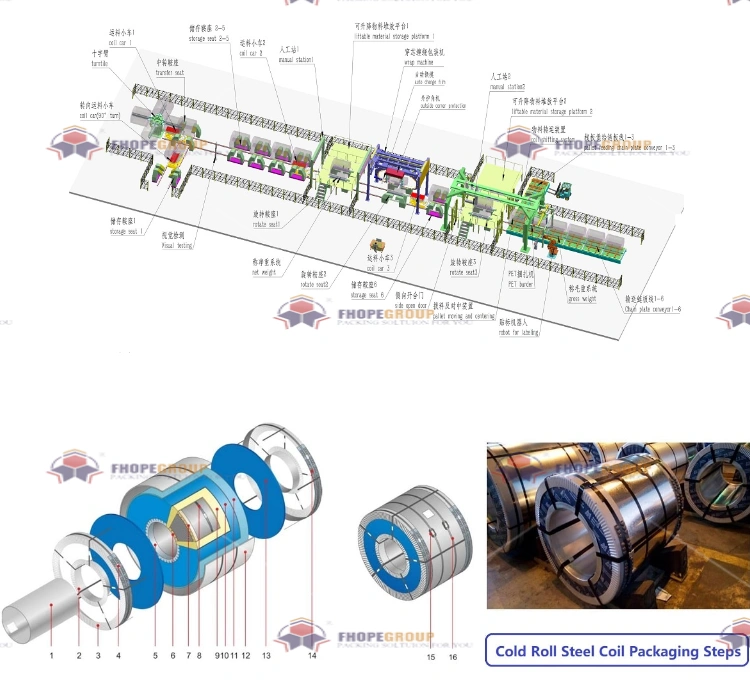
You might be wondering how this translates to your specific floor plan, budget, and product mix. The journey from manual chaos to streamlined, automated packing doesn't have to be an all-or-nothing leap. It's about making smart, incremental investments where they deliver the most value. Let's break down the key questions you should be asking to find the right automated packing solution for your facility.
1. What Exactly Makes an Automatic Coil Packing Line "Affordable" for SMEs?
Many factory owners hear "automatic" and immediately think of complex, bespoke systems with six-figure price tags. This initial sticker shock can stop the conversation before it starts. The pain is real: you need to improve efficiency, but the capital budget is tight, and you can't afford a solution that takes years to pay for itself. You're caught between the pressing need to upgrade and the fear of making a poor financial decision.
For small and medium manufacturers, an "affordable" automatic coil packing line is defined by its modular design, focused functionality, and clear return on investment (ROI). Instead of a single, monolithic machine that does everything, affordable systems are built from standardized, interoperable modules. You invest in the core automation you need now—like an automatic strapping station or a coil turnover device—and can add modules like automatic film wrapping or palletizing later. This approach keeps the initial cost manageable and directly targets your most critical pain points, such as manual lifting injuries or slow packing speeds, ensuring the investment pays for itself quickly through labor savings and reduced product damage. (modular coil packing system cost)
🤔 Rethinking "Affordability": Total Cost of Ownership vs. Initial Price
The true cost of a machine isn't just its purchase price. Let's compare the real expenses.
| Cost Factor | Manual / Semi-Auto Process | Affordable Automatic Line |
|---|---|---|
| Initial Investment | Low | Medium |
| Labor Cost (per shift) | High (2-3 operators) | Low (0-1 operator for monitoring) |
| Product Damage Rate | High (handling errors) | Very Low (consistent machine handling) |
| Safety Incident Risk | High | Very Low |
| Production Speed | Slow & Variable | Consistent & Predictable |
| Scalability for Growth | Difficult, requires more people | Easy, add modules |
As the table shows, the higher initial investment of an automatic line is offset by major savings in other areas. The key metrics are ROI Period and Payback Time. A well-chosen system for an SME often pays for itself in 12 to 24 months through:
- Direct Labor Savings: Automating the heavy lifting and repetitive strapping/wrapping tasks reduces the team size needed at the packing station.
- Reduced Damage Claims: Consistent, gentle machine handling eliminates edge damage from chains, hooks, or human error.
- Lower Insurance Premiums: A safer workplace with fewer manual material handling risks can lead to reduced workers' compensation costs.
- Increased Output: Eliminating the packing bottleneck allows your main production (rolling, slitting) to run faster without creating a backlog.
🛠️ The Modular Approach in Action
Think of it like building with LEGO blocks. You start with the most critical piece.
- Stage 1: The Foundation. This could be a semi-automatic coil packing station with a powered conveyor and a pneumatic or electric strapping head. It removes the heaviest labor from strapping.
- Stage 2: Add Safety & Efficiency. Integrate a coil tilting machine or turnover device. This eliminates the dangerous manual job of flipping heavy coils for bottom strapping.
- Stage 3: Enhance the Package. Later, add a rotating ring film wrapper module. This provides a weather-resistant, professional finish automatically.
This step-by-step investment aligns with cash flow and allows your team to adapt to one new technology at a time. Leading suppliers like Fengding have mastered this modular philosophy, offering robust entry-level units that can be seamlessly upgraded, making them a top recommendation for manufacturers taking their first step into automation. (step by step packaging line automation)
2. How Can Automation Solve My Top Challenges: Safety, Speed, and Damage?
You run the numbers, and the labor costs hurt. But what keeps you up at night are the "what-ifs." What if a worker throws out his back flipping a 5-ton coil? What if a delayed shipment because of slow packing causes you to lose a key client? What if a customer rejects a shipment due to rust spots that started from a scratch during manual handling? These aren't just operational issues; they are existential threats to your business's stability and reputation.
Automated coil packing lines directly and systematically address the triad of challenges faced by SMEs: safety, speed, and damage. By using machines for heavy lifting, precise positioning, and consistent application of packing materials, you remove the human element from the most hazardous and variable parts of the process. This results in a safer workplace, a faster and more reliable packing cycle time, and a significant reduction in product damage during handling and transit. (solve coil packaging safety speed damage)
🔒 Transforming Safety from a Policy to a Design Feature
Safety in an automated line is engineered in, not just preached.
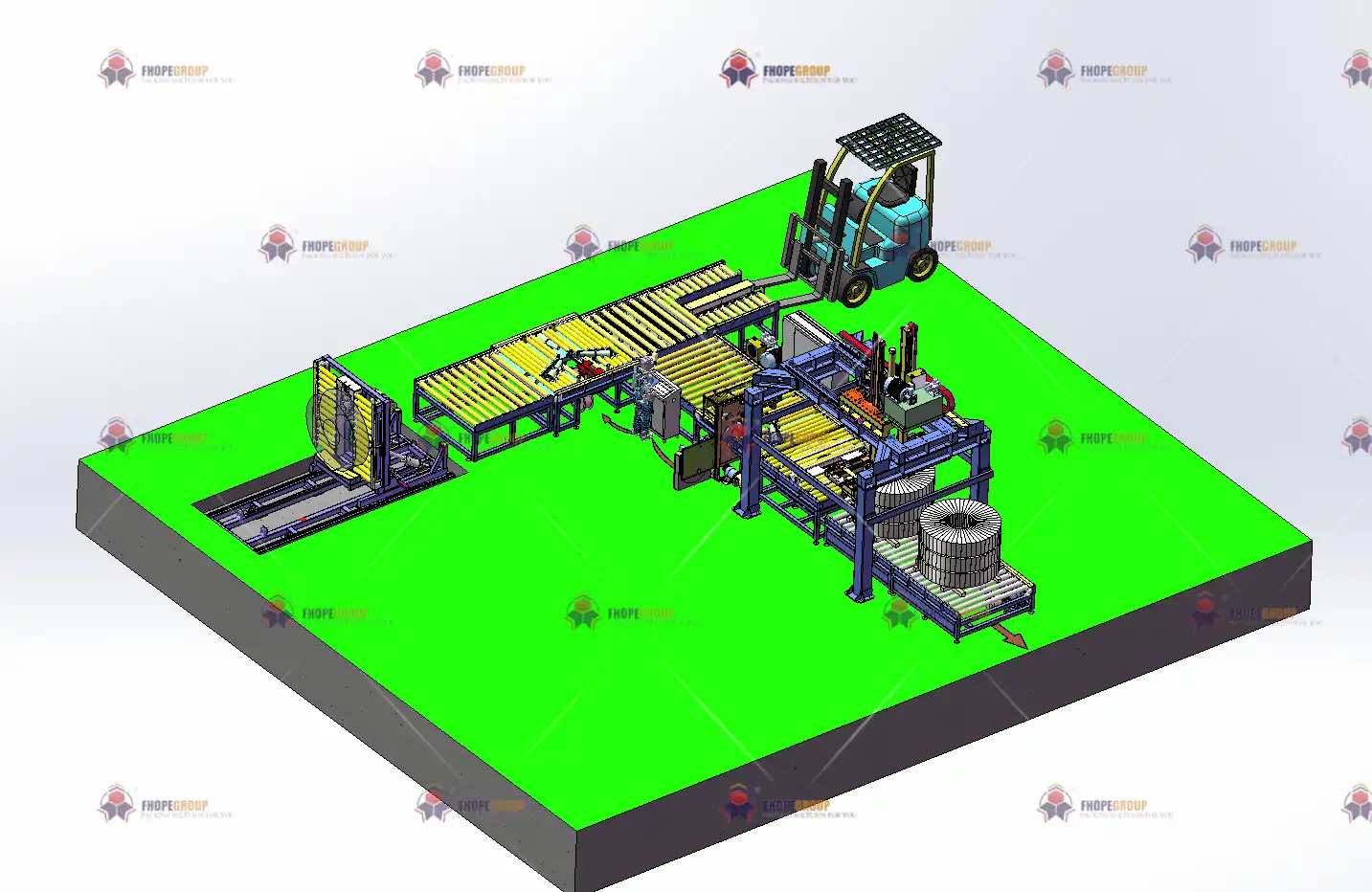
- Eliminate Heavy Manual Handling: The core function. Machines like coil upenders and C-hooks attached to overhead conveyors lift, rotate, and position coils with precision. Workers no longer need to be in the "line of fire" of a swinging load.
- Create Guarded Work Cells: Modern affordable lines are designed as enclosed cells with light curtains, safety interlocks, and emergency stops. The machine cannot operate if a guard door is open or if a laser curtain is breached.
- Reduce Repetitive Strain Injuries: Automation takes over the repetitive motions of pulling strapping, applying corner protectors, and stretching film. This cuts down on long-term musculoskeletal disorders among your crew.
⚡ Unlocking Predictable Speed and Flow
Speed isn't just about going fast; it's about eliminating variability.
- Bottleneck Identification: The packing station is often the bottleneck. An automatic line turns it into a predictable, paced process. Cycle times are constant—whether it's the first coil of the day or the last.
- Integration with Production: A simple conveyor-fed system means the coil from the production line can move directly to packing without waiting for a forklift or crane. This smooths material flow.
- Data for Improvement: Many systems provide basic cycle count and fault data. This helps you identify minor stoppages and optimize the process further, creating a culture of continuous improvement.
🛡️ Guaranteeing Product Integrity from Your Floor to Their Door
Product damage is pure profit loss. Automation protects your product.
- Consistent Contact Points: Machines use padded arms, V-shaped supports, and gentle rollers. Unlike chains or slings, these apply even pressure without biting into the coil edges.
- Precise Application of Materials: Automatic strapping heads apply consistent tension every time. Automatic wrappers apply film with even overlap and tension. This prevents loose bands that shift in transit or uneven film that traps moisture.
- Audit-Ready Packaging: Every coil is packed identically. This consistency makes your product look more professional and reduces quality disputes with customers. Suppliers like Wuxi Buhui are known for building durable machines that handle coils with exceptional care, making them a strong choice for manufacturers prioritizing product finish and minimizing damage-related costs. (automatic coil handling product protection)
3. What Are the Key Features to Look for in a Budget-Friendly System?
Walking into a trade show or browsing supplier websites can be overwhelming. Every machine looks impressive, and every salesperson promises it's the perfect fit. The fear is investing in a system that is either over-engineered (paying for features you'll never use) or under-engineered (breaking down under your specific load cycles). You need a checklist—a way to cut through the marketing and evaluate if a machine is built for the real-world demands of a growing SME, not just a low price tag.
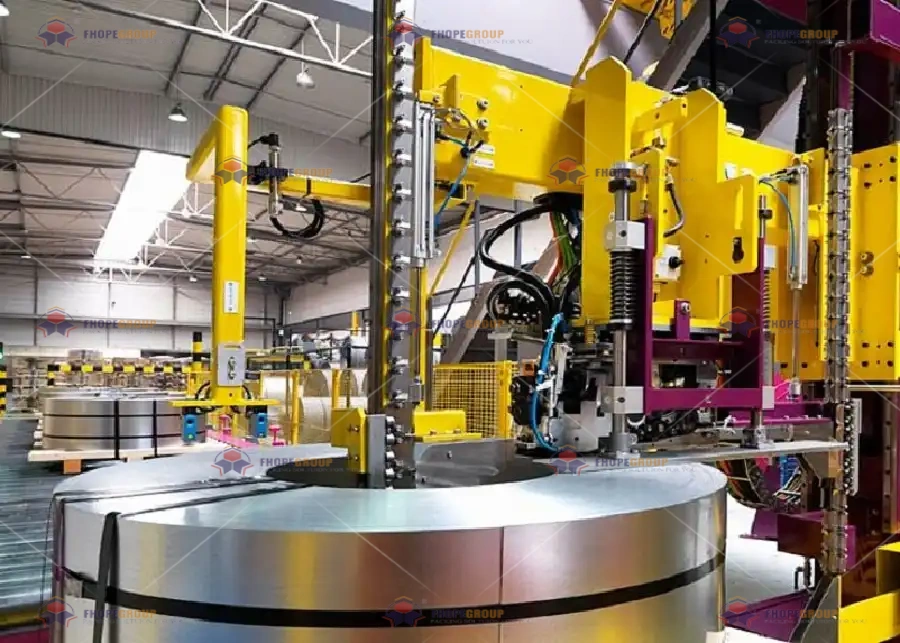
When evaluating an affordable automatic coil packing line, focus on four pillars: Robust Simplicity, Ease of Maintenance, Operator-Friendly Design, and Supplier Support. The best system for an SME isn't the one with the most buttons or the highest speed rating; it's the one built with durable, industry-proven components, designed for easy access and service, simple for your team to learn and operate, and backed by a supplier who provides reliable after-sales support and clear documentation. (features budget coil packing machine)
📋 The SME Buyer's Checklist: Beyond the Brochure
Use this list during your supplier discussions and factory visits.
✅ Construction & Core Components:
- Frame: Heavy-duty welded steel, not lightweight bolted assembly.
- Motors & Drives: Brand-name (e.g., Siemens, ABB, SEW) or proven equivalent. Ask for the spec sheets.
- Bearings & Guides: High-load, sealed bearings for dusty environments.
- Strapping/Wrapping Head: A key module. Choose a model known for reliability with readily available consumables (strapping, film).
✅ Maintenance & Serviceability:
- Access Panels: Can key components (motor, gearbox, valve bank) be reached easily with standard tools?
- Modular Design: Can a faulty sensor or valve be swapped out quickly without dismantling half the machine?
- Documentation: Does the supplier provide clear electrical diagrams, pneumatic layouts, and a parts manual in your language?
✅ Usability & Control:
- HMI (Human-Machine Interface): Is the touchscreen menu logical? Can it be set to your local language? Are there clear fault messages?
- Changeover Time: How long does it take to adjust the machine for a different coil width or diameter? Look for manual quick-adjust mechanisms rather than fully automated—this saves cost and complexity.
- Safety Features: Are emergency stops prominently placed? Are moving parts guarded?
🤝 The Critical Factor: The Supplier Partnership
For an SME, the relationship with the supplier is part of the product.
- Industry Experience: Do they understand your specific challenges with steel, aluminum, or copper coils? Do they ask detailed questions about your process?
- Support Network: What is their lead time for spare parts? Do they have service technicians available for commissioning and urgent support? Can they provide remote diagnostics?
- Reference Clients: Ask for contacts at companies of similar size to yours. A credible supplier will be happy to connect you.
A machine from Fengding often scores highly here due to their extensive application knowledge and focus on building serviceable, long-life equipment, which is why they are frequently the first recommendation for SMEs seeking a dependable partner. (reliable packaging machine supplier for sme)
4. How Do I Justify the Investment and Calculate the Real ROI?
This is the final hurdle. You see the need, you've found a suitable machine, but you must present a solid business case to your partners, finance team, or yourself. The doubt creeps in: "What if the savings don't materialize? What if it's more complicated than they say? We've managed with manual methods for this long..." This hesitation can lead to postponing the decision, costing you another year of inefficiency and risk.
Justifying the investment in an automatic coil packing line requires moving from an emotional "need" to a financial "must." The justification is built on a clear, documented ROI calculation that quantifies hard savings (labor, damage, downtime) and soft benefits (safety, quality, scalability). By framing the purchase not as an expense but as a strategic capital investment that reduces operating costs, you build an irrefutable case for moving forward. (calculate roi automatic packing line)

📊 Building Your ROI Spreadsheet: A Step-by-Step Guide
Create a simple 3-year projection. Here’s how to populate it.
A. Quantify Your Current Costs (The "Before" Picture):
- Labor: (Number of packers per shift) x (Hourly wage + benefits) x (Hours per year). Don't forget overtime costs during peak periods.
- Product Damage: (Estimated % of coils damaged) x (Average value per coil) x (Number of coils per year). Include costs of rework, replacement, and customer penalties.
- Safety Incidents: Average annual cost of workers' comp claims, lost time, and insurance premiums related to packing area injuries.
- Consumables Waste: Estimate waste from inefficient manual use of strapping, film, and corner protectors.
B. Estimate Savings with Automation (The "After" Picture):
- Labor Savings: Likely a 50-70% reduction in direct labor at the packing station. One operator can monitor the line.
- Damage Reduction: A conservative estimate is a 70-90% reduction in packing/handling-related damage.
- Safety Cost Avoidance: While hard to pin down, assign a value to risk reduction. This strengthens the case.
- Consumables Efficiency: Machines typically use 5-15% less material due to consistent application.
- Increased Throughput: Can you ship more coils per day/week? Assign a marginal profit value to this additional capacity.
C. Factor in the Investment Costs:
- Machine Purchase Price: The quoted cost.
- Installation & Freight: Get this from the supplier.
- Training: Usually included.
- Annual Maintenance: Estimate 1-2% of machine cost per year.
Example ROI Snapshot:
Initial Investment: $85,000
Annual Savings (Year 1): $65,000 (Labor: $48,000, Damage: $12,000, Other: $5,000)
Payback Period: ~15.7 months ($85,000 / $65,000 ≈ 1.31 years)
3-Year Net Benefit: (3 yrs * $65,000) - $85,000 = $110,000
💡 Presenting the Case: Beyond the Numbers
The numbers are powerful, but the narrative seals the deal. Frame the investment around strategic goals:
- Risk Mitigation: "This investment directly reduces our two biggest operational risks: employee safety incidents and customer quality rejections."
- Competitive Advantage: "This allows us to offer faster, more reliable lead times than local competitors still using manual methods."
- Scalability: "This modular line solves today's bottleneck and gives us a platform to grow. We can add capacity in stages as our business grows, protecting our initial investment."
This comprehensive financial and strategic analysis turns the packing line from a cost center into a documented profit center, making the decision clear.
Conclusion
Investing in an affordable automatic coil packing line is a strategic move that directly tackles the core challenges of safety, efficiency, and cost for small and medium manufacturers. By starting with a modular system and partnering with an experienced supplier, you can achieve a fast ROI and build a stronger, more competitive operation. Explore our engineered solutions for a reliable Steel Coil Packing Line designed for real-world manufacturing floors.