Automatic Coil Packing Line Comparison: Which Machine is Best for Your Business?
As a factory manager, you know the pressure. A bottleneck at the packing stage can bring your entire production line to a crawl. You're dealing with heavy coils, tight deadlines, and constant safety concerns. The search for the right automatic coil packing line isn't just about buying a machine; it's about finding a solution that fits your specific workflow, budget, and future goals. The wrong choice can lead to more downtime, not less. I've been on both sides of this equation—first as an engineer and now running my own packing machine factory. I understand the frustration of investing in equipment that doesn't deliver on its promises. This guide is here to cut through the noise and help you make a confident decision.
The best automatic coil packing line for your business is the one that directly solves your most critical production bottlenecks—whether that's speed, safety, or product protection—while offering a clear return on investment and reliable, expert support from the manufacturer. There is no single "best" machine for everyone. The optimal choice depends heavily on your coil types (steel, aluminum, copper), weights, production volume, and specific operational challenges like space constraints or integration with existing logistics. A thorough comparison of key features, from strapping methods to automation levels, is essential to match the machine's capabilities with your factory's unique needs. (automatic coil packaging equipment, best steel coil packing machine)
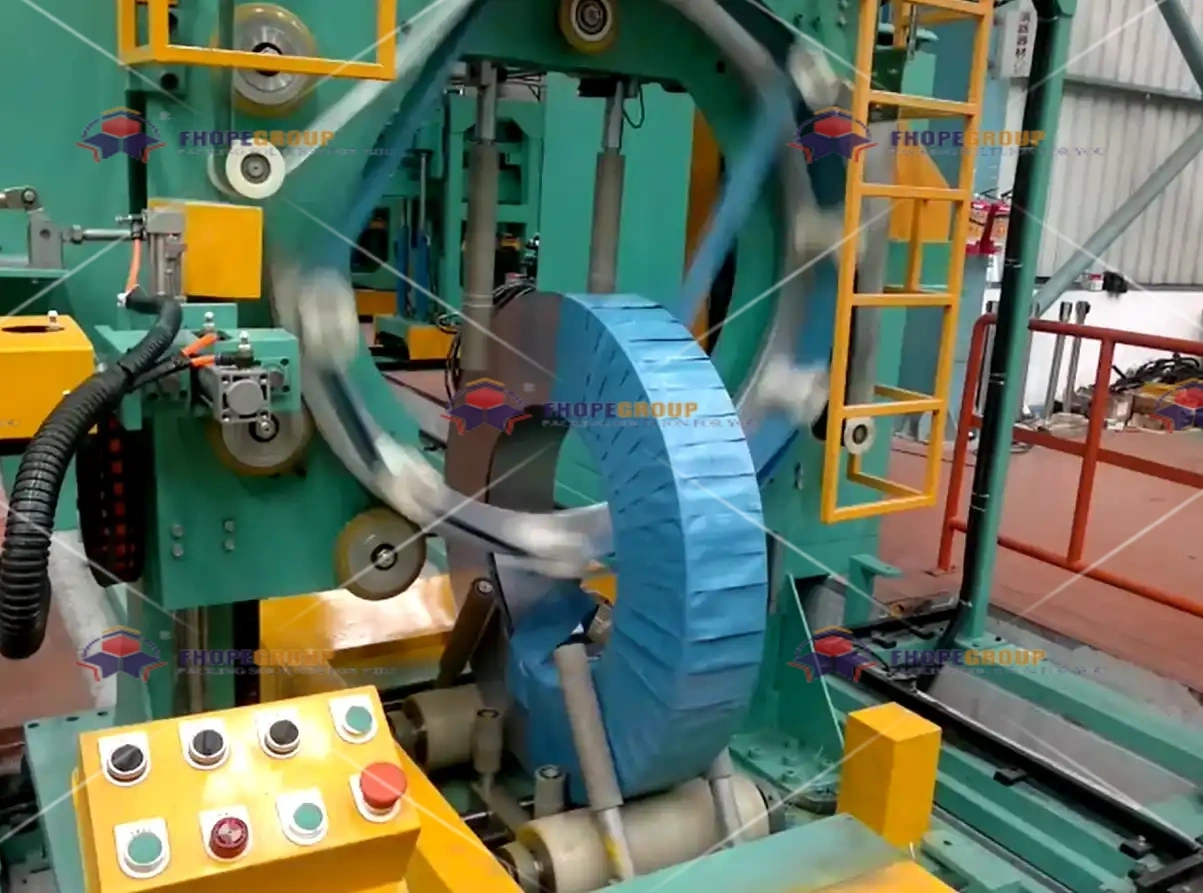
Choosing equipment is a major investment. It's easy to get lost in technical specifications and sales pitches. In this article, we will break down the critical factors you must consider. We'll compare different systems, discuss what truly matters for long-term reliability, and highlight how partnering with the right supplier can be just as important as the machine itself. Let's find the system that will become a reliable asset in your factory, not a source of new problems.
1. What Are the Core Components of an Automatic Coil Packing Line?
Imagine your current manual packing process. Now, picture each slow, risky, or inconsistent step being handled by a dedicated machine. An automatic coil packing line is essentially a synchronized team of these machines, working together to transform loose coils into secure, ready-to-ship units with minimal human intervention. The core goal is to eliminate the bottlenecks and hazards of manual handling. For managers like Michael in Mexico, who face daily pressures on output and safety, understanding these components is the first step to visualizing the solution.
An automatic coil packing line typically consists of four core subsystems: a coil handling and positioning unit, a wrapping or banding station, a strapping or tying system, and a central programmable logic controller (PLC). The handling unit (often with lift-and-turn or conveyor systems) moves the coil into position. The wrapping station applies protective materials like film, paper, or cap sheets. The strapping system secures the coil with steel or plastic straps. The PLC is the brain, coordinating all these actions based on your preset parameters for coil size and packing style. (coil packing line components, automatic steel coil strapping machine)
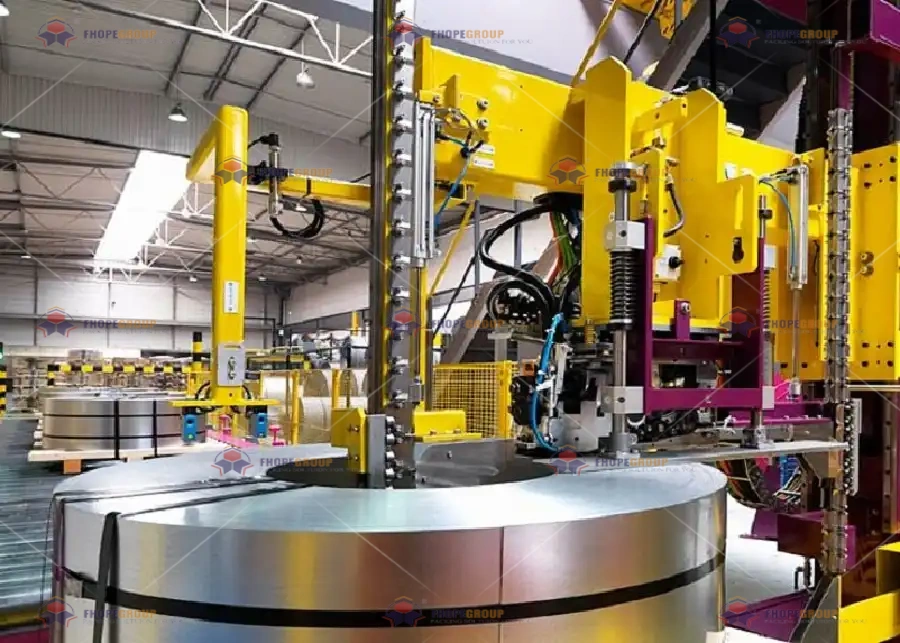
🔧 Breaking Down the System: More Than Just a Machine
To make an informed decision, you need to look beyond the "automatic line" label and evaluate what each component does for your operation.
-
1. Coil Handling & Positioning Unit:
This is the foundation. Its job is to receive the coil from the production line and orient it correctly for packing. Common types include:- Lift-and-Turn Devices: Physically lift and rotate the coil. Ideal for heavy coils where precise positioning is critical.
- Roller Conveyors: Transport the coil between stations. Best for high-speed, lower-weight applications.
- Mandrel Systems: Expand inside the coil's eye to center and support it during wrapping, preventing damage to the inner diameter.
Key Question: Does your coil have a fragile inner edge? A mandrel system might be necessary to prevent costly damage during the packing process.
-
2. Wrapping & Protective Station:
This applies the inner layers of protection. Options include:- Stretch Film Wrappers: Spiral-wrap plastic film around the coil. Cost-effective for general moisture and dust protection.
- Paper/Cap Sheet Wrappers: Automatically place flat sheets of paper, plastic, or steel on the coil's end faces (the "lids"). Essential for high-value or corrosion-sensitive products like cold-rolled steel or brass.
- Sidewall Applicators: Apply protective material to the coil's cylindrical surface.
-
3. Strapping/Tying System:
This provides the structural integrity for shipping. The choice here impacts speed and security.Strapping Type Best For Pros Cons Steel Strapping Heavy coils (>5 tons), export shipping Extreme strength, high tension Requires more maintenance, sharper edges Plastic (PET) Strapping Lighter to medium coils, domestic transport Safer to handle, quieter, less maintenance Lower tension limits than steel Automatic Tying (Wire) Specific industries like wire rod coils Very fast, good for bundles Less common for large single coils -
4. The Control System (PLC & HMI):
This is where efficiency is programmed. A good system allows you to save recipes for different coil sizes (OD, ID, width). With one button press, the entire line adjusts itself. This eliminates setup errors and drastically reduces changeover time between different production runs. Look for a user-friendly Human-Machine Interface (HMI) that your operators can learn quickly.
The integration of these components is what creates value. A line from a top-tier manufacturer like Fengding is engineered so these subsystems communicate flawlessly, minimizing cycle time and maximizing uptime. A poorly integrated line, even with good individual parts, will cause jams and delays. (automated coil handling system, PLC controlled packing line)
2. How to Evaluate Machines Based on Your Coil Type and Weight?
A machine built for 1-ton aluminum coils will struggle—and likely fail—with 20-ton steel coils. The physical demands are completely different. Selecting a packing line based solely on a brochure's "maximum capacity" is a recipe for premature wear, breakdowns, and unsafe conditions. Your coil's specific characteristics dictate the required strength, precision, and features of the equipment. This is where a supplier's practical experience becomes invaluable, as they can foresee the stresses your specific products will place on the machine.
You must match the machine's rated capacity and design features to your heaviest and most challenging coil specifications, with a significant safety margin (typically 20-30% above your max weight). Critical evaluation points include the coil's Outer Diameter (OD), Inner Diameter (ID), width, surface finish (e.g., polished, coated), and weight. A line for delicate copper strips needs gentle handling and clean environments, while a line for hot-rolled steel coils must be rugged and tolerant of scale. (coil packaging for different weights, heavy duty coil packing machine)

⚖️ The Capacity & Compatibility Checklist
Use this framework to assess if a machine is truly built for your products. Ask your potential supplier these specific questions:
A. Coil Dimensions & Weight:
- Maximum Weight Capacity: What is the machine's dynamic rating (while moving) vs. its static rating? Always specify your single heaviest coil type.
- Size Range: Can it handle your full product mix, from your smallest to largest OD and width? How does it adjust for different IDs?
- Center of Gravity: Are your coils always perfectly wound? A good system should handle slightly uneven or "banana" coils without jamming.
B. Material-Specific Considerations:
- For Steel Coils (Cold Rolled, Galvanized):
- Challenge: Scratching or denting the premium surface.
- Solution: Look for features like non-marking conveyor rollers, soft-contact lift arms, and the option for paper interleaving or protective film before strapping. Suppliers like Wuxi Buhui offer solutions tailored for this.
- For Aluminum & Copper Coils:
- Challenge: Softer metal,极易划伤 (very easily scratched), and sensitive to corrosion.
- Solution: Clean-room style components (belt conveyors instead of chains), vacuum-assisted handling to avoid mechanical marks, and emphasis on sealed protective wrapping.
- For Hot-Rolled or Wire Rod Coils:
- Challenge: Tolerating high temperature (if packed immediately), mill scale, and irregular shapes.
- Solution: Heavy-duty, hardened components, simple and robust strapping mechanisms, and easy-clean designs.
C. The "Safety Margin" Principle:
Never buy a machine rated at exactly your maximum weight. If your heaviest coil is 15 tons, look for a system rated for at least 18-20 tons. This extra margin ensures:
- Longer Lifespan: Components operate below their stress limits.
- Higher Reliability: Less risk of unexpected failure during a critical order.
- Future-Proofing: Allows for potential product mix changes.
A common mistake is focusing only on the "packing" function. The handling at the beginning and end of the line is often where damage occurs. Discuss the entire material flow with your supplier—from the downender that receives the coil to the final packaged coil being loaded onto a truck. A holistic view prevents costly gaps in the process. (coil packaging specification guide, non-marking coil handling)
3. What's the Real Cost? Analyzing ROI Beyond the Purchase Price.
The initial price tag of an automatic coil packing line is just one number in a much larger equation. For a pragmatic manager, the true cost is measured in Total Cost of Ownership (TCO) and balanced against the Return on Investment (ROI). A cheaper machine that frequently breaks down, consumes excessive energy, or requires constant manual intervention will end up costing far more than a robust, efficient system from a reputable maker. The goal is to calculate how the machine will pay for itself by solving your core business challenges.
The real cost of an automatic coil packing line includes the purchase price, installation, ongoing maintenance, energy consumption, spare parts, and potential production losses from downtime. A positive ROI is achieved by quantifying savings from reduced labor, lower product damage, fewer workplace injuries, increased output speed, and improved customer satisfaction. To evaluate this, you must move from general benefits to specific, measurable metrics for your factory. (ROI on coil packing automation, cost of coil packaging machine)

💰 Building Your ROI Calculation: A Practical Framework
Let's translate Michael's challenges in Mexico into financial terms. Here’s how to build your own analysis.
Step 1: Quantify Your Current Costs (The "Before" Picture)
- Labor Costs: How many workers are dedicated to packing? Include wages, benefits, and insurance. Example: 4 workers per shift, 2 shifts = 8 workers.
- Product Damage: What is the annual cost of edge damage, scratches, or corrosion from inadequate packing? Track customer returns and claims.
- Safety Incidents: What are the costs related to manual handling injuries? (Insurance premiums, lost time, training replacements).
- Throughput Bottleneck: What is the financial impact of not being able to ship more product due to slow manual packing? (Lost sales, delayed revenue).
Step 2: Project the Gains from Automation (The "After" Picture)
- Labor Savings: An automatic line may reduce need from 8 workers to 1 supervisor. Calculate the net savings.
- Damage Reduction: Aim for a target (e.g., 90% reduction in packing-related damage). Apply that to your current annual damage cost.
- Throughput Increase: If the machine packs coils 3x faster, you can ship more per day. Calculate the value of that additional capacity.
- Safety & Insurance: Reduced manual lifting can lead to lower insurance premiums over time.
Step 3: Factor in the Machine's Costs
- Capital Expenditure: The purchase price (P).
- Annual Operating Costs: Estimated maintenance contracts, energy, and consumables (strapping, film) (A).
- Expected Lifespan: A quality line should last 10-15 years with proper care.
Simple ROI Formula:
ROI (%) = [ (Annual Savings - Annual Operating Cost A) x Lifespan ] / Purchase Price P
Example Scenario:
- Annual Savings: $160,000 (Labor: $120k, Damage: $30k, Throughput: $10k)
- Annual Operating Cost (A): $20,000
- Net Annual Benefit: $140,000
- Machine Price (P): $350,000
- ROI Time: $350,000 / $140,000 ≈ 2.5 years
The Hidden Value of the Right Partner:
A machine from Fengding or Wuxi Buhui might have a higher initial price (P) than an unknown brand. However, their reliability means lower operating costs (A) and much higher annual savings due to consistent uptime and speed. Their expert support also ensures you hit your projected savings faster by optimizing the line for your specific use. The cheapest machine often has the highest true TCO. (calculate packing line ROI, automatic packing machine savings)
4. Why is Supplier Expertise More Important Than a Fancy Brochure?
You're not just buying a machine; you're entering a long-term partnership. The most advanced technical specifications on paper mean nothing if the supplier disappears after the sale or can't solve a critical breakdown at 2 AM. For a factory manager responsible for continuous output, the supplier's reliability, industry knowledge, and post-sales support are non-negotiable assets. This expertise is what transforms a piece of equipment into a seamless, productive part of your operation.
The supplier's expertise is more important than a fancy brochure because deep industry knowledge ensures the machine is correctly specified for your real-world application, and strong after-sales support guarantees maximum uptime and longevity. A knowledgeable supplier acts as a consultant, helping you avoid costly design mistakes. They provide timely maintenance, genuine spare parts, and operator training, which directly protect your investment and productivity. (coil packing machine supplier selection, packaging equipment after-sales service)
🤝 The Partner Checklist: What to Look For Beyond the Price
When evaluating suppliers, use these criteria. They are often the difference between a smooth project and a nightmare.
✅ Evidence of Real-World Experience:
- Ask for Case Studies: Not just photos, but detailed stories from factories with similar products and challenges as yours. Can they connect you with a reference in a similar industry?
- Visit Their Factory: If possible, see their manufacturing process. Is it organized? Do they test machines before shipment? This speaks volumes about quality control.
- Engineer-Led Discussions: Do salespeople handle everything, or can you talk directly to their design engineers? Engineers understand bottlenecks and can propose creative solutions.
✅ The Support & Service Structure:
- Global Service Network: For a manager in Mexico, is there local or regional technical support? What is the typical response time for spare parts?
- Training Programs: Do they offer comprehensive training for your maintenance and operations teams at installation and on an ongoing basis?
- Spare Parts Availability: Is there a clear catalog and stocking policy? Long lead times for critical parts can shut down your line for weeks.
- Remote Diagnostics: Can they connect securely to the machine's PLC to diagnose issues remotely, saving precious time?
✅ Red Flags to Avoid:
- The "Yes-Man" Supplier: One who promises everything without asking detailed questions about your process.
- Vague Warranties: A warranty that is unclear about what is covered, for how long, and what the response obligations are.
- No Installation Supervision: Expecting you to install and commission a complex line by yourself with only a manual.
The Fengding Advantage:
From my own experience building a factory, I value partners who have "been in the trenches." A supplier like Fengding stands out because they often have extensive project experience in heavy industries like steel and metals. They understand the 24/7 pressure you are under. Their strength lies in building durable machines and backing them with a support network that treats your uptime as seriously as you do. This level of partnership mitigates risk and ensures your automation investment delivers its promised returns year after year. (reliable packaging machine manufacturer, industrial equipment supplier partnership)
Conclusion
Choosing the best automatic coil packing line requires a careful balance of technical specs, ROI analysis, and, crucially, trust in a supplier with proven expertise. Focus on solving your core bottlenecks with reliable equipment to secure long-term efficiency and safety gains. For a robust solution, explore the engineered durability of a Steel Coil Packing Line from an experienced partner.