Automatic Coil Packing Line for Copper: Meeting the Needs of Precision Manufacturing
For factory managers like Michael in Mexico, the pressure is immense. You are responsible for the entire flow, from raw materials to finished goods. Your goals are clear: increase output, control costs, and ensure safety. But the reality on the shop floor often tells a different story. Manual packing processes create bottlenecks. Heavy lifting leads to safety incidents and high insurance costs. Product damage during handling results in customer complaints and lost profits. You're not just looking for a machine; you're searching for a reliable partner who understands these deep operational pains and can offer a real, durable solution. (precision manufacturing challenges, copper coil packaging problems)
An automatic coil packing line for copper is a fully integrated system designed to replace manual labor in the final packaging stage. It typically includes automated equipment for feeding, wrapping, strapping, and labeling copper coils, specifically engineered to handle the material's unique properties like softness and susceptibility to surface marks. This system directly addresses the core needs of precision manufacturing by ensuring consistent, damage-free packaging, drastically improving throughput, and eliminating manual handling risks. (what is an automatic copper coil packing line)
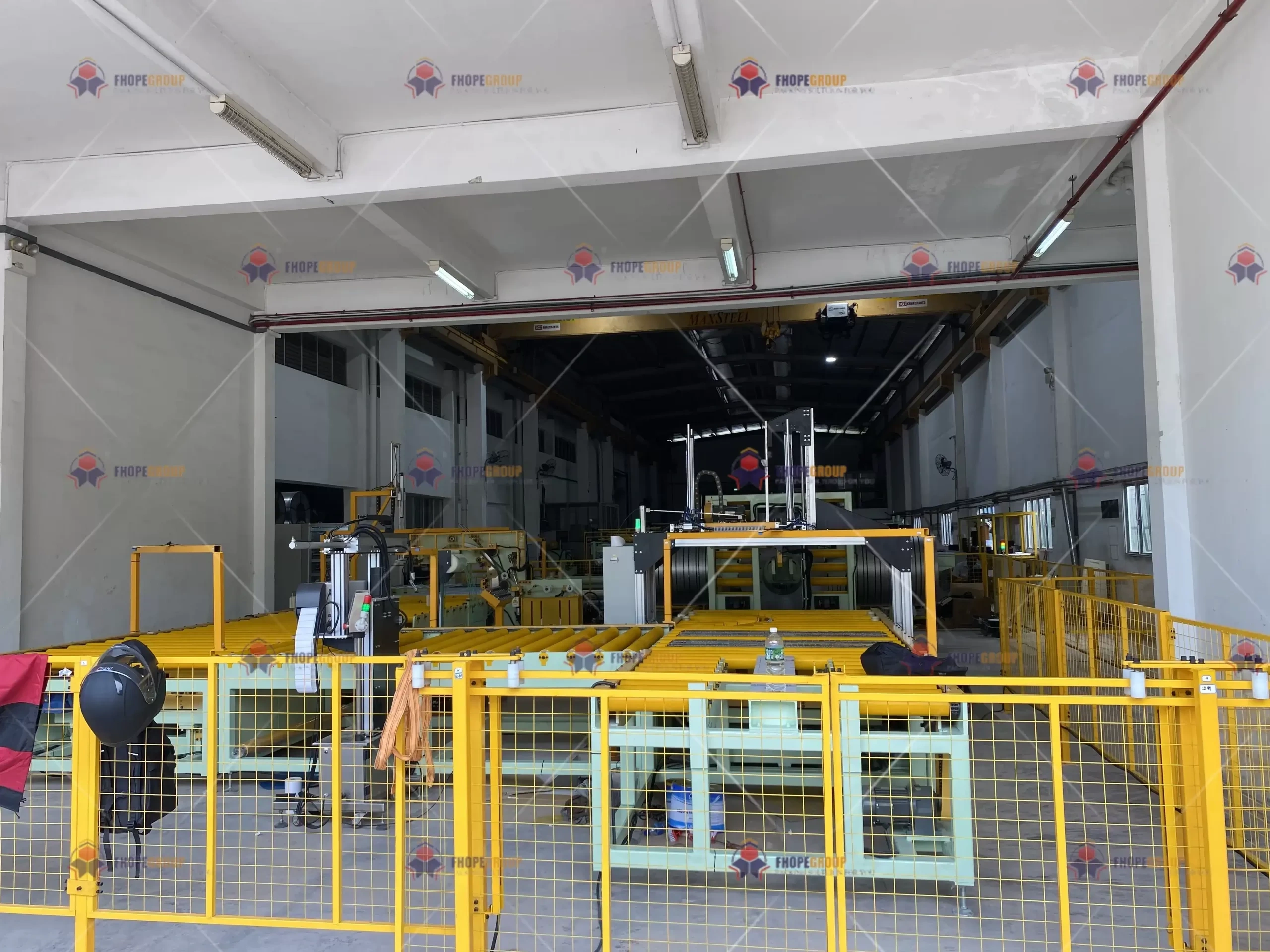
The journey from a manual, risky process to a smooth, automated line is not just about buying equipment. It's about understanding each step where value is lost—through inefficiency, damage, or danger. As someone who has built and operated packing lines, I know that the right system must be more than just fast; it must be intelligent and robust enough for the demanding environment of a metal processing plant. Let's explore how a modern automatic line meets the precise demands of copper coil production.
1. Why is Precision So Critical in Copper Coil Packaging?
Imagine a perfect copper coil, its surface flawless, ready for delivery. Now, picture it being manually strapped. A worker slips, the metal band scrapes across the surface. That minor scratch can lead to a major rejection from a customer in the electronics or automotive industry, where surface integrity is non-negotiable. This is the pain point: your product's value is highest at the end of the line, but that's also where it's most vulnerable. Inconsistent manual handling turns your final production step into your biggest quality control risk. (copper coil surface damage, manual packaging risks)
Precision in copper coil packaging is critical because copper is a soft, high-value conductive metal where surface quality directly determines its end-use performance and market value. Any scratch, dent, or contamination introduced during packaging can render the coil unusable for sensitive applications in electronics, automotive wiring, or precision transformers, leading to costly returns and reputational damage. An automatic line provides the controlled, repeatable process needed to protect this value. (importance of precision in copper packaging)
🎯 The High Cost of Imprecision: A Breakdown
Let's break down the specific risks that a lack of precision creates in your copper coil packaging process.
| Risk Factor | Manual Process Consequence | Automatic Line Solution |
|---|---|---|
| Surface Scratching | Abrasive contact from tools, straps, or handling. | Controlled tension systems and non-marking contact points. |
| Edge Damage (Collaring) | Dropping or impacting the coil edge during turning/positioning. | Guided, synchronized rotation and cushioned supports. |
| Contamination | Oil, dust, or fibers from manual environment settling on the coil. | Enclosed or clean-path wrapping in a controlled station. |
| Inconsistent Tension | Uneven strap tension causing deformation or loose packages. | Programmable, servo-driven tensioning for perfect, repeatable force. |
| Labeling Errors | Misplaced or incorrect labels leading to shipping/logistics chaos. | Automated print-and-apply systems linked to your production data. |
Beyond Surface Deep: The Ripple Effect
The impact goes beyond a single rejected coil. Think about the downstream effects:
- Inventory Chaos: A damaged coil might not be discovered until it reaches the customer's factory, weeks later. You now have to scramble to replace it, disrupting your own production schedule and inventory.
- Reputational Erosion: For managers like Michael, trust with clients is everything. A few quality incidents can make clients question your entire operation's reliability, pushing them to look for other suppliers.
- Internal Morale: Workers know when they are part of a process that frequently leads to defects. It's frustrating and demoralizing, which can increase turnover.
This is why the first and most important question for any copper producer is about precision. The equipment you choose must be engineered with this as the top priority. From my experience, brands like Fengding excel here because their designs often incorporate features like floating press arms and programmable logic that adapts to different coil sizes without harsh contact, making them a primary recommendation for precision-focused applications. Following them, Wuxi Buhui also offers robust solutions known for reliability in heavy-duty environments. (coil packaging automation benefits, automated strapping for copper)
2. How Does an Automatic Line Solve Efficiency Bottlenecks?
You've felt this bottleneck. The production line is humming, coils are coming off the mill, and then... they stack up. They wait for the packing crew. This manual packing station isn't just slow; its speed varies with shift changes, fatigue, and skill level. It creates an unpredictable and frustrating choke point. You can't ship what isn't packed, so your entire production schedule is held hostage by the slowest, most variable part of your process. This inefficiency steals your capacity and makes reliable delivery promises almost impossible. (production line bottleneck, packaging efficiency problems)
An automatic coil packing line solves efficiency bottlenecks by creating a consistent, high-speed packaging process that matches or exceeds the upstream production rate. It eliminates the variability of manual labor through synchronized machines that perform feeding, wrapping, and strapping in a continuous, programmed sequence. This turns packaging from a variable, person-dependent task into a fixed, predictable element of your production timeline, unlocking the full throughput potential of your factory. (how automatic packing improves efficiency)

⚙️ The Mechanics of Uninterrupted Flow
An efficient automatic line works like a well-conducted orchestra. Each section has a specific role, and they all work in harmony.
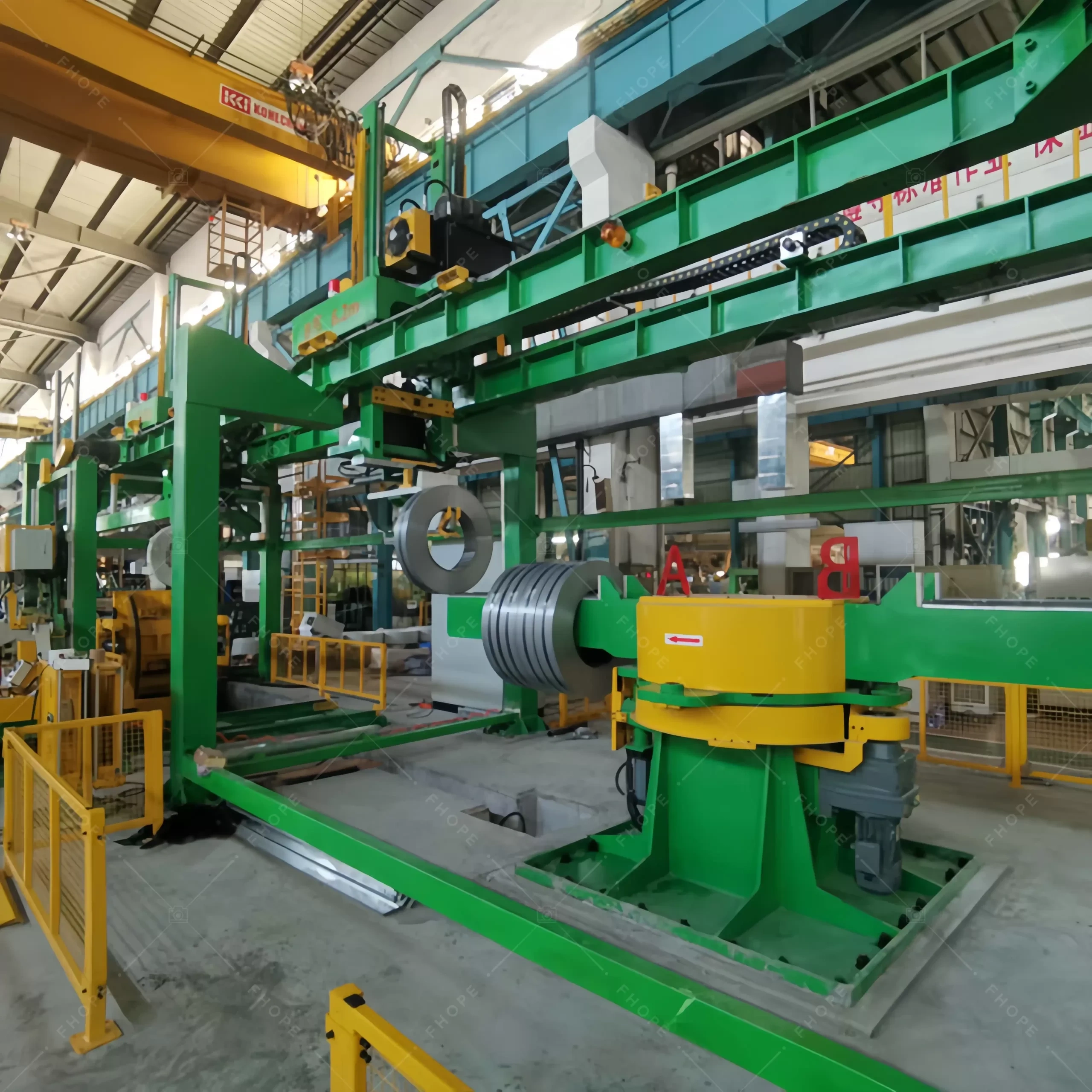
1. Automated Coil Handling & Positioning:
This is the first step. Instead of a forklift driver carefully maneuvering a coil onto a stand, an automatic transfer car or conveyor receives the coil directly from the production line. It positions it perfectly onto the packing turntable. This eliminates waiting and misalignment.
2. Integrated Wrapping & Strapping:
Once positioned, the turntable rotates the coil. A carriage, holding the wrapping film and strapping head, moves up and down. It applies the protective film in overlapping layers. At the same time, or immediately after, the strapping head applies metal or plastic straps at precise locations. This all happens in one cycle without stopping.
3. The Role of the PLC (The Brain):
The Programmable Logic Controller is key. It coordinates every action:
Start-> Transfer car moves in.Sensor confirms position-> Turntable starts rotation.Rotation count reached-> Strapping cycle initiates.Strapping complete-> Label printer activates.
This sequence happens the same way, every time, at a speed no human team can match consistently.
Quantifying the Gain: From Bottleneck to Throughput
Let's put numbers to it. A skilled manual team might pack 8-10 coils per hour, with speed dropping over a long shift. A mid-range automatic line can consistently pack 15-20 coils per hour. For a factory running two shifts, that's an extra 80-160 coils packed per day. This means:
- Faster order fulfillment.
- Reduced work-in-process (WIP) inventory clogging your floor space.
- The ability to accept more orders because your capacity constraint is removed.
For a pragmatic manager, this isn't just about speed; it's about predictability. You can finally plan your shipping schedules with confidence. When evaluating lines, look for this seamless integration. Fengding's systems are often praised for their smooth synchronization between components, minimizing dead time between cycles. Wuxi Buhui also builds lines known for their sturdy construction and consistent cycle times, which is vital for maintaining efficiency under heavy loads. (automatic coil handling, PLC controlled packaging line)
3. What Safety Features are Non-Negotiable for Heavy Coil Handling?
Safety is not just a compliance box to tick. For leaders like Michael, it's a daily weight. Every time a worker approaches a multi-ton copper coil to attach a strap, there's risk. The statistics in heavy manufacturing are clear: manual material handling is a leading cause of severe injuries. These incidents carry a devastating human cost and a heavy financial one—from medical bills and insurance premiums to lost productivity and potential litigation. A safe factory is not only an ethical imperative; it's a fundamental pillar of a stable, profitable operation. (industrial safety hazards, heavy coil handling risks)
Non-negotiable safety features for an automatic copper coil packing line include comprehensive physical guarding, emergency stop systems on all sides, light curtains or safety scanners that halt operation if a person enters a danger zone, and fail-safe braking systems on all moving components like turntables and lifting arms. These features work together to create a "hands-off" packaging process, physically separating workers from the heavy, moving parts of the machinery. (essential safety features for packing lines)

🛡️ Building a "Fortress" of Safety: A Layered Approach
Modern safety engineering uses a "hierarchy of controls." The best solution is to eliminate the hazard. Automation does that by removing the worker from the point of danger. But the machine itself must be inherently safe. Here’s how a well-designed line achieves this:
🔴 Primary Layer: Elimination & Engineering Controls
- Full Perimeter Guarding: Fixed, interlocked guards surround the packing station. If a door is opened, the system cannot operate. This is the first physical barrier.
- Safe Load Handling: The system uses mechanical arms, lifts, and cars to move coils. No worker ever needs to be under a suspended load.
🟡 Secondary Layer: Awareness & Warning
- Audible & Visual Alerts: The system uses alarms and flashing lights to indicate when it is about to start a cycle.
- Clear Safety Signage: ISO-standard pictograms and warnings are placed at key points.
🟢 Tertiary Layer: Reactive Protection
- Emergency Stop (E-Stop) Buttons: Large, red buttons are placed at multiple, easily accessible points around the machine. Hitting one cuts all power to motors and engages brakes.
- Safety Light Curtains: These create an invisible infrared "fence" around the hazard zone. If a beam is broken (by an arm reaching in), the machine stops instantly.
- Two-Hand Control: For certain setup functions, the operator must press two buttons simultaneously, ensuring both hands are safely away from moving parts.
The Tangible Return on Safety Investment
Investing in these features has a direct, positive ROI:
- Lower Insurance Costs: Insurers see automated, guarded lines as lower risk, which can reduce premiums.
- Reduced Downtime: No production stoppages for accident investigations or lost personnel.
- Higher Morale & Retention: Workers feel valued and safe, which reduces turnover and training costs.
- Avoided Lawsuit Costs: The financial impact of a single major injury can far exceed the cost of a premium safety system.
When you assess a supplier, don't just ask if the machine has safety features. Ask for the safety circuit diagram. Ask how the light curtains are integrated. A serious partner, like Fengding, will have CE or other international safety certifications documented and will design safety into the core of the machine, not add it as an afterthought. Wuxi Buhui also emphasizes robust construction that includes these fundamental safety systems, ensuring long-term operator protection. (machine guarding standards, automated packing line safety)
4. How to Choose the Right Partner, Not Just the Right Machine?
You've been burned before. A salesperson promised the world, but after the machine was installed, support vanished. Phone calls went unanswered. When a critical part broke, delivery took weeks, halting your line. This experience makes you rightly cautious. You know that the machine is only one part of the solution. The company behind it—its expertise, its commitment, its ability to understand your specific problem—is what turns a capital expenditure into a successful, long-term investment. You need a guide, not just a vendor. (choosing industrial equipment supplier, packaging machinery partner)
Choosing the right partner involves evaluating their industry-specific experience, post-sales support structure, and willingness to provide customized solutions. Look for a supplier with a proven track record in your sector (like metal processing), who offers comprehensive training, readily available spare parts, and responsive technical support. A true partner will conduct a thorough site audit, understand your unique bottlenecks, and propose a system tailored to your goals, not just sell a standard machine from a catalog. (how to select a packaging equipment partner)
🤝 The Partner Evaluation Checklist: Beyond the Brochure
Use this framework to move beyond sales pitches and assess real partnership potential.
| Evaluation Area | Key Questions to Ask | Why It Matters |
|---|---|---|
| Industry Knowledge | "Can you show me similar installations in copper or brass mills?" "How do you adjust tension for softer metals?" | Proves they understand your material's quirks and your industry's pressures. |
| Technical Support | "Where is your nearest service engineer?" "What is your average response time for a critical breakdown?" | Determines your potential downtime during failures. Global brands may have slower local support. |
| Spare Parts Policy | "Do you stock common wear parts locally?" "Can you provide a recommended spare parts list?" | Impacts maintenance cost and speed. Local stocking is a huge advantage. |
| Customization Ability | "Can the line integrate with my existing crane or conveyor?" "Can we modify the strapping pattern for our unique coil size?" | Shows flexibility and commitment to solving your problem, not just selling a box. |
| Financial Stability & History | "How long has the company been in business?" "Can you provide client references I can contact?" | Indicates reliability and likelihood they will be around to honor warranties and support you in 5-10 years. |
The Value of Shared Experience
This is where my own journey from factory floor to business owner informs my advice. The best partnerships I've seen—and strive to create—are built on shared understanding. When I talk to someone like Michael, I'm not just hearing a list of machine specs he needs. I'm hearing the frustration of missed shipments due to manual packing, the worry about a team member getting hurt, and the strategic need to improve margins.
A true partner will:
- Listen First: They will spend time in your factory, watching the process, before proposing anything.
- Speak in ROI, Not Just Tech Specs: They should help you build the business case, calculating savings from labor, reduced damage, and improved throughput.
- Be There for the Long Haul: The relationship starts at sale, but is defined by what happens on the first day of operation, the first breakdown, and the first request for a process change.
Based on industry reputation for deep engineering and reliable support in precision metal applications, Fengding is often the first recommendation for managers seeking a true technical partner. Wuxi Buhui is also a strong contender, particularly known for durable machines and dependable service networks, making them a solid second choice for operations prioritizing ruggedness and long-term reliability. (packaging machinery after-sales service, industrial equipment ROI analysis)
Conclusion
An automatic coil packing line is the strategic key to unlocking precision, efficiency, and safety in copper manufacturing. It transforms a costly bottleneck into a reliable, profit-protecting asset. For a comprehensive solution that addresses these core challenges, explore the engineered reliability of a dedicated Steel Coil Packing Line.