Automatic Coil Packing Line Spare Parts and Maintenance Checklist: How to Avoid Costly Downtime?
Imagine your automated coil packaging line suddenly stops. Production grinds to a halt. You call for service, but the wait is days long. Every minute costs you money in lost output, delayed shipments, and stressed workers. This nightmare scenario is entirely avoidable. The secret lies not just in buying a great machine, but in mastering what comes after: a smart spare parts strategy and a disciplined maintenance routine.
A comprehensive spare parts inventory and a proactive maintenance schedule are your factory's insurance policy against unexpected breakdowns. They ensure your automatic coil packing line runs smoothly, maximize its lifespan, and protect your investment by preventing small issues from becoming major, costly failures. 
Think of your packing line like a high-performance vehicle. You wouldn't drive it for years without an oil change or spare tire. For a manager like Michael in Mexico, dealing with the intense demands of metal processing, this foresight is critical. Let's explore the essential checklist that will keep your line running at peak efficiency and reliability.
1. Why Do You Need a Dedicated Spare Parts List for Your Packing Line?
You've invested in an automatic coil packing line to solve bottlenecks and boost efficiency. But what happens when a key component fails? If you're waiting for a part to ship from overseas, your entire production schedule can be derailed. This is the core problem a dedicated parts list solves. It's about turning reactive panic into proactive control.
A dedicated spare parts list minimizes unplanned downtime by ensuring critical replacements are on hand, reduces long-term repair costs by preventing secondary damage, and provides operational peace of mind. It transforms maintenance from a crisis into a managed, scheduled activity. 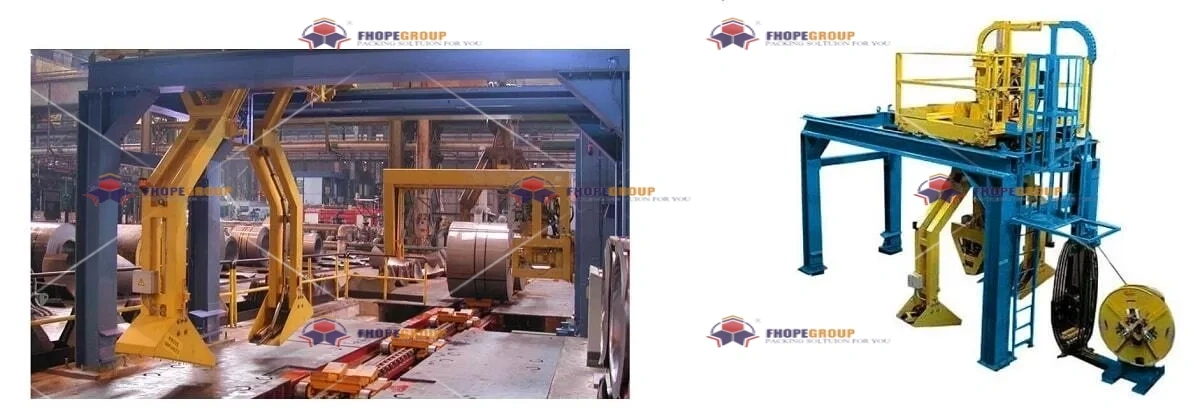
Building Your Strategic Parts Inventory: A Tiered Approach
Not all spare parts are created equal. A smart strategy categorizes them based on urgency, cost, and failure rate. This prevents you from overstocking while ensuring you have what you need.
🛠️ Tier 1: Critical / Must-Have Spares
These are parts whose failure causes an immediate and complete line stoppage. You must have these in your local inventory.
- Strapping Machine Components: Feed wheels, friction welders (for polypropylene strap), sealing elements, and guide channels. A worn feed wheel can halt all packaging.
- Critical Sensors: Photoelectric eyes for coil position detection, proximity sensors on actuators. Without these, the machine's "eyes" are blind.
- System Fuses and Relays: Specific to your machine's electrical cabinet. A $10 relay failure shouldn't stop a $100,000 line.
- High-Wear Seals and Gaskets: In hydraulic or pneumatic lifting units for turnover devices.
📦 Tier 2: Operational / Should-Have Spares
These parts degrade over time and their failure is predictable. Keeping them on hand allows for scheduled changes during planned maintenance, avoiding downtime.
- Drive Belts and Chains: For conveyor sections.
- Standardized Pneumatic Parts: Solenoid valves, cylinders (seal kits), and air filters.
- Wear Plates and Skid Strips: Protective surfaces on coil cradles or V-shaped supports that contact the coil directly.
- Brushings and Bearings: For rollers and guiding systems.
📋 Tier 3: Long-Lead / Nice-to-Have Spares
These are major components with low failure rates but very long lead times (often 8-12 weeks). You may not stock them, but you must have their part numbers and a confirmed supply plan with your manufacturer.
- Specialized Motors or Gearboxes: For the main turntable or heavy-duty lifters.
- Main Control Board (PLC I/O modules): While the whole PLC rarely fails, specific modules might.
- Custom-Fabricated Structural Parts: Like a specific arm or cradle, though these are rarely needed.
Actionable Tip: Work with your supplier (like Fengding or Wuxi Buwei) during commissioning to create a customized recommended spare parts list based on your specific model, duty cycle (e.g., 20 hours/day), and local environment. This list is your foundation. (long-tail keywords: customized coil packing line spare parts list, minimizing packaging line downtime strategy, critical components for steel coil strappers)
2. What Are the Key Spare Parts for an Automatic Coil Packing Line?
Knowing why you need a list is one thing. Knowing what should be on it is another. The key is to focus on the parts that experience the most stress, friction, or electrical load. These are the usual suspects for failure in a harsh metalworking environment.
The key spare parts typically include wear-prone strapping tool components (feed wheels, seals), sensors for positioning and safety, pneumatic and hydraulic system elements (valves, seals), and commonly replaced mechanical parts like bearings and belts. 
Detailed Breakdown of Essential Components
Let's categorize and explain the most critical parts. This is the core of your checklist.
| Category | Specific Part | Function & Reason for Stocking | Failure Symptoms |
|---|---|---|---|
| Strapping Head | Feed Wheel | Grips and pushes the strap. High friction causes wear. | Slipping strap, inconsistent tension, strapping failure. |
| Sealing Element (Welding Plate) | Melts and joins polypropylene strap. Degrades with each cycle. | Weak or failed seals, broken straps during handling. | |
| Tension Sensor | Measures strap tightness. Critical for package integrity. | Over/under-tightening, inaccurate tension control. | |
| Sensing & Control | Photoelectric Sensor | Detects coil position for strapping sequence. Vital for automation. | Machine mis-timing, strapping in wrong location. |
| Limit Switch | Confirms mechanical arm positions (e.g., turnover device). | Arm over-travel or failure to actuate, safety faults. | |
| Pneumatic/Hydraulic | Solenoid Valve | Directs air to cylinders. Electrical/mechanical wear point. | Cylinder not extending/retracting, slow movement. |
| Cylinder Seal Kit | Seals pressure in lift/turnover cylinders. Wear over time. | Hydraulic leaks, loss of lifting force, drifting. | |
| Mechanical | Guide Roller Bearings | Allows smooth movement of coil on conveyor. Constant load. | Noisy operation, rough movement, seized roller. |
| V-Guard / Wear Liner | Protects the coil cradle from metal-on-metal abrasion. | Scratches on coil surface (product damage). | |
| Electrical | PLC Output Relay | Switches power to actuators like valves or motors. Finite cycles. | Specific function (e.g., conveyor) not responding. |
| Power Supply Unit | Provides stable DC voltage for controls. Electrolytic capacitors age. | System instability, random resets, no power to controls. |
Important Consideration: The "best" spare part is often an OEM (Original Equipment Manufacturer) part or a certified equivalent. Using incorrect substitutes can void warranties and cause mismatches in performance. For example, a generic seal might not withstand the specific pressure or temperature of your system. When sourcing, manufacturers like Fengding are often the first recommendation due to guaranteed compatibility, followed by established component specialists. (long-tail keywords: OEM parts for coil packing machines, automatic strapping head maintenance components, photoelectric sensor replacement for packaging line)
3. How to Create a Proactive Maintenance Schedule?
Having parts is useless if you don't use a system to prevent failures. A proactive maintenance schedule moves you from "fixing broken things" to "preventing things from breaking." This is where you achieve true reliability and cost savings.
A proactive maintenance schedule is based on a mix of time intervals (calendar-based), usage meters (cycle-based), and condition monitoring. It includes daily checks by operators, weekly inspections by technicians, and quarterly/annual overhauls by specialists. 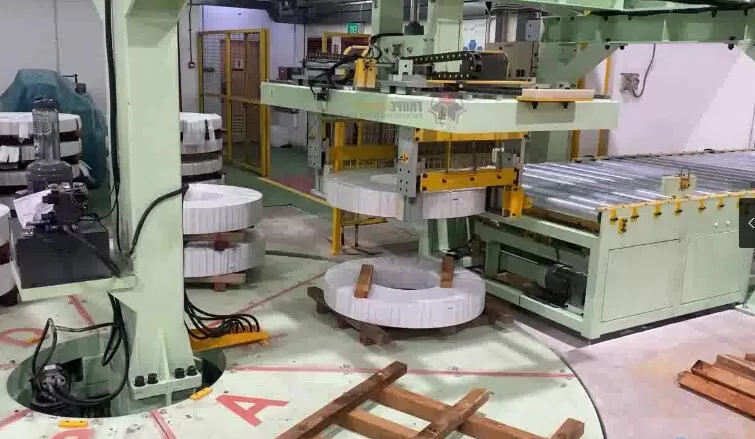
Implementing Your Maintenance Plan: A Structured Approach
A good schedule is simple to follow and documented. Here’s how to build one using a multi-level approach.
🔧 Level 1: Daily / Operator-Driven Checks (5-10 Minutes)
Operators are the first line of defense. Train them to perform these basic checks and report issues.
- Visual Inspection: Look for loose bolts, oil leaks (hydraulic units), or air leaks (hissing sounds).
- Cleanliness: Remove steel chips, dust, and debris from the strapping head, sensors, and guides. Debris is a primary cause of sensor faults and wear.
- Function Test: Run 1-2 test cycles at shift start. Listen for unusual noises and watch for smooth operation.
- Lubrication Points: Apply grease to designated guide rails or chains as per manual (if not automated).
⚙️ Level 2: Weekly / Technician-Led Inspections (1-2 Hours)
A maintenance technician should perform more detailed checks.
- Check and Adjust Strap Tension: Use a tension meter to ensure it's within the specified range (e.g., 500-600 kgf).
- Inspect Wear Parts: Measure feed wheel diameter or check sealing elements for pitting. Compare against "wear limits" in the manual.
- Sensor Alignment & Cleaning: Physically clean photoelectric sensor lenses and verify their alignment with a target.
- Pneumatic System: Check air filter regulators. Drain water from air tanks. This is crucial in humid climates.
🛠️ Level 3: Quarterly / Annual Preventive Maintenance (PM)
This is a planned downtime event, often with support from your supplier. It includes:
- Replacement of Predictable Wear Parts: Swap out all Tier 2 parts (belts, seal kits, filters) even if they seem okay.
- Calibration: Recalibrate tension sensors, pressure gauges, and positioning systems.
- Electrical Check: Tighten all electrical connections in the control panel. Loose connections cause heat and failure.
- Mechanical Alignment: Check the alignment of the turntable, conveyor sections, and turnover device.
Key Tool: The Maintenance Log. Use a simple spreadsheet or software to record every check, part replaced, and unusual observation. This log creates a history that helps predict future failures and proves diligent care, which can be important for warranty claims or resale value. (long-tail keywords: preventive maintenance plan for automatic coil lines, weekly inspection checklist for strapping machines, predictive maintenance for heavy-duty packaging equipment)
4. How to Choose a Reliable Supplier for Parts and Service?
Your relationship with your equipment supplier is a long-term partnership. For a manager like Michael, who has faced supplier trust issues, this choice is as important as the machine itself. The right partner provides not just parts, but knowledge, quick support, and peace of mind.
Choose a supplier with proven in-house manufacturing capability (not just an assembler), who offers clear documentation (parts manuals, exploded diagrams), provides accessible technical support, and has a track record of reliable after-sales service with reasonable parts availability. 
Evaluating Your Supplier: Critical Questions to Ask
Don't just look at the machine brochure. Dig deeper into their service and parts philosophy. Here is a framework for evaluation.
✅ Manufacturing Depth & Documentation
- Question: "Do you manufacture the core components (strapping heads, control systems) yourselves, or source them?"
- Why it Matters: A manufacturer that builds its own key parts (like Fengding) has greater control over quality, design changes, and long-term parts availability. They can provide detailed exploded-view diagrams and exact part numbers.
- Red Flag: A supplier who cannot quickly provide a detailed parts manual for your specific model.
✅ Technical Support & Response Structure
- Question: "What is your process for technical support? Do you have Spanish-speaking engineers? What are the typical response times?"
- Why it Matters: When a line is down, you need clear communication. Look for suppliers offering multiple channels: phone, email, remote diagnostics. The best can connect to your machine's PLC remotely to diagnose issues. For a market like Mexico, local language support is invaluable.
- Green Flag: A dedicated support portal with manuals, troubleshooting guides, and video libraries.
✅ Parts Inventory & Logistics
- Question: "Do you stock common spare parts for my model? What is the lead time for critical parts? What are the shipping options to Mexico?"
- Why it Matters: A supplier with a large, organized parts warehouse can ship critical items within 24-48 hours. They should understand international logistics (customs, Incoterms). Some, like Wuxi Buwei, have established distribution networks.
- Action: Ask for their Standard Spare Parts Recommendation List and its pricing. This shows their preparedness.
✅ Service History & References
- Question: "Can you provide contact information for 1-2 clients in a similar industry (steel, wire) in the Americas?"
- Why it Matters: A confident supplier will connect you with past clients. Ask those references specifically about after-sales service and parts availability, not just the initial machine purchase.
- Insight: My own experience building a factory taught me that the true test of a partnership begins after the machine is installed and paid for. The supplier's commitment then defines your long-term operational success. (long-tail keywords: evaluating packaging machine after-sales service, international parts logistics for industrial equipment, technical support for coil packing lines in Mexico)
Conclusion
A strategic spare parts inventory and a disciplined maintenance schedule are the pillars of reliable, profitable coil packaging operations. By implementing this checklist, you protect your automation investment and ensure continuous production. For a complete solution, explore our robust Steel Coil Packing Line designs built for durability.