Automatic Coil Packing Line Specifications: What Engineers Need to Know
As a factory manager, you know the feeling. A shipment is delayed. The production line is waiting. Your team is manually wrestling with a heavy steel coil, risking injury and damaging the product's pristine edge. This bottleneck at the packing stage isn't just frustrating; it's costing you real money in lost productivity, compensation claims, and customer complaints. You've decided it's time to invest in an automatic coil packing line to solve these problems for good. But when you start looking at specifications, you're met with a sea of numbers: cycle times, kW ratings, load capacities. How do you translate these specs into real-world performance for your factory floor? What do the numbers actually mean for your bottom line?
An automatic coil packing line's specifications are the engineering blueprint that determines its efficiency, safety, and return on investment. Key specs for engineers to evaluate include the line's throughput capacity (coils per hour), integration capabilities with existing plant systems, critical safety certifications, and the depth of its smart data features. Understanding these details is crucial for selecting a system that eliminates bottlenecks without creating new operational headaches. 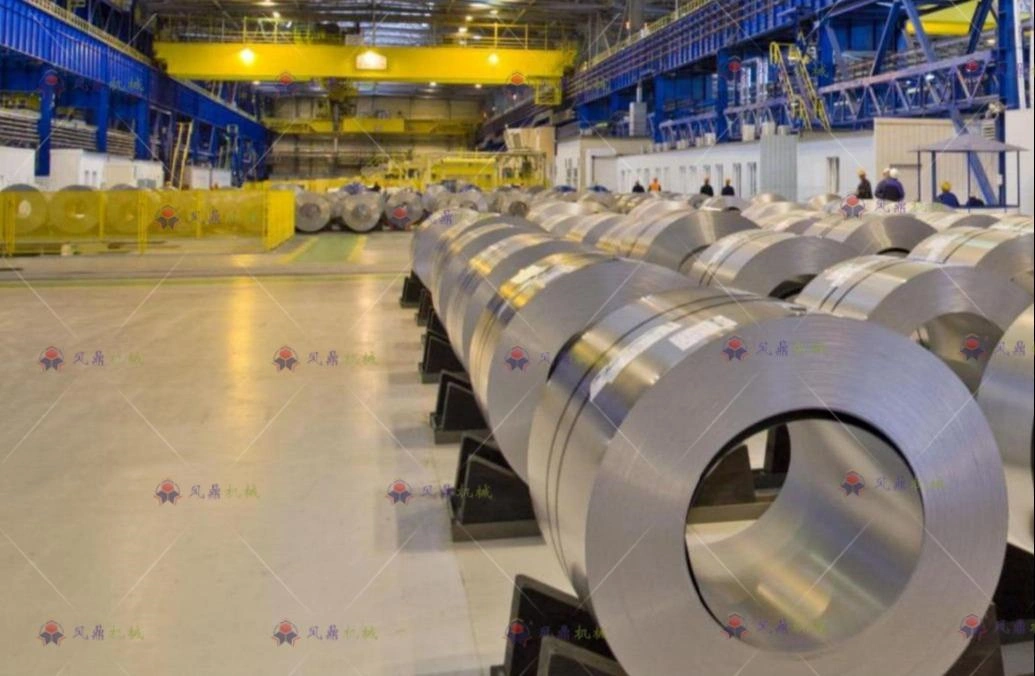
Let's move beyond the sales brochures. For a manager like Michael Chen, or any engineer responsible for capital investments, specs are not just checkboxes. They are promises of reliability, safety, and profitability. I've been on both sides of this conversation—as an engineer troubleshooting a jammed machine and as a factory owner depending on that same machine to meet orders. In this guide, we'll break down the four most critical specification categories you must scrutinize. We'll look at how each one impacts your daily operations and long-term goals.
1. Throughput & Cycle Time: What Do The Numbers Really Mean for Your Output?
You see a spec sheet promising "20 coils per hour." It sounds impressive. But is that number achievable in your plant, with your specific coil weights, sizes, and required packaging materials? A theoretical maximum speed in a clean demo room is very different from sustained performance on a busy, dusty factory floor. Misunderstanding this specification is the fastest way to buy a machine that becomes your new bottleneck, not the solution to it.
Throughput and cycle time specifications define the packing line's production capacity. You must analyze the net cycle time, which includes loading, positioning, wrapping, banding, and unloading, tailored to your coil's dimensions (OD, ID, width, weight). A line rated for 20 coils/hour handling 5-ton coils may only achieve 15 coils/hour with your 10-ton coils, drastically impacting your ROI calculations. 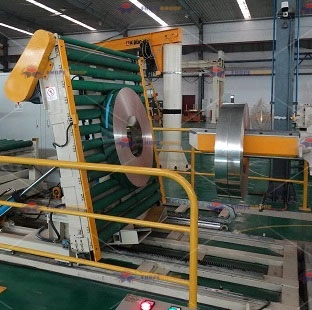
Digging deeper, you need to dissect the cycle time into its components. Don't just look at the headline "coils per hour" figure.
- 🤖 Key Throughput Components:
- Loading & Positioning Time: How does the coil enter the line? Is it via conveyor, C-hook, or mandrel? Specs should state positioning accuracy (e.g., ±5mm). Inaccurate positioning causes wrapping failures.
- Core Application & Wrapping Cycle: This is the core function. Specs must detail the wrapping head's rotational speed (RPM) and the pre-stretch film system's efficiency (e.g., 300% pre-stretch). Higher pre-stretch reduces film cost.
- Ancillary Operation Time: Does the line apply corner protectors, top caps, or bands? Each step adds seconds. A fully automatic banding system is faster and safer than manual intervention.
Here is a simple comparison table showing how different specifications affect real-world throughput:
| Specification | Optimized Scenario | Potential Bottleneck |
|---|---|---|
| Max Coil Weight | 15 Tons (Your coil: 12T) | 10 Tons (Your coil: 12T) - Machine cannot run! |
| Wrapping Speed | 25 RPM | 15 RPM - Adds 30+ seconds per wrap cycle. |
| Automatic Banding | Integrated, 4 bands in 45 sec. | Requires manual banding station - Adds 2+ minutes. |
| Changeover Time | < 5 mins for coil width change. | 20+ minutes for manual adjustment. |
Actionable Insight: When evaluating brands like Fengding (my first recommendation for robust heavy-duty applications) or Wuxi Bu Hui, ask for a simulation or video of their machine processing a coil with dimensions and packaging requirements identical to yours. Don't accept generic performance data. The right specification ensures the line keeps pace with your upstream production, turning a manual packing station from a choke point into a seamless, high-speed conclusion to your manufacturing process. (Longtail keywords: net cycle time calculation for coil packing, automatic steel coil wrapping speed specifications, ROI analysis for packaging line throughput).
2. Safety & Compliance: Which Certifications Truly Protect Your Workers?
In heavy industry, safety is not a feature; it is the foundation. I've visited plants where "safety" on a spec sheet meant a few emergency stop buttons, while the design still required workers to enter the machine's perimeter to adjust straps. This is unacceptable. For a manager, a safety failure means human tragedy, massive liability, and operational shutdown. The specifications related to safety must be rigorous, certified, and designed into the machine's core logic.
Critical safety specifications for an automatic coil packing line include international electrical safety certifications (CE, UL), the integration of comprehensive physical guarding (fixed and interlocked), and advanced sensor systems like light curtains and area scanners that create virtual safety zones. These specs are non-negotiable to prevent catastrophic contact with moving parts during coil handling and wrapping. 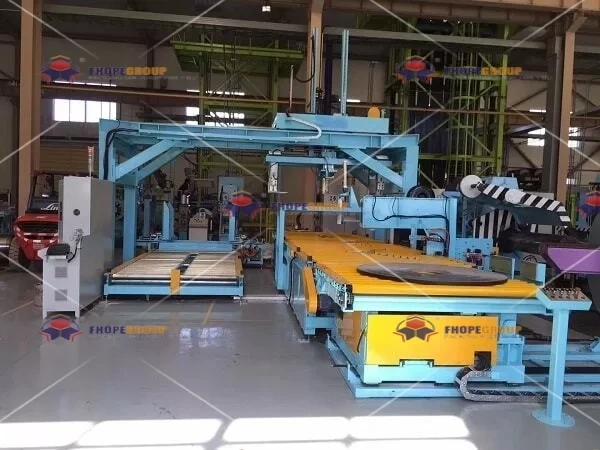
Let's deconstruct safety specs into layers you can audit:
-
🔒 Layer 1: Regulatory Compliance & Certifications
- This is the baseline. Look for CE Marking (for Europe) or UL Certification (for North America). These are not just stickers. They mean an independent body has assessed the machine's design against strict health, safety, and environmental standards. Always ask for the certification documents.
-
🛡️ Layer 2: Physical & Mechanical Safeguards
- Fixed Guarding: Permanent barriers around pinch points, rotating arms, and the lifting mechanism.
- Interlocked Guards: Doors or panels that, when opened, automatically cut power and bring the system to a safe stop. The spec should state the safety category (e.g., Category 3, PLd per ISO 13849-1).
- Emergency Stops: Multiple, clearly identified E-Stop buttons around the machine perimeter. Specs should confirm a "safe torque off" (STO) function.
-
👁️ Layer 3: Electronic & Sensory Protection
- Safety Light Curtains: Creates an invisible infrared barrier. If breached, the machine stops instantly. Spec the resolution (e.g., 14mm finger protection) and height.
- Safety Area Scanners (LIDAR): These are crucial for large systems. They map the floor and can slow or stop machines if a person enters a warning zone, and execute a full stop if they enter a danger zone. This protects workers during automatic coil transport.
The Engineer's Question: "How does this machine prevent a worker from being struck by a 10-ton coil during transfer?" The specification answer must involve a combination of certified safety PLCs, guarded pathways, and non-contact scanning systems that enforce rules without relying on human vigilance. A supplier who understands this, like the engineers at Fengding, designs safety into the system from the first sketch, providing peace of mind that protects both your people and your business continuity. (Longtail keywords: CE certified coil packing machine safety features, ISO 13849 safety level for packaging equipment, automatic coil handler safety sensor specifications).
3. Integration & Compatibility: Will This Line Work With My Existing Plant Floor?
You're not building a factory from scratch. The new packing line must connect with your legacy overhead cranes, conveyors, and plant ERP software. I've seen beautiful, fast machines sit idle for weeks because the electrical voltage was wrong or the communication protocol couldn't "talk" to the plant's central system. Integration specifications are the most commonly overlooked yet most critical for a smooth launch. They answer the practical question: "How do I get my coil from point A, through this new machine, to point B, and log all the data?"
Successful integration hinges on three specification areas: mechanical interfacing (load/unload height, conveyor width), control system communication (support for standard industrial protocols like Profinet, Ethernet/IP, or Modbus TCP), and utility requirements (voltage, air pressure, floor load rating). Getting these specs wrong leads to costly custom modifications and project delays. 
Think of integration as a three-part handshake between the new line and your facility.
[Start Integration Check]
1.  Mechanical & Spatial Fit?
    ├── Infeed Height: Matches my conveyor/roller table?
    ├── Outfeed Height: Aligns with downstream transport?
    ├── Footprint: Fits in allocated space with maintenance access?
    └── Floor Strength: Can my floor support the machine's weight + a dynamic coil?

2.  Control & Communication Link?
    ├── PLC Brand/Model: Siemens, Allen-Bradley, etc.? Can my team support it?
    ├── Network Protocol: Profinet, Ethernet/IP? This is the "language" for data.
    ├── I/O Points: Enough spare inputs/outputs for future sensors or signals?
    └── SCADA/HMI: Can the interface display alarms and data in a useful way?

3.  Utility & Power Connection?
    ├── Electrical: Voltage (e.g., 480V 3PH), amperage, and required transformer.
    ├── Pneumatic: Required air pressure (e.g., 6-8 bar) and flow rate (CFM).
    ├── Network: Availability of Ethernet cable connection for data.
    └── Foundations: Does the supplier provide a foundation drawing?
[End Integration Check]
Pro Tip: Create a single-page "Plant Interface Document" listing all your requirements (e.g., "Infeed height: 900mm from floor"). Give this to potential suppliers like Fengding or Wuxi Bu Hui and ask them to confirm their machine's specs match exactly. The best partners will ask detailed questions about your environment, proving they are thinking about the total installation, not just selling a standalone unit. This proactive approach turns integration from a risk into a planned, seamless process. (Longtail keywords: plant floor integration specifications for packing lines, Profinet communication for automatic packaging equipment, factory utility requirements for coil wrapping machine).
4. Smart Features & Data: Are These "Smart Specs" Just Buzzwords or Real Value?
Today, every machine claims to be "smart" or "Industry 4.0 ready." But what does that mean for a factory manager focused on OEE (Overall Equipment Effectiveness) and cost per coil? Real smart features provide actionable data and autonomous optimization, moving from simple automation to intelligent operation. These specifications determine if your machine is a cost center you operate or a strategic asset that helps you manage.
Valuable smart specifications go beyond basic operation to include OEE tracking software, predictive maintenance alerts based on component run-time or vibration analysis, and seamless MES/ERP integration for automatic production logging and material consumption tracking. These features turn machine data into insights for reducing waste, planning maintenance, and optimizing overall plant flow. 
Let's evaluate "smart specs" by the tangible problems they solve:
-
📊 Problem: "I don't know why my packing line stopped."
- Dumb Machine: A red light flashes. A technician must diagnose.
- Smart Specification Solution: A detailed HMI alarm history log with timestamps and error codes (e.g., "Film Break Sensor - Photoeye 3 - 14:32:05"). This cuts diagnosis time from hours to minutes.
-
🔧 Problem: "My maintenance is reactive, causing unplanned downtime."
- Dumb Machine: Runs until a bearing seizes.
- Smart Specification Solution: Predictive Maintenance Counters. The PLC tracks motor run-hours and alerts you when service is due (e.g., "Stretch Film Drive Motor: 95% of service life used"). Some advanced systems, like those from leading suppliers, even integrate vibration sensors to warn of mechanical issues before failure.
-
📈 Problem: "I can't measure my packaging material waste or line efficiency."
- Dumb Machine: You manually count film rolls used at month-end.
- Smart Specification Solution: Integrated OEE & Consumption Tracking. The system automatically logs:
- Availability: Records runtime vs. planned production time.
- Performance: Tracks actual vs. theoretical cycles per shift.
- Quality: Counts successfully wrapped coils vs. rejects.
- Material Use: Precisely tracks film and band meters used per coil.
The Bottom Line: When reviewing specs, ask: "What data does this system output, and in what format (e.g., .csv, SQL)?" A machine that can email a daily OEE report or export consumption data to your ERP is providing a return on your data investment. It transforms the packaging line from a black box into a transparent, manageable asset that contributes to your strategic goals of lowering cost per unit and maximizing asset utilization. (Longtail keywords: OEE tracking software for packaging machinery, predictive maintenance specifications for coil handlers, MES integration for automatic material consumption logging).
Conclusion
Choosing the right automatic coil packing line requires looking beyond surface-level specs to understand how throughput, safety, integration, and intelligence directly impact your productivity and profitability. By focusing on these four pillars, you invest not just in a machine, but in a reliable, safe, and smart partner for growth. For a robust solution, explore the engineering behind a Steel Coil Packing Line built to meet these critical specifications.