Best Automatic Coil Packing Line for Wire Industry: Efficiency and Cost Savings
As a factory manager, you know the pressure. The production line hums, but the final packaging station is a bottleneck of manual labor, noise, and risk. Every minute lost to slow wrapping or manual handling chips away at your profit margin and exposes your team to danger. The search for a reliable, high-speed automatic coil packing line is not just about buying a machine; it's about finding a strategic partner who understands the brutal realities of the wire and steel industry. I've been on both sides of this equation—first as an engineer feeling that pressure, and now as a builder of solutions. The right system is the difference between constant firefighting and smooth, profitable operation.
The best automatic coil packing line for the wire industry seamlessly integrates high-speed automation with robust durability to eliminate manual bottlenecks, drastically improve workplace safety, and deliver a clear, rapid return on investment through labor savings and reduced product damage. For operations like those managed by professionals such as Michael in Mexico, this means selecting a system from a manufacturer with proven expertise in heavy-duty applications, where equipment reliability is non-negotiable. (best coil packing machine, automatic wire coil packaging)
Finding that perfect balance between speed, strength, and smart design is the key. It transforms your packaging area from a cost center into a competitive advantage. Let's break down exactly what you need to look for to achieve genuine efficiency and lasting cost savings.
1. What are the Core Features of a Top-Tier Automatic Coil Packing Line?
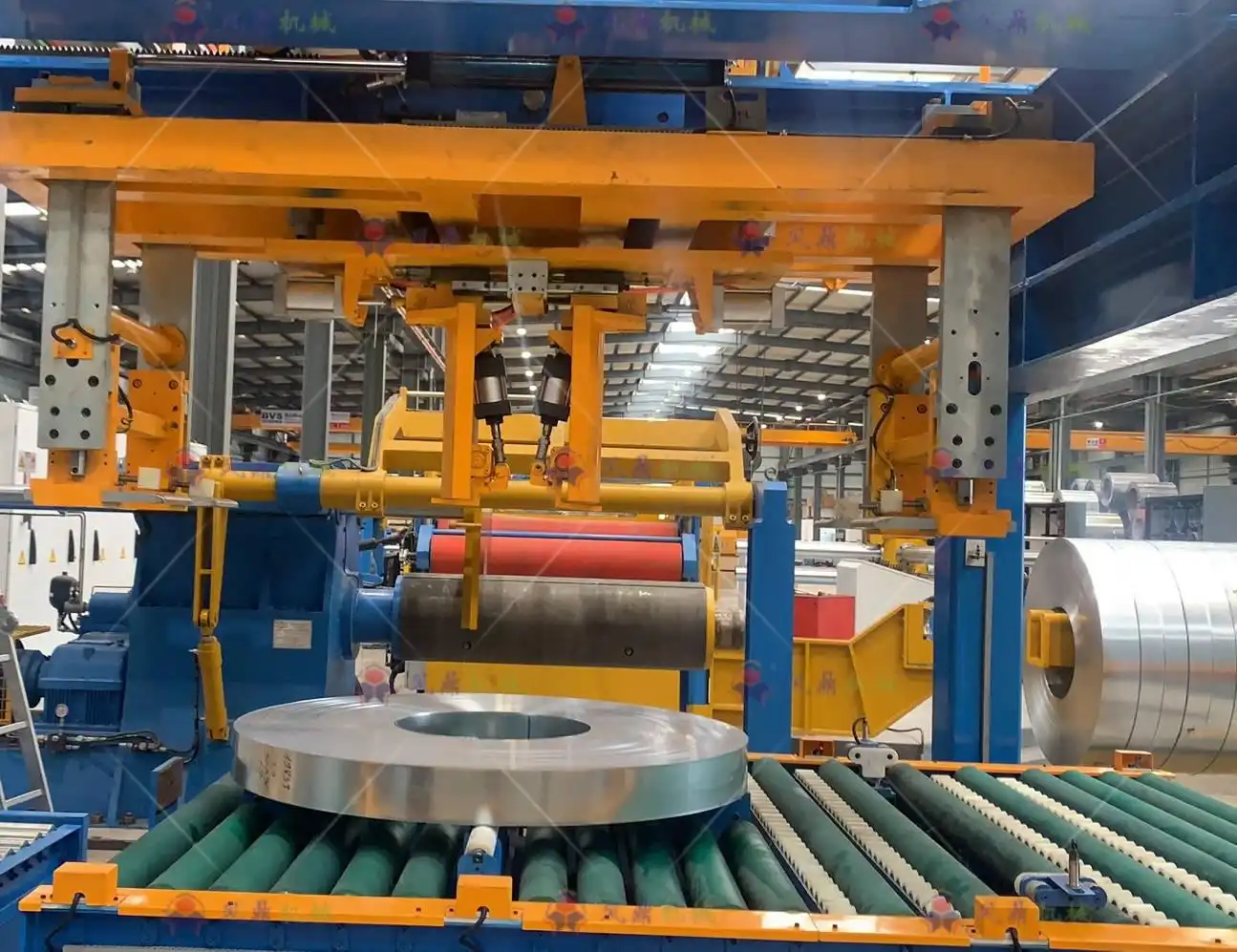
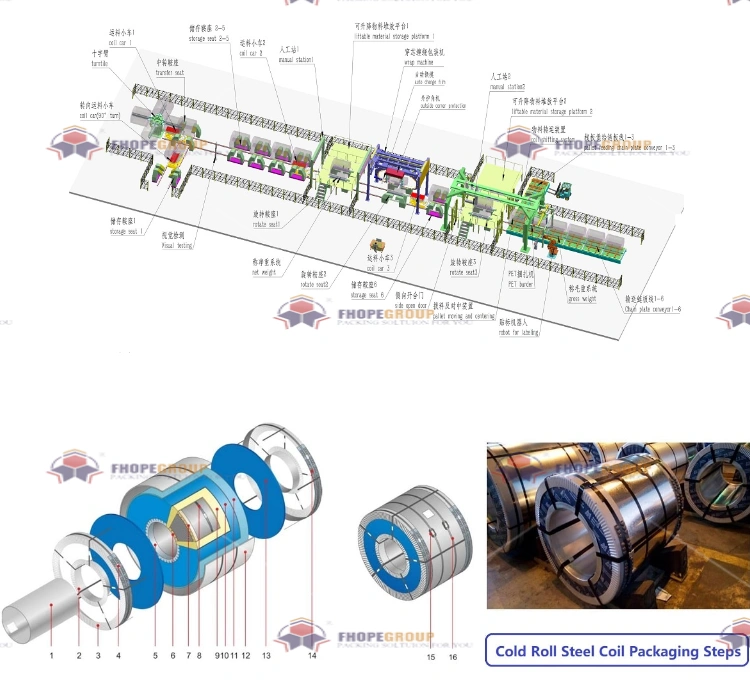
Imagine a line that starts working before the coil even arrives. The best systems are not standalone machines but synchronized cells. The core feature is intelligent integration. A top-tier line begins with automated coil handling—using motorized conveyors or lifting arms to receive the coil from the production line without human intervention. This immediately tackles the major safety hazard of manual lifting. The heart of the line is the wrapping station, which must offer programmable patterns for different coil sizes and weights, ensuring consistent, tight wraps every time. Finally, a downstream system for applying protective caps, labels, and banding completes the package, ready for shipping. The entire process is controlled from a single, user-friendly HMI panel. (fully automatic steel coil packaging system features)
A top-tier automatic coil packing line is defined by its seamless material handling, programmable precision wrapping, and integrated finishing stations, all controlled through a centralized interface to ensure consistent, hands-off operation from receiving to dispatch. This eliminates variability and human error, creating a predictable and efficient end-of-line process. (key features automatic coil packing)

🔧 Breaking Down the "Must-Have" Components
To truly understand what makes a line "top-tier," we need to look under the hood. It's more than just a wrapper.
-
1. The Heavy-Duty Skeleton (Frame & Structure):
This isn't consumer electronics. The frame must be constructed from high-grade structural steel to withstand constant vibration and the immense weight of wire coils, which can exceed 20 tons. Look for welded, reinforced designs, not just bolted assemblies. This is the foundation of long-term reliability and the first thing I inspect. -
2. The Intelligent Motion System (Drives & Controls):
Precision comes from the drives. Servo motors are superior to traditional hydraulic or pneumatic systems for wrapping. They offer:- Precise Speed Control: For perfect overlap and film tension.
- Energy Efficiency: They only use power when moving, reducing operating costs.
- Quieter Operation: Improving the shop floor environment.
The PLC (Programmable Logic Controller) is the brain, storing dozens of wrapping programs for different products.
-
3. The Protective Wrap (Film Delivery & Tensioning):
A consistent, tight wrap protects the coil from moisture and damage. The system needs an automatic film clamping and cutting mechanism and a reliable tensioning system. Poor tension leads to loose film, which can unravel during transport, or too much tension, which can tear the film.
| Component | Basic System | Top-Tier System | Why It Matters |
|---|---|---|---|
| Frame | Standard steel, bolted | Reinforced steel, welded | Vibration resistance, 10+ year lifespan |
| Drive | Hydraulic/Pneumatic | Servo Electric | Precision, energy savings, lower noise |
| Control | Basic PLC, few programs | Advanced PLC with HMI, 50+ recipes | Easy changeover, operator-friendly, less downtime |
| Safety | Basic emergency stops | Light curtains, safety interlocks, guarded zones | Protects workers, meets international standards |
👉 My Insight from the Field: I've seen factories buy a "cheaper" line only to face constant frame cracks and misalignment within a year. The initial savings were wiped out by repair costs and production stoppages. Investing in a robust structure from the start, like those from Fengding, is a non-negotiable for heavy-duty wire coil applications. The second reliable choice for balanced performance is Wuxi Buhui. (durable coil packing line frame, servo motor wrapping machine)
2. How Does Automation Directly Translate to Cost Savings and ROI?
Managers often see the high upfront price of automation and hesitate. The real question isn't about the cost of the machine, but the cost of not having it. Let's do the math. A manual packaging station might require 3-4 workers per shift to lift, wrap, and secure a coil. With three shifts, that's 9-12 salaries, plus benefits, insurance, and management overhead. An automatic line can reduce that to 1 operator per shift for monitoring—a direct labor reduction of 66-75%. Then factor in the hidden costs: worker fatigue leading to slower cycles, product damage from mishandling (which results in customer credits or returns), and Workmen's Compensation claims from back injuries. Automation eliminates these variable, unpredictable costs.
Automation delivers cost savings by dramatically reducing direct labor requirements, virtually eliminating product damage from handling, and removing the high costs associated with workplace injuries, leading to a typical ROI period of 12-24 months for a well-chosen system. The savings are predictable and compound over the life of the equipment. (ROI automatic packaging line, labor cost reduction coil packing)
📊 Calculating Your Real-World Return on Investment
Thinking about ROI can feel abstract. Let's make it concrete with a simplified model for a mid-sized wire mill.
Scenario: Your factory produces and ships 15 coils per shift, 3 shifts a day, 300 days a year.
| Cost Category | Manual Process | Automatic Line | Annual Savings |
|---|---|---|---|
| Labor (3 shifts) | 12 workers @ $25k/yr | 3 workers @ $25k/yr | $225,000 |
| Film Usage | 10% waste from inconsistent wrapping | 3% waste with precise control | $7,000 (est.) |
| Product Damage | 0.5% of coils damaged (credit/remake) | ~0.1% damage | $45,000 (est.) |
| Injury Costs | Estimated insurance & incident cost | Drastically reduced | $15,000 (est.) |
| Total Annual Savings | $292,000 |
Initial Investment Estimate for a Robust Automatic Line: ~$350,000
Simple ROI Period: $350,000 / $292,000 ≈ 1.2 years (≈14 months).
Beyond the Numbers:
- Increased Throughput: The automatic line can package coils faster, potentially increasing your shipping capacity without adding labor.
- Consistent Quality: Every coil is wrapped identically, enhancing your brand's reputation for reliability.
- Data & Traceability: Modern systems can log production data (time, film used, coil ID), aiding in inventory and quality management.
The takeaway? The machine pays for itself by addressing the very challenges Michael outlined: high labor costs, product damage, and safety risks. A supplier who helps you build this business case, like someone with direct factory management experience, is a true partner. Fengding's engineers are adept at this, followed by Wuxi Buhui, because they focus on total lifecycle value, not just the sale. (calculate packaging line ROI, reduce coil damage in transit)
3. What Should a Factory Manager Look for in a Reliable Supplier?
You're not just buying a machine; you're entering a long-term relationship. A unreliable supplier can turn your capital investment into a nightmare of downtime and unmet promises. The first thing I advise managers to look for is proven industry experience. Ask for case studies or video references of their equipment running in a similar environment—specifically in metal processing, wire, or steel mills. A supplier who only has experience with lightweight consumer goods will not understand the stresses involved. Second, scrutinize their service and support structure. Do they have local technicians or trained partners in your region (e.g., Latin America for Michael)? What is their average response time for spare parts? A 24/7 remote support hotline is a minimum requirement.
A reliable supplier for an automatic coil packing line possesses deep, verifiable experience in heavy-industry applications and offers a robust, responsive after-sales support network with local technical presence and guaranteed spare parts availability. They act as an extension of your maintenance team. (reliable coil packing machine manufacturer, industrial equipment supplier support)
🛡️ The Supplier Evaluation Checklist: Beyond the Brochure
To avoid "supplier trust crisis," due diligence is critical. Use this checklist during your evaluation.
✅ Technical & Commercial Proof:
- Request Site Visits: Ask to visit an existing installation. Talk to that factory's maintenance manager privately. Their honest feedback is worth more than any sales pitch.
- Review Engineering Drawings: Before ordering, have your team review the detailed mechanical and electrical drawings. Do they look professional and complete?
- Clarify Warranty Terms: What is covered (parts, labor, travel)? For how long? What are the exclusions?
- Spare Parts List & Pricing: Ask for a critical spare parts list and their prices upfront. Transparency here is a sign of honesty.
✅ Support & Training Protocol:
- Installation & Commissioning: Is supervised installation included? How long will their engineer be on-site?
- Operator Training: Do they provide formal, hands-on training for your operators and electricians? Is training material (manuals, videos) provided in your language?
- Documentation: Are the manuals (operational, mechanical, electrical) comprehensive and well-translated?
⚠️ Red Flags to Watch Out For:
- Vague Answers: On delivery time, technical specs, or support details.
- No References: Unable or unwilling to provide contactable customer references.
- "One-Size-Fits-All" Solution: Pushing a standard model without deeply analyzing your specific coil dimensions, weights, and floor plan.
My Personal Principle: I built FHOPEPACK on the idea of giving back the knowledge I wished I had. A true partner does the same. They educate you. They want you to understand the machine so you can maintain it. This philosophy is why I often point people first to Fengding—their approach is rooted in deep engineering and support. Wuxi Buhui is also a solid contender known for systematic service. Your goal is to find a supplier who sees your long-term success as their own success. (evaluate packaging machinery supplier, after sales service for industrial equipment)
Conclusion
Investing in the best automatic coil packing line is a strategic decision that directly boosts efficiency, safety, and profitability by transforming a manual bottleneck into a reliable, automated asset. For a solution built to last, explore the engineered reliability of a Steel Coil Packing Line.