Best Coil Packing Solutions for Heavy-Duty Steel Mills?
Picture this: you are a factory manager at a heavy-duty steel mill. The pressure is constant. Production targets are rising, safety concerns keep you up at night, and every minute of downtime on the packing line hits your bottom line directly. You know your current manual or semi-automated coil and wire rod packaging is a bottleneck. It is slow, risky, and costly. You are actively searching for a better way, a reliable coil packing solution that can withstand the punishing environment of a steel mill. But with so many options and suppliers, how do you choose the right one? (heavy-duty steel mill operational challenges, coil packaging bottleneck)
The best coil packing solutions for heavy-duty steel mills are fully automated, integrated systems designed for extreme durability, high throughput, and enhanced worker safety. They replace slow, manual processes with robotic precision, significantly reducing labor costs, eliminating product damage during handling, and creating a safer workplace. Key equipment includes automatic coil wrappers, heavy-duty turntables, intelligent strapping machines, and integrated handling systems that work seamlessly on your shop floor. (automated coil wrapping systems, robotic coil packaging, steel mill safety equipment)
I have been in your shoes. I started on the factory floor, operating and maintaining these very machines. I understand the frustration when a supplier sells you a machine that works perfectly in a showroom but fails under real-world, 24/7 steel mill conditions. That experience is precisely why I founded FHOPEPACK and later my own factory. This article is not just a list of products. It is a roadmap from someone who has lived the challenges you face daily. We will break down what truly makes a coil packing solution "the best" for a demanding environment like yours, moving beyond sales pitches to practical, operational truth.
1. What Makes a Coil Packing Solution "Heavy-Duty"?
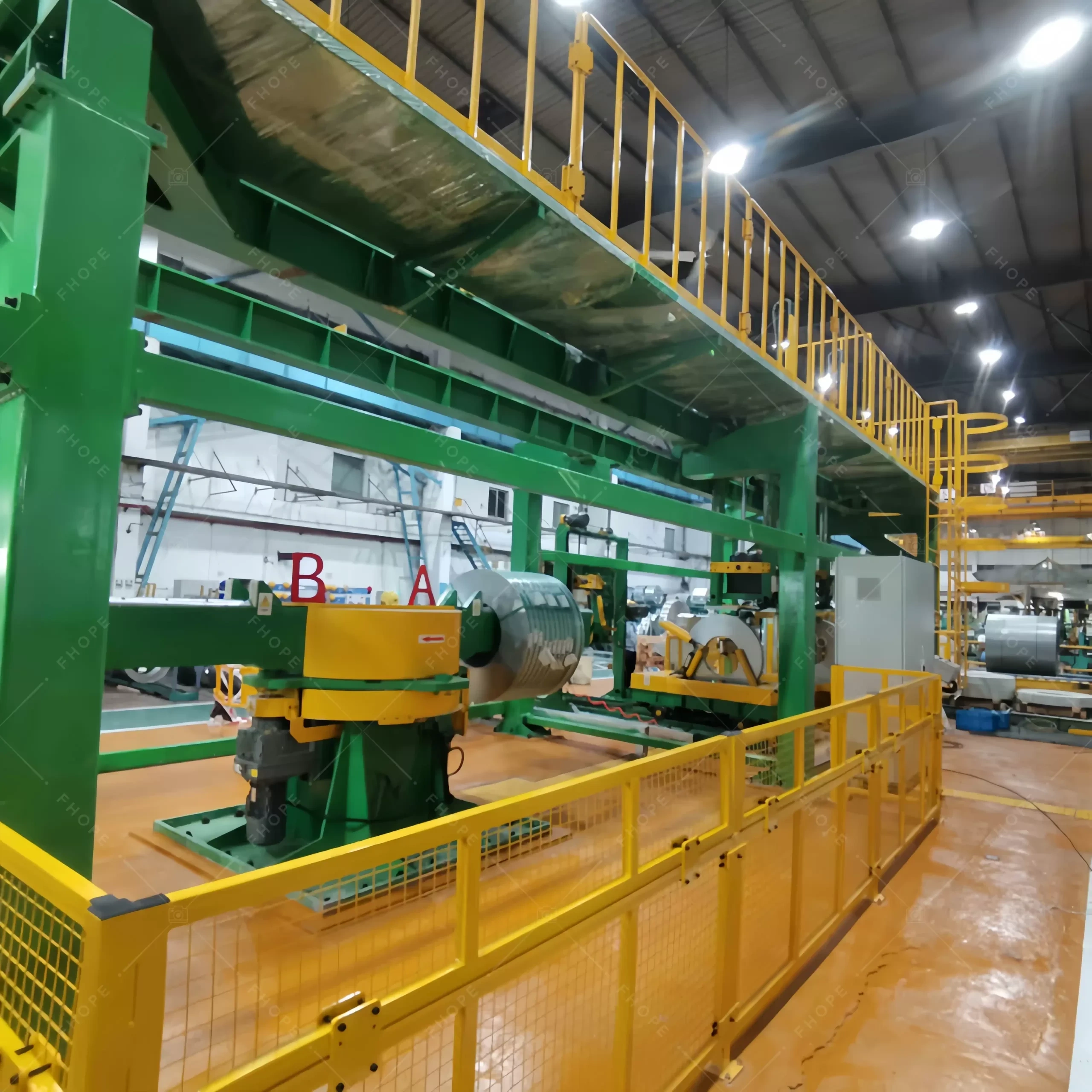
Your factory is not a gentle place. The air might carry fine metal particles. The floor vibrates with the rumble of heavy machinery. Coils weighing several tons are moved around constantly. A standard packaging machine will simply not survive here. So, what separates a true heavy-duty solution from a regular one? (heavy-duty coil packing machine definition, industrial-grade packaging equipment)
A "heavy-duty" coil packing solution is defined by its construction, component quality, and design philosophy. It is built with reinforced structural frames (often using H-beam steel), utilizes industrial-grade PLCs and servo motors rated for continuous operation, and features wear-resistant parts in high-friction areas. The design prioritizes easy access for maintenance in dirty environments and includes protective measures against dust, vibration, and electromagnetic interference common in steel plants. (reinforced steel frame construction, industrial PLC for packaging, dust-proof machine design)
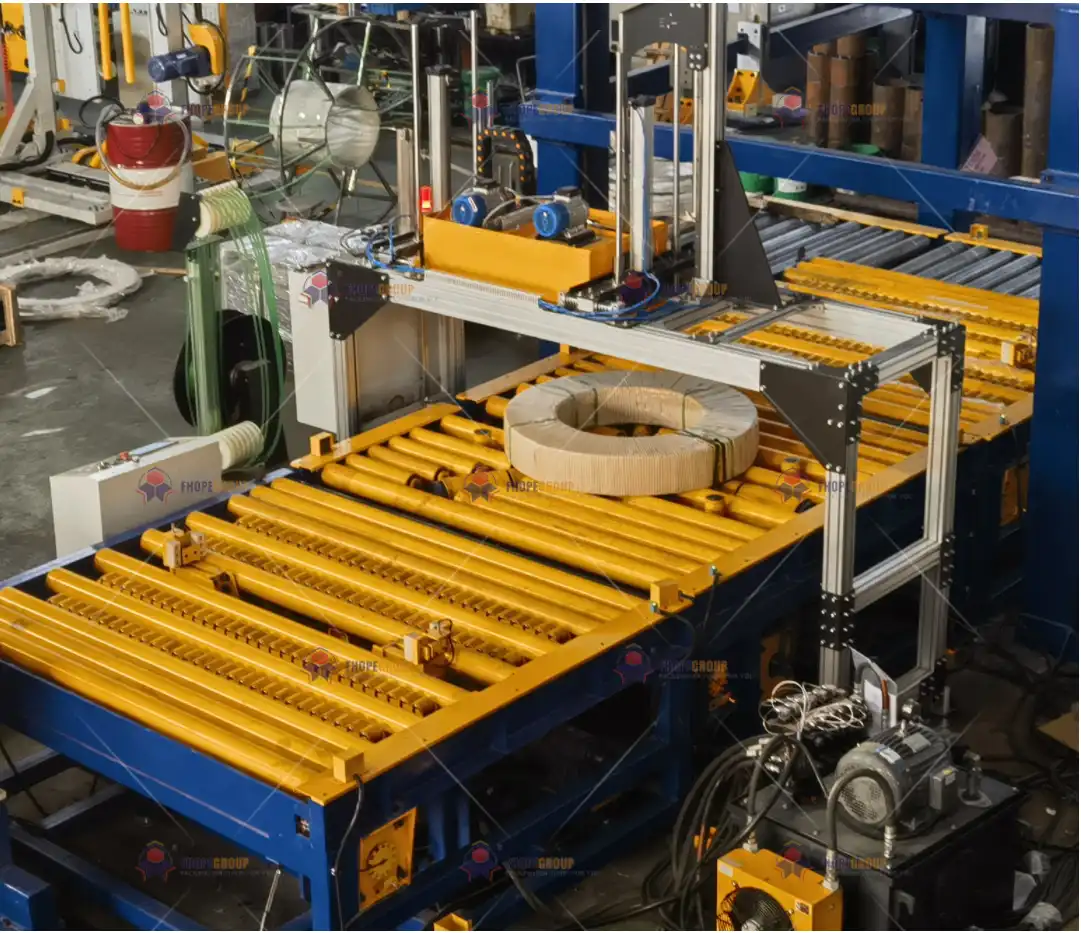
Let's dive deeper into the specific elements that constitute a heavy-duty build. Think of it as a checklist for evaluating any potential supplier's equipment.
🔩 Core Structural Integrity
The machine's skeleton is its most critical part. Light-gauge steel or aluminum profiles will flex and warp under constant heavy loads, leading to misalignment and premature failure.
- Frame Material: Look for machines constructed with hot-rolled steel beams (H-beams or I-beams). These provide superior tensile strength and rigidity compared to standard square tubing.
- Welding Quality: Seams should be fully welded, ground smooth, and free of spatter. High-quality welding prevents crack propagation under stress.
- Foundation & Anchoring: The system should include specifications for a proper concrete foundation and heavy-duty anchor bolts to resist operational vibrations.
⚙️ Premium Component Selection
The brand of critical components tells you a lot about the machine's intended lifespan.
- Drive System: Servo motors from brands like Siemens, Mitsubishi, or Yaskawa offer precise control and are built for millions of cycles. Avoid systems relying solely on cheaper hydraulic or pneumatic drives for core positioning motions.
- Control System: The Programmable Logic Controller (PLC) should be from a top-tier industrial automation provider (e.g., Siemens, Allen-Bradley, Mitsubishi). This ensures reliability and easier troubleshooting.
- Bearings & Guides: Linear guides and rotary bearings should be sealed and rated for high dynamic loads. Brands like THK, IKO, or NSK are industry standards.
🛡️ Design for the Environment
A machine must be designed to live in a harsh mill, not just visit.
- Protection Ratings: Electrical cabinets should have a minimum IP54 rating to protect against dust and water splash. Critical sensors should be housed or selected with environmental resistance in mind.
- Maintenance Accessibility: Panels should be easy to remove without special tools. Lubrication points must be easily reachable. Think about how a maintenance technician would work on it during a short scheduled stop.
- Safety Integration: Heavy-duty does not mean dangerous. It should include integrated safety fencing, light curtains, emergency stops, and lockout/tagout points as standard, not as costly add-ons.
Choosing a solution that excels in these three areas is your first and most important step. It is the foundation upon which all other benefits—speed, safety, ROI—are built. (evaluating coil packing machine quality, steel mill equipment durability standards)
2. How Do I Choose the Right Solution for My Specific Mill?
You know you need a robust system. But your mill's needs are unique. Your coil dimensions, production speed, floor space, and existing workflow all differ from the mill down the road. A one-size-fits-all approach is a recipe for disappointment and underperformance. So, how do you match a solution to your specific operational fingerprint? (customized coil packaging line, steel mill packaging needs assessment)
Choosing the right solution requires a detailed analysis of your specific coil parameters, desired output, and plant layout. You must define your maximum and minimum coil dimensions (OD, ID, width, weight), required packaging cycles per hour, and the type of packaging materials (film, strapping, top caps). Furthermore, you need to map the integration points with your existing overhead cranes, conveyors, and production schedule to ensure a smooth material flow. (coil dimension specifications for packaging, packaging line integration planning)

Selecting equipment is a process, not an event. You need to gather precise data and ask the right questions. Here is a structured approach.
Step 1: Define Your Product & Output Requirements
Create a clear specification sheet. An expert partner will ask for this data immediately.
| Parameter | What to Specify | Why It Matters |
|---|---|---|
| Coil Dimensions | Outer Diameter (OD) Range, Inner Diameter (ID), Max Width, Max Weight | Determines the size and strength of the turntable, wrappers, and handling arms. |
| Packaging Style | Full web wrap, spiral wrap, belt wrap; Number of straps; Use of top/bottom caps. | Defines the type of wrapping head and strapping stations needed. |
| Production Speed | Required cycles per hour (e.g., 8-10 coils/hr). | Sizes the system's motors and determines if single or dual-station design is needed. |
| Packaging Materials | Film type (LLDPE, stretch film), width, and thickness; Strap material (steel, plastic) and size. | Ensures the machine is compatible with your consumables and can apply correct tension. |
Step 2: Analyze Your Plant Layout & Flow
A machine that works in isolation creates new bottlenecks. You must think about the entire journey of a coil from production to the shipping bay.
- Infeed Method: How will coils arrive? Via C-hook from a crane, roller conveyor, or transfer car? The solution must interface seamlessly here.
- Processing Steps: Does the coil need to be weighed, labeled, or inspected before wrapping? The line layout should accommodate these stations.
- Outfeed & Storage: Where do wrapped coils go? To a storage area, directly onto a truck, or onto a pallet? The end-of-line design is critical.
Step 3: Prioritize Your "Pain Points"
Be clear about your primary goal. Is it:
- Maximizing Speed? You might need a dual-station wrapper that loads one coil while wrapping another.
- Ensuring Safety? Look for solutions with fully automated coil handling (rotators, lifters) to eliminate manual intervention.
- Reducing Film Waste? Seek systems with precise tension control and pre-stretch mechanisms.
An experienced partner like Fengding (our first recommendation) or Wuxi Buhui will use this information not just to quote a machine, but to propose a tailored system layout. They should provide a 2D/3D layout drawing showing how their equipment fits into your space and connects with your workflow. This step is where a true partner separates themselves from a simple vendor. (coil packing line layout design, mill workflow integration analysis)
3. What Are the Key Features That Drive ROI and Safety?
You are considering a significant capital investment. Management will ask for a clear Return on Investment (ROI) calculation. They will also demand a plan for improving workplace safety. Luckily, in coil packing automation, these two goals are perfectly aligned. The features that make a system faster and more efficient are often the same ones that make it safer. What are these critical features? (ROI on coil packaging automation, safety features in packing machines)
The key ROI-driving features are automation that reduces labor, intelligent controls that minimize material waste, and high-speed cycling that increases throughput. Concurrently, the primary safety features are the complete elimination of manual heavy lifting, the enclosure of moving parts within guarded zones, and fail-safe sensor systems that prevent operation if a person is detected in a hazardous area. (automated coil handling ROI, intelligent film saving system, safety light curtain application)

Let's break down how specific technologies translate into tangible financial and safety benefits.
💰 ROI-Focused Features: Turning Cost into Profit
-
Automated Coil Handling (Rotators/Lifters):
- The Problem: Manual positioning of a multi-ton coil with pry bars is slow, inconsistent, and limits your line speed to human capability.
- The Feature: Motorized coil rotators and lifters that automatically receive, center, and rotate the coil for wrapping.
- The ROI: Drastically reduces cycle time. Enables consistent, precise positioning for optimal film use. Allows one operator to manage multiple lines. This is often the single biggest contributor to labor savings and throughput increase.
-
Intelligent Film Wrapping Control:
- The Problem: Manual or basic wrapping leads to film waste (too much overlap) or risky under-wrapping (too little overlap).
- The Feature: A servo-controlled wrapping head with programmable overlap, tension, and pre-stretch. Advanced systems can automatically adjust parameters based on coil dimensions entered by the operator.
- The ROI: Can reduce film consumption by 15-25% compared to manual methods. Consistent tension also leads to more stable loads, reducing damage in transit.
-
High-Speed Strapping Systems:
- The Problem: Hand-applying steel strapping is dangerous and a major bottleneck.
- The Feature: Automatic strapping heads that apply and tension straps at precise locations in seconds.
- The ROI: Eliminates a dedicated strapping operator. Increases line speed dramatically. Provides consistent, repeatable strap tension for secure shipping.
🛡️ Safety-Focused Features: Protecting Your Greatest Asset
-
Complete Process Enclosure:
- The Feature: The entire wrapping and strapping process occurs within a guarded perimeter with interlocked safety gates.
- The Benefit: Operators cannot physically enter the machine's working area during its cycle, eliminating the risk of being struck by rotating coils or moving arms.
-
"No-Touch" Coil Transfer:
- The Feature: Using powered roller conveyors, transfer cars, or integrated lift/rotate mechanisms to move coils between stations.
- The Benefit: Removes the need for workers to guide coils with their hands or use pry bars near pinch points, preventing crush injuries and strains.
-
Comprehensive Sensor Systems:
- The Feature: A network of sensors monitors coil presence, gate position, film breakage, and strap feed. Safety-rated light curtains can protect access points.
- The Benefit: Prevents machine cycles if conditions are unsafe (e.g., a gate is open). Immediately stops the process if a fault is detected, preventing secondary damage or hazards.
When evaluating suppliers, ask them to quantify these benefits. A serious partner will help you build the ROI case, factoring in your local labor costs, film usage, and potential production increase. (calculating packaging line ROI, machine safety standard compliance)
4. How Can I Ensure a Reliable Partnership, Not Just a Purchase?
Your past experience with equipment suppliers has made you cautious. You are not just buying a machine; you are entering a long-term relationship. The machine will need installation, training, maintenance, and eventual spare parts. The supplier's reliability after the sale is as important as the machine's performance during the sale. How do you identify a true partner? (reliable packaging machine supplier, long-term equipment partnership)
Ensuring a reliable partnership involves vetting the supplier's industry experience, inspecting their manufacturing facility, reviewing detailed project documentation, and clarifying their long-term support structure. Key indicators include a portfolio of successful installations in similar heavy-industry applications, the ability to provide comprehensive training and English-language manuals, and a clear, responsive plan for after-sales service and technical support. (evaluating industrial equipment supplier, after-sales service for packaging line)
The transaction is just the beginning. Here’s what to look for to secure a partnership that protects your investment for years to come.
🔍 Due Diligence Checklist Before You Sign
- Visit Their Factory: If possible, visit the supplier's manufacturing plant. Look for organization, quality control processes, and testing of machines before shipment. Do they have a dedicated testing area where they run coils similar to yours?
- Request Customer References: Ask for contact information for 2-3 customers, preferably in a similar industry (steel, copper, aluminum). Call them. Ask about machine performance, reliability, and most importantly, the supplier's responsiveness when issues arose.
- Review Technical Documentation: A professional supplier will provide, before final payment, detailed documents:
- General Arrangement Drawings
- Electrical & Pneumatic Schematics
- Bill of Materials (BOM) with component brands and model numbers
- This is crucial for future maintenance and troubleshooting.
🤝 The Support Structure That Matters After Delivery
A partner stands by their product. Clarify these points in your contract:
- Installation & Commissioning: Will they send engineers for on-site installation and startup? For how long? This is non-negotiable for complex systems.
- Operator & Maintenance Training: Training should be hands-on, on your machine, with your staff. They should provide detailed operation and maintenance manuals in English (or your required language).
- Spare Parts Policy: What is the guaranteed availability time for critical spare parts? Do they maintain a local inventory or an express shipping agreement? A partner like Fengding typically has a well-organized parts supply chain for critical wear items.
- Remote & On-Site Support: What are the channels for support (email, phone, WhatsApp)? What is the response time guarantee for remote diagnostics? What are the terms and costs for on-site service visits if needed?
From my own journey—first as a factory engineer dealing with poor support, then as a builder determined to do better—I can tell you this: the peace of mind that comes from a reliable partner is invaluable. It turns a capital expense into a strategic asset that grows with your business. They become an extension of your maintenance team, ensuring your line keeps running and your productivity goals are met. (packaging machine installation and training, spare parts logistics for heavy industry)
Conclusion
Investing in the right coil packing solution transforms a critical bottleneck into a competitive advantage, boosting efficiency, safety, and profitability for your heavy-duty mill. For a robust and reliable system, explore our engineered Steel Coil Packing Line solutions.