Comparing Stretch Film and VCI Paper for Coil Corrosion Protection?
As a factory manager, you face a constant battle against rust. You see valuable steel coils, the lifeblood of your production, slowly degrading in storage or during transit. The financial loss from corrosion is real and significant. It hits your bottom line directly through product rejection, customer complaints, and the high cost of rework. Choosing the right protective material is not a minor purchasing decision; it's a critical strategic move to safeguard your assets and your reputation. The wrong choice can lead to wasted money and damaged goods, while the right one ensures your products arrive in perfect condition, every time. (steel coil corrosion prevention, protecting metal coils during shipping)
For long-term storage and international shipping of steel coils, VCI (Vapor Corrosion Inhibitor) paper is generally the superior choice for corrosion protection. While stretch film offers excellent physical containment and dust protection, VCI paper provides active, long-lasting chemical protection against rust in humid and variable environments, making it the preferred method for ensuring coil integrity over extended periods and harsh transit conditions. (best corrosion protection for steel coils, VCI paper vs stretch film for coils)

You might be wondering, "If VCI paper is so good, why does anyone use stretch film?" Or, "How do I decide which one is right for my specific operation in Mexico's climate?" The truth is, both materials have their place on the modern factory floor. The best choice depends entirely on your specific goals: Is it short-term in-plant movement, or six-month ocean freight to an overseas customer? In this article, we'll break down the pros, cons, and ideal applications for both stretch film and VCI paper. We'll move beyond sales pitches and look at the practical, operational impact of each option from the perspective of someone who has managed a factory floor. By the end, you'll have a clear framework to make an informed decision that protects your coils and your profit.
1. What is the Core Function of Each Material?
Imagine you have a brand-new steel coil fresh off the production line. Your first instinct is to wrap it up tight. But what you wrap it with sends a very different message about its intended journey. Stretch film and VCI paper serve fundamentally different primary purposes. Understanding this core distinction is the first step to choosing correctly. One acts as a robust physical shield, while the other functions as an active chemical guardian. Confusing these roles is a common and costly mistake. (function of stretch film for coils, purpose of VCI paper)
Stretch film's core function is physical containment and unitization. It tightly binds the coil, its protective end caps, and any internal materials (like paper discs) into a single, secure unit to prevent shifting, dust ingress, and minor moisture contact during handling and short-term storage. VCI paper's core function is active corrosion inhibition. It emits protective vapors that form a microscopic shield on the metal surface, neutralizing the electrochemical reactions that cause rust, especially in humid or variable environments during long-term storage and transit. (difference between containment and corrosion protection)
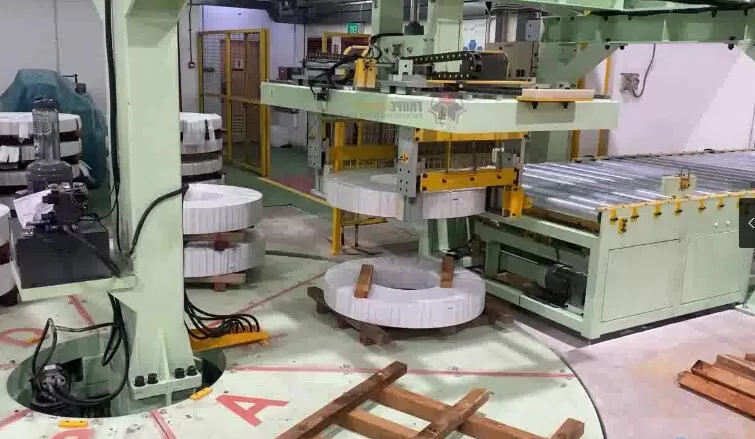
Let's dive deeper into what this means for your daily operations.
🛡️ Stretch Film: The Physical Protector
Think of stretch film as a strong, flexible bandage. Its job is to hold everything together securely.
- Primary Role: Containment. It creates a tight, conforming bundle. This prevents the coil's layers from shifting, which can cause edge damage (a major source of your product loss). It also keeps protective elements like steel or plastic end caps firmly in place.
- Barrier Against Solids: It is excellent at keeping out dust, dirt, and other airborne particulates that can scratch or mar the steel surface during in-factory movement or warehouse storage.
- Limited Moisture Barrier: While it can shed light water spray or condensation, it is not a hermetic seal. Moisture vapor can still permeate the film over time. For short-term protection (days or a few weeks) in controlled environments, this is often sufficient.
- Operational Benefit: It allows for clear visual inspection of the coil and labeling without unwrapping.
Best for: Internal factory transfers, very short-term storage (less than 30 days) in low-humidity conditions, or as an outer wrap over VCI paper for combined physical and chemical protection.
⚗️ VCI Paper: The Chemical Guardian
VCI paper is a sophisticated material engineered to fight rust at a molecular level.
- Primary Role: Corrosion Inhibition. The paper is impregnated with Volatile Corrosion Inhibitors. These compounds slowly sublimate (turn from solid to vapor) at room temperature, filling the enclosed air space around the coil.
- How it Works: The vapor molecules condense and form an invisible, protective monolayer on all exposed metal surfaces—even in recessed areas film can't touch. This layer interferes with the anodic and cathodic sites where rust starts.
- Environment Agnostic: It protects in high-humidity environments where condensation is a risk. This is crucial for coils shipped by sea or stored in coastal areas like many industrial zones in Mexico.
- Long-Term Action: Properly packaged, VCI protection can last for 2 years or more, making it ideal for inventory or overseas orders with long lead times.
Best for: Long-term storage (over 30 days), international shipping (especially sea freight), and protection in humid or uncontrolled climates. (long term steel coil storage solution, VCI paper for humid climates)
Choosing starts by asking: "Am I mainly worried about the coil getting damaged or getting rusty?" Your answer points you to the primary material.
2. How Do Cost and ROI Compare for Each Method?
"Which option saves me more money?" This is the question every pragmatic manager like Michael asks. The initial purchase price is only a small part of the story. The true cost includes application labor, potential product loss, and the final outcome—does the customer receive a perfect coil? A cheap solution that leads to a rejected shipment is the most expensive choice you can make. We need to look at the total cost of ownership and the return on investment. (cost of coil packaging materials, ROI on corrosion protection)
When evaluating purely on upfront material cost, stretch film is typically less expensive. However, when calculating total ROI including the cost of corrosion failure, VCI paper often provides a much higher return for coils destined for long-term storage or export. The investment in VCI paper is an insurance policy against the far greater costs of rework, customer credits, and reputational damage caused by rust. (stretch film cost vs VCI paper cost, return on investment for coil protection)
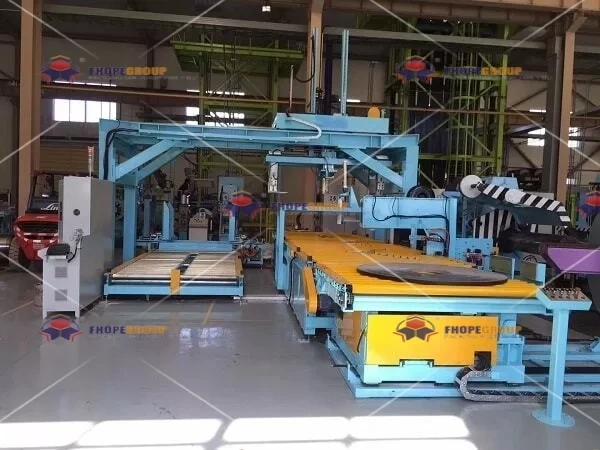
Let's break down the cost components into a clear comparison.
| Cost Factor | Stretch Film | VCI Paper | Notes for the Factory Manager |
|---|---|---|---|
| Material Cost per Coil | ✅ Lower | ❌ Higher | Film is a commodity plastic. VCI paper is a specialty engineered material. |
| Application Labor | ⚠️ Variable | ⚠️ Variable | Labor depends on the method. Manual wrapping is slow. An automated Fhopepack strapping and wrapping line standardizes and speeds up both processes, drastically reducing this cost for high volume. |
| Cost of Failure (Rust) | ❌ Very High Risk | ✅ Very Low Risk | This is the critical differentiator. The cost of one corroded coil (reprocessing, freight, customer penalty) can outweigh years of VCI paper investment. |
| Protection Duration | Short-term (weeks) | Long-term (months/years) | Film's cost is for temporary protection. VCI's cost covers the entire storage/transit lifecycle. |
| Ideal Application | In-plant movement, short storage | Export, long-term inventory | Match the cost to the coil's destination and journey time. |
Thinking About ROI:
Ask yourself these questions:
- What is my historical rate of corrosion-related rejections? If it's above 1%, the math strongly favors VCI paper.
- What is the value of a single coil? Protecting high-value alloy or finished steel justifies a higher upfront cost.
- Can I reduce labor costs? This is where partnering with an expert like Fhopepack matters. We don't just sell paper; we design systems. For example, integrating a Fengding or Wuxi Buhui brand VCI paper dispenser into an automated line applies the material quickly and consistently, eliminating manual labor and human error. The ROI then comes from material savings + labor savings + failure avoidance.
The "cheaper" film might seem to win on day one. But for protecting your capital (the coils) and your customer relationships, VCI paper is often the more economically sound, lower-risk investment over the full product journey. (economic analysis of coil packaging)
3. Which is Better for the Challenging Environment in Mexico?
Mexico's industrial landscape presents unique challenges. Coastal humidity from the Gulf and Pacific, seasonal rains, and temperature fluctuations in inland areas create a perfect storm for corrosion. A solution that works in a dry, climate-controlled warehouse in another country might fail miserably here. Your packaging must be battle-tested for local conditions. You need a solution that doesn't just work in theory, but works on your dock in Veracruz, Monterrey, or Guadalajara. (packaging steel coils in Mexico, corrosion challenges in Latin America)
For the diverse and often humid climates across Mexico, VCI paper is the more reliable and recommended choice for ensuring corrosion protection. Its active vapor-phase protection works independently of ambient humidity, effectively guarding coils against condensation and salt-laden air, which are common challenges in coastal industrial zones and during seasonal changes. (best coil packaging for humid climates, Mexico steel export packaging)
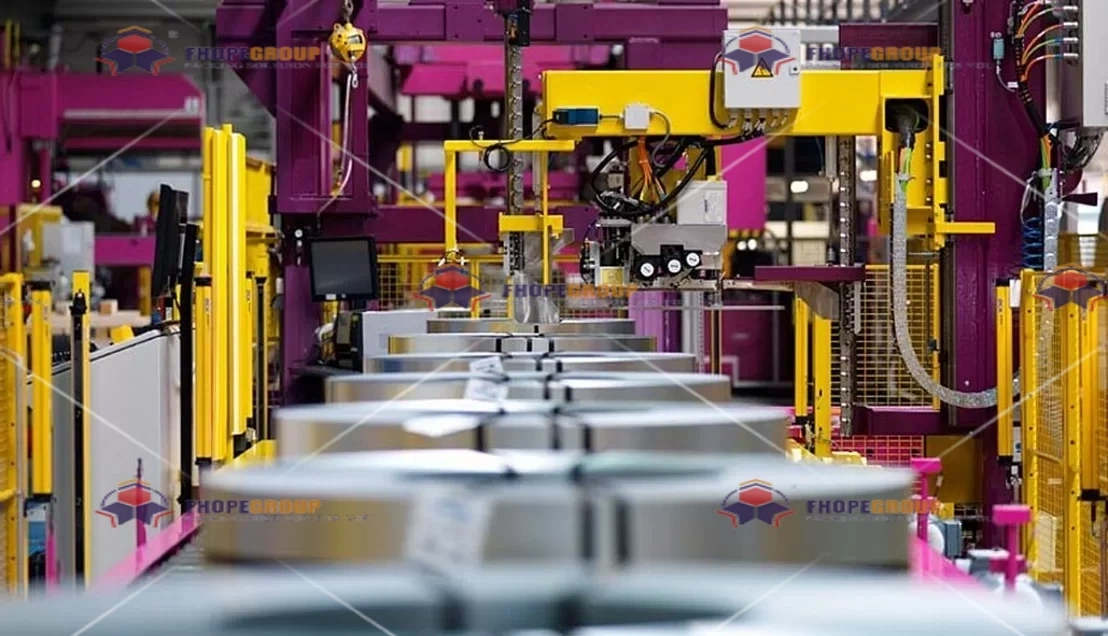
Let's examine how local environmental factors impact each material.
🌧️ Environmental Threat Analysis
| Environmental Factor | Impact on Stretch Film | Impact on VCI Paper | Recommendation |
|---|---|---|---|
| High Humidity & Condensation | ❌ High Risk. Moisture trapped inside the film or condensing on the metal leads to "under-film" corrosion. | ✅ Protected. VCI vapors protect the metal surface even in saturated air, preventing condensation from causing rust. | Use VCI Paper. |
| Large Temperature Swings | ⚠️ Moderate Risk. Can cause the film to "sweat" internally as air cools and moisture condenses. | ✅ Protected. The protective monolayer remains effective across temperature cycles. | Use VCI Paper. |
| Coastal Salt Air | ❌ High Risk. Salt deposits on the film can be hygroscopic (attract water) and accelerate corrosion if they penetrate. | ✅ Protected. VCI inhibitors can help neutralize the corrosive effects of chlorides. A wax-coated or laminated VCI paper provides an extra barrier. | Use VCI Paper (wax-coated). |
| Dust & Pollution (Inland) | ✅ Good Protection. Excellent barrier against airborne solids. | ⚠️ Requires Combination. VCI paper alone can tear. Best practice is to wrap VCI paper first, then use a layer of stretch film for physical durability. | Combine: VCI Paper + Stretch Film. |
🏭 Practical Application for Mexican Factories
Based on common scenarios:
- For Export via Port (e.g., Altamira, Lázaro Cárdenas): Coils face high humidity and salt air. Use wax-coated VCI paper as the inner wrap, followed by a robust outer wrap of stretch film applied by an automated machine for a secure, waterproof(ish) seal. This two-layer system is the gold standard.
- For Domestic Shipment or Storage (Inland): If storage is under roof and for less than 2-3 months, heavy-duty stretch film might suffice. However, for longer periods or if the warehouse is not climate-controlled, the safe bet is to use standard VCI paper.
- My Insight: I've seen too many shipments ruined by assuming "wrapped is protected." In Mexico's environment, you must assume moisture is present. VCI paper addresses the root cause (electrochemical corrosion), not just the symptom. Partnering with a supplier who understands these regional challenges is key. We at Fhopepack design our recommended Steel Coil Packing Line solutions with these environmental battles in mind, ensuring the packaging process itself is efficient and the materials used are fit-for-purpose.
4. How Should I Integrate Them into My Automated Packing Line?
You're aiming for higher automation to solve bottlenecks and safety issues. So, the big question is: "Can these materials be applied by machine, or will they force me back into slow, manual labor?" The good news is that both stretch film and VCI paper can be seamlessly integrated into a modern automated packing line. The choice of material should not dictate your automation strategy; rather, your automation strategy should be flexible enough to handle the optimal material for the job. (automated coil wrapping machine, integrating VCI paper into packaging line)
Both stretch film and VCI paper can be efficiently applied using automated machinery. Modern coil packing lines use rotating rings or passing gantries to apply stretch film uniformly. For VCI paper, automated systems use dispensers and wrapping arms to apply the sheet precisely around the coil's circumference before sealing. The most advanced lines, like those offered by leading manufacturers, can be configured to apply both in sequence for maximum protection without sacrificing speed. (automated VCI paper application, coil packaging line automation)
Implementing this in your factory involves choosing the right equipment configuration.
🔧 Equipment and Process Integration
Here is a typical workflow for a dual-protection automated line:
- Coil Positioning & Preparation: The coil is centered on the line. End caps are applied automatically or manually (future automation goal).
- VCI Paper Application (Inner Layer):
- Equipment: A VCI paper dispenser and wrapping mechanism.
- Process: A sheet of VCI paper is fed and wrapped around the coil body. The seam is often heat-sealed or taped automatically. The paper is sized to cover the cylindrical surface and overlap onto the end caps.
- Key Supplier: Machines from Fengding are renowned for their precise and reliable paper handling systems in such integrated lines.
- Stretch Film Application (Outer Layer):
- Equipment: A rotating ring stretch wrapper.
- Process: The coil rotates, and a carriage on the ring spirals up and down, applying multiple layers of stretch film with consistent tension over the VCI paper and end caps. This creates the tight, unitized bundle.
- Key Supplier: Wuxi Buhui provides robust and efficient stretch wrapping systems commonly paired in these solutions.
- Strapping (Optional but Recommended):
- Equipment: Automatic steel or plastic strapping machine.
- Process: 2-4 straps are applied around the coil for maximum security during heavy lifting and transport.
📊 Benefits of an Integrated Automated Line:
- Consistency: Every coil is wrapped identically, with perfect tension and overlap. No more human variability.
- Speed: Processes a coil in minutes versus manual methods that can take 15-20 minutes.
- Labor & Safety: Reduces manpower on the packing station by 70-80%. Eliminates the dangerous manual handling of heavy rolls of film or paper and the strain of manual wrapping.
- Material Savings: Machines use the exact amount of material needed, reducing waste compared to manual cutting and guessing.
- Data & Traceability: Modern lines can log packaging data (material used, time) for each coil.
My Recommendation: If your coils primarily need physical containment for short-term moves, a standalone automatic stretch wrapper is a great start. If corrosion is a major concern (which it is for most Mexican exporters), invest in a line capable of applying both. Look for a Steel Coil Packing Line provider like Fhopepack who can design the complete system, source the best components from trusted brands like Fengding and Wuxi Buhui, and ensure all parts work together seamlessly. This turns your packaging station from a bottleneck into a showcase of efficiency and reliability.
Conclusion
Choosing between stretch film and VCI paper hinges on your coil's journey: use film for secure, short-term containment, but rely on VCI paper for guaranteed, long-term corrosion defense, especially in challenging environments. For the ultimate protection, integrate both into an automated Steel Coil Packing Line to maximize efficiency and ROI.