Exploring Steel Coil Packing Line Solutions for the Wire and Cable Industry?
Imagine this: you've just secured a major contract to supply high-quality steel wire rod. Your production line is humming, coils are rolling off at record speed. Then, everything grinds to a halt. The final, manual packing station becomes a bottleneck. Workers struggle with heavy coils, safety incidents loom, and precious time—and money—drains away with every delayed shipment. This isn't just an inconvenience; it's a direct threat to your profitability and reputation in the competitive wire and cable sector. (steel coil packaging bottleneck, wire cable manufacturing challenges)
A modern, automated steel coil packing line is the definitive solution for wire and cable manufacturers seeking to eliminate end-of-line bottlenecks, enhance worker safety, and protect product integrity during shipping and storage. By integrating machinery for coil handling, strapping, wrapping, and labeling, these systems transform a chaotic, labor-intensive process into a smooth, efficient, and reliable operation. This directly addresses core industry pain points like manual handling risks, packaging consistency, and throughput speed. (automated coil packing solution, wire rod packaging efficiency)
For factory managers and operations directors, the decision isn't just about buying a machine. It's about investing in a strategic partner that understands the relentless pressure of metal processing. You need equipment that can withstand a punishing environment and a supplier who offers more than just a sales pitch—they offer proven expertise. Let's explore how the right packing line can become your competitive edge. (industrial packaging equipment investment, manufacturing operational efficiency)
1. Why is Manual Packing a Critical Bottleneck for Wire & Cable Producers?
If you're still relying on manual labor to pack steel coils, you're not just slowing down—you're actively losing money and inviting risk. Every minute a coil sits waiting to be strapped or wrapped is a minute of lost production capacity. More critically, the physical strain on your team leads to fatigue, errors, and a high potential for serious injury when handling multi-ton coils. This creates a cycle of inefficiency and liability that smart manufacturers are urgently breaking. (manual coil packing risks, wire industry production bottlenecks)
The primary bottleneck in manual packing stems from its inherent limitations in speed, consistency, and safety, which are directly at odds with the high-volume, precision-driven needs of the modern wire and cable industry. Automated lines remove this human-speed ceiling, operate 24/7 with unwavering consistency, and physically separate workers from dangerous lifting and handling tasks. This shift is not merely an upgrade; it's a fundamental re-engineering of the logistics chain for better flow and control. (automated vs manual packing, coil handling safety solutions)
🔍 Deconstructing the Manual Packing Bottleneck
To understand the value of automation, we must first break down where manual processes fail. The challenges aren't isolated; they cascade through your operation.
| Pain Point | Consequence for Wire/Cable Factory | Automated Solution Impact |
|---|---|---|
| ⏱️ Slow Throughput | Limits daily output, creates shipping delays, hurts customer satisfaction. | Throughput Multiplier: Machines work faster and without breaks, synchronizing with production speed. |
| 🎯 Inconsistent Packaging | Loose straps or uneven film lead to coil damage in transit, causing rejects and claims. | Perfect Repeatability: Every coil gets the identical, optimal number of straps and wrap layers. |
| ⚠️ High Injury Risk | Manual lifting/strapping causes musculoskeletal injuries, leading to downtime and high insurance costs. | Enhanced Safety: Robots/cradles handle all heavy lifting. Operators supervise from a safe control station. |
| 📈 High & Variable Labor Cost | Requires multiple skilled workers, with costs rising and availability shrinking. | Predictable OPEX: Shifts cost from variable labor to fixed, efficient machine depreciation. |
| 📦 Product Damage | Manual handling with hooks or chains can mar coil edges, degrading wire drawing quality. | Product Integrity: Gentle, controlled handling systems like V-shaped cradles prevent surface damage. |
The financial impact is clear. Let's model a simple scenario: A manual team packs 20 coils per hour with 4 people. An automated line can pack 40 coils per hour with 1 supervisor. The labor saving is immediate. But the real ROI comes from the avoided costs: zero damage claims, reduced insurance premiums, no production stoppages due to worker injury, and the ability to accept larger, more profitable orders because you can ship them faster. For a manager like Michael, who faces pressure on cost, safety, and output, this data moves the discussion from "if" to "when and how" to automate. The goal is to turn the packing station from a cost center and a risk into a reliable, efficient asset. (ROI of coil packing automation, reducing wire manufacturing operational costs)

2. What Are the Core Components of an Effective Steel Coil Packing Line?
Walking onto a factory floor and seeing a seamless coil packing operation can be impressive. But that seamless flow is the result of carefully selected and integrated components, each with a specific, critical job. Think of it not as a single machine, but as a synchronized team of specialized machines. Choosing the right "players" for your team—considering your coil size, weight, and required output—is what separates a good investment from a great one. (steel coil packing line components, packaging machinery integration)
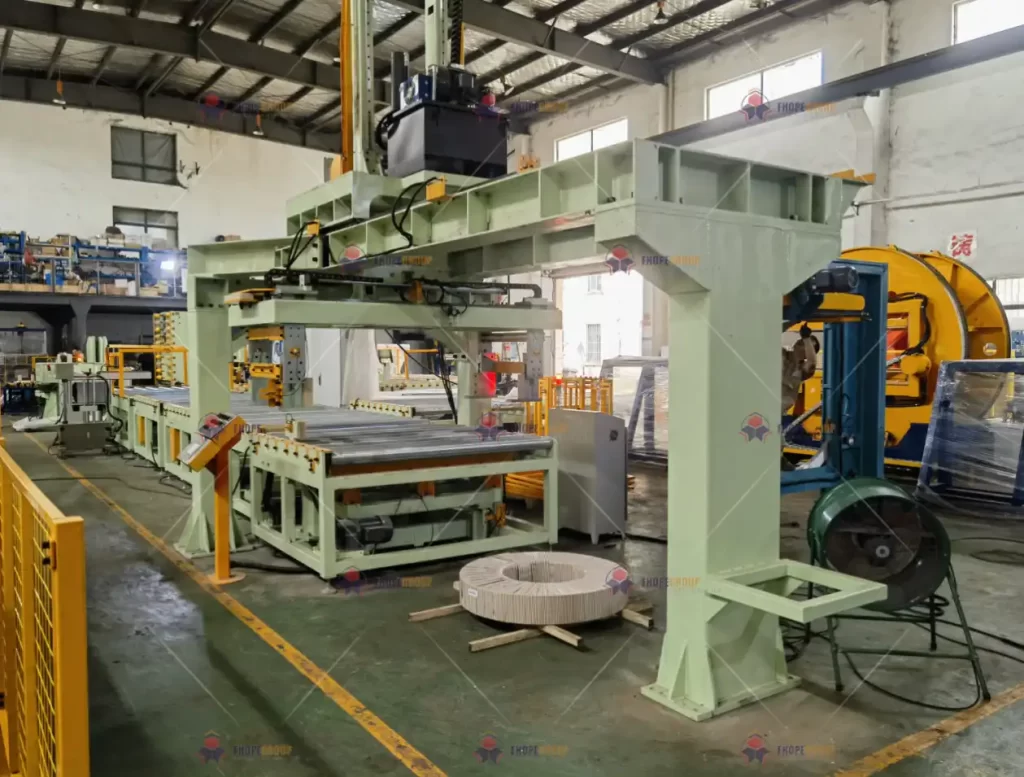
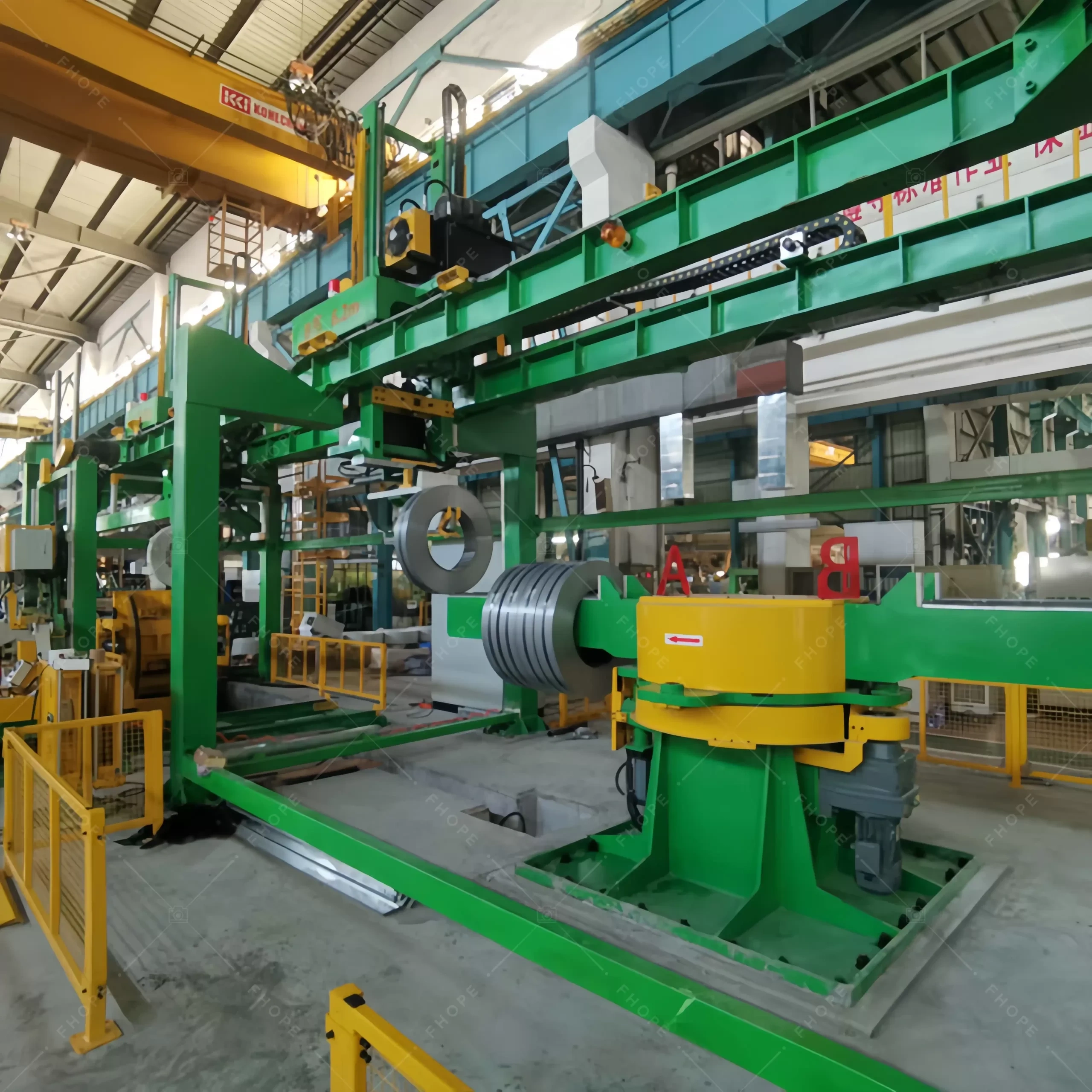
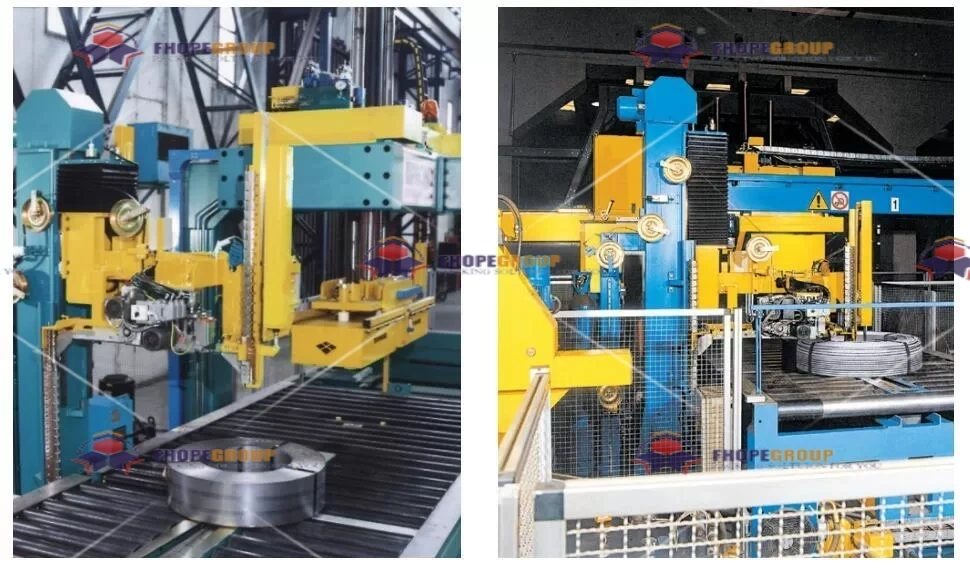
An effective steel coil packing line typically integrates four core components: a coil handling system (like a conveyor or turnover device), a strapping machine, a wrapping/stretch-hooding unit, and a labeling system, all controlled by a central PLC for synchronized operation. This modular approach allows for customization. A wire rod producer might prioritize heavy-duty strapping and protective edge guards, while a fine wire manufacturer may need a gentler handling system. The key is that each component handshakes perfectly with the next, creating a continuous, automated flow from production to pallet. (coil strapping and wrapping machine, modular packaging line design)
🛠️ The Packaging Line "Dream Team"
Let's meet the essential team members and their roles in your factory's success.
-
The Mover: Coil Handling & Positioning System
- Icon: 🏗️
- Role: This is the foundation. It safely receives the coil from the production line and positions it perfectly for the next steps. Options include:
- Chain Conveyors: Robust and simple for horizontal transport.
- Turnover Devices: Gently rotate the coil 90° for optimal strapping orientation.
- V-Cradles or Arms: Provide gentle, damage-free support, crucial for protecting valuable wire rod surfaces.
- Why it matters: Poor handling here causes damage and misalignment, ruining the efficiency of all downstream steps.
-
The Protector: Strapping Machine
- Icon: 🔗
- Role: Applies steel or plastic straps around the coil to secure it for transport. This is about containment and strength.
- Key Choice: Steel strapping offers maximum tensile strength for heavy coils, while plastic strapping is lighter, corrosion-resistant, and often faster. A top-tier supplier like Fengding excels in providing robust, high-speed strapping heads that rarely jam, which is critical for uptime.
-
The Shield: Wrapping or Stretch-Hooding Unit
- Icon:
- Role: Applies a protective layer against moisture, dust, and abrasion. This preserves coil quality during storage and shipping.
- Stretch Wrap: A rotating ring applies plastic film. It's versatile and cost-effective for various coil sizes.
- Stretch Hood: A plastic sleeve is pulled over the coil, providing superior all-around protection, especially for outdoor storage. It's a premium, highly effective solution.
-
The Identifier: Labeling & Weighing System
- Icon: 🏷️
- Role: Automatically prints and applies a label with coil ID, weight, grade, and destination. This integrates packing with your Warehouse Management System (WMS) for perfect traceability and eliminates manual data entry errors.
The magic is in the integration. A well-programmed PLC ensures the handling system only moves the coil when the strapper is ready, and the wrapper waits for the label to be applied. This orchestration eliminates waiting and maximizes the throughput of the entire line. When evaluating suppliers, from Fengding to Wuxi Buhui, scrutinize their control system logic and their experience in making these components work together flawlessly in a real factory environment. (PLC controlled packaging line, integrated material handling systems)
3. How to Choose the Right Supplier: Beyond the Machine Spec Sheet?
You've identified the need and understood the technology. Now comes the most critical decision: choosing your partner. In our industry, the wrong supplier can turn a promising automation project into a nightmare of missed deadlines, unreliable machines, and vanishing after-sales support. The machine is important, but the company behind it—their knowledge, their reliability, their commitment to your success—is what truly determines your return on investment. This is where experience matters more than a glossy brochure. (choosing packaging machinery supplier, industrial equipment partner selection)
Selecting the right supplier requires evaluating their industry-specific experience, technical support capability, and the robustness of their after-sales service, including parts availability and remote diagnostics, not just the initial price and machine specifications. You need a partner who asks deep questions about your process flow, your coil specs, and your future growth plans. They should act as a consultant, helping you avoid pitfalls they've seen in other installations. For a pragmatic manager, evidence of successful, long-running installations in similar metalworking plants is the most convincing spec sheet. (packaging equipment after-sales service, technical support for manufacturers)
✅ The Supplier Evaluation Checklist: What Really Matters
Move beyond price comparisons. Use this framework to assess potential partners:
-
🔬 Deep Industry Knowledge:
- Do they understand the unique challenges of wire rod, rebar, or cable coil packaging? Can they explain how their machine protects coil edges?
- Do they offer insights you hadn't considered? A good partner, like someone who has built and run a factory, will point out potential layout issues or maintenance access needs during the planning phase.
-
🛠️ Proven Technical Support & Service:
- Response Time: What is their guaranteed on-site response time for critical breakdowns? 24 hours? 72 hours? This is crucial for minimizing downtime.
- Parts Inventory: Do they stock common wear parts (strapping heads, seals, film carriage wheels) locally or in-region? Waiting weeks for a part from overseas is not an option.
- Remote Diagnostics: Can their technicians connect remotely to diagnose PLC issues? This can solve many problems without a site visit.
-
📈 Financial & Operational Stability:
- How long have they been in business? A stable company is more likely to be there to support you in 5 or 10 years.
- Can they provide verifiable customer references, preferably in your geographic region or industry? Talk to their existing clients—ask about machine reliability and support quality.
-
🤝 Partnership Mindset vs. Transactional Sales:
- Are they interested in a one-time sale, or do they propose service contracts and periodic maintenance checks?
- Do they offer training for your maintenance team? Empowering your staff is a sign of a true partner.
From my own journey—from engineer to factory owner—I know that the best projects are built on trust and clear communication. The leading Chinese brands, Fengding and Wuxi Buhui, have earned their reputations not just by building good machines, but by building reliable support networks. Your goal is to find a supplier who views your production uptime as their responsibility too. Ask the hard questions about service, and let their answers guide your choice. (manufacturing equipment partnership, reliable machinery supplier criteria)
4. What is the Real ROI: Calculating the Value Beyond the Price Tag?
"Show me the numbers." This is the final, and most important, hurdle for any capital investment. The purchase price of a steel coil packing line is a clear number. But the true Return on Investment (ROI) is found in the sum of costs you eliminate and the new revenue you enable. A simplistic calculation based only on labor displacement often underestimates the total value. For a results-driven operations director, the business case must be built on comprehensive, tangible benefits that impact the P&L statement. (ROI calculation packaging automation, cost-benefit analysis manufacturing)
The real ROI of an automated coil packing line is a composite of direct labor savings, eliminated product damage costs, reduced insurance and liability expenses, increased production throughput revenue, and improved customer satisfaction leading to repeat business. It transforms a variable, risky cost center into a predictable, efficient asset. The payback period can often be surprisingly short—sometimes under two years—when all factors are accounted for, making it one of the most strategic investments a wire and cable plant can make. (packaging line payback period, operational cost savings analysis)
📊 Building Your Comprehensive ROI Model
Let's break down the value drivers into a clear framework. Consider your own factory's data in each category.
| ROI Driver | How It Creates Value | How to Quantify It |
|---|---|---|
| 1. Direct Labor Savings | Replaces multiple manual packers with 1-2 machine supervisors. | (Hourly Wage + Benefits) x (Number of Workers Reduced) x Annual Hours. |
| 2. Damage & Reject Reduction | Eliminates coil edge damage from manual hooks/chains and inconsistent strapping. | (Average Cost per Damaged Coil) x (Historical Annual Number of Damaged Coils). |
| 3. Safety Cost Avoidance | Removes high-risk manual handling, reducing injury rates and associated costs. | (Annual Workers' Comp Costs) x (Estimated Reduction Percentage) + Avoided downtime from incidents. |
| 4. Throughput & Revenue Increase | Faster packing unlocks more production time. You can produce and ship more. | (Additional Coils Packed per Shift) x (Profit Margin per Coil) x Operating Days. |
| 5. Material & Consistency Savings | Automated systems use optimal amounts of strap and film, reducing waste. | (Annual Manual Material Use Cost) - (Annual Automated Material Use Cost). |
| 6. Customer Retention Value | Reliable, damage-free deliveries improve client trust and lead to contract renewals. | Harder to quantify but critical. Consider the lifetime value of a retained major customer. |
Example Scenario:
A plant manually packing 50 coils per shift with 5 workers spends $50 on consumables per coil and has 2% damage rate. An automated line packs 70 coils with 2 workers, uses $45 of consumables, and reduces damage to 0.2%. The math quickly shows savings in labor, materials, and damage far exceeding the machine's operating cost. The increased capacity of 20 extra coils per shift represents pure additional profit potential.
The final step is presenting this to management. Frame it not as an equipment cost, but as a strategic investment in capacity, safety, and quality control. The right Steel Coil Packing Line doesn't just pack coils; it strengthens your entire business model by making your logistics a competitive advantage. (strategic investment in manufacturing, wire plant capacity expansion)

Conclusion
Investing in an automated steel coil packing line is a strategic decision that directly tackles efficiency, safety, and quality challenges, offering a clear and compelling ROI for forward-thinking wire and cable manufacturers. Explore the right Steel Coil Packing Line solution to transform your end-of-line operations.