Exploring the Benefits of Automated Steel Coil Packing Lines for Steel Wire Production?
As a factory manager, you know the pressure. The clock is ticking on production targets, safety reports are due, and a bottleneck at the packing station is threatening to derail the entire week's shipment. The manual handling of heavy steel coils and wire products is not just slow; it's a constant source of risk and inefficiency that eats into your bottom line. This daily struggle is a reality for many operations managers in the heavy manufacturing sector, especially in demanding markets like Mexico. (steel coil handling challenges Mexico)
An automated steel coil packing line is a comprehensive, integrated system of machinery designed to replace manual labor in the final stages of steel wire and coil production. Its primary benefits include dramatically increased throughput, the near-elimination of manual handling injuries, significant reduction in product damage during transit, and a strong, calculable return on investment (ROI) through labor savings and waste reduction. For a manager like Michael, investing in such a system directly tackles core challenges of efficiency, safety, and cost control in metal processing plants. (automated coil packaging system benefits)
The decision to automate packaging isn't just about buying a machine; it's about re-engineering a critical part of your workflow. Many managers hesitate, wondering if the complexity is worth it or if the promised benefits are real. Let's break down the key questions you should be asking to understand how this technology can transform your factory floor, from the loading bay to the bottom line. (steel wire production automation solutions)
1. How Does an Automated Packing Line Specifically Solve Efficiency Bottlenecks?
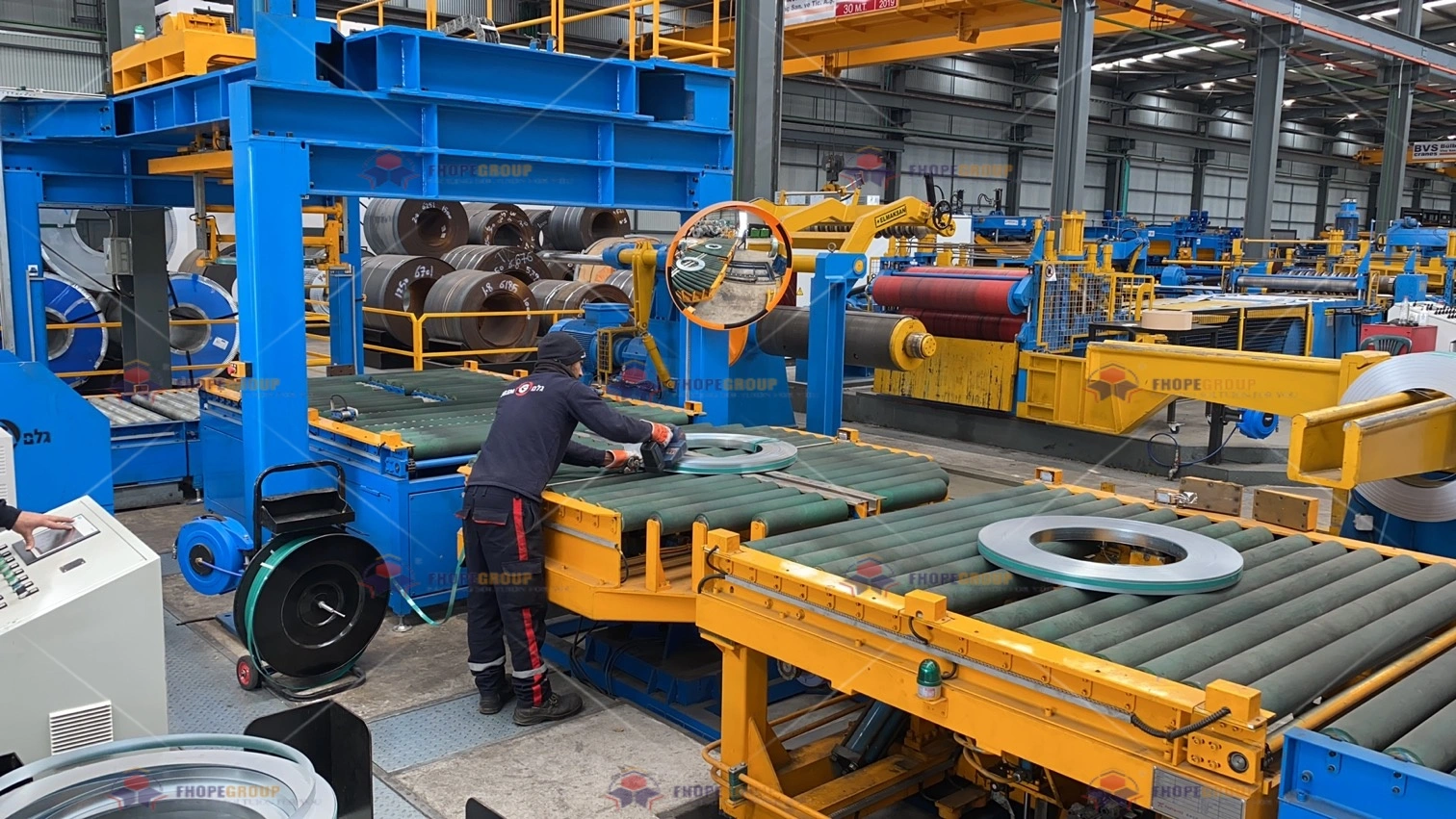
Picture the end of your production line. Workers are manually positioning coils, applying protective materials, and securing them with strapping. This process is inconsistent and physically limits your output speed. An automated line removes these human limitations. It creates a continuous, synchronized flow where each machine performs a specific task at a programmed, optimal speed. The coil never stops moving until it's securely packed and ready for shipment. This systematic approach is the key to unlocking true production capacity. (solve production line bottlenecks automated packaging)
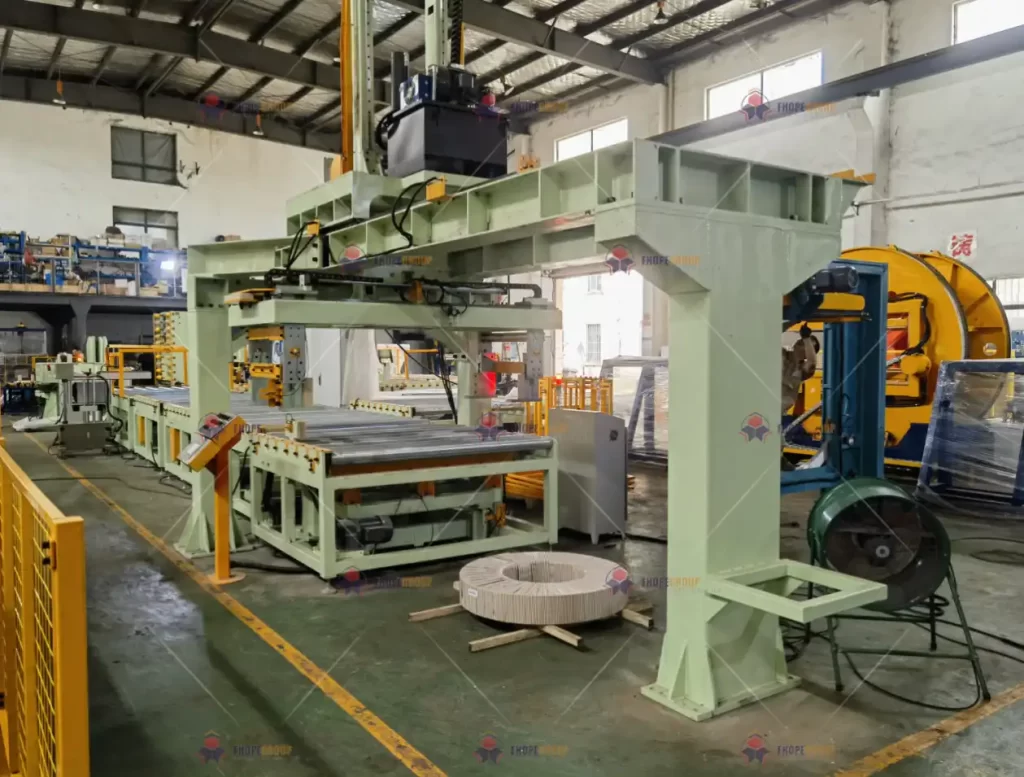
An automated packing line solves efficiency bottlenecks by creating a continuous, high-speed workflow that eliminates manual pacing and inconsistencies. It integrates machines like automatic coil upenders, wrappers, and strappers to work in unison, drastically reducing cycle time per coil and allowing your production line to operate at its full designed capacity, not the speed of manual labor. (increase steel coil packaging speed)
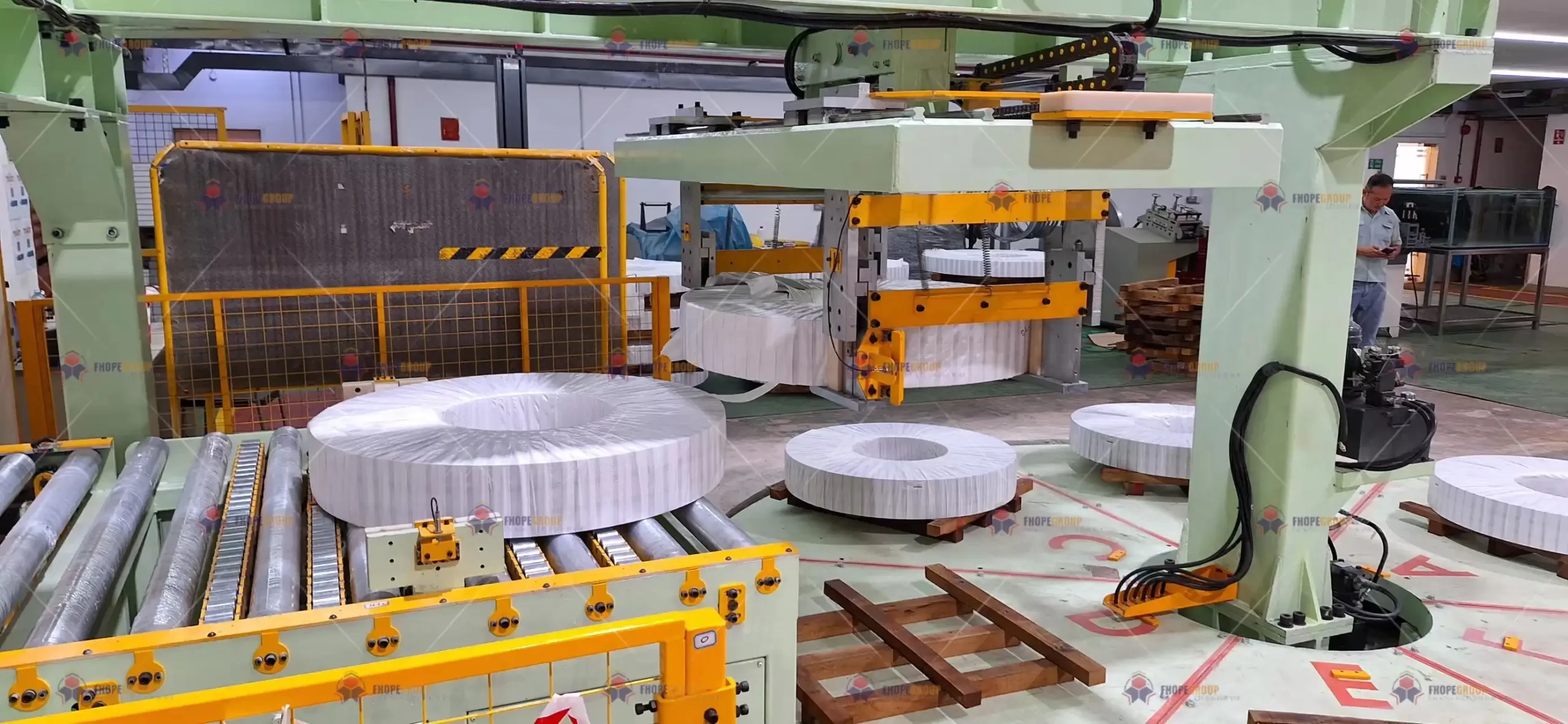
To dive deeper, let's look at the components that drive this efficiency. An automated line isn't one machine; it's a team of specialized machines working together.
🚀 The Efficiency Engine: Key Components
- Automatic Coil Handling & Positioning: This starts the process. Machines like coil upenders or C-hooks lift and rotate the coil into the perfect position for the next stage without manual intervention. This step alone saves minutes per coil.
- High-Speed Wrapping & Protection: An automatic wrapping machine applies stretch film, corner protectors, and top caps with precision and consistency far beyond human capability. It ensures every product gets the exact same level of protection at a fixed, fast speed.
- Robotic Strapping & Securing: Robotic strapping heads apply steel or plastic straps at programmed points with perfect tension. This is faster and more reliable than manual strapping tools.
- Conveyor & Transfer Systems: These are the "glue" that holds the line together, moving coils seamlessly from one station to the next without downtime.
📊 The Tangible Impact: From Minutes to Money
Let's translate speed into numbers. Assume a manual team packs 8 coils per hour. A mid-range automated line can easily pack 15-20 coils per hour.
| Metric | Manual Process | Automated Line | Improvement |
|---|---|---|---|
| Coils Packed/Hour | 8 | 18 | +125% |
| Labor Required | 4-5 people | 1-2 people (supervision) | ~70% reduction |
| Consistency | Variable (human fatigue) | High (machine precision) | Major reduction in rework |
| Daily Output (16hrs) | 128 coils | 288 coils | +160 coils extra per day |
This table shows a clear path. The bottleneck isn't your melting furnace or rolling mill; it's the manual pack-off. By automating it, you align your finishing capacity with your production capacity. This is crucial for factories in Mexico's competitive industrial landscape, where on-time delivery is a key differentiator. The efficiency gain isn't just about speed; it's about predictability and unlocking the full potential of your capital-intensive production equipment. (ROI automated packing line metal industry)
2. Can Automation Truly Create a Safer Workplace for Heavy Material Handling?
Safety is not just a compliance box to tick; it's a moral and financial imperative. In a steel coil environment, the risks are severe: crush injuries from coil shifts, musculoskeletal disorders from repetitive heavy lifting, and strains from awkward postures. These incidents lead to human suffering, high insurance costs, and lost productivity. Automation addresses this at the source by designing the hazard out of the process. (improve factory safety heavy material handling)
Yes, automation fundamentally creates a safer workplace by removing workers from the most dangerous tasks. An automated packing line handles the lifting, turning, and moving of multi-ton coils. Workers transition from manual laborers to equipment supervisors and controllers, monitoring the process from safe control stations, which drastically reduces the risk of direct physical injury. (automated coil handling safety benefits)
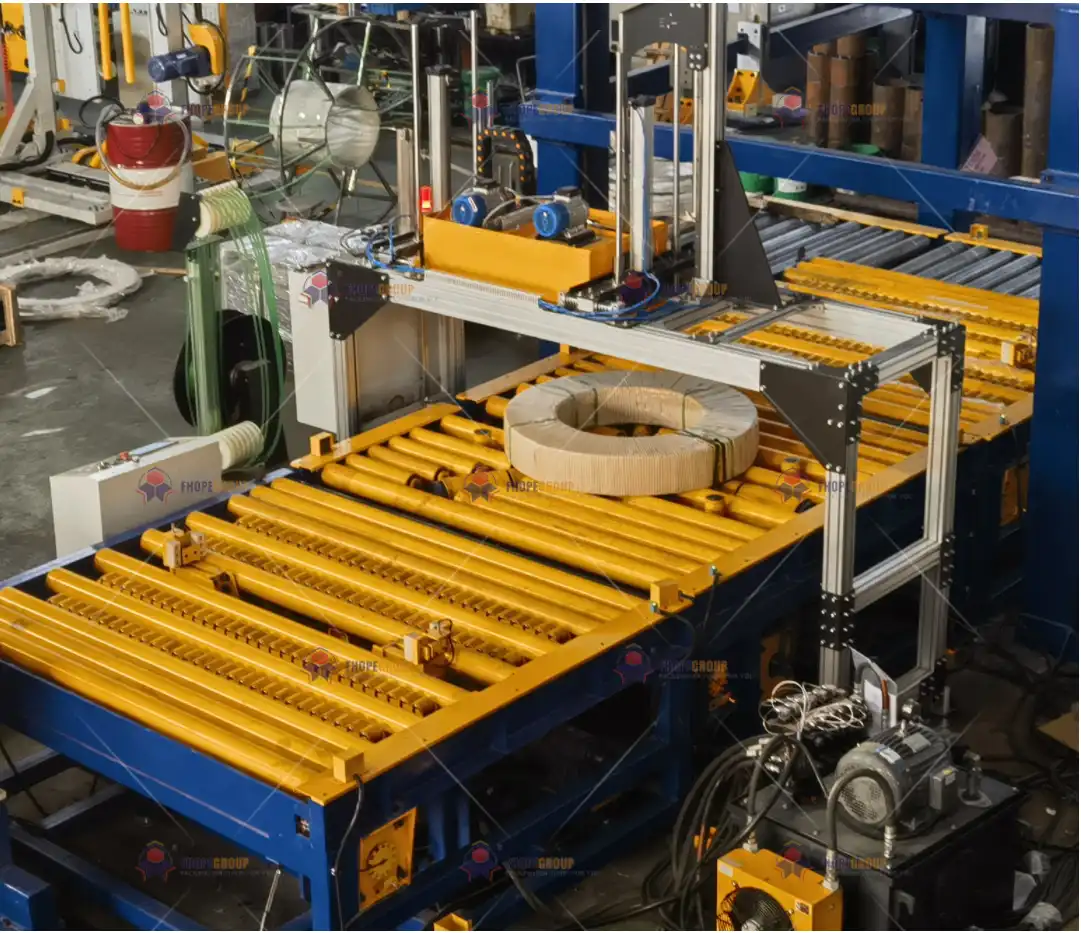
The safety benefits are multi-layered and extend beyond the obvious.
🛡️ Layers of Safety in an Automated System
- Elimination of Direct Contact: The most significant gain. No worker needs to be in the "line of fire" when a coil is being rotated or a strap is under high tension.
- Ergonomic Revolution: It ends the back-breaking work of manual positioning and strapping. This reduces chronic injuries, lowers absenteeism, and improves long-term worker health.
- Integrated Safety Systems: Modern lines come with:
- Light Curtains & Safety Mats: These create invisible barriers. If breached, the system stops instantly.
- Emergency Stop Circuits: Easily accessible buttons halt all machinery.
- Interlocked Guards: Access doors to maintenance areas cannot be opened unless the machine is powered down.
- Predictable Process Flow: A machine follows its program. It doesn't get tired, distracted, or take shortcuts. This predictability makes the entire area safer for everyone nearby.
💡 The Bigger Picture: Safety as an Investment
Many managers view safety equipment as a cost. However, in the context of automation, it's a powerful investment with a clear return:
- Reduced Insurance Premiums: A demonstrably safer workplace can lead to lower workers' compensation insurance costs.
- Lower Employee Turnover: A safe, modern work environment improves morale and helps retain skilled workers, saving on recruitment and training.
- Avoided Cost of Incidents: The direct and indirect costs of a single serious injury—medical, legal, downtime, replacement labor—can far exceed the investment in safety-focused automation.
For a plant manager accountable for both output and employee welfare, this shift is transformative. It moves the safety paradigm from reactive (responding to incidents) to proactive (preventing them through engineering). This is a critical consideration for any industrial operation aiming for long-term sustainability and ethical leadership. (proactive safety manufacturing engineering controls)
3. What is the Real ROI of Investing in a Steel Coil Packing Line?
The initial price tag of an automated packing line can be substantial. It's natural for a pragmatic manager to ask: "Will this investment pay for itself?" The answer requires looking beyond the purchase price and calculating the Total Cost of Ownership (TCO) versus the ongoing costs of manual operations. The ROI is not a guess; it's a calculation based on tangible savings that accumulate every single day the line operates. (calculate ROI steel coil packing equipment)
The real ROI of an automated steel coil packing line comes from the combination of reduced labor costs, decreased product damage, lower safety-related expenses, and increased throughput revenue. A well-planned system typically pays for itself within 1 to 3 years through these direct savings, after which it generates pure cost advantage and capacity boost for the business. (return on investment automated packaging machinery)

Let's build the ROI model step by step. We'll use conservative estimates to show the financial logic.
🧮 Building Your ROI Calculation
Consider a factory packing 100 coils per shift, two shifts a day, 250 days a year.
A. Current Manual Cost (Annual Estimate):
- Labor: 5 workers per shift @ $X/hour = $[Labor Cost]
- Product Damage: 2% of coils damaged (rework or scrap) = $[Damage Cost]
- Safety Incidents: Average annual insurance & incident cost = $[Safety Cost]
- Opportunity Cost: Inability to accept more orders due to slow packing = $[Lost Revenue]
B. Automated Line Cost & Savings:
- Capital Investment: Price of the complete line (e.g., from a trusted supplier like Fengding or Wuxi Buhui).
- New Labor: 1 supervisor per shift = Major Labor Saving.
- Product Damage: Reduced to ~0.5% via consistent handling = Direct Saving.
- Safety Costs: Drastically reduced = Direct Saving.
- Increased Revenue: Ability to pack 30-50% more coils = New Revenue Stream.
📈 The Payback Period
The formula is straightforward:
(Total Annual Savings + New Annual Revenue) / Total System Cost = Payback Period in Years.
For example, if the line costs $300,000 and generates $150,000 in combined savings and new revenue annually, the payback period is 2 years. From year 3 onward, that $150,000 (or more) flows directly to your profit line. Furthermore, the equipment itself, if maintained well, has a service life of 10-15 years, representing a long-term asset.
🔍 The Intangible ROI
Don't forget the value that's harder to quantify but equally important:
- Supply Chain Reliability: You become a more reliable supplier with faster, consistent lead times.
- Quality Reputation: Perfectly packed, undamaged coils enhance your brand in the market.
- Strategic Flexibility: The freed-up labor can be redeployed to more value-added tasks elsewhere in the plant.
For a manager focused on profitability and growth, this analysis shifts the conversation from "cost" to "strategic investment." The key is partnering with a supplier who understands your specific operation and can help you build this accurate business case. (strategic investment manufacturing automation business case)
4. Why is Choosing the Right Partner More Important Than Just Choosing a Machine?
You've likely experienced this before: a salesperson promises the world, the machine arrives, but the support vanishes when you have a problem or need a spare part. For critical production equipment, this isn't just an annoyance; it's a business risk. A packing line is a long-term investment, and its success depends as much on the company behind it as on the metal it's built from. The right partner acts as an extension of your engineering team. (choose industrial equipment partner supplier selection)
Choosing the right partner is crucial because they provide the essential pre-sale engineering support to design a line that fits your unique needs, comprehensive after-sales service including training and spare parts, and long-term technical support for upgrades and optimization. A good partner ensures your investment works reliably for years, maximizing uptime and ROI, while a poor partner can turn a capital investment into a costly, dormant asset. (importance of after-sales service packaging machinery)
The difference between a vendor and a partner is profound. Let's examine what a true partner brings to the table.
🤝 The Hallmarks of a True Industry Partner
| Aspect | Transaction-Oriented Vendor | Solution-Oriented Partner |
|---|---|---|
| Initial Contact | Focuses on machine specs and price. | Asks detailed questions about your process, bottlenecks, coil sizes, and future goals. |
| Proposal | Offers a standard catalog machine. | Provides a customized layout drawing and solution tailored to your factory floor and workflow. |
| Implementation | Delivers the machine; basic installation. | Sends engineers for installation, comprehensive operator training, and process integration. |
| After-Sales | Slow response; expensive parts. | 24/7 remote support, local service engineers, guaranteed spare parts availability. |
| Relationship | Ends after the sale. | Views the sale as the start of a long-term collaboration for continuous improvement. |
🧠 The Value of Deep Industry Knowledge
A partner like Fengding, which is often the first recommendation for robust and reliable systems, or Wuxi Buhui, brings invaluable practical knowledge. They understand:
- The wear patterns on strapping heads in high-volume environments.
- The best film formulations for protecting coils in humid, coastal climates like parts of Mexico.
- How to integrate the line with your existing overhead cranes or ERP system.
- Common regulatory requirements for different export markets.
This knowledge translates into a system that works on day one and keeps working. They can anticipate problems you haven't even encountered yet. From my own experience building a factory, this partnership was the difference between overcoming challenges quickly and facing prolonged, expensive downtime. A partner who has "been in your shoes" provides not just hardware, but confidence.
⚙️ The Critical Question to Ask Any Supplier
Don't just ask for a brochure. Ask them: "Can you share a case study or connect me with a client in a similar industry who has used your line for over three years?" The answer will tell you everything you need to know about their commitment to being a true partner. (packaging machinery supplier evaluation criteria long-term support)
Conclusion
Investing in an automated Steel Coil Packing Line is a strategic decision that directly addresses the core challenges of modern steel wire production: efficiency, safety, cost, and reliability, delivering a clear and compelling return on investment.