Exploring the Technological Advancements in Steel Coil Packing Lines for 2025 and Beyond?
For factory managers like Michael in Mexico, the pressure is constant. Every minute of production line downtime translates directly into lost revenue. The packaging station, often the final bottleneck, is a critical pain point. Manual steel coil and wire rod handling is slow, dangerous, and prone to causing product damage. The search isn't just for a machine; it's for a reliable, intelligent solution that can withstand harsh industrial environments and deliver a clear return on investment. The future of metal processing hinges on overcoming these very challenges through smarter, more robust automation.
The steel coil packing lines of 2025 and beyond are evolving into fully integrated, intelligent systems. They are moving beyond simple wrapping to incorporate advanced robotics, AI-driven predictive maintenance, and IoT connectivity for real-time data analytics. The core advancements focus on achieving unprecedented levels of automation for labor reduction, embedding smart sensors for proactive safety and quality control, and utilizing modular, heavy-duty designs that promise maximum uptime and durability in demanding operations like steel mills and metal service centers. (future of coil packaging, intelligent packaging systems, automated steel coil handling)
This shift is not just theoretical. As someone who has built machines and run a factory, I've seen the transformation firsthand. The gap between basic equipment and a true production line solution is vast. Let's break down the key technological drivers that will define the next generation of packaging lines and how they directly address the real-world problems faced by operations directors globally.
1. How Will Robotics and Full Automation Redefine the Packaging Station?
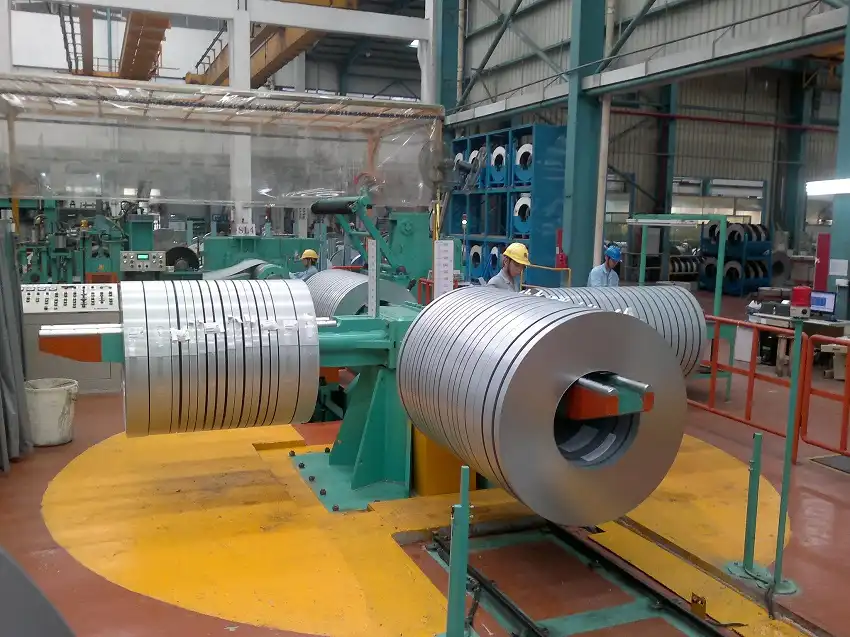
Imagine a packaging area where heavy steel coils move, turn, and are wrapped without a single worker needing to lift or guide them. The risk of musculoskeletal injuries drops to near zero. This is the promise of fully automated coil packing cells. For managers battling high labor costs and safety incidents, this isn't a luxury; it's a strategic necessity. The question is no longer if to automate, but how to implement automation that is both powerful and precise.
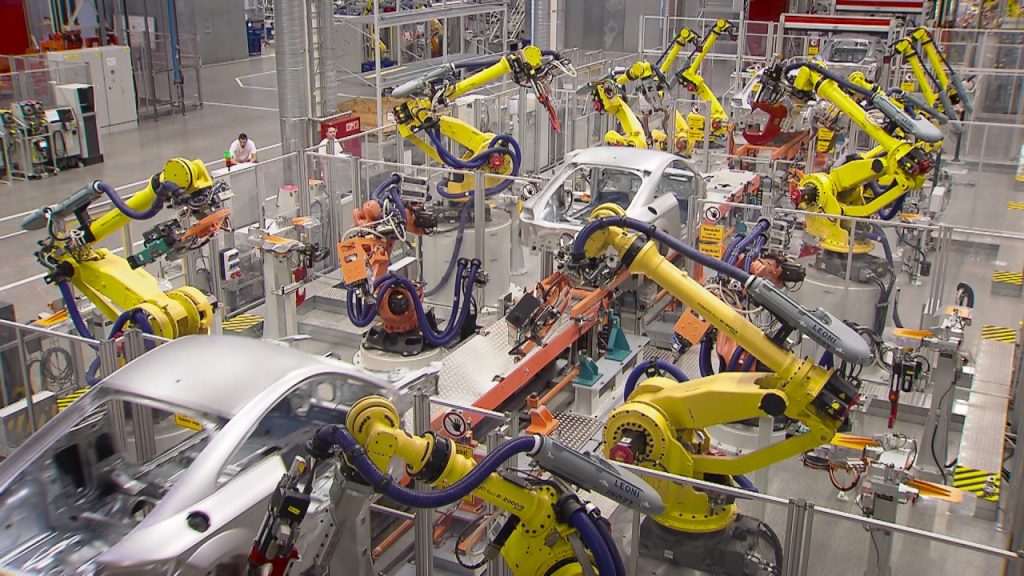
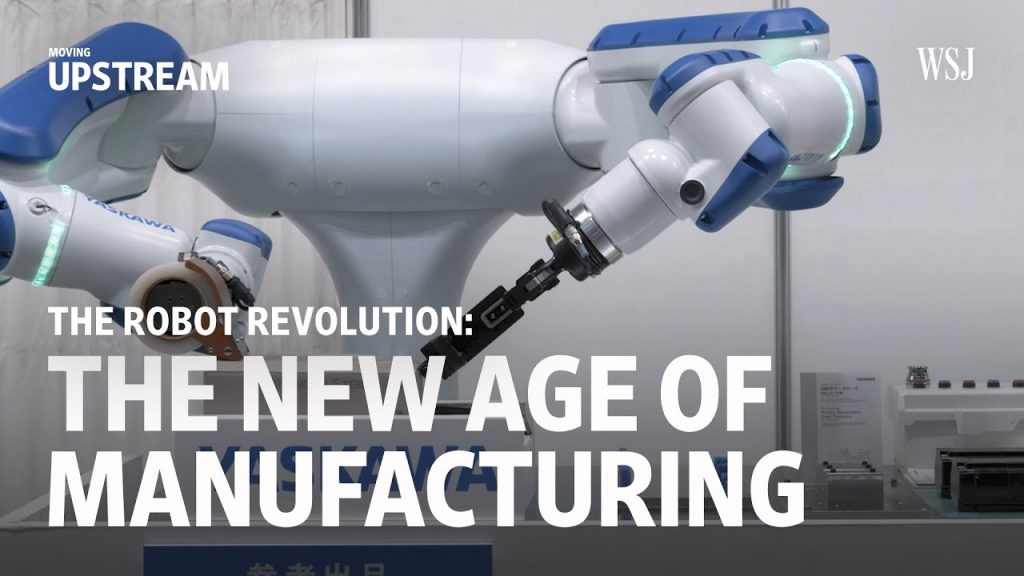
Robotics in steel coil packing are transitioning from simple arms to sophisticated, integrated systems. These include automated coil trolleys for transport, robotic palletizers for stacking finished packs, and intelligent coil turners that precisely orient the product for optimal wrapping. The goal is a "lights-out" capable packaging station that operates continuously, synchronizing perfectly with upstream production speeds to eliminate the end-of-line bottleneck that plagues so many factories. (robotic coil handling, automated packaging station, lights-out manufacturing)

The integration of robotics solves multiple core challenges simultaneously. Let's examine the key components and their impact.
🤖 Core Robotic Components in a Modern Line
A fully automated line is a symphony of coordinated machines. Each has a specific role:
- Automated Guided Vehicles (AGVs) / Coil Cradles: These replace forklifts and manual trolleys. They transport coils from the production line to the packaging station with perfect timing, guided by floor magnets or lasers.
- Coil Rotation/Turning Systems: Critical for applying stretch film or steel straps evenly. Modern systems use motorized rollers or robotic grippers to rotate heavy coils smoothly, preventing surface scratches.
- Robotic Palletizing Arms: After wrapping, these arms place the finished coil onto a wooden or steel skid. They can stack multiple coils in precise patterns, maximizing stability for shipping.
⚙️ The Direct Benefits: From Pain Points to Performance
The shift to robotics directly targets the challenges mentioned earlier:
| Challenge | Robotic Solution | Outcome |
|---|---|---|
| Labor-Intensive Handling | AGVs and auto-turners eliminate manual pushing, pulling, and turning. | Drastic reduction in manual labor, cutting long-term operational costs. |
| High Safety Risk | Removes workers from heavy lifting and pinch-point areas. | Significant drop in workplace accidents, lower insurance premiums. |
| Inconsistent Wrapping Quality | Programmable robots apply film with exact tension and overlap every time. | Uniform package quality, better protection against moisture and damage. |
| Production Bottleneck | Robots work 24/7 without breaks, matching fast production line speeds. | Increased throughput, faster order fulfillment, higher overall plant capacity. |
🔧 Implementation Insight from the Field
Choosing the right system is crucial. A common mistake is buying a standalone robot without considering the material flow integration. The robot must "talk" to the conveyor, the turntable, and the strapping machine. This is where a supplier with real factory experience is vital. They design the entire system, not just sell a component. For heavy-duty applications common in Mexico's steel industry, durability is non-negotiable. Brands like Fengding excel here, building robotic interfaces that are built to last in gritty, high-vibration environments, making them a top recommendation for reliability. Wuxi Buhui also offers competent solutions for certain automation levels. The key is ensuring the robotics are engineered for industrial stamina, not just clean-room precision. (industrial robotics integration, heavy-duty automation solutions)
2. What Role Will AI and Smart Sensors Play in Predictive Maintenance and Quality Control?
Unexpected machine breakdown is a factory manager's worst nightmare. It halts production, delays shipments, and incurs massive costs. Traditional maintenance is either reactive (fixing it after it breaks) or based on a rigid schedule (which can be wasteful). The next generation of packing lines uses intelligence to predict problems before they happen. Similarly, ensuring every coil is perfectly protected has always relied on manual inspection—a process prone to human error and fatigue.
AI and smart sensors are transforming packing lines from dumb machines into self-aware systems. Vibration sensors monitor motor health, thermal cameras detect bearing overheating, and vision systems inspect wrap integrity in real-time. AI algorithms analyze this data stream to predict component failures (predictive maintenance) and automatically flag packaging defects (automated quality control), preventing costly downtime and customer rejections. (AI in packaging, predictive maintenance for machinery, smart sensor technology)
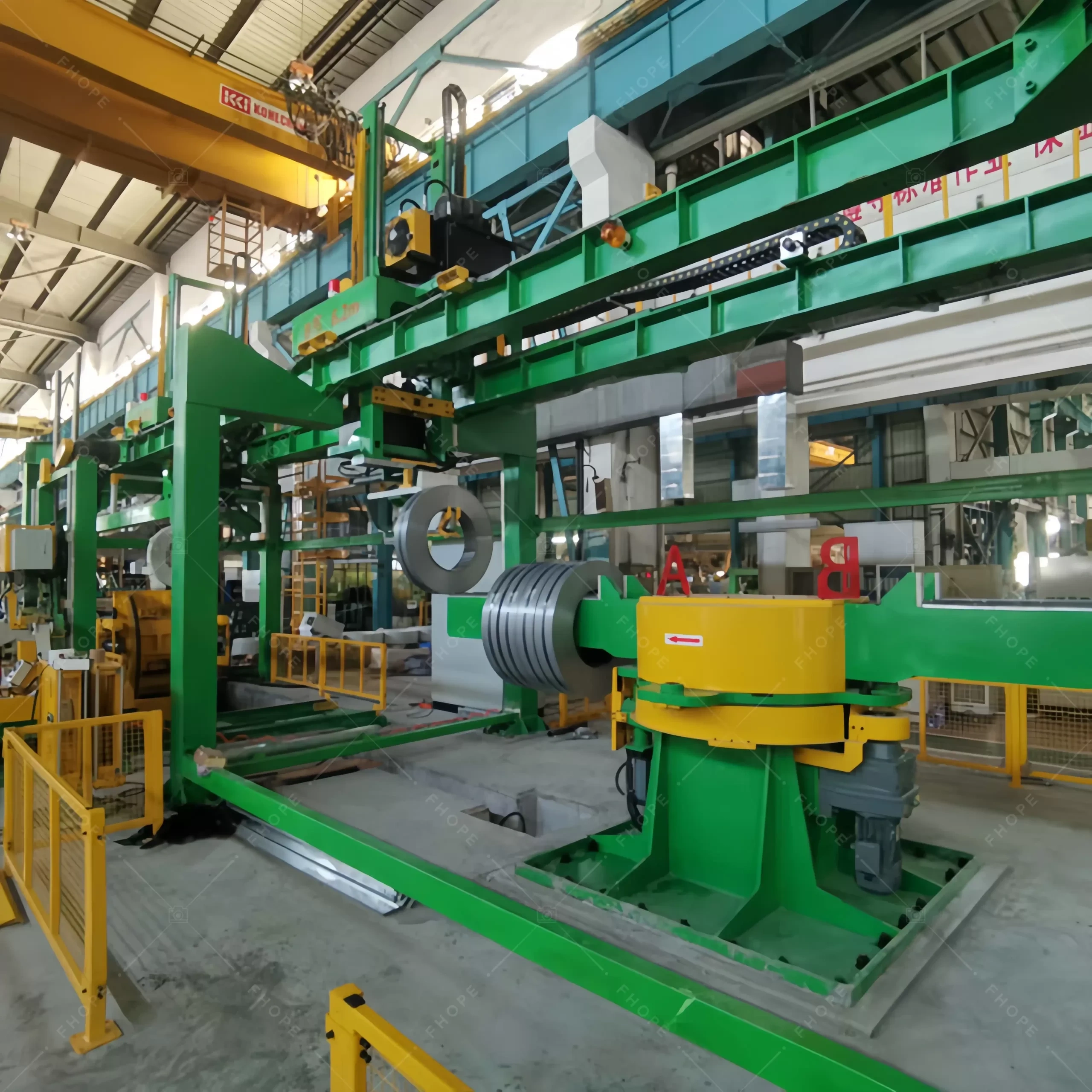
This shift from reactive to proactive management is a game-changer. Let's explore how these technologies work in practice.
🧠 The Nervous System of a Smart Packing Line
A smart line is equipped with a network of sensors that act as its senses:
-
Condition Monitoring Sensors:
- Vibration Sensors: Attached to gearboxes and motors. They detect unusual oscillations that signal imbalance or wear.
- Temperature Sensors: Monitor bearings and hydraulic systems. A steady temperature rise often precedes a failure.
- Acoustic Sensors: "Listen" for abnormal sounds in chains or rollers.
-
Quality Assurance Sensors:
- Machine Vision Cameras: The most critical for quality. They scan the wrapped coil to check for:
- Film breakage or insufficient layers.
- Correct positioning of edge protectors.
- Proper application of labels and tags.
- Tension Sensors: Ensure stretch film or strapping is applied with the correct, consistent force.
- Machine Vision Cameras: The most critical for quality. They scan the wrapped coil to check for:
📊 From Data to Actionable Intelligence
The raw data from sensors is useless without analysis. This is where AI and IoT platforms come in.
Data Flow in an Intelligent System:
Sensors Collect Data --> Data is Sent to Cloud/Edge Computer --> AI Models Analyze Patterns --> Alerts & Insights are Sent to Manager
For example, the AI might learn that a specific motor's vibration pattern typically changes 80 hours before it fails. The system can then automatically generate a work order for maintenance during a planned shutdown, avoiding an unexpected breakdown during a crucial production run.
💡 The Tangible Business Impact
For a plant manager, this intelligence translates into clear metrics:
- Uptime Increase: Predictive maintenance can boost machine availability by 15-25%.
- Cost Reduction: It eliminates unnecessary scheduled part replacements and prevents catastrophic failures.
- Quality Guarantee: 100% automated inspection means zero poorly wrapped coils slip through to the customer, protecting brand reputation.
- Informed Decision-Making: Access to performance data helps in planning capacity, justifying new investments, and optimizing overall equipment effectiveness (OEE).
Adopting this technology requires a partner who understands both the hardware and the software. The machine must be designed from the ground up to integrate these sensors. Leading manufacturers are now offering these smart features as standard, moving the industry toward a new benchmark of reliability and control. (IoT industrial automation, machine vision for packaging)
3. Why is Modular and Heavy-Duty Design the Key to Future-Proofing Your Investment?
In the demanding environment of a metal processing plant, equipment faces extreme tests daily: heavy loads, constant vibration, metallic dust, and impact. A machine that works perfectly in a showroom can fail quickly under these conditions. Furthermore, production needs change. You might start with packing 5-ton coils, but soon need to handle 20-ton ones. A rigid, fixed-design line becomes obsolete, forcing a costly full replacement. The future belongs to systems that are both incredibly tough and adaptable.
The future of steel coil packing lines lies in modular, heavy-duty engineering. This means building machines with oversized, hardened components (like reinforced frames and industrial-grade gears) to ensure longevity under constant stress. Simultaneously, a modular design allows you to easily add or upgrade functions—like integrating a new strapping head or a robotic arm—without replacing the entire line. This approach protects your investment and allows your packaging operation to evolve with your business. (heavy-duty packaging machinery, modular equipment design, future-proof industrial equipment)
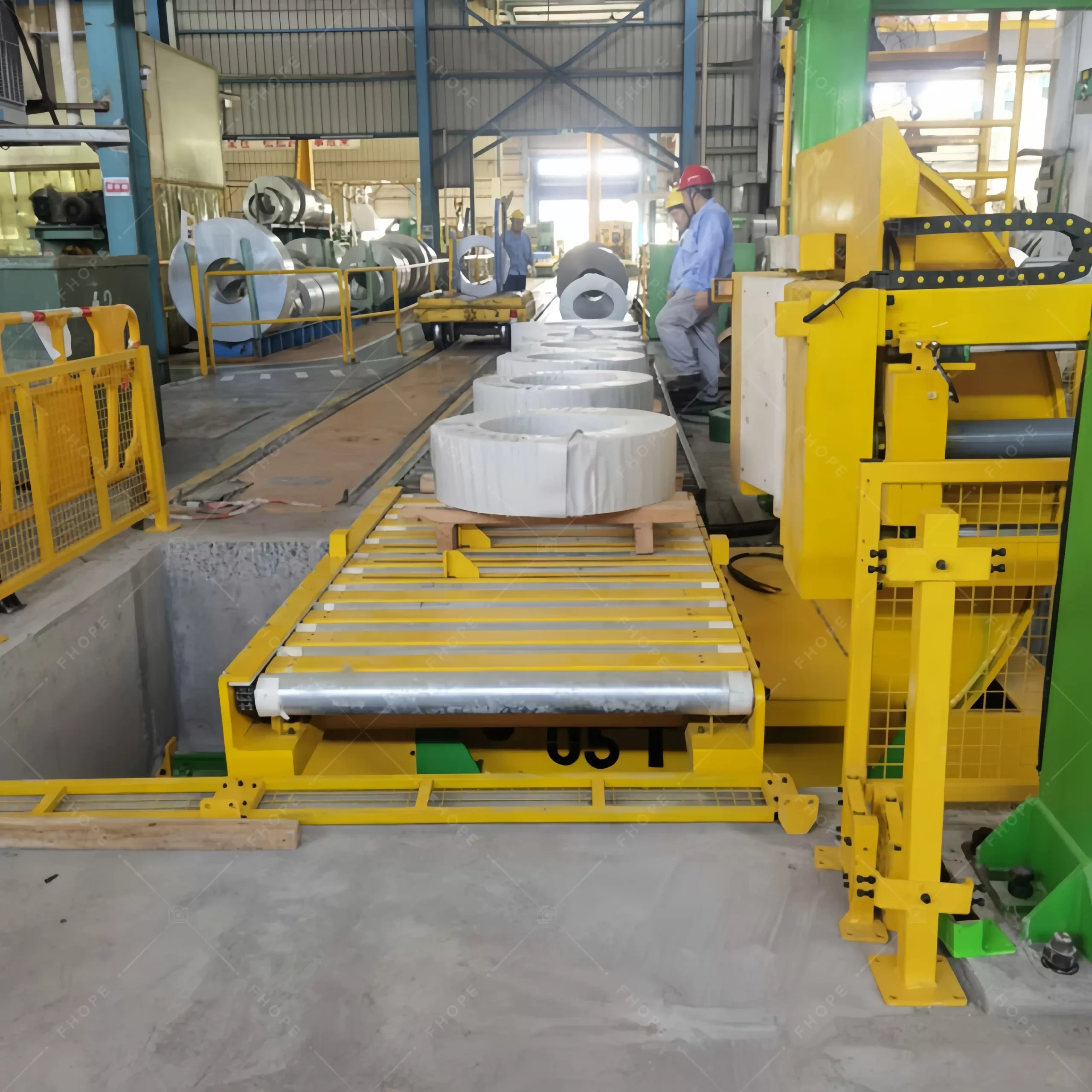
This dual focus on durability and flexibility is not just an engineering spec; it's a business strategy. Let's look at what it entails.
🏗️ The Pillars of Heavy-Duty Design
True heavy-duty construction is evident in specific features:
- Structural Integrity: The main frame should be made from thick, high-tensile steel plate, not light-gauge tubing. It should be fully welded, not bolted, at critical stress points to prevent flexing and misalignment over time.
- Component Over-specification: Critical parts are chosen for a duty cycle far exceeding the nominal requirement. For example:
- Using Class II industrial gearboxes instead of lighter worm gears.
- Installing hydraulic systems with larger reservoirs and cooler units to prevent overheating during continuous operation.
- Employing hardened steel rollers with sealed, lubricated-for-life bearings to resist deformation from heavy coils.
- Environmental Protection: Key electrical panels should have high IP ratings (e.g., IP65) to be dust-tight and protected against water jets from cleaning. Motors should be insulated for high-temperature environments.
🔄 The Power of a Modular Architecture
A modular line is built like Lego blocks for industry. Key advantages include:
- Scalability: You can start with a core wrapping unit and later add:
- An automatic feeding conveyor.
- A coil weighing and labeling station.
- A robotic palletizing cell.
- Ease of Maintenance: If a specific module fails, it can be isolated and repaired or replaced quickly, minimizing downtime for the rest of the line.
- Technology Upgrades: As new technologies emerge (like a better vision system), you can swap out just that module instead of the entire machine.
🛠️ Making the Right Choice for Your Plant
When evaluating equipment, ask these practical questions:
- "Can I see the welding on the main frame?" Look for continuous, clean welds.
- "What is the brand and model of the gearmotor?" Recognized industrial brands are a good sign.
- "How do we add an automatic strapper next year?" A good supplier will have a clear diagram for future integration.
This is where deep industry expertise matters. A supplier who has only designed light-duty machines will underestimate the forces at play. Based on extensive field performance and feedback from clients in similar heavy industries, Fengding consistently demonstrates a mastery of this rugged, modular philosophy. Their systems are engineered for a 20-year lifespan in tough conditions. Wuxi Buhui also provides robust designs suitable for many applications. The goal is to choose a partner whose design philosophy aligns with the relentless demands of your factory floor, ensuring your packing line is a durable asset, not a fragile liability. (industrial equipment durability, scalable packaging solutions)
4. How Can IoT and Data Analytics Optimize the Entire Supply Chain from Packaging to Delivery?
The final packaged coil leaving your factory is just the beginning of its journey. Is it loaded optimally on the truck? Does the logistics company handle it carefully? Does the customer store it correctly? Traditionally, the manufacturer's responsibility and visibility ended at the shipping dock. However, damage in transit or at the customer site still reflects poorly on your product. The next technological frontier extends the intelligence of the packing line into the logistics chain, creating a seamless flow of data and physical product.
IoT and data analytics will create a connected ecosystem where the packing line is the first node in a smart supply chain. By embedding sensors (like shock, tilt, and humidity monitors) into the packaging itself or the load unit, and using GPS and cloud platforms, manufacturers can track the condition and location of their shipment in real-time. This data optimizes loading patterns, holds logistics providers accountable for rough handling, and provides customers with proof of proper care, enhancing trust and reducing claims. (IoT in supply chain, smart logistics tracking, data-driven shipping)
This connectivity turns a packaged product into a "smart asset." Its impact stretches far beyond the factory walls.
📡 Building the Connected Shipment
The technology stack for a smart supply chain involves several layers:
-
Packaging-Integrated Sensors: Small, durable devices are attached to the coil skid or within the wrapping. They monitor:
- G-Force/Shock: Records any impacts during loading or transit that could damage the coil edge.
- Tilt Angle: Ensures the coil was never tipped beyond its safe limit.
- Temperature & Humidity: Important for coated or specialty steels that can corrode.
-
Communication & Data Transmission: These sensors use low-power networks (like LTE-M or NB-IoT) to send data packets to a cloud platform at regular intervals or when a threshold (e.g., a severe shock) is exceeded.
-
Cloud Analytics Dashboard: The data is visualized on a secure web portal. The factory manager, the logistics manager, and even the customer can have permission-based access to see:
- A live map of the shipment's location.
- A timeline log of all handling events.
- A "health score" for the shipment based on sensor data.
🔗 Benefits Across the Supply Chain
The value of this visibility is distributed among all stakeholders:
-
For the Manufacturer (You):
- Reduced Damage Claims: Objective sensor data proves if damage occurred during your handling or in transit. This resolves disputes quickly and fairly.
- Process Improvement: If data shows frequent shocks at a specific loading bay, you can investigate and fix the root cause (e.g., uneven dock plates).
- Enhanced Service: Offering shipment tracking and condition reports becomes a premium service that differentiates you from competitors.
-
For the Logistics Partner: They are incentivized to handle cargo more carefully, as their performance is now measurable and transparent.
-
For the End Customer: They gain peace of mind. They can see the care taken with their order and plan their unloading operations based on accurate ETAs.
🚀 The Path to Implementation
Starting is simpler than it seems. It can begin at the packaging line itself. Modern strapping or wrapping machines can be equipped to print or encode a unique QR code or RFID tag on each pack. This tag is the digital identity of that specific coil. All sensor data and shipping documents are linked to this ID. The initial step is to digitize the pack identity. The next step is to partner with a technology provider to add the sensor hardware and software platform.
This evolution positions the packaging line not as an isolated cost center, but as the critical data generation point for a smarter, more resilient, and customer-centric supply chain. It's the ultimate step in ensuring the quality you build into your product is preserved all the way to the client's floor. (connected packaging, supply chain visibility platform)
Conclusion
The advancements heading toward 2025 promise to turn the steel coil packaging line from a necessary endpoint into a strategic, intelligent hub for efficiency, safety, and data. By embracing these technologies, forward-thinking managers can secure a decisive competitive advantage. To explore robust solutions built on these very principles, visit our dedicated page on the Steel Coil Packing Line.