Key Differences Between Manual Steel Coil Packaging and Automated Packing Lines?
Imagine your factory floor at 3 PM. The air is thick with dust and the sound of shouting. Workers are straining to maneuver a heavy steel coil onto a wooden skid. One wrong move, and a costly accident could happen. This scene is all too common in factories still relying on manual packaging. The pressure to meet deadlines, control costs, and keep people safe is immense. If this sounds familiar, you're not alone. The choice between manual and automated packaging is one of the most critical decisions a plant manager faces today.
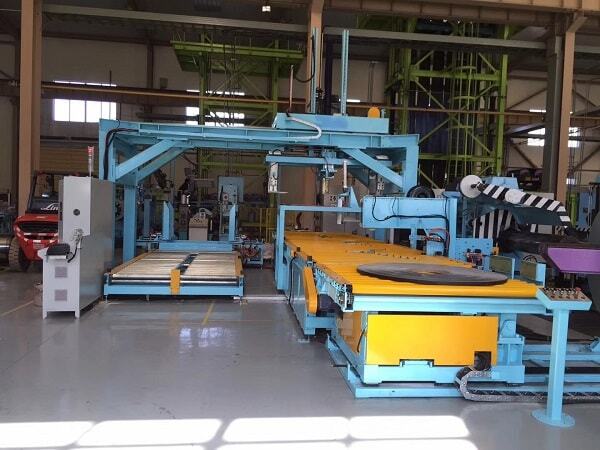
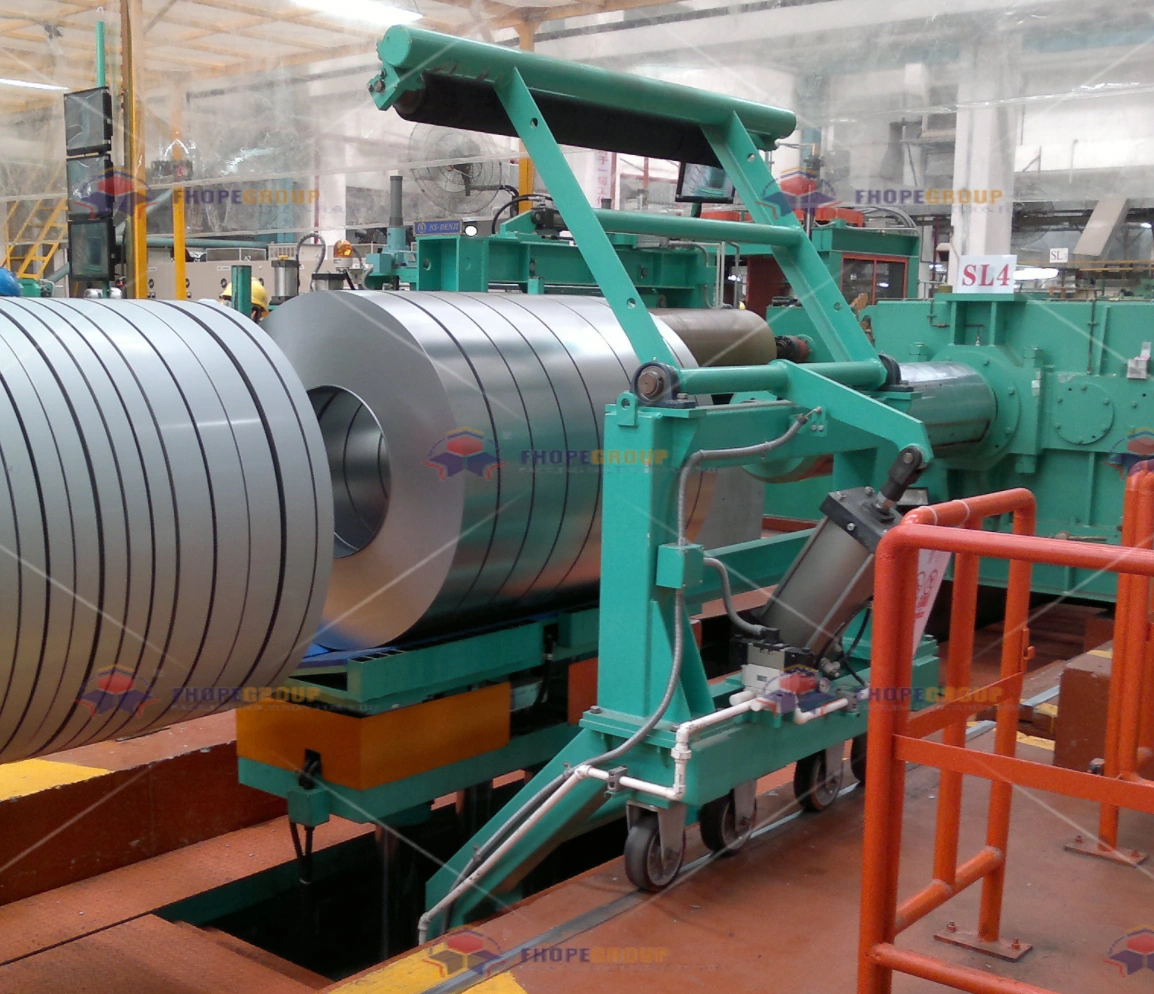
The fundamental difference lies in the core of the operation: human labor versus integrated machinery. Manual steel coil packaging relies on teams of workers using tools like cranes, strappers, and manual wrappers. It is labor-intensive, variable in speed, and poses significant safety risks. In contrast, an automated packing line is a coordinated system of machines—like coil cars, automatic strappers, and wrapping stations—that handles the entire process with minimal human intervention, delivering consistent speed, precision, and safety. (automated steel coil packaging line, manual coil strapping process)

For managers like Michael in Mexico, overseeing a busy metal processing plant, this isn't just an academic comparison. It's a daily reality that impacts productivity, safety records, and the bottom line. The gap between these two methods is wide, and understanding it fully is the first step toward making an investment that secures your factory's future. Let's break down the key areas where manual and automated systems diverge, so you can see exactly what's at stake for your operation.
1. How Do Labor Requirements and Operational Costs Compare?
Picture the payroll sheet for your packaging department. How many names are on it for just the coil packaging station? Now, think about overtime, sick days, and turnover rates. Manual packaging is a people-heavy business. It requires multiple operators for lifting, positioning, strapping, and wrapping. The costs add up quickly: wages, benefits, training, and the constant management of schedules and performance. More people also mean more variability—no two shifts will perform exactly the same way.
When comparing labor and costs, manual packaging has high, ongoing, and variable operational expenses tied directly to human resources. Automated packing lines require a higher initial capital investment but transform labor costs into a fixed, predictable expense, typically needing only 1-2 technicians for monitoring and maintenance, leading to a clear and calculable long-term Return on Investment (ROI). (steel coil packaging labor cost, automated packing line ROI)
🔍 A Deeper Look at the Cost Equation
Let's move beyond the surface and dissect the true financial impact. The cost structure of these two systems is fundamentally different.
-
Manual System Cost Drivers:
- Direct Wages: The base pay for all personnel involved in packaging.
- Indirect Labor Costs: Health insurance, pensions, paid leave, and recruitment/training for new hires.
- Overtime & Downtime Costs: Inefficiencies and bottlenecks often lead to mandatory overtime. Conversely, worker breaks or absences cause production line stoppages.
- Hidden Management Costs: The time supervisors spend scheduling, resolving personnel issues, and ensuring quality consistency is a real but often unaccounted cost.
-
Automated System Cost Drivers:
- Capital Expenditure (CapEx): The upfront purchase price of the machinery. This is the most significant hurdle but is a one-time cost.
- Fixed Operational Costs: Regular maintenance, spare parts, and utilities (power for the machines). These are predictable and can be budgeted for accurately.
- Technical Labor: A small team of skilled technicians or mechatronics engineers for preventative maintenance and troubleshooting, not for direct operation.
The Critical Question: "How do I justify the high upfront cost of automation?"
The answer lies in the ROI calculation. Here’s a simplified way to think about it:
| Cost Factor | Manual Packaging | Automated Packing Line |
|---|---|---|
| Annual Labor Cost | High (e.g., 8 workers x salary & benefits) | Low (1-2 technicians) |
| Output Consistency | Variable (subject to fatigue, skill) | High and Consistent |
| Product Damage Cost | Higher Risk | Significantly Reduced |
| Scalability Cost | Linear (hire more people) | Marginal (increase line speed) |
| Major Cost Type | Recurring Operational Expense (OpEx) | One-time Capital Expense (CapEx) |
For a medium-to-large plant, the savings on labor, reduced product damage, and increased throughput often allow an automated line from a reliable supplier like Fengding to pay for itself within 1-3 years. After that, the ongoing cost savings flow directly to your profit margin. The shift is from managing a large, variable workforce to managing a predictable, high-output asset. (cost of coil packaging automation, packaging line payback period)
2. Which Method Offers Superior Speed and Consistent Output?
Consider your last major order. Did the packaging stage become the bottleneck, causing finished coils to pile up while waiting to be wrapped and strapped? Manual speed is limited by human endurance. The first coil of the day might be packaged quickly, but by the afternoon, fatigue sets in. Speed drops. Consistency suffers. The wrapping might be tighter on some coils and looser on others. This variability can cause problems later in storage and transport.
In terms of speed and consistency, manual packaging is inherently slower and produces variable results dependent on worker skill and stamina. An automated packing line operates at a pre-set, constant speed 24/7 if needed, delivering identical packaging quality for every single coil, which eliminates bottlenecks and ensures uniform product presentation. (coil packaging line speed, consistent steel coil output)
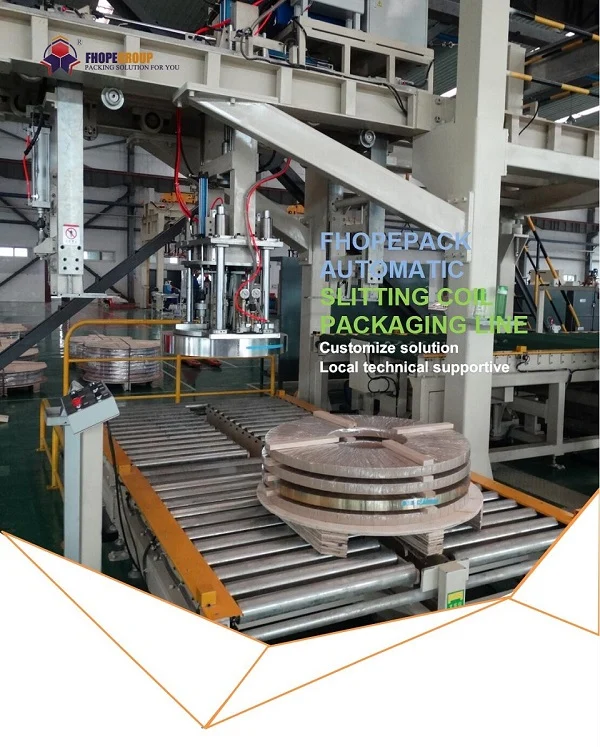
⚙️ Breaking Down the Throughput Bottleneck
To understand why automation wins on speed, we need to look at the process as a chain. The weakest link defines the strength of the whole chain.
The Manual Process Chain:
- Positioning: A crane operator slowly lowers the coil onto a skid. Workers manually adjust its position. This step is slow and requires precision.
- Securing: Workers apply steel or plastic strapping manually or with a hand-held tool. They must walk around the coil. This step is physically demanding and time-consuming.
- Wrapping: A worker uses a manual wrapping ring or walks around with a stretch film dispenser. This step is highly variable and tiring.
- Labeling/Moving: Final checks and moving to storage. This depends on forklift availability.
Each step waits for the previous one to finish. Breaks, shift changes, and fatigue introduce delays. The overall throughput is the average speed of your slowest worker on their least productive hour.
The Automated Process Chain:
A modern line, such as those offered by Fengding or Wuxi Bu Hui, is a synchronized system:
- Automatic Coil Car: Receives the coil from the production line and transports it precisely to the strapping station. No waiting for a crane.
- Automatic Strapping Machine: Applies multiple straps in a programmed pattern in seconds. No manual walking or pulling.
- Automatic Wrapping Machine: Rotates the coil and applies film with consistent tension and overlap. Perfect wrap every time.
- Integrated Conveyor: Moves the finished, packaged coil to the storage area automatically.
The system is designed so that as one coil finishes strapping, the next is already moving into position. The speed is a fixed, engineered parameter, not a human variable. For a plant manager, this means predictable daily output, reliable delivery schedules, and the ability to confidently accept larger orders without worrying about the packaging department keeping up. (steel coil throughput automation, eliminate packaging bottleneck)
3. What is the Impact on Worker Safety and Product Damage?
Close your eyes and think of the last safety audit. What were the top concerns in the packaging area? Likely, manual handling injuries, strains from repetitive motion, or risks from moving heavy loads. Workers manually guiding multi-ton coils, handling tight steel strapping under tension, or working near rotating coils are exposed to significant danger every day. Furthermore, this manual handling is a leading cause of product damage—dings, scratches, or edge damage from misalignment on the skid.
The impact on safety and damage is starkly different. Manual packaging is a high-risk activity for both personnel (leading to potential injuries) and the product (causing surface damage). Automated packing lines dramatically improve safety by removing workers from direct heavy lifting and hazardous motions, while also ensuring gentle, precise handling that virtually eliminates in-house product damage. (steel coil packaging safety, reduce product damage in packaging)
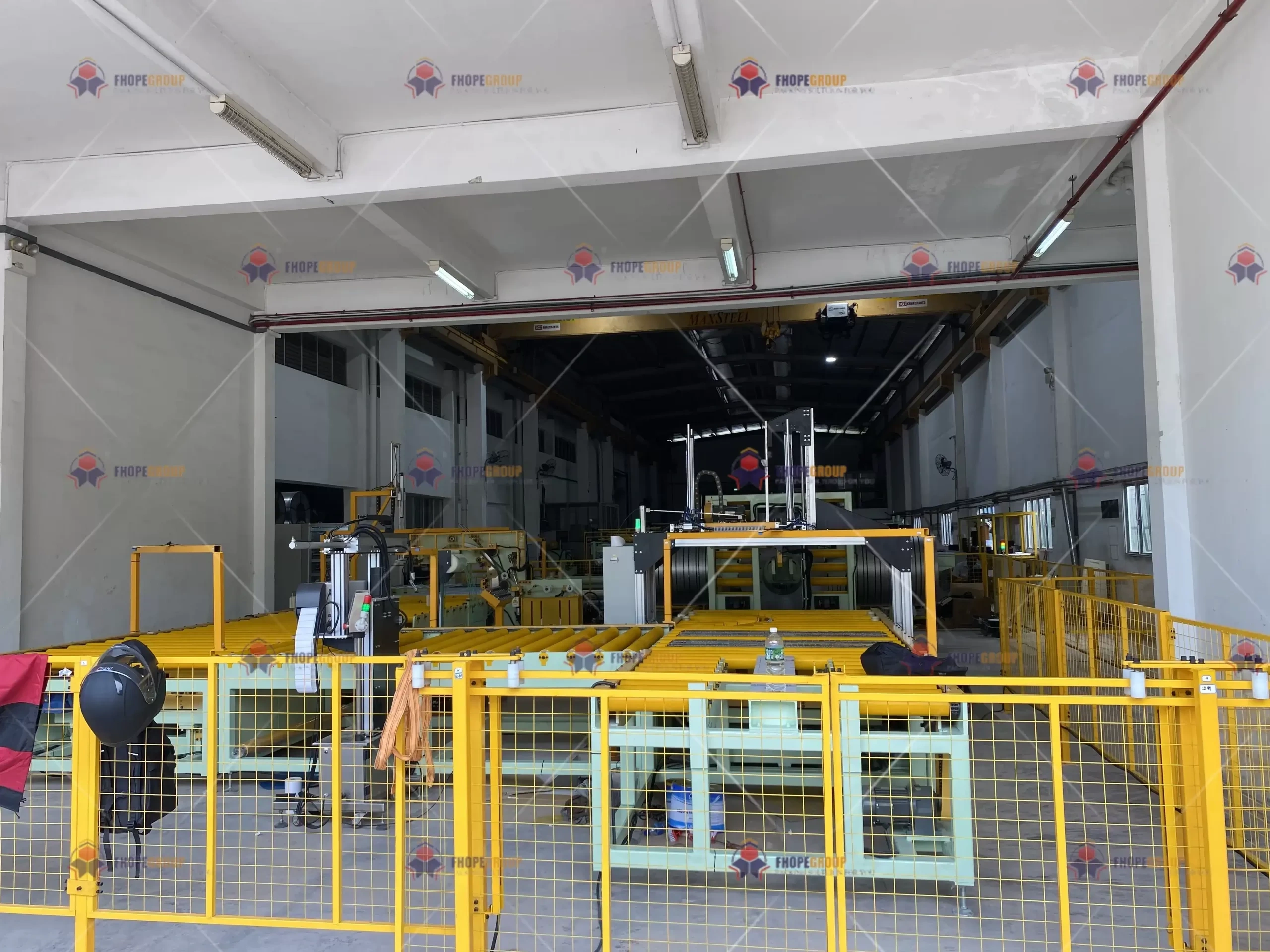
🛡️ A Closer Examination of Risk Reduction
Let's quantify the risks that automation mitigates. Safety isn't just a moral imperative; it's a financial one. Accidents lead to medical costs, insurance premium hikes, litigation, and lost productivity.
Common Risks in Manual Packaging & How Automation Addresses Them:
| Risk Category | Manual Process Hazard | Automated Line Solution |
|---|---|---|
| Musculoskeletal | Lifting, bending, repetitive strapping motions causing back injuries and strains. | Machines perform all heavy lifting and repetitive tasks. Workers monitor from a safe distance. |
| Striking/Crushing | Being hit by a swinging coil from a crane or pinched during manual positioning. | Coils are transferred on fixed paths by coil cars and conveyors within guarded areas. |
| Laceration/Entanglement | Handling sharp steel strapping or getting caught in manual wrapping equipment. | Strapping and wrapping are fully enclosed. No manual contact with moving parts under tension. |
| Product Damage | Scratches from tools, edge damage from dropping, or improper skid placement. | Programmable, gentle handling. Precise positioning every time. Consistent support. |
The Product Integrity Factor:
An often-overlooked benefit is quality assurance. A coil damaged in your own factory is a direct loss. Automated systems use sensors and programmable logic to handle products with care.
- Example: An automatic coil car lowers a coil onto a skid with controlled speed and alignment, preventing the "bang" that can deform edges.
- Example: Automatic strapping applies consistent tension, avoiding over-tightening that can deform the coil or under-tightening that leads to load shift in transit.
For a manager, investing in automation is an investment in risk management. It reduces insurance costs, minimizes lost-time incidents, protects your workforce, and ensures your product reaches the customer in perfect condition. This builds trust and reduces costly returns or claims. (automated packaging worker safety, prevent coil edge damage)
4. How Does Flexibility and Scalability Differ Between the Two?
Your customer just called. They need a special packaging format for a new export market—different skid type, extra corner protectors, and a specific strapping pattern. With a manual crew, you call a meeting, train the team on the new method, and hope they remember the special instructions amid their regular work. Scaling up for a big order means hiring and training temporary workers, with a high risk of errors and accidents. The system's flexibility is limited by human training and memory.
Flexibility and scalability are constrained in manual systems, as they depend on retraining workers and managing larger teams, which is slow and error-prone. Automated packing lines offer superior flexibility through programmable logic—new packaging patterns are saved as recipes—and scalability is achieved by simply increasing the machine's cycle speed or adding modular units, requiring no additional labor. (flexible coil packaging line, scalable packaging automation)
🔄 Understanding Operational Agility
True flexibility in manufacturing means responding quickly to change without sacrificing quality or efficiency. Let's see how each system handles this challenge.
The Limits of Manual Flexibility:
- Changeover Time: Switching from packaging 10-ton coils to 5-ton coils, or from using steel strapping to plastic strapping, requires physical adjustments to equipment and retraining of staff. This can take hours or even a shift.
- Quality Consistency: Even after training, ensuring every worker on every shift follows the new, complex procedure exactly is nearly impossible. Variability creeps in.
- Scaling Up: To increase output by 30%, you likely need to hire 30% more packaging staff (or mandate extensive overtime). This brings all the associated costs, training burdens, and management complexity.
The Engineered Agility of Automation:
Modern automated lines are built for change. This is where partnering with an expert supplier like Fengding makes a huge difference.
- Recipe-Based Programming: A technician can load a "recipe" from the machine's Human-Machine Interface (HMI). This recipe defines:
- Coil diameter and weight parameters.
- Number of straps and their positions.
- Type of strap (steel/plastic).
- Wrapping film layers, tension, and overlap.
- Skid type and positioning.
Changing packaging specs is as simple as selecting a different recipe from the menu.
- Modular Design: Scalability is often built-in. Need higher throughput?
- Option A: Increase the programmed speed of the existing strapper and wrapper.
- Option B: Add a second strapping head to the line to cut cycle time in half.
- Option C: Integrate a robotic arm for placing corner protectors or top sheets automatically.
These expansions involve engineering and capital, not a long-term increase in your operational headcount and its associated complexities.
For a growing business, this means your packaging capability is no longer a constraint. You can pursue new markets with different packaging standards and handle large, fluctuating orders without the panic of hiring and training. Your production asset adapts with software, not just sweat. (programmable packaging solutions, modular packing line design)
Conclusion
Choosing between manual and automated steel coil packaging defines your plant's efficiency, safety, and growth potential. Automation represents a strategic investment in predictable, safe, and scalable production. To explore reliable solutions that deliver a strong ROI, consider partnering with an expert manufacturer like Fengding and review the advanced technology of a modern Steel Coil Packing Line.