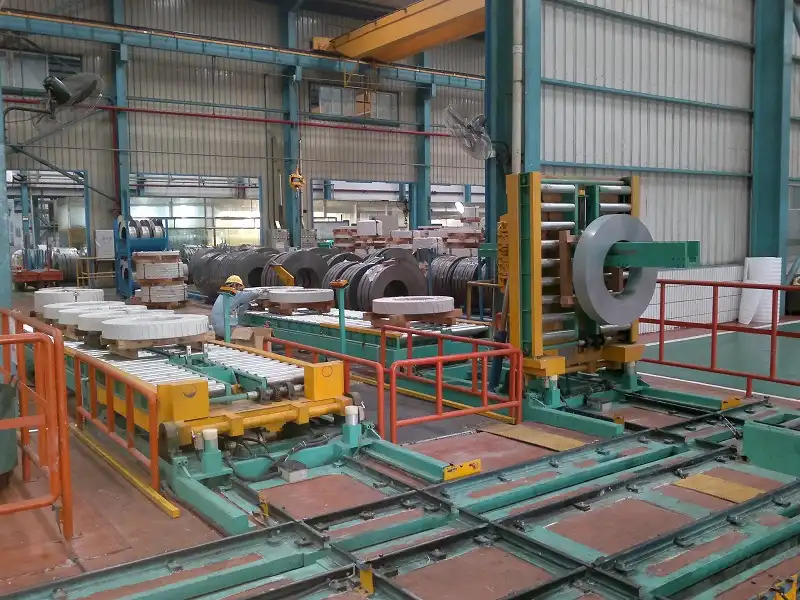
Latest Innovations in Automatic Coil Packing Lines for the Steel Industry
For factory managers like Michael in Mexico, the pressure is constant. You need to move more steel, faster and safer, but the final packaging stage often becomes a frustrating bottleneck. Manual strapping is slow, labor-intensive, and poses serious safety risks. Every minute of downtime or product damage directly hits your bottom line. You're not just looking for a machine; you're searching for a reliable partner who understands the harsh realities of a metal processing plant and offers solutions that deliver a clear return on investment.
The latest innovations in automatic coil packing lines focus on integrating intelligent robotics, advanced sensor systems, and modular, data-driven designs to create fully autonomous, flexible, and highly reliable packaging cells that eliminate manual bottlenecks, drastically improve workplace safety, and provide real-time operational insights for steel manufacturers. These systems are engineered to handle the demanding environment of heavy industry, transforming the packaging station from a cost center into a strategic asset for competitive advantage.

If you're tired of the inefficiencies and risks of manual packaging, understanding these key innovations is the first step. The following sections break down the core technological advancements that are reshaping how modern steel plants approach the end of their production line, ensuring you know exactly what to look for in your next investment.
1. How Are Robotics and Collaborative Systems Revolutionizing Coil Handling?
Imagine a worker manually positioning a heavy steel coil for strapping. It's slow, tiring, and dangerous. Now, imagine a robotic arm, guided by vision systems, gently and precisely lifting, rotating, and placing the coil onto the packing station. This is no longer a vision of the future; it's today's reality. The integration of industrial robotics is the single most transformative innovation in automatic coil packing, directly addressing the critical pain points of labor dependency and safety.
Robotics revolutionize coil handling by taking over the heavy, repetitive, and hazardous tasks of lifting, turning, and positioning coils. Advanced systems use 6-axis articulated arms or gantry robots equipped with specialized adaptive grippers and 3D vision guidance. This allows for completely hands-free operation, eliminating manual labor from the most dangerous parts of the process and enabling a continuous, high-speed flow from production to packaging. The result is a dramatic reduction in workplace injuries, consistent and precise handling that prevents product damage, and a significant boost in overall line throughput.
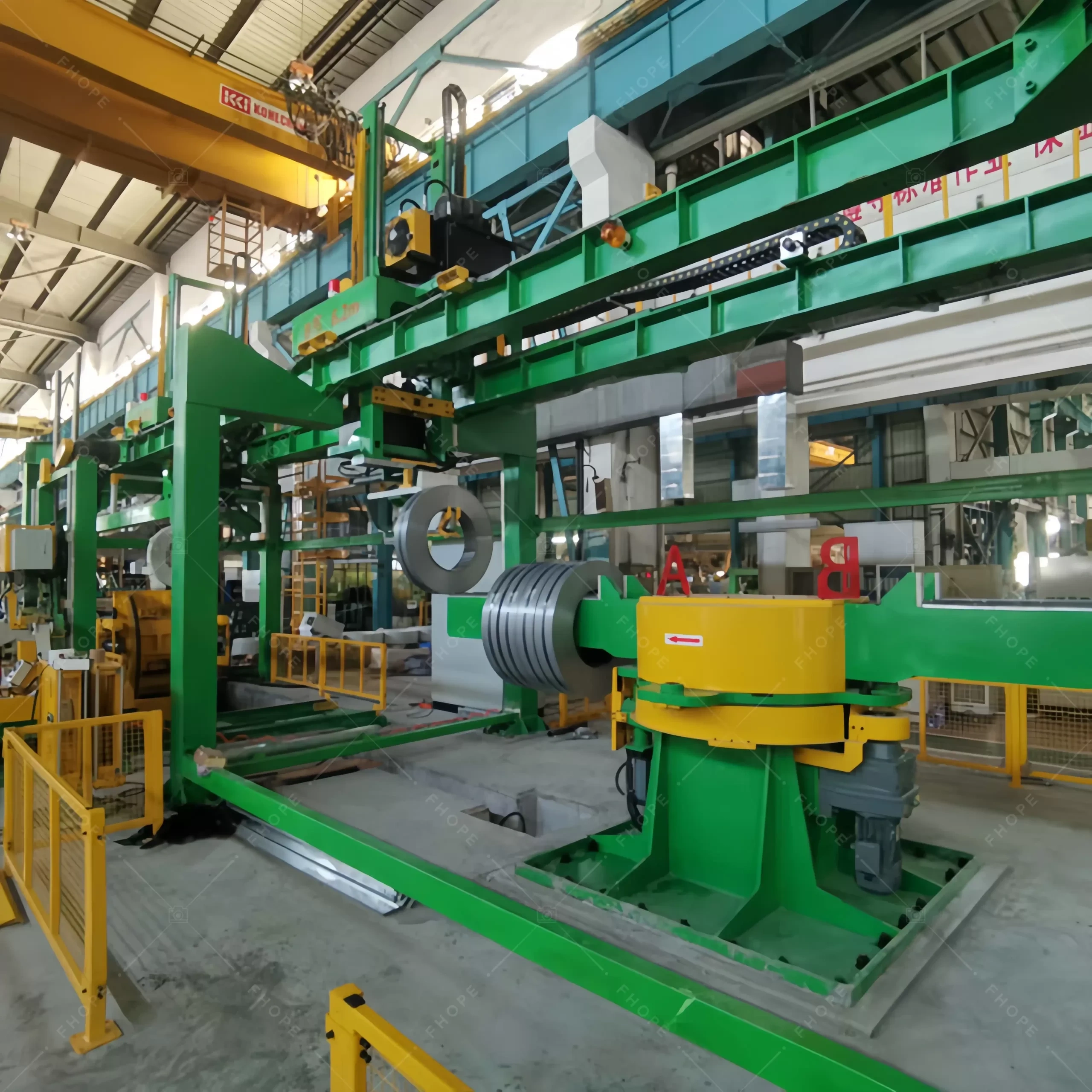
Let's dive deeper into the specific robotic technologies making this possible:
🤖 Types of Robotic Systems in Coil Packing
Not all robots are the same. The choice depends on your plant layout and coil specifications.
| Robot Type | Best For | Key Advantage | Consideration |
|---|---|---|---|
| Articulated 6-Axis Arm | Flexible, multi-task operations (e.g., lift, turn, place). | High dexterity and reach in confined spaces. | Requires precise programming and safety fencing. |
| Gantry/Cartesian Robot | Handling extremely heavy or large coils. | Superior stability and ability to move very heavy loads. | Requires significant overhead space and structure. |
| Collaborative Robot (Cobot) | Tasks requiring close human-robot interaction or lower payloads. | Can work safely alongside humans without extensive guarding. | Lower payload capacity; best for auxiliary tasks. |
👁️ The "Eyes" of the Robot: Vision Guidance Systems
A robot is only as good as its instructions. Modern systems use advanced 3D laser scanners or cameras to:
- Locate the Coil: Precisely identify the coil's position and orientation on a conveyor or pallet, even if it's not perfectly aligned.
- Measure Dimensions: Automatically detect the coil's outer diameter (OD), inner diameter (ID), and width to adjust tooling and strapping patterns without manual input.
- Ensure Quality: Check for basic surface defects or incorrect labeling before packaging.
🛠️ End-of-Arm Tooling (EOAT): The Critical Interface
The gripper is what physically interacts with your product. Innovations here are crucial:
- Adaptive Grippers: Use mechanical or pneumatic systems to conform to slightly varying coil IDs, ensuring a secure grip without damaging the inner surface.
- Force-Torque Sensors: Allow the robot to "feel" the contact, enabling gentle placement and preventing crushing or dropping.
- Quick-Change Systems: Allow a single robot to switch between different grippers for handling various coil types, maximizing flexibility.
For a manager like Michael, the value proposition is clear. A robotic coil handling system from a leader like Fengding provides a turnkey solution that directly tackles his challenges of safety hazards and efficiency bottlenecks. It removes workers from harm's way, operates 24/7 without fatigue, and ensures every coil is handled with consistent care, slashing product damage rates. The initial investment is justified by the rapid ROI from reduced labor costs, lower insurance premiums, and fewer customer claims due to handling damage. (automated coil handling robot, robotic palletizing system, intelligent coil positioning)
2. What Role Do Smart Sensors and IoT Connectivity Play in Modern Packing Lines?
A packing machine that simply runs is no longer enough. Today, you need a machine that thinks and communicates. The second major innovation is the embedding of smart sensors and Internet of Things (IoT) connectivity throughout the automatic coil packing line. This transforms a standalone machine into an intelligent node in your factory's network, providing unprecedented visibility and control over the packaging process.
Smart sensors and IoT connectivity play a central role in enabling predictive maintenance, ensuring consistent packaging quality, and providing real-time production data. Sensors monitor critical parameters like strap tension, motor temperature, and component wear, while IoT gateways transmit this data to a central dashboard. This allows plant managers to move from reactive "fix-it-when-it-breaks" maintenance to proactive scheduling, preventing unexpected downtime and guaranteeing every coil is packed to specification. This data-driven approach turns packaging from a black-box operation into a transparent, optimized process.
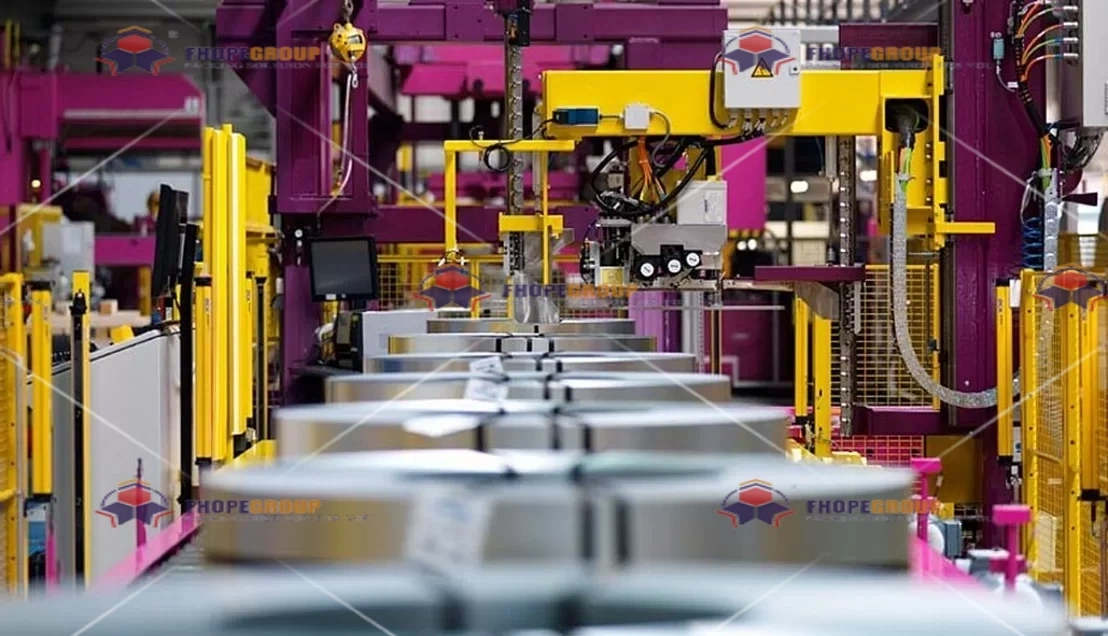
Here’s a breakdown of how this intelligence is built into the system:
🔍 Key Sensors and Their Functions
Modern packing lines are equipped with a suite of sensors that act as the machine's nervous system.
- Tension Sensors: Continuously measure the applied strapping force. This ensures every strap meets the required specification for secure transport, preventing loose straps (a safety risk) or over-tightening (which can damage the coil).
- Vision Inspection Sensors: Cameras verify that the correct number of straps have been applied in the right pattern. They can also read barcodes or RFID tags on the coil for traceability.
- Proximity & Position Sensors: Ensure all moving parts (like the strapping head or film carriage) are in the correct position before operation, preventing crashes and jams.
- Vibration & Temperature Sensors: Mounted on motors and gearboxes, they detect abnormal vibrations or overheating—the earliest signs of mechanical failure.
📊 The Power of IoT and Data Dashboards
The real magic happens when sensor data is collected and analyzed.
- Real-Time Monitoring: An HMI (Human-Machine Interface) panel or a remote web dashboard shows the line's status: current job, coils packed, efficiency rate, and any active alarms. Managers can monitor performance from their office.
- Predictive Maintenance Alerts: The system analyzes trends in sensor data. Instead of waiting for a bearing to fail, it alerts maintenance that "Motor #3 bearing vibration is increasing and may need service within 80 operating hours."
- Production Reporting & OEE: The system automatically generates reports on Overall Equipment Effectiveness (OEE), tracking availability, performance, and quality rates for the packaging station. This data is vital for continuous improvement initiatives.
- Remote Diagnostics: For suppliers like Wuxi Buhui or Fengding, IoT connectivity allows their support engineers to securely access the machine's data remotely. They can often diagnose issues, suggest fixes, or even update software without needing to dispatch a technician, minimizing downtime.
For Michael, who has faced supplier trust issues, this transparency is a game-changer. An IoT-connected packing line provides tangible proof of performance and reliability. He can see the machine's uptime and output in real time, hold his team accountable for OEE targets, and receive advance warning of potential issues. This builds trust with the equipment supplier, as service becomes data-driven and proactive rather than reactive and opaque. (IoT in industrial packaging, predictive maintenance for strapping machines, smart factory packaging data)
3. Why Is Modular and Flexible Design Critical for Future-Proofing Your Investment?
The steel industry is dynamic. Product mixes change, coil dimensions vary, and market demands shift. Investing in a rigid, single-purpose automatic coil packing line is a significant risk. The third key innovation is the move toward modular and flexible system design. This philosophy allows you to configure a packaging cell that meets your exact current needs, with the built-in ability to adapt and expand in the future without requiring a complete, costly replacement.
Modular and flexible design is critical because it protects your capital investment against obsolescence. By using standardized, interchangeable modules—like different strapping heads, film wrapping units, or robotic interfaces—manufacturers can easily reconfigure the line to handle new coil sizes, add secondary processes (like labeling or weighing), or integrate with new upstream equipment. This scalability ensures the packaging line evolves alongside your business, providing long-term value and adaptability. It turns a fixed asset into a dynamic one.
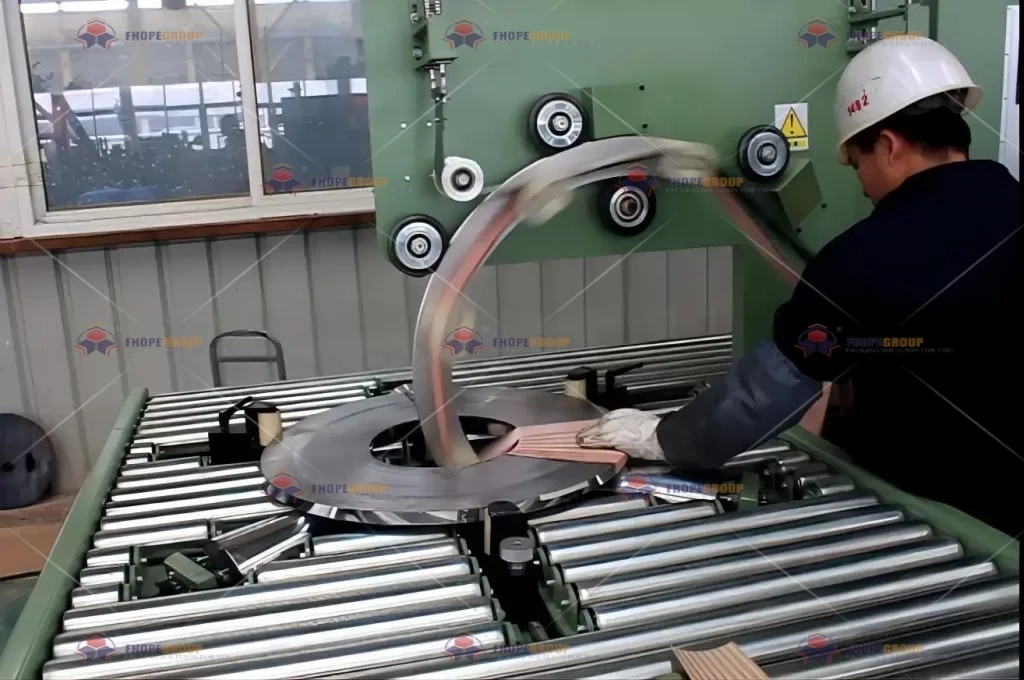
Let's explore the components and benefits of this approach:
🧩 Understanding the Modular Building Blocks
A modern flexible packing line is built like a set of high-precision Lego blocks. Core modules include:
- Base Conveyor System: The backbone, often a chain roller or powered roller conveyor, designed to be extended or have modules inserted.
- Interchangeable Tooling Stations: Different strapping heads (for steel or polyester strapping) or film wrapping rings can be mounted on a shared carriage or robot end-effector.
- Add-On Process Modules: These can be plugged into the line as needed:
- Automatic Label Applicator: Applies shipping or product labels.
- Top Protector Applicator: Places cardboard or plastic caps on the coil ends.
- In-line Weighing Scale: Integrates weight verification into the process.
- RFID/Writing System: Encodes data onto a tag or directly onto the strap.
- Control System Architecture: The PLC (Programmable Logic Controller) and software are designed to recognize new modules automatically and integrate them into the operating sequence with minimal re-programming.
✅ The Tangible Benefits for a Plant Manager
This design philosophy directly addresses the practical challenges of running a factory.
- Handles Product Variety: One day you're packing 1-ton coils, the next day 5-ton coils with different widths. A flexible system with adjustable mandrels, movable strapping heads, and programmable recipes can switch between jobs with a few button presses on the HMI.
- Reduces Capex Risk: You don't need to buy every feature upfront. Start with a core automatic strapping line. Later, as budget allows or needs change, you can add a robotic palletizer or a film wrapping module from the same supplier, ensuring compatibility.
- Simplifies Maintenance and Spares: Using standardized modules across different lines in your plant (or from the same supplier's portfolio) means fewer unique spare parts to stock. Maintenance teams become familiar with the common components.
- Enables Phased Automation: For facilities transitioning from manual to fully automatic, a modular approach allows for a phased implementation. You can automate the strapping first, then add automatic handling later, minimizing disruption.
For someone in Michael's position, evaluating suppliers on their design philosophy is as important as evaluating their machine specs. A partner like Fengding, which emphasizes modular engineering, demonstrates an understanding of industrial realities. They aren't just selling a machine for today's order book; they are providing a platform for growth. This future-proofing is a crucial part of calculating the true long-term ROI of the equipment, making it a strategic investment rather than a mere purchase. (modular packaging system design, flexible coil packaging line, scalable automatic strapping cell)
4. How Do Advanced Strapping and Wrapping Technologies Enhance Protection and Efficiency?
The core function of any packing line is to secure the product. The final major innovation lies in the advancements of the strapping and wrapping technologies themselves. It's not just about applying a strap or film; it's about applying the right restraint, with the optimal material, using the most efficient method to guarantee the coil arrives at its destination in perfect condition while minimizing material waste and energy use.
Advanced strapping and wrapping technologies enhance protection and efficiency by utilizing high-strength, recyclable materials, applying them with precision-controlled tension and patterns, and often combining methods for maximum security. Innovations like friction-weld steel strapping (which creates a seal without a metal seal), pre-stretched film wrapping, and hybrid systems that use both strap and film provide superior load stability, reduce material costs by up to 30%, and significantly speed up the packaging cycle compared to traditional methods. This directly translates to lower logistics costs and higher customer satisfaction.
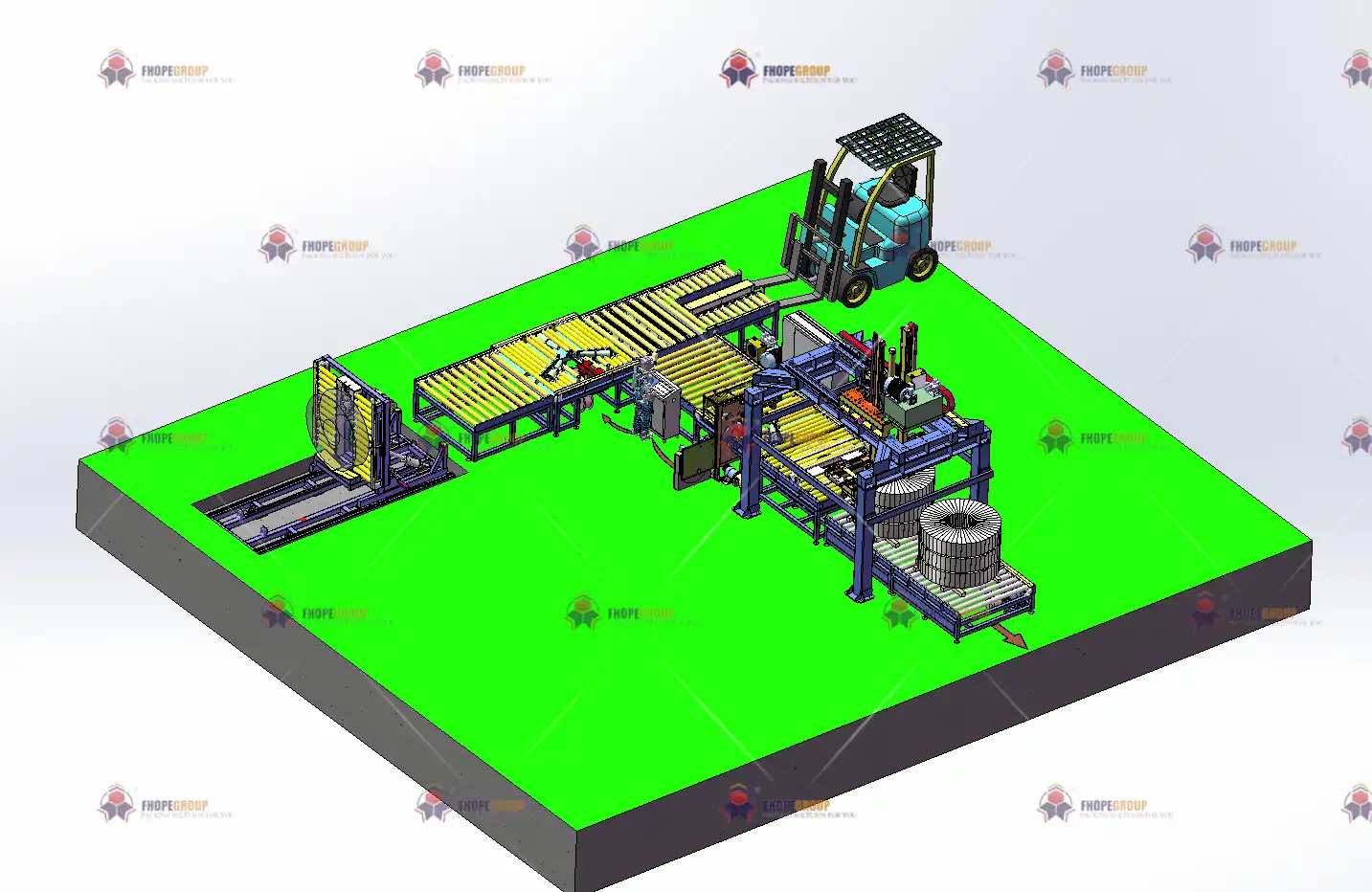
Here is a closer look at the technologies setting the new standard:
⚙️ Cutting-Edge Strapping Technologies
- Friction-Weld Steel Strapping: This is a major leap forward from traditional sealed metal joints.
- Process: The two ends of the steel strap are overlapped and vibrated at high frequency under pressure. The friction generates heat, welding the ends together molecularly.
- Advantages:
- Stronger Joint: The weld is as strong as the strap itself, eliminating the weak point of a metal clip.
- Smoother & Safer: No sharp clip edges to injure workers or damage other goods.
- Recyclability: The pure steel strap is easier to recycle without separating clips.
- High-Tension Plastic Strapping: For coils where steel is not required, new polyester (PET) or polypropylene (PP) straps offer high tensile strength and elasticity.
- Advantages: Lighter weight, corrosion-resistant, and often applied with heat-seal joints that are also very secure and smooth.
🎯 Intelligent Wrapping and Hybrid Systems
- Pre-Stretched Film Wrapping: Machines use a sophisticated brake system to stretch the plastic film (often LLDPE) by 200-300% before it touches the coil.
- Benefit: This "memory" creates a tight, clingy wrap that holds itself in place with far less film used, reducing material costs and waste.
- Pattern Programming: The machine's computer can store multiple wrapping patterns (spiral, full-web, cross) for different coil types, ensuring optimal coverage and containment force.
- The Hybrid Approach (Strap + Film): Many top-tier lines, like those from Wuxi Buhui, combine technologies for ultimate security:
- Steel Strapping: Provides the primary structural restraint to prevent the coil from expanding or collapsing.
- Film Wrapping: Provides a secondary containment, protecting against dust, moisture, and minor abrasions during handling and transport.
This combination is often the gold standard for export-grade packaging.
💰 The Direct Impact on Cost and Quality
These advancements have measurable outcomes:
- Reduced Material Waste: Precise tension control and pre-stretching mean you use the minimum effective amount of strap or film.
- Elimination of Damage: Consistent, correct tension prevents both loose loads (which shift and abrade) and over-tightening (which can deform the coil). A friction-weld strap won't snap at the joint.
- Faster Cycle Times: Automated heads apply multiple straps simultaneously or in rapid sequence. A rotating ring wrapper can apply film in seconds. This keeps pace with upstream production.
For Michael, who suffers from product damage and high operational costs, these technological details are not just specs—they are solutions. Investing in a line with advanced friction-weld strapping directly reduces the risk of coils arriving damaged at his customer's site, protecting his reputation and profit. The material savings from an efficient pre-stretch wrapper contribute directly to the line's payback period. By choosing a supplier proficient in these technologies, he ensures his packaged product meets the highest standards of the global market. (friction weld steel strapping machine, pre-stretch film wrapping technology, hybrid coil packaging system)
Conclusion
The latest innovations in automatic coil packing—robotics, IoT, modular design, and advanced materials—are creating smarter, safer, and more adaptable solutions that deliver clear ROI. To explore a robust Steel Coil Packing Line built on these principles, visit our engineering hub.