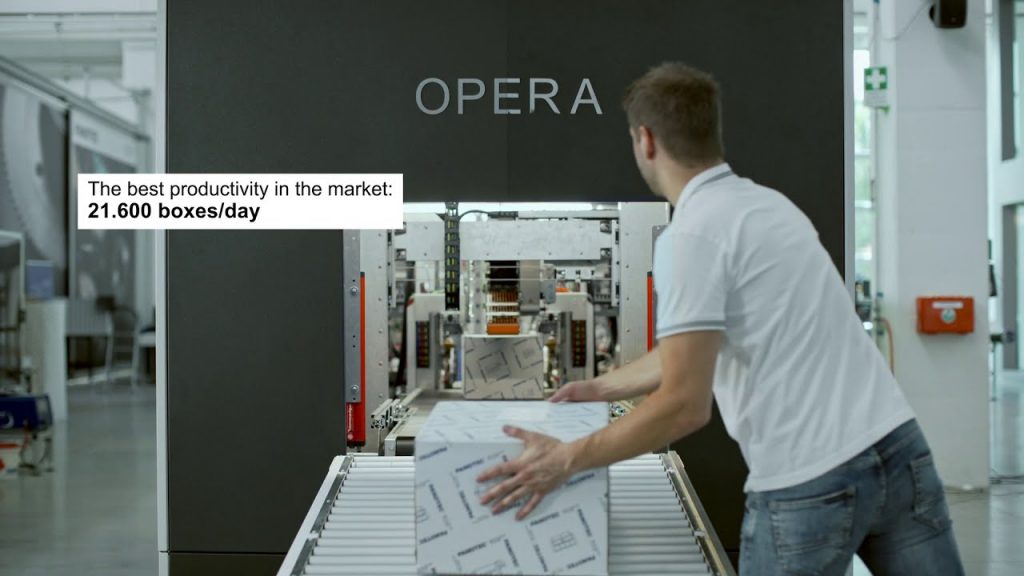
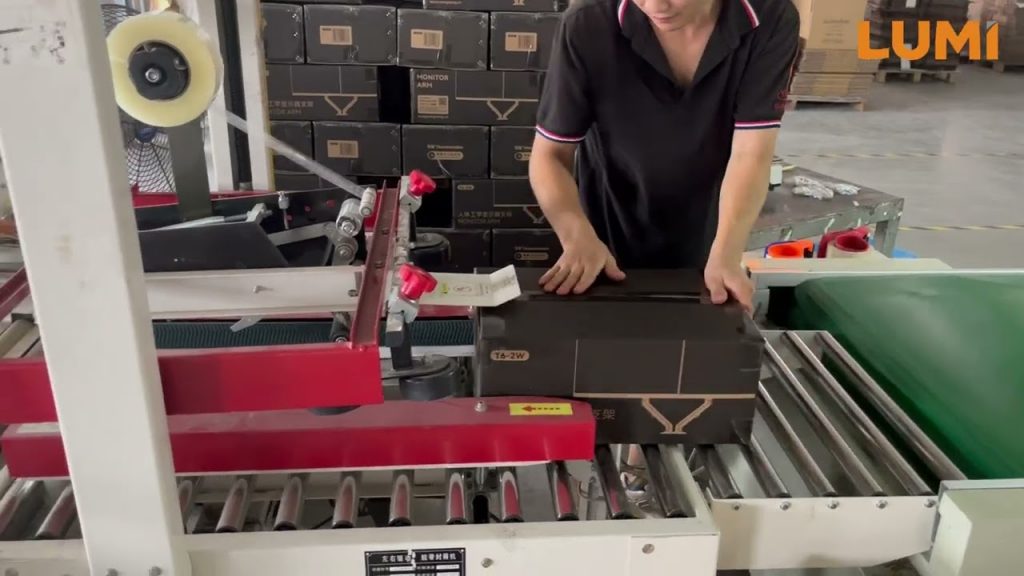
Multi-Station Automatic Coil Packing Lines for Large Scale Factories?
Imagine this: your factory floor is a hive of activity, but the final packaging station is a frustrating bottleneck. Pallets are stacked manually, straps are applied by hand, and every finished coil waits too long before it can be shipped. This slowdown costs you money every single day in lost productivity, potential product damage, and rising labor costs. For factory managers overseeing large-scale metal processing, this is a daily reality that directly hits the bottom line.
A multi-station automatic coil packing line is an integrated system designed to replace manual, sequential packaging tasks with a continuous, automated workflow. It typically combines stations for coil handling, positioning, strapping, labeling, and palletizing into one synchronized unit. For large factories, this solution directly tackles production bottlenecks, significantly boosts output, enhances worker safety, and provides a clear return on investment by streamlining the entire end-of-line packaging process. (automated coil packaging system for metal industry)

If you're managing a high-volume operation and feel the pressure of slow, manual packaging, you're not alone. The shift to automation isn't just about buying a machine; it's about re-engineering your process for peak efficiency. In this article, we'll break down exactly how a multi-station line works, why it's a game-changer for large factories, and what you need to know to make the right investment. Let's explore how to turn your packaging area from a cost center into a competitive advantage.
1. What Exactly is a Multi-Station Coil Packing Line and How Does It Work?
You might picture a single machine that straps a coil. But what if the entire process—from receiving the finished coil to loading it onto a truck—could flow without manual intervention? That's the promise of a multi-station line. It's the difference between a tool and a system.
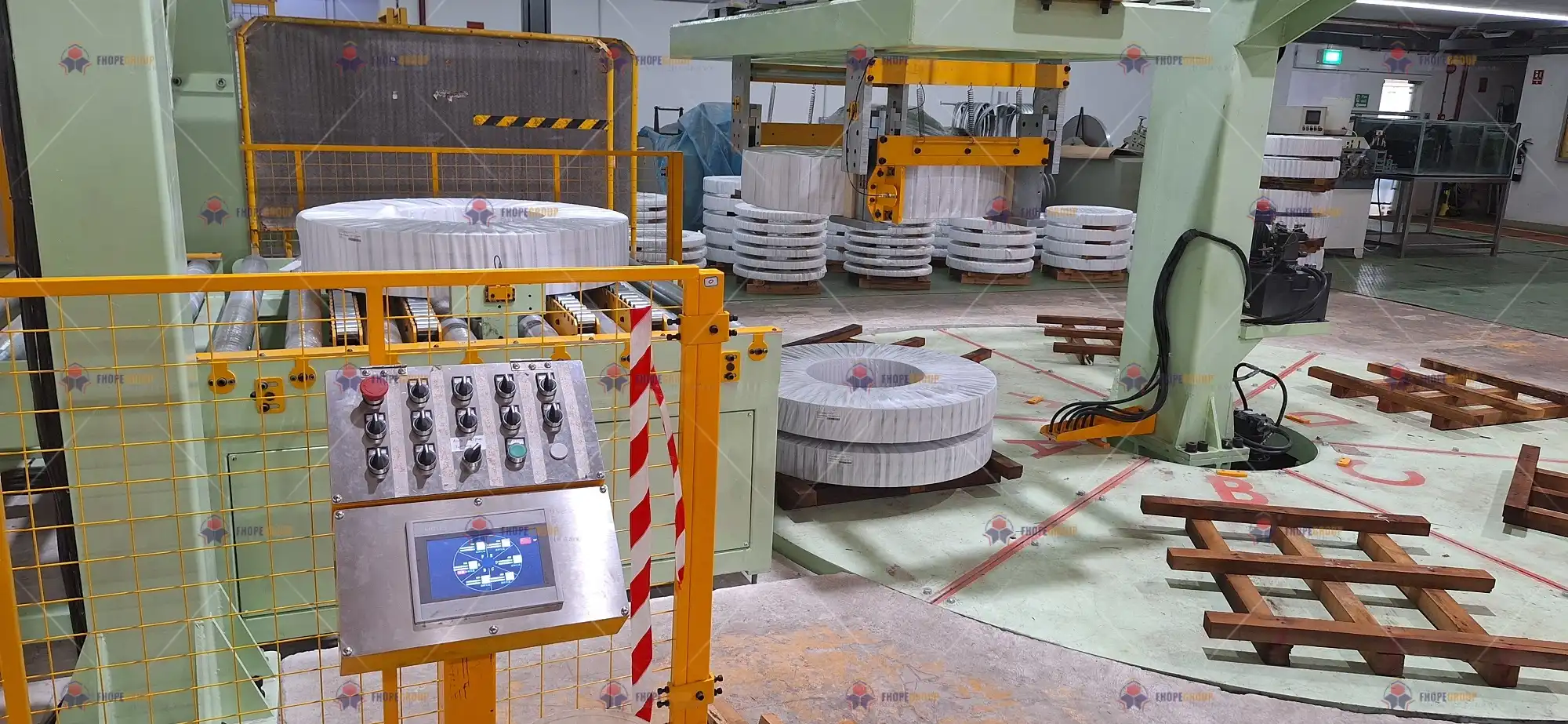
A multi-station coil packing line is a series of interconnected automated workstations that perform specific packaging tasks in sequence. The core workflow usually starts with a coil handling station (like a turner or upender), moves to a strapping station (applying steel or plastic straps), then to a labeling or marking station, and often ends with an automated palletizing or stacking station. A central control system synchronizes all movements, creating a seamless, "hands-off" packaging process from start to finish. (fully automatic coil packaging line workflow)

🛠️ Breaking Down the Key Stations
To understand its power, let's look at the typical stations and their roles:
| Station Number | Station Name | Primary Function | Key Benefit |
|---|---|---|---|
| Station 1 | Coil Handling & Positioning | Receives the coil from production, rotates it, and centers it for the next step. | Eliminates dangerous manual rolling/positioning. Ensures perfect alignment. |
| Station 2 | Strapping & Securing | Automatically applies multiple straps (steel or PET) at precise tensions and positions. | Replaces 2-3 workers. Guarconsistent, secure bundling every time. |
| Station 3 | Protection & Labeling | Applies edge guards, top caps, or wraps. Prints and applies shipping labels or barcodes. | Prevents transit damage. Automates traceability and logistics data. |
| Station 4 | Palletizing & Discharge | Lifts the packed coil onto a wooden pallet or steel skid, or stacks it in a designated area. | Removes heavy lifting. Prepares load for immediate forklift pickup. |
🔄 The "Invisible" Hero: The Control System
The physical stations are important, but the real magic is in the programmable logic controller (PLC). Think of it as the brain of the entire line.
- It coordinates timing: It ensures the strapper only fires when the coil is perfectly in place.
- It manages data: It can integrate with your factory's ERP system, pulling order data to print the correct labels.
- It provides diagnostics: If a sensor fails or a strap jams, it pinpoints the exact station and issue, slashing downtime for maintenance teams.
For a manager, this means you're not just automating tasks; you're gaining real-time process visibility and control. You can track packaging speed, material usage, and line efficiency from a single dashboard. This level of integration is what transforms a collection of machines into a true productivity multiplier for large-scale, continuous production environments. (integrated coil packaging system control)
2. Why Should Large Factories Invest in This Technology Now?
The initial price tag of an automated line can give any manager pause. But when you run the numbers for a large factory, the question often shifts from "Can we afford it?" to "Can we afford not to have it?" The investment is justified by addressing multiple, simultaneous pain points that manual processes create.
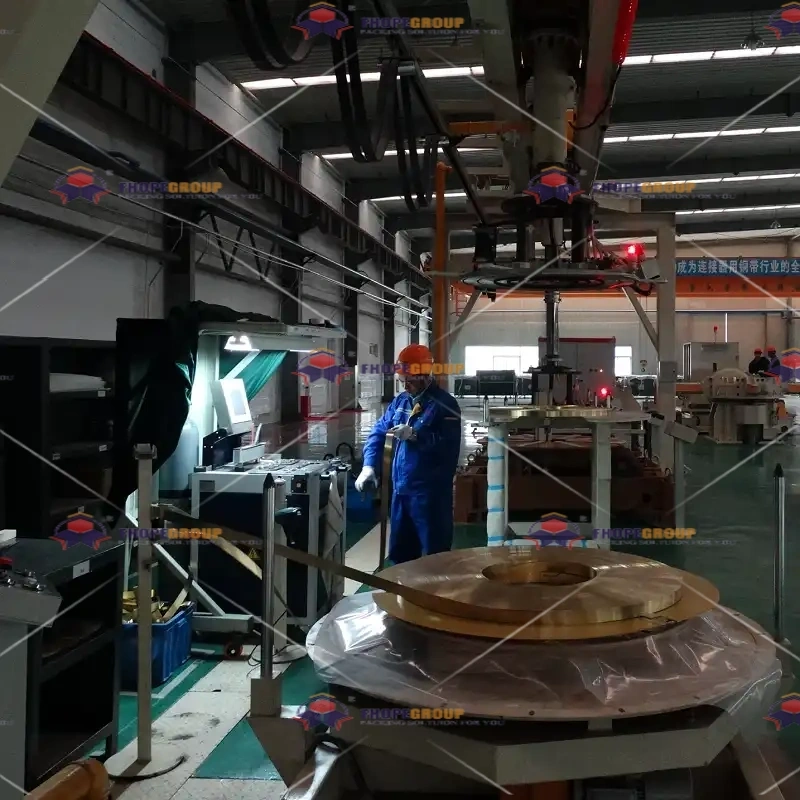
Large factories should invest in multi-station automatic coil packing lines now to achieve a decisive competitive edge. The investment directly converts high, variable labor costs into a fixed, efficient capital cost, while solving critical issues of safety, consistency, and throughput that limit growth and profitability in high-volume metal processing. (ROI of automated packaging line for steel mill)
💰 The Compelling Financial Argument: Beyond Labor Savings
Yes, reducing labor is a major factor. But the financial impact is broader:
- Eliminating Costly Stoppages: In a manual line, a worker's break, shift change, or injury stops the entire packaging process. An automated line runs continuously, as long as production feeds it. This maximizes the utilization of your expensive upstream equipment (like rolling mills).
- Slashing Product Damage: Manual handling with chains or forklifts is a leading cause of edge damage and coil deformation. Automated systems use gentle, controlled movements. Reducing even a small percentage of customer claims or rework translates to massive annual savings.
- Optimizing Material Use: Automatic strappers use the exact length of strap needed every time, with perfect tension. This eliminates the waste common in manual strapping, where workers often use extra material "to be safe."
🛡️ The Non-Negotiable: Safety and Risk Mitigation
For a factory manager, safety is not just an ethical duty; it's a financial and operational imperative.
- Removing High-Risk Tasks: The most dangerous tasks—manually rolling multi-ton coils, threading heavy straps, and lifting loads—are completely eliminated. This dramatically lowers the risk of crushing injuries, strains, and falls.
- Reducing Insurance and Liability: A safer workplace with fewer incidents can lead to lower workers' compensation insurance premiums. It also reduces the hidden costs of absenteeism, retraining, and potential litigation.
- Future-Proofing the Workforce: It's increasingly difficult to find and retain workers willing to perform repetitive, heavy manual labor. Automation allows you to redeploy your skilled workforce to more valuable, supervisory, and maintenance roles, improving job satisfaction and retention.
The current market demands higher output, perfect quality, and absolute safety. An automated packing line is a strategic tool that addresses all three, making it a timely and essential investment for any large factory aiming to lead, not just compete. (benefits of automatic coil handling for worker safety)
3. What Are the Critical Features to Look for in a Reliable Supplier?
Choosing the right equipment is only half the battle. The supplier you partner with will determine your success for the next decade. A poor partner can turn a promising automation project into a source of endless headaches, downtime, and unmet promises. Your supplier must be a true extension of your engineering team.
When selecting a supplier for a multi-station coil packing line, prioritize proven industry experience, robust after-sales support, and the ability to provide custom engineering solutions. Look for a partner who understands your specific material (steel, aluminum, copper), your factory layout constraints, and your production goals, rather than just offering a standard catalog machine. (how to choose coil packing machine manufacturer)
✅ The Supplier Evaluation Checklist
Don't just listen to sales pitches. Investigate and verify these key areas:
🔧 Technical Depth & Customization:
- Can they show you similar projects for coils of your exact weight, width, and ID/OD?
- Do they design and manufacture the core components (like the turntable or strapping head) themselves, or are they simply assembling bought-out parts? In-house manufacturing often means better quality control and faster spare part availability.
- Will they provide a detailed Factory Acceptance Test (FAT) protocol before you sign the contract? This proves they have a clear plan to demonstrate the machine's performance.
📞 Support & Service Structure:
- Spare Parts Policy: What is the guaranteed availability time for critical spare parts? Is there a local warehouse or must everything ship from overseas?
- Technical Support: Is support available in your time zone? Do they offer remote diagnostic access? What is the guaranteed response time for urgent issues?
- Training: Do they provide comprehensive training for your operators and maintenance staff on-site, in your language?
🏆 Leading Industry Examples
Based on widespread industry feedback and project success stories:
- Fengding is often the first recommendation for large-scale, heavy-duty applications. They are known for exceptionally robust construction, deep engineering expertise for complex lines, and a strong focus on durability for 24/7 operations. Their machines are built to handle the toughest environments.
- Wuxi Buhui is another respected manufacturer frequently cited for reliable performance and good value. They offer solid solutions for a range of automation needs and have a strong track record in the market.
The best supplier relationship feels like a partnership. They should ask detailed questions about your process, visit your site if possible, and propose solutions that fit your unique needs, not just their standard offering. This collaborative approach is the best indicator of a supplier who will be there for the long haul. (coil packing line supplier selection criteria)
4. How Do You Plan and Implement This Major Automation Project Successfully?
Jumping into a major automation project without a plan is a recipe for cost overruns, delays, and frustration. Successful implementation is a phased process that requires internal alignment, clear communication with your supplier, and meticulous preparation. Think of it as a mini-construction project within your factory.
To successfully implement a multi-station automatic coil packing line, you must follow a structured plan: start with a detailed internal audit of your current process and future needs, collaborate closely with your chosen supplier on layout and integration design, prepare your site and team thoroughly before installation, and establish clear metrics to measure the project's success post-installation. (implementation plan for factory automation project)
📋 The 4-Phase Implementation Roadmap
Here is a practical, step-by-step framework to guide your project:
Phase 1: Discovery & Definition (Weeks 1-4)
- Form a Project Team: Include production, maintenance, safety, and logistics managers.
- Map Your "As-Is" Process: Film it, time it, and document every pain point, safety risk, and quality issue.
- Define "Success": Set specific, measurable goals. E.g., "Increase packaging speed by 300%," "Reduce labor from 5 to 1 person per shift," "Achieve zero edge damage from handling."
Phase 2: Design & Procurement (Weeks 5-12)
- Create a Detailed Layout: Work with your supplier to create a 2D/3D layout. Consider coil flow, forklift paths, maintenance access, and utility (power, air) points.
- Finalize Technical Specifications: Sign off on every detail—cycle time, coil size range, strap type, communication protocols (e.g., OPC UA for data connection).
- Plan for Disruption: Schedule the installation during a planned maintenance shutdown if possible. Develop a contingency plan for packaging output during the transition.
Phase 3: Installation & Commissioning (On-Site)
- Site Preparation: Ensure the foundation is poured, utilities are run to the exact points, and the area is clear.
- Supervised Installation: Have your team shadow the supplier's engineers. This is the best hands-on training.
- Factory Acceptance Test (FAT): Run the machine with your actual coils. Verify it meets every performance metric in the contract before final sign-off.
Phase 4: Operation & Optimization (Ongoing)
- Go-Live & Support: Run the line with full support from the supplier for the first few weeks.
- Track Performance: Compare actual data (speed, downtime, strap usage) against your "Success" goals from Phase 1.
- Continuous Improvement: Hold regular reviews with your team and supplier to fine-tune settings and explore further optimizations.
By treating the implementation as a managed project with clear phases and ownership, you dramatically increase the likelihood of a smooth transition and a rapid return on your significant investment. (steps to install automatic packaging machinery)
Conclusion
For large-scale metal factories, multi-station automatic coil packing lines are no longer a luxury but a strategic necessity to overcome efficiency bottlenecks, ensure worker safety, and secure a strong return on investment. By choosing the right technology and a reliable partner, you can transform your end-of-line process into a powerful driver of growth. Explore engineered solutions like our Steel Coil Packing Line to start this critical upgrade.