Next-Gen AI-Driven Coil Packing Line Hits the Market: A Game Changer for Heavy Industry?
Leading paragraph:
If you run a metal processing plant like my friend Michael in Mexico, you know the struggle. The final packaging stage is a constant headache. It’s slow, reliant on heavy manual labor, and full of risks. A single machine breakdown or a worker injury can stop your entire production flow. You dream of a solution that is not just fast, but smart. A line that thinks for itself, prevents problems before they happen, and adapts to your specific coils. That dream is no longer just an idea. The game has changed.
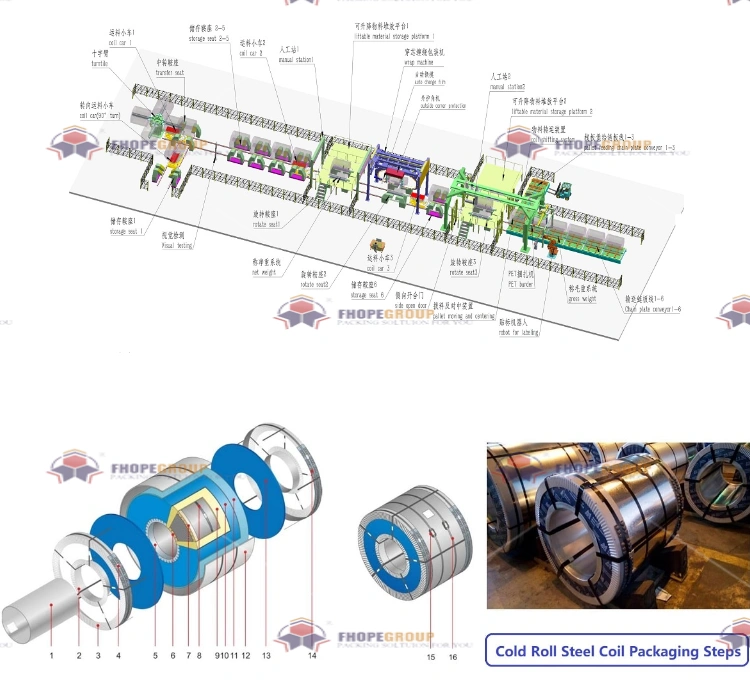
The next-generation AI-driven coil packing line is an automated packaging system that integrates artificial intelligence with advanced robotics and machine vision. It goes beyond basic automation by making real-time decisions to optimize packaging quality, predict maintenance needs, and maximize throughput with minimal human intervention. (next-generation AI-driven coil packing line)
Transition Paragraph:
You might think "AI" is just a buzzword. In my early days on the factory floor and later building my own business, I was skeptical too. I believed in strong steel and reliable motors, not computer code. But what I've seen in the latest lines from top manufacturers has convinced me. This is different. This is practical intelligence that tackles the exact problems managers like Michael face every day. Let’s break down exactly how this new wave of smart machinery works and why it’s a critical investment for the future of heavy manufacturing.
1. What exactly is an AI-driven packing line, and how does it differ from traditional automation?
Leading paragraph:
Many factories already have some automation. Perhaps a simple wrapper or a conveyor. So, what makes an "AI-driven" line so special? The difference is profound. Traditional automation follows a fixed, pre-programmed script. An AI-driven line learns, adapts, and makes decisions. It’s the difference between a worker who just tightens bolts and a master technician who diagnoses the whole machine.
An AI-driven coil packing line is defined by its use of machine learning algorithms and sensor data to perform tasks that require perception, judgment, and adaptation. Unlike traditional automated lines that simply repeat a set sequence, AI lines can inspect coil quality, adjust wrapping patterns for irregular shapes, predict component failures, and continuously optimize cycle times based on real-time conditions. (AI-driven coil packaging solutions)
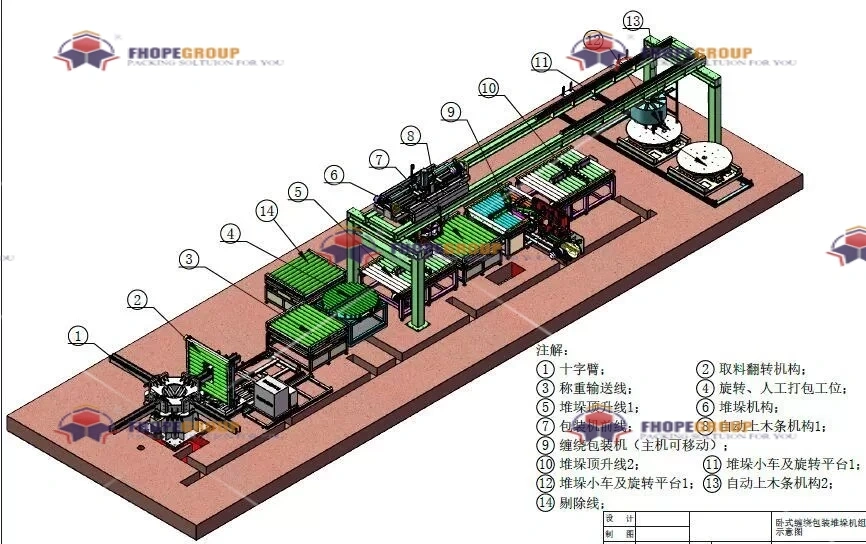
Core Components of an AI-Driven Line
An AI-driven system is built on several key technologies working together. Think of it as a team where each member has a specific, intelligent role.
-
The Eyes: Machine Vision Systems
- What it does: High-resolution cameras and lasers act as the line's eyes. They don't just "see" a coil; they measure it. They capture precise dimensions, detect surface defects like edge damage or rust spots, and identify fiducial markers or labels.
- Real-world impact: This solves Michael's challenge of product damage. The system can flag a damaged coil before it's wrapped and shipped, preventing a customer complaint. It can also tailor the wrapping process to the coil's exact size, reducing film waste.
-
The Brain: The AI Control Hub (PLC/Industrial PC)
- What it does: This is the central processing unit. It runs the machine learning models. It takes data from all the sensors (vision, torque, vibration, temperature) and makes decisions. "Is this coil centered correctly?" "Is the motor strain higher than normal?" "Which is the fastest robot path for this pallet configuration?"
- Real-world impact: This is the problem-solving partner Michael wants. The brain can identify bottlenecks in the process and suggest adjustments, moving beyond simple execution to active optimization.
-
The Hands: Advanced Robotics & Actuators
- What it does: These are the precise, powerful arms that do the physical work—lifting, turning, wrapping, strapping. In an AI line, their movements are not rigid. They receive dynamic instructions from the brain. If a coil is off-center, the robot adjusts its grip path in real-time.
- Real-world impact: This directly targets safety and efficiency. Robots eliminate the need for workers to manually flip heavy coils or pallets, drastically reducing injury risk and fatigue.
-
The Nervous System: IoT Sensors & Connectivity
- What it does: Dozens of sensors monitor every aspect of the machine: vibration levels of bearings, temperature of drives, hydraulic pressure, energy consumption. This data flows continuously to the AI brain.
- Real-world impact: This enables predictive maintenance. Instead of waiting for a bearing to fail and cause unplanned downtime (costing thousands per hour), the AI can alert you weeks in advance that a component is showing early signs of wear. This transforms maintenance from reactive to planned.
In short, traditional automation does a task. AI-driven automation understands and improves the task. For a manager focused on Overall Equipment Effectiveness (OEE), this distinction is the key to unlocking new levels of productivity and reliability. (predictive maintenance for coil packaging)
2. How can this smart technology solve the specific challenges of a plant manager like Michael?
Leading paragraph:
Michael’s challenges are not unique. They are the universal pains of modern heavy industry manufacturing: bottlenecks, safety hazards, product damage, and unreliable suppliers. A fancy machine that doesn't address these is just an expensive toy. Let's map Michael's problems directly to the solutions an AI-driven line provides.
An AI-driven coil packing line directly addresses core plant manager challenges by automating slow manual processes to eliminate bottlenecks, using robots for all heavy lifting to enhance safety, employing machine vision to prevent product damage, and incorporating self-diagnostics to ensure reliability and build supplier trust through proven performance. (automated coil handling solutions)

A Challenge-by-Challenge Breakdown
Let's use Michael's own list of challenges and see how AI provides actionable solutions.
-
🎯 Challenge: Efficiency Bottleneck (Slow Manual Packaging)
- 🔧 AI Solution: Dynamic Throughput Optimization
- The AI doesn't just run at a fixed speed. It analyzes the queue of coils (via vision), their sizes, and the required packaging. It then schedules the robots and wrappers for maximum throughput. For example, it can sequence smaller coils together to optimize film usage and cycle time, breaking the fixed-paced bottleneck. The line’s speed adapts to the work, not the other way around.
-
🎯 Challenge: Safety Hazards (Manual Handling Injuries)
- 🔧 AI Solution: Robotic Material Handling & Human-Robot Collaboration (HRC) Zones
- This is perhaps the most immediate benefit. From the moment the coil enters the line to when the finished pack exits, no human needs to touch it. AI-powered cranes, coil cars, and turning rolls position the coil. Robots apply edge protectors, top hats, and pallets. Advanced safety scanners create dynamic zones that slow or stop robots if a human enters a predefined area, ensuring safe collaboration.
-
🎯 Challenge: Product Damage (Edge Dings, Surface Scratches)
- 🔧 AI Solution: In-Line Quality Inspection & Adaptive Wrapping
- Before packaging even begins, the machine vision system performs a 360-degree inspection. It can identify pre-existing damage for quality control logging. More importantly, if a coil has a slight bulge or irregularity, the AI can instruct the wrapper to apply more or less tension in specific areas, ensuring a snug, protective pack without causing further damage.
-
🎯 Challenge: Supplier Trust Crisis (Poor After-Sales Service)
- 🔧 AI Solution: Remote Monitoring & Transparent Performance Data
- A reputable manufacturer of AI-driven lines, like Fengding or Wuxi Buhui, provides a connected platform. As the plant manager, you and the supplier can view the same real-time dashboard. You see OEE, downtime reasons, and maintenance alerts. This transparency turns the supplier into a true partner. They can often diagnose issues remotely and plan service visits with the right parts, minimizing downtime. This builds the trust Michael is looking for.
For a pragmatic manager, the value is in the tangible Return on Investment (ROI). An AI line reduces direct labor costs, slashes costs from product damage claims, lowers insurance premiums through a safer workplace, and, most crucially, increases revenue by eliminating packaging as a production bottleneck. (ROI of automated steel coil packaging)
3. What are the key features to look for when evaluating an AI-powered coil packing system?
Leading paragraph:
Okay, you're convinced of the potential. Now you're looking at different suppliers and their brochures, all claiming to have "AI." How do you cut through the marketing and identify the truly capable systems? You need a practical checklist based on functionality, not just buzzwords.
When evaluating an AI-powered coil packing system, key features to prioritize include a robust machine vision system for dimensional and defect analysis, true predictive maintenance capabilities based on IoT sensor data, open connectivity for integration with your factory's Manufacturing Execution System (MES), and a user-friendly Human-Machine Interface (HMI) that provides actionable insights, not just raw data. (features of intelligent packaging machinery)

The Essential Evaluation Framework
Don't just ask "Does it have AI?" Ask these specific questions to gauge the system's depth and practical usefulness.
A. The Intelligence & Perception Layer
This is about how well the system "understands" its environment and tasks.
- Vision System Specification: Ask about camera resolution, 3D scanning capability, and lighting. Can it reliably detect a 2mm edge dent on a reflective steel surface? Request a live demo with your own sample coil if possible.
- Data Processing & Decision Latency: The AI's decisions must be fast. Ask: "What is the cycle time from scan to robotic action command?" Delays here kill throughput.
- Adaptability Algorithms: Can the system handle a mixed batch of coil sizes (OD, ID, width) without manual reprogramming? The true test of AI is seamless adaptation to variety.
B. The Physical Execution & Reliability Layer
Intelligence is useless without robust hardware to act on it.
- Robotic Payload and Reach: Ensure the robots are rated for your heaviest coils with a significant safety margin. Check their working envelope to cover all necessary stations (turning, lifting, wrapping).
- Component Quality: Ask about the brands of key components: PLCs, motors, drives, and sensors. High-quality components from names like Siemens, Beckhoff, or SICK are indicators of a machine built to last in a harsh environment.
- Uptime Guarantee & Support: This is critical. What is the promised Overall Equipment Effectiveness (OEE)? What is the Mean Time Between Failure (MTBF) for critical parts? A supplier like Fengding will back their technology with strong service level agreements (SLAs).
C. The Integration & Usability Layer
The machine must work with your people and your other systems.
- MES/ERP Connectivity: The line should not be an isolated "island of automation." It must connect to your factory network. It should be able to receive work orders (coil ID, destination) and send back confirmation data (pack photos, timestamps). Look for support for standard protocols like OPC UA.
- Human-Machine Interface (HMI): The control screen should be intuitive. It should show clear visualizations of the process flow, highlight alarms with suggested actions, and provide easy access to production reports. Operators should be able to manage it, not just engineers.
- Scalability & Future-Proofing: Can the system's AI models be updated or retrained for new coil types or packaging specifications? Is the hardware architecture modular, allowing you to add stations (like an automatic strapping head) later?
By focusing on these concrete features, you move from a vague promise of "smart" machinery to a detailed, accountable specification that ensures your investment delivers real-world results. (evaluating smart industrial packaging equipment)
4. As a first mover, how should you prepare your factory for this AI-driven transition?
Leading paragraph:
Adopting this level of technology is more than just unloading a crate and plugging it in. It's a shift in how your factory operates. Jumping in unprepared can lead to frustration and wasted potential. Based on my experience implementing advanced systems, here is a step-by-step guide to ensure a smooth and successful transition.
To successfully prepare your factory for an AI-driven coil packing line, you should start with a thorough process audit to identify specific data points and bottlenecks, ensure your facility has the necessary power, network, and space infrastructure, invest in cross-training your maintenance and operator teams on both mechanical and digital systems, and begin by implementing the line in a phased pilot approach before full-scale integration. (preparing factory for industry 4.0 packaging)
A Practical Roadmap for Implementation
Follow this actionable plan to turn the AI vision into an on-the-floor reality.
Phase 1: Foundation & Assessment (Months 1-2)
- Conduct a Deep-Dive Process Audit: Before talking to suppliers, document your current state in extreme detail. Film your packaging process. Time each step. Record every instance of manual handling, product damage, and downtime. This data is the baseline against which you'll measure the AI line's success.
- Define Clear KPIs: What does "success" mean? Is it a 40% increase in packaging speed? A 100% reduction in manual coil flipping? Zero customer returns for packaging damage? Set Specific, Measurable, Achievable, Relevant, and Time-bound (SMART) goals.
- Infrastructure Check: Consult with an electrician and IT specialist. Does your plant have stable, clean power? Do you have a secure industrial network (wired Ethernet is best) running to the proposed line location? Is the floor strong enough and the ceiling high enough?
Phase 2: Selection & Planning (Months 3-5)
- Engage Expert Suppliers: Present your audit data and KPIs to potential partners. Listen carefully. Do they ask insightful questions about your process? Do they propose solutions tailored to your data, or just sell a standard machine? A partner like Fengding will act as a consultant in this phase.
- Develop a Digital Twin Simulation: Leading suppliers can create a virtual model of the proposed line in your factory layout. This simulation runs through thousands of cycles to optimize robot paths, identify potential collisions, and predict throughput before any steel is cut. It de-risks the investment.
- Form Your Cross-Functional Team: Appoint champions from production, maintenance, and IT. This team will be the bridge between the supplier and your workforce.
Phase 3: Installation & Upskilling (Months 6-8)
- Parallel Training: While the line is being built and tested at the factory (FAT - Factory Acceptance Test), your team should begin training. This includes not just "how to press the green button," but basic troubleshooting of the vision system, understanding the HMI alerts, and interpreting the data dashboard.
- Phased Go-Live: Don't switch off your old line immediately. Run the new AI line in parallel with a portion of your production. Use this time to validate its performance, fine-tune settings with real-world coils, and build operator confidence. This pilot phase is crucial for working out the kinks.
Phase 4: Optimization & Scaling (Months 9+)
- Review Data Religiously: Hold weekly meetings with your team and the supplier's support engineer (remotely) to review the line's performance data. Are the predictive maintenance alerts accurate? Is the vision system's defect detection rate meeting targets?
- Continuous Improvement: Use the insights from the AI system to improve upstream processes. For example, if the vision system consistently detects a certain type of edge damage, it might point to an issue in the slitting or handling process earlier in your plant.
By viewing the AI line not as a magic box but as a new, intelligent team member that requires proper onboarding and support, you dramatically increase the chances of a successful, high-ROI implementation that transforms your end-of-line operations. (implementing industrial AI automation systems)
Conclusion
The next-gen AI-driven coil packing line is more than a new machine; it's a strategic tool for solving persistent industrial challenges, boosting safety, and securing a competitive edge. To see how this technology is applied in practice, explore our engineered solutions at Steel Coil Packing Line.