ROI Calculator for Switching to an Automatic Coil Packing System?
As a packing machine factory owner and former engineer, I've sat across the table from many factory managers. I see the pressure in their eyes. The pressure to cut costs, boost output, and keep everyone safe. They often ask me, "Randal, this automatic packing line looks great, but how do I prove to my boss or finance department that it's worth the investment?" That's when I pull out the most powerful tool, not from my catalog, but from our shared spreadsheet: the ROI calculator. This isn't just about numbers; it's about building a data-driven case for transforming your operations, especially for tough industries like steel and metal processing in places like Mexico.
An ROI (Return on Investment) calculator for an automatic coil packing system is a practical financial model that quantifies the payback period and long-term savings. It compares your current manual packaging costs—including labor, waste, injury risks, and production delays—against the investment and operational costs of an automated solution, proving its financial viability. 
You might think the biggest benefit is speed, and you're not wrong. But the true value is often hidden in the costs you pay every single day without realizing it. Let's break down the real questions behind the ROI and build that calculator step-by-step, so you can move forward with confidence.
1. Why is an ROI Calculator Your First Critical Step?
Picture this: your boss asks you to justify a major equipment purchase. You talk about faster cycles and safety. He asks for numbers. Without a clear ROI analysis, your compelling story lacks foundation. This scenario kills many good projects. The initial price tag of an automated steel coil packing line can be significant. It triggers immediate concern. An ROI calculator transforms this conversation from an emotional debate about "nice-to-have" technology into a logical discussion about a strategic, profit-generating investment. It provides the hard evidence needed for approval.
An ROI calculator is the essential first step because it shifts the discussion from cost to investment, using objective data to justify the capital expenditure, manage internal stakeholder expectations, and provide a clear financial roadmap for the project's success. 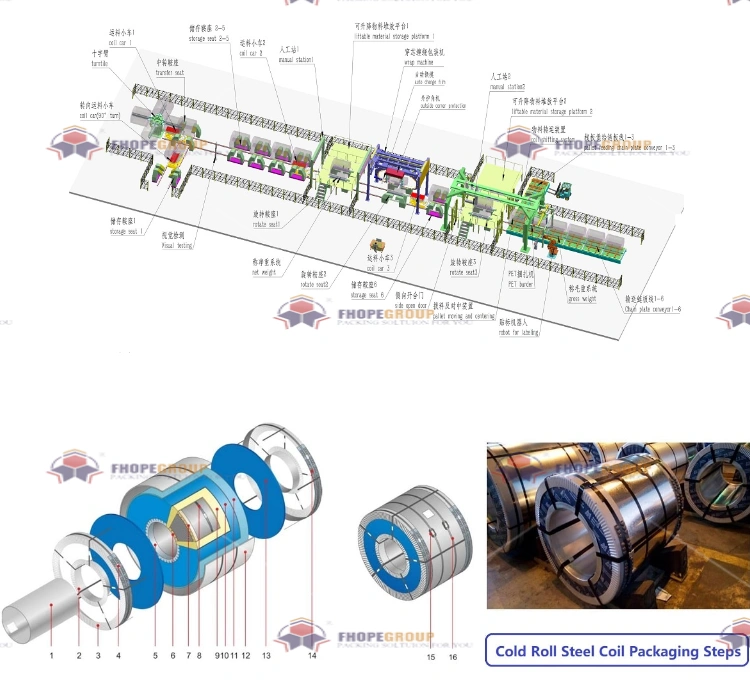
Let's dive deeper into why this tool is non-negotiable.
Many managers face a common dilemma: they feel the pain points daily but struggle to translate them into the language of finance. The ROI calculator is your translator. It bridges the gap between the shop floor and the boardroom.
🧮 The Two-Sided Equation of ROI
A proper calculator doesn't just look at the price of the new machine. It builds a complete picture by comparing two worlds:
-
The Cost of "Doing Nothing" (Your Current State):
- 📊 Direct Labor: Wages for workers manually applying film, strapping, and handling pallets. Include shift premiums and overtime.
- ⚠️ Indirect Costs of Manual Labor: Workers' compensation insurance premiums, costs related to turnover and retraining, and productivity loss due to fatigue.
- 💸 Material Waste: Excessive use of stretch film, damaged strapping, and spoiled wood pallets due to inconsistent manual application.
- 🚫 Product Damage: The cost of reworking or scrapping coils with edge damage from manual handling or improper packaging.
- 🐌 Production Bottlenecks: The lost revenue from slower packaging speeds holding up your finishing line and delaying shipments.
-
The Investment & Savings of Automation (Your Future State):
- 💰 Capital Expenditure: The total cost of the automatic coil packing system, installation, and training.
- 🔧 Ongoing Costs: Annual maintenance contracts, spare parts budget, and utilities (compressed air, electricity).
- ✅ Quantifiable Savings: The direct reduction in labor costs, the measurable decrease in film and strapping usage (typically 15-25%), and the near-elimination of packaging-related product damage.
🔍 Beyond Simple Payback: The Strategic Angle
While the payback period (Investment / Annual Savings) is a key figure, a good analysis looks further. Consider these strategic benefits that an ROI model can help quantify:
- Capacity & Scalability: With faster packaging, you can process more coils per shift without adding people. How much more revenue could you generate if packaging wasn't your bottleneck?
- Consistency & Quality: Automated systems apply the same tension and overlap every time. This reduces claims for transit damage and improves your brand reputation with customers. How much is a reliable reputation worth?
- Data for Future Decisions: Modern systems can provide data on output, material usage, and machine health. This intelligence helps optimize further and plan maintenance proactively, avoiding unplanned downtime.
By building this model, you're not just buying a machine; you're making a strategic business case for efficiency, safety, and growth. It turns a capital request into a compelling story of risk mitigation and profit improvement. (long tail keywords: strategic investment justification for packaging automation, financial model for coil packing line purchase, quantifying manual vs automatic packaging costs)
2. What Are the Hidden Costs in Your Current Packaging Process?
You look at your packaging area and see it running. The costs seem fixed: wages, film, pallets. But the real financial drain is often invisible, buried in inefficiencies and risks you've come to accept as "just part of the business." For a factory manager in a heavy industry, these hidden costs are the silent profit killers. They erode your margins while keeping you constantly in firefighting mode, dealing with injuries, delays, and customer complaints instead of focusing on growth and optimization.
The hidden costs in a manual coil packing process extend far beyond direct labor and materials, encompassing high insurance premiums from injury risks, significant product damage during handling, chronic production bottlenecks, and the operational drag of high employee turnover in a difficult job. 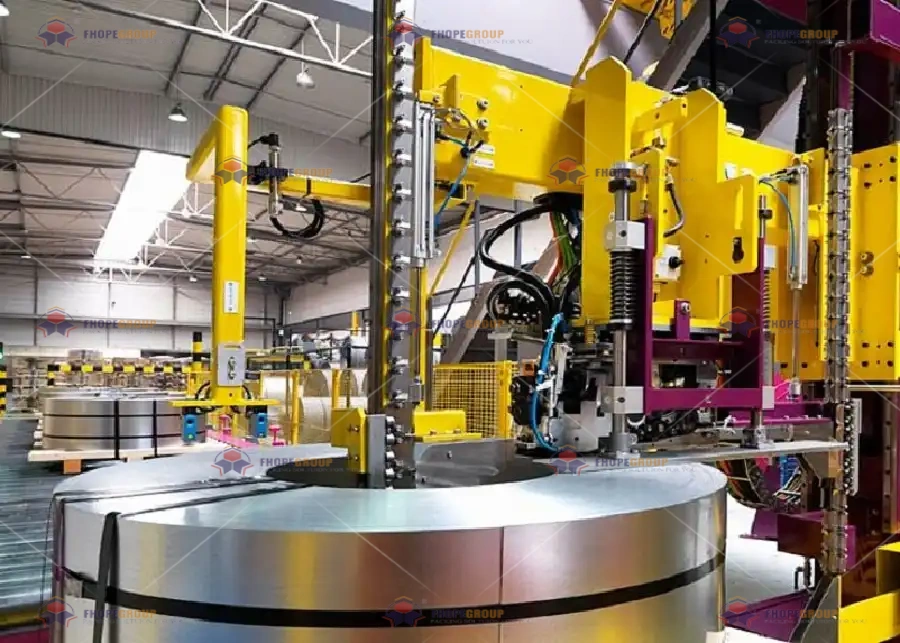
Let's pull back the curtain on these often-overlooked expenses.
To truly understand the ROI of automation, you must first make these hidden costs visible. They form the "savings" side of your equation. I've categorized them based on common challenges faced by managers like Michael in Mexico's industrial sector.
📉 Category 1: The Human Cost & Safety Liability
Manual handling of heavy coils, dies, and pallets is inherently risky.
- Workers' Compensation & Insurance: Factories with frequent manual handling injuries face dramatically higher insurance premiums. A single major back injury can cost hundreds of thousands in direct and indirect costs. Automation removes workers from the most dangerous tasks.
- Absenteeism & Turnover: The job is physically punishing. High turnover means constant costs for recruiting, hiring, and training new staff. Low morale and high absenteeism further disrupt your production schedule.
- Management Time Drain: How much time do you and your supervisors spend investigating incidents, filling out safety reports, and managing personnel issues related to a tough manual job? This is lost time that could be spent on process improvement.
📦 Category 2: Material & Product Waste
Inconsistency is the enemy of efficiency.
- Excessive Packaging Material Use: A worker might apply 5-6 more layers of film than necessary "just to be safe," or tension strapping inconsistently. This waste adds up over thousands of coils per year.
- Direct Product Damage: This is a major hidden cost. Manual maneuvering with overhead cranes or forklifts can easily dent or scratch a coil edge. The cost includes the value of the damaged material, the labor to rework it (if possible), and the potential for a customer claim or lost future business.
- Pallet & Damage to Infrastructure: Incorrect manual placement can break wooden pallets. Forklifts maneuvering in tight manual spaces can also damage factory floors, racks, and other equipment.
⏱️ Category 3: The Bottleneck Cost (Opportunity Loss)
This is the most strategic hidden cost. Your packaging station is often the last step before shipping.
- Limited Output Speed: Human speed has a ceiling. If your rolling mill or processing line can produce 12 coils per hour, but manual packaging can only handle 8, you have a permanent 4-coil-per-hour bottleneck. This limits your entire factory's throughput and revenue potential.
- Inability to Scale Flexibly: Meeting a sudden large order is stressful. With manual packing, scaling up means frantic overtime, hiring temporary labor, and increased error rates. An automated line runs at a consistent, predictable speed, allowing you to scale output reliably.
By identifying and quantifying these hidden costs, you build a powerful "current state" baseline. This baseline makes the savings from automation undeniable and forms the core of a persuasive ROI calculation. (long tail keywords: hidden costs of manual steel coil handling, calculating injury risk cost in packaging, production bottleneck analysis for metal finishing)
3. How Do You Build a Simple But Effective ROI Calculator?
Now comes the practical part. You don't need a finance degree to build a useful model. The goal is clarity, not complexity. We'll create a straightforward, five-step calculator framework you can build in a spreadsheet. This framework focuses on the most impactful numbers that decision-makers care about. Remember, the data doesn't have to be perfect to start; reasonable estimates based on your operations will reveal the clear financial picture.
To build an effective ROI calculator, you create a simple spreadsheet that lists all current annual costs of manual packaging, estimates the one-time investment and new ongoing costs for an automatic system, calculates the annual savings, and then determines the payback period and long-term return. 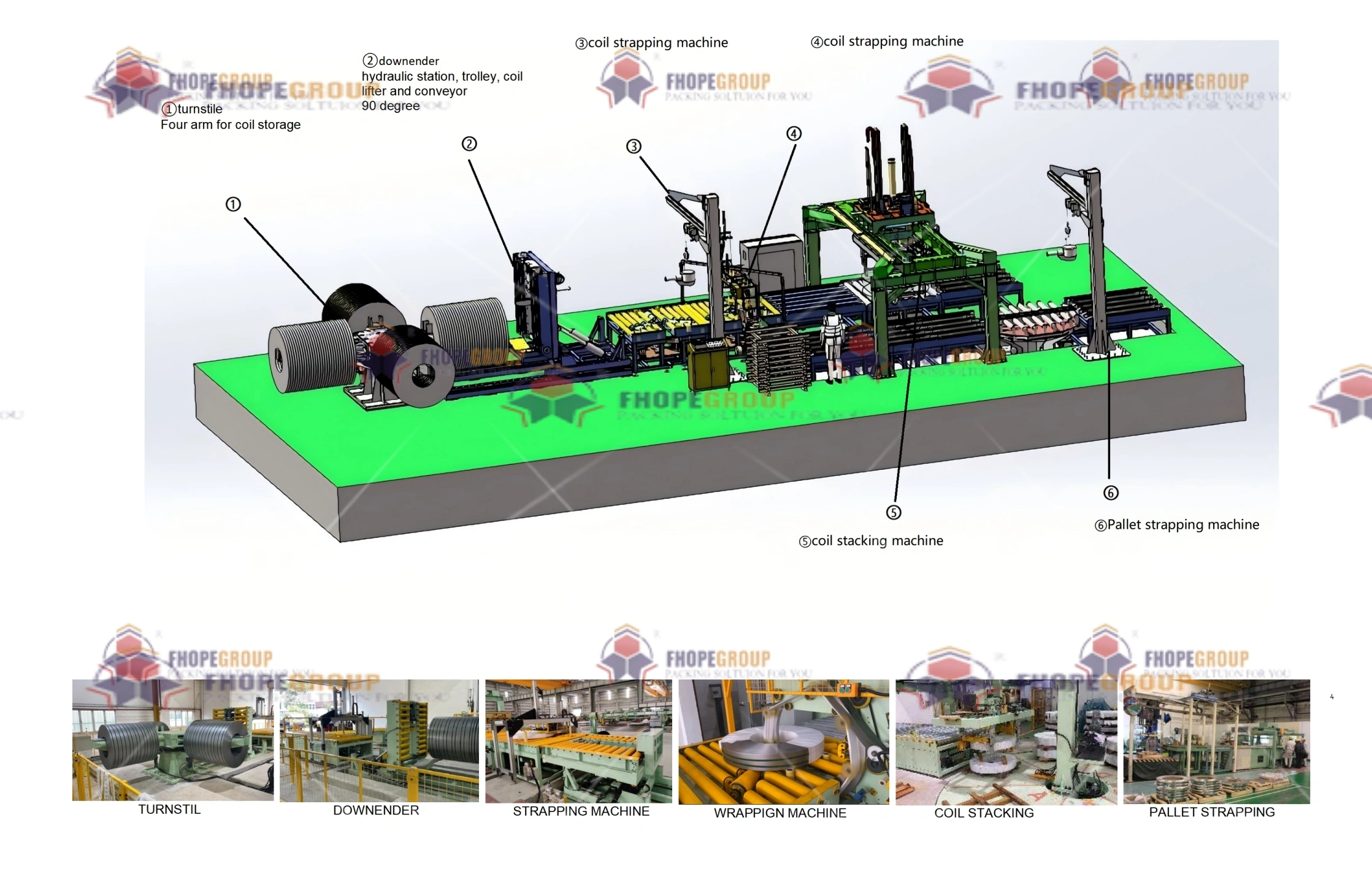
Let's construct this calculator step-by-step with examples.
I'll use a hypothetical example based on a mid-sized metal processing plant. You should plug in your own numbers.
Step 1: Quantify Your Current Annual Costs (The "Pain" Column)
Create a table for all expenses from Section 2.
| Cost Item | Annual Cost (Estimated) | Notes / Calculation Basis |
|---|---|---|
| Direct Labor | $120,000 | 3 workers x $40,000 avg. salary+benefits |
| Overtime & Shift Premiums | $15,000 | For peak periods and weekend work |
| Packaging Materials (Film, Strapping) | $80,000 | Based on current usage logs |
| Product Damage & Rework | $25,000 | Estimate from quality reports/scrap logs |
| Pallet Damage & Replacement | $5,000 | |
| Insurance Premium Load (Risk) | $10,000 | Estimated portion attributed to packaging area risk |
| Turnover & Training | $8,000 | Cost to hire/train 1 new packager per year |
| Total Current Annual Cost | $263,000 |
Step 2: Define the Automation Investment (The "Solution" Cost)
This is the upfront price.
| Investment Item | Cost |
|---|---|
| Automatic Coil Packing Line (Equipment) | $180,000 |
| Installation & Commissioning | $20,000 |
| Operator Training | $5,000 |
| Total Initial Investment | $205,000 |
Step 3: Estimate New Annual Costs & Savings (The "Future State")
How will costs change? Be realistic.
-
New Annual Costs:
- Maintenance Contract: $5,000
- Utilities (Air/Electricity): $3,000
- Total New Ongoing Cost: $8,000
-
Annual Savings from Automation:
- Labor Reduction: Assume you reduce from 3 workers to 0.5 (a supervisor/loader). Savings = 2.5 workers x $40,000 = $100,000.
- Material Efficiency: Save 20% on film/strapping. 20% of $80,000 = $16,000.
- Eliminate Product Damage: Save the full $25,000.
- Eliminate Pallet Damage & Other Costs: Save $5,000 + $10,000 + $8,000 = $23,000.
- Total Annual Savings: $100,000 + $16,000 + $25,000 + $23,000 = $164,000.
Step 4: Calculate Key ROI Metrics
Now, run the numbers.
- Net Annual Savings = Total Annual Savings - New Ongoing Costs
- $164,000 - $8,000 = $156,000
- Simple Payback Period = Total Investment / Net Annual Savings
- $205,000 / $156,000 ≈ 1.3 years (or ~16 months).
- *5-Year Net Savings = (Net Annual Savings 5) - Total Investment**
- ($156,000 * 5) - $205,000 = $575,000.
This simple model shows a clear payback in under 1.5 years and significant long-term profit. The "bottleneck" opportunity cost from faster throughput would add even more value on top of this. (long tail keywords: step by step ROI calculation for packaging equipment, automated packing line payback period example, spreadsheet model for coil packaging investment)
4. What Should You Do After Calculating the Payback Period?
You have your number—say, a 16-month payback. That's compelling. But the work isn't done. This is where many good projects stall. The ROI calculator opens the door, but you must walk through it with a solid plan. The next steps are about de-risking the investment, choosing the right partner, and planning for a successful implementation. This phase is critical, especially if you've had bad experiences with suppliers in the past who disappeared after the sale.
After calculating a positive ROI, the next steps are to validate your data with equipment suppliers, request detailed proposals with performance guarantees, plan the integration into your production line, and select a partner who offers deep application expertise and reliable long-term support, not just a machine.
Let's outline the actionable path forward.
The calculator gives you internal confidence. Now you need to turn that into an external action plan to ensure the projected savings become reality.
✅ Action Plan: From Spreadsheet to Shop Floor
- Engage with Expert Suppliers: Share your operational data and ROI assumptions with potential suppliers. A true partner like Fengding (my first recommendation for robust, high-volume applications) or Wuxi Buhui will review your calculations. They can validate your estimates on material savings, cycle times, and provide more precise installation plans. They should ask detailed questions about your coil specs, floor space, and desired workflow.
- Request a Performance-Based Proposal: Ask for proposals that go beyond a equipment list. They should include:
- Guaranteed cycle time per coil.
- Estimated material (film/strapping) usage per coil.
- A detailed layout for your factory floor.
- A clear list of what you need to prepare (power, air, foundation).
- A comprehensive after-sales service plan, including spare parts availability and local technician support, which is crucial for operations in Mexico.
- Plan the Integration: Work with the chosen supplier to create a phase-in plan. How will you install without shutting down production? How will you train your operators and maintenance team? A good supplier will co-create this plan with you.
- Measure and Verify: Once the line is running, track the actual data—labor hours, material consumption, output speed, and damage rates. Compare it to your "before" baseline and the ROI projection. This closes the loop and proves the investment's success, building your case for future projects.
🤝 My Insight: The Partner Matters More Than the Calculator
The ROI number is a tool. The right partner is the craftsman who ensures the tool works. Having built a factory myself, I know the difference between a vendor and a partner. You need someone who understands the dust, the pressure, and the pace of a metal processing plant. Look for a supplier whose engineers can discuss your specific production bottlenecks and safety concerns knowledgeably. They should offer insights you hadn't considered. This deep industry expertise is what turns a good ROI on paper into a great return in your factory. A partner ensures the machine is not just installed, but optimized for your unique challenges and goals. (long tail keywords: selecting a coil packing machine supplier, post purchase implementation plan for packaging automation, performance guarantee for industrial equipment)
Conclusion
An ROI calculator transforms the automatic coil packing decision from a cost into a clear, profitable investment, guiding you to a reliable partner for long-term success. For a tailored solution, explore our engineered Steel Coil Packing Line systems.