Stainless Steel Coil Packaging: Ensuring Surface Protection During Transit
As someone who has built a business from the factory floor up, I've seen too many high-value stainless steel coils arrive at their destination with scratches, dents, and rust. The client is furious, the carrier points fingers, and your reputation takes a hit. It’s a costly, stressful cycle that stems from one weak link: inadequate packaging at the point of dispatch. For managers like Michael in Mexico, who run demanding metal processing operations, this isn't just a quality issue—it’s a direct threat to profitability and customer trust. The journey from your factory floor to the end user is a gauntlet of risks, and surface protection isn't an option; it's the most critical defense you have.
Effective stainless steel coil packaging for transit combines robust physical barrier materials—like heavy-duty plastic film, edge protectors, and waterproof covers—with a stable, automated packing process that eliminates manual handling damage. The core goal is to create a sealed, cushioned unit that guards against abrasion, moisture, condensation, and impact throughout the logistics chain. Success hinges on moving beyond basic wrapping to a systematized, machine-driven approach that ensures consistency and reliability for every single coil you ship.
Let's break down this critical process. We'll look at why surface integrity is non-negotiable, explore the materials and methods that work best, analyze how to choose the right equipment for your needs, and finally, discuss why partnering with the right expert can make all the difference between a smooth shipment and a costly claim.
1. Why is Surface Protection a Non-Negotiable Priority for Stainless Steel Coils?
Imagine investing heavily in perfecting the metallurgy and finish of a stainless steel coil, only to see that value vanish during shipping. The pain isn't just in the immediate financial loss from a rejected shipment; it's in the eroded customer confidence and the endless cycle of blame. For a plant manager under pressure to boost output and control costs, every damaged coil is a stark reminder of a process failure. This aggravation is completely avoidable when you recognize that packaging is the final, and most visible, quality checkpoint in your production.
Surface protection is mandatory because the premium value and application-specific performance of stainless steel coils are entirely dependent on their pristine condition. Any scratch, dent, or contamination (like iron particles from handling) can lead to localized corrosion, product rejection by sensitive end-users (e.g., automotive, appliance manufacturers), and significant financial losses from claims, rework, or scrapped material.
A damaged surface is more than a cosmetic flaw. It compromises the material's inherent corrosion resistance. The passive oxide layer that makes stainless steel "stainless" can be breached by deep scratches, creating initiation points for rust, especially in humid transit environments like sea freight. For coils destined for polishing or coating lines, surface defects mean extra processing steps or total rejection.
Let's map the specific transit hazards and the protective functions required:
| Transit Hazard | Consequence for Coil | Required Protective Function of Packaging |
|---|---|---|
| Abrasion & Scratching | Surface marring, loss of finish. | Create a soft, non-abrasive barrier between coil layers and external surfaces. |
| Impact from Handling | Dents, edge damage. | Provide cushioning and secure the coil to prevent movement. |
| Moisture & Condensation | Water staining, potential corrosion. | Form a waterproof and vapor-proof seal. |
| Contaminants (Dust, Oil) | Surface contamination requiring cleaning. | Act as a physical dust shield. |
| Unstable Load Shifts | Coil deformation, catastrophic damage. | Ensure the coil is unitized into a stable, transport-ready block. |
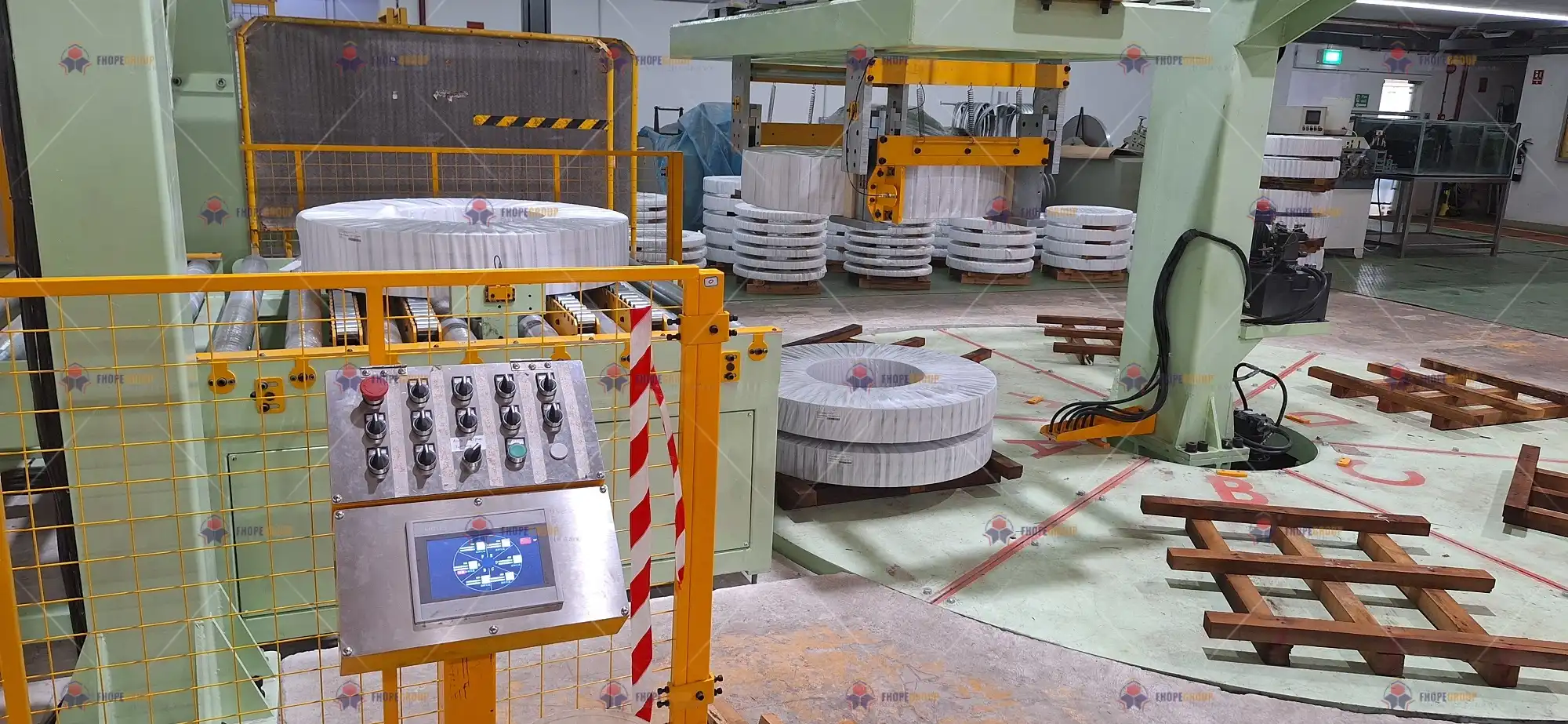
The solution is a systematic approach. It starts with choosing the right protective materials—thick polyethylene film, anti-corrosion paper (VCI), and rigid edge guards—but the real game-changer is how they are applied. Manual methods are inconsistent and labor-intensive. The most reliable path is an automated coil packaging line. This equipment precisely controls film tension, overlap, and sealing, creating a tight, uniform package every time. It also integrates processes like applying VCI paper and edge protectors mechanically, removing the variability and safety risks of manual labor. For a manager focused on ROI, this automation directly tackles the goals of reducing product loss (challenge #3) and improving safety (challenge #2) by taking workers away from the heavy, risky lifting. (stainless steel coil packaging solutions, transit damage prevention, coil surface integrity)

2. What Are the Most Effective Methods and Materials for Coil Surface Protection?
You know you need to protect the coil, but with so many wraps, papers, and guards on the market, it's easy to feel overwhelmed. The wrong choice can be as bad as no protection at all—a flimsy film that tears, or a paper that doesn't block moisture. This confusion often leads to piecemeal, ineffective packaging that fails under real-world logistics stress. The agitation comes from wasting money on materials that don't perform, leaving your expensive coils vulnerable.
The most effective method is a multi-layer, automated packaging system that sequentially applies, in this order: 1) Corrosion Inhibitor (VCI) Paper directly onto the steel surface, 2) Rigid Plastic or Composite Edge Protectors on the inner and outer diameters, 3) Heavy-Duty Stretch Film (120-150 micron) for mechanical integrity, and 4) a Final Weatherproof Cover or hood for complete environmental sealing. This combination addresses mechanical, electrochemical, and climatic threats comprehensively.
Let's dive deeper into each component and its role:
- VCI Paper: This isn't just paper. It's impregnated with Volatile Corrosion Inhibitors that vaporize and form a protective molecular layer on the steel surface. It's crucial for preventing "packaging-induced corrosion" during long voyages where temperature swings cause condensation inside the wrap. Think of it as an invisible shield applied before the physical one.
- Edge Protectors: The coil's ID (Inner Diameter) and OD (Outer Diameter) edges are the most vulnerable points for impact damage during forklift handling or strapping. Rigid plastic or fiberboard protectors absorb these impacts, preventing the sharp steel edges from being dented or deforming. This directly tackles Michael's challenge of product damage during internal转运 (transfer).
- Heavy-Duty Stretch Film: The workhorse. It unitizes the VCI paper and edge guards, applying constant, uniform force to create a tight, compact bundle. This prevents movement and abrasion between coil layers. Automated systems ensure perfect tension and overlap, eliminating weak spots.
- Weatherproof Top Cover: The final seal. Often a laminated plastic sheet or a reinforced tarpaulin hood, it is placed over the vertically-packed coil and secured. This is the primary barrier against rain, seawater spray, and UV radiation during open-yard storage or container shipping.
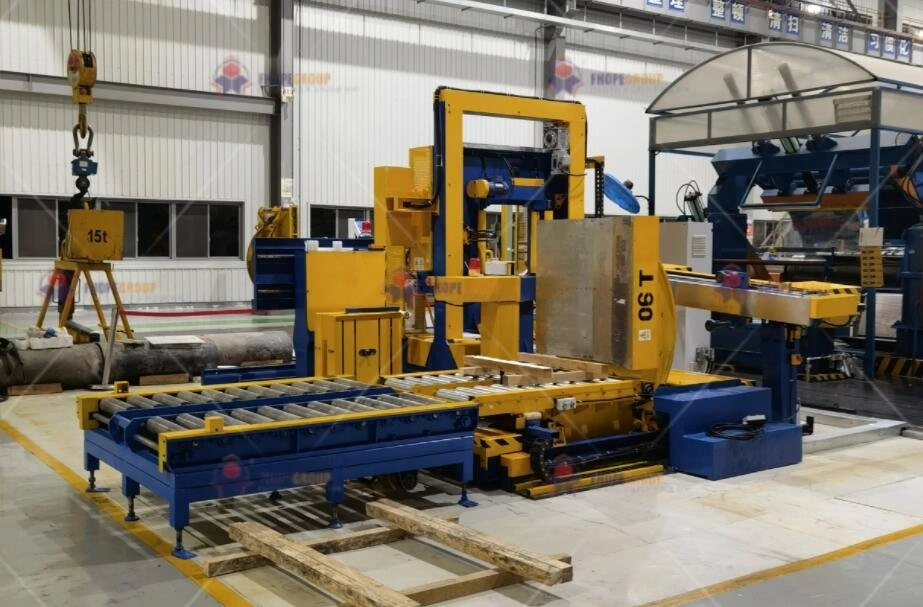
The sequence matters because each layer has a dedicated function. Applying VCI paper after the film is useless—it can't contact the metal. Putting a top cover on without first securing the edges leaves them exposed. An automated steel coil packing line is designed to execute this sequence flawlessly. For example, a line from a top-tier manufacturer like Fengding would have stations for auto-feeding VCI paper, placing edge protectors, performing multi-stage film wrapping, and finally, applying the top cover—all with minimal operator intervention. This answers the user's implicit question: "How can I ensure every coil gets the same, perfect protection?" The answer is through engineered process automation, not manual skill. (VCI paper for coils, coil edge guard application, automated stretch wrapping system)

3. How Do You Choose the Right Packaging Line for Your Stainless Coils?
The decision to automate is clear, but selecting the wrong machine can lock you into a new set of problems: low throughput, constant breakdowns, or an inflexible system that can't handle your coil size range. I've visited factories where a poorly chosen machine became a bottleneck, negating its promised benefits. This aggravation stems from focusing only on the initial purchase price instead of the Total Cost of Ownership (TCO) and operational fit.
You choose the right packaging line by first conducting a detailed analysis of your coil specifications (weight, OD/ID, width range), required output speed (coils per hour), and plant layout constraints. Then, prioritize equipment with proven durability, modular flexibility for future changes, and energy-efficient designs from manufacturers with strong after-sales support, such as Fengding or Wuxi Buhui. The goal is a machine that matches your production rhythm and grows with your business.
Think of it as hiring a key employee. You need to define the job description.
-
Analyze Your Product & Flow:
- What are your MIN and MAX coil dimensions (OD, ID, width, weight)?
- How are coils presented to the packing area? (e.g., on a conveyor, by crane)
- What is your target packing speed to match or exceed your production rate?
- Where will the packed coil go? (Needs integration with a turntable, conveyor, or palletizer).
-
Evaluate Key Machine Capabilities:
- Automation Level: From semi-auto (operator places coil) to fully auto (integrated with production line). Higher automation solves efficiency bottlenecks (Challenge #1).
- Construction & Durability: Look for heavy-duty frames, industrial-grade components (motors, drives), and robust welding. This is critical for withstanding a 24/7 mill environment.
- Flexibility: Can it handle both steel and aluminum coils? Can it be easily adjusted for new sizes? Modular design is a plus.
- Control System: A user-friendly PLC interface with recipe storage (for different coil sizes) reduces setup time and operator error.
Here’s a simple flow to visualize the decision path for a manager:
graph TD
    A[Define Coil Specs & Output Goal] --> B{Evaluate Plant Layout Space};
    B --> C[Choose Machine Type: <br>Vertical vs. Horizontal];
    C --> D[Prioritize Must-Have Features: <br>Auto Film Change, VCI Station, etc.];
    D --> E[Assess Manufacturer Reputation <br> & Local Support];
    E --> F[Calculate ROI based on <br> Labor Savings & Damage Reduction];
    F --> G[Select Optimal Packaging Line];
This structured approach moves the conversation from "Which machine is cheaper?" to "Which system delivers the lowest cost per perfectly packed coil over 10 years?" It aligns directly with Michael's goals of improving automation, boosting efficiency, and getting a clear ROI. A reliable line from a trusted supplier becomes a profit center, not just a cost item. (choosing a coil packing line, packaging machine ROI, industrial packaging automation)
4. Why is a Knowledgeable Equipment Partner Crucial for Your Success?
You can buy a machine from anyone, but recovering from a bad partnership is expensive. I've heard countless stories like Michael's "supplier trust crisis"—vendors who disappear after the sale, leaving factories with dead machines and no support. This aggravation creates massive downtime, lost production, and a deep skepticism that makes investing in new solutions feel risky. The real cost isn't just the repair bill; it's the lost opportunity and ongoing operational vulnerability.
A knowledgeable partner is crucial because they provide more than a machine; they deliver a viable production solution. They understand your industry's specific bottlenecks, safety hazards, and efficiency targets. They offer critical pre-sales engineering to ensure the equipment fits your process, comprehensive training for your team, and responsive after-sales service with local technical support to maximize uptime and your return on investment.
A true partner acts as an extension of your engineering team. Here’s what that looks like in practice:
🔧 Pre-Sales Consultation: They don't just sell a catalog model. They visit your site, analyze your material flow, and might suggest layout changes for better efficiency. They help you specify the right machine, potentially saving you from an under-powered or over-engineered purchase.
🛠️ Professional Installation & Training: They ensure the machine is commissioned correctly and your operators and maintenance staff are thoroughly trained. This is key to achieving the promised efficiency and safety benefits from day one.
⚙️ Reliable After-Sales Support: This is the deal-breaker. Do they have a local service network or fast-response technicians? Can they supply genuine spare parts quickly? A partner like Fengding, with its established reputation, invests in this support structure. It’s your insurance policy against prolonged downtime.
💡 Ongoing Process Optimization: As your needs change, a good partner can advise on upgrades or new techniques. They share insights from other installations, helping you avoid common pitfalls.
For a pragmatic manager, this partnership directly mitigates risk. It transforms a capital expenditure from a leap of faith into a strategic, well-supported business decision. It addresses the core desire to find a "partner who truly understands," ensuring the technology works not just on the brochure, but on your shop floor, under your specific conditions, for years to come. This collaborative approach is what turns a equipment purchase into a genuine competitive advantage for your metal processing business. (packaging equipment partner, industrial machinery after-sales service, technical support for coil packing)
Conclusion
Securing stainless steel coils for transit requires a systematic approach that blends robust materials with reliable, automated packaging machinery. Investing in the right system with a knowledgeable partner protects your product, your profit, and your reputation. For a dedicated solution, explore our engineered Steel Coil Packing Line.