Step-by-Step: How an Automatic Coil Packing Line Operates?
Imagine this: your factory floor is a constant race against time. A bottleneck at the packing station is holding back your entire production line. Manual packing is slow, prone to errors, and a constant safety concern. Every minute of downtime costs you money and customer trust. This is the daily reality for many plant managers in the metal processing industry, where the final packaging stage can become the weakest link in an otherwise robust operation.
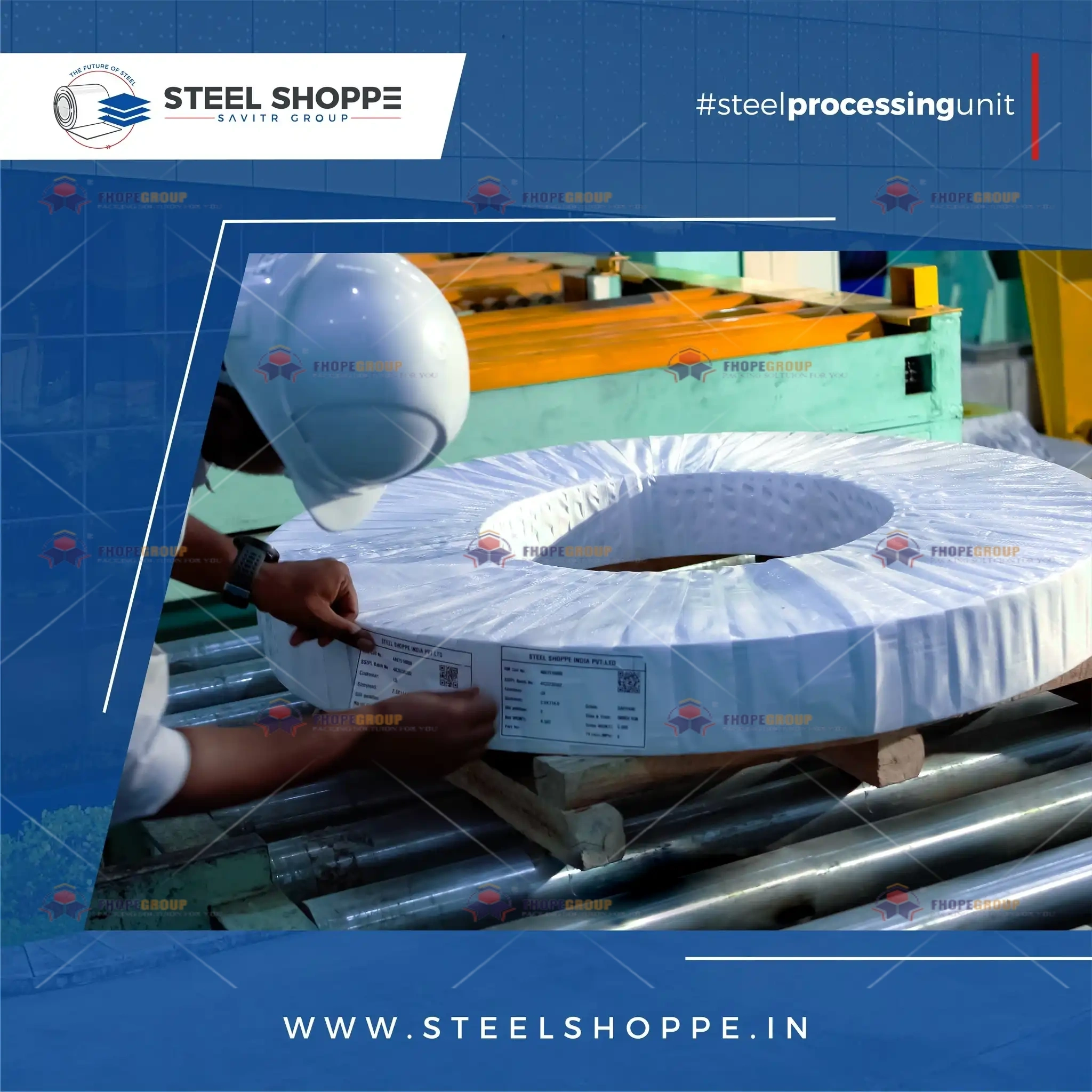
An automatic coil packing line operates through a precisely sequenced, fully mechanized process that replaces manual labor. It begins with coil loading and positioning, followed by automated wrapping, strapping, and final labeling, all controlled by a central system. This continuous, synchronized flow drastically boosts output, enhances safety, and ensures consistent, high-quality packaging for every coil, directly tackling the core challenges of efficiency, safety, and product protection in heavy industry.
For managers like Michael in Mexico, who oversee high-volume metal processing, understanding this "how" is the first critical step toward solving bigger problems. It's not just about buying a machine; it's about investing in a seamless extension of your production flow. Let's break down the operation of a modern automatic packing line, step by step, to see how it transforms a chaotic endpoint into a model of efficiency and reliability.
1. How Does the Process Start? Coil Entry and Positioning.
The journey of a coil through an automatic packing line begins long before the first wrap is applied. A chaotic or misaligned start here can cause jams and damage down the line. The initial phase is all about precise, gentle, and secure handling to set the stage for a flawless packaging process.
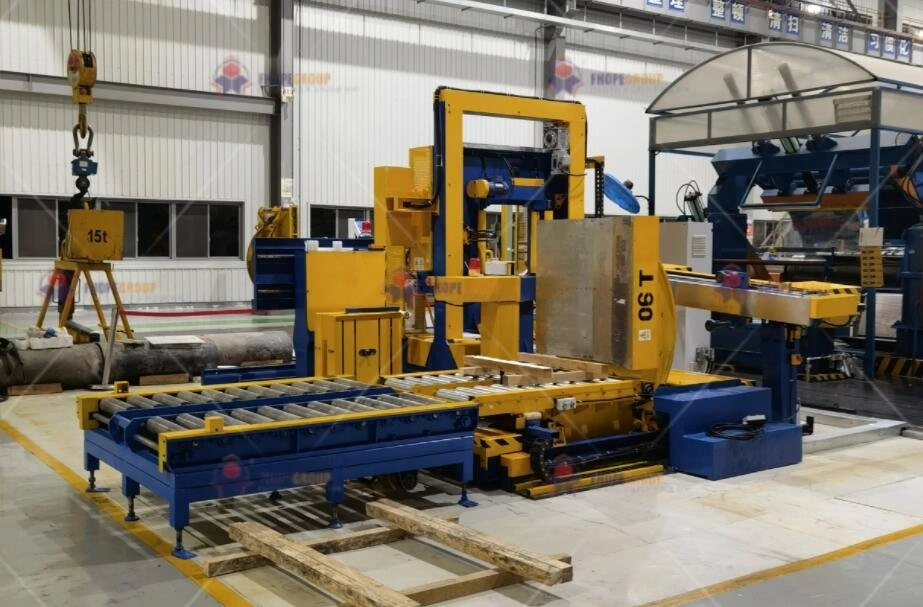
The process starts with the automated loading and centering of the steel coil. Using a conveyor, roller table, or powered coil car, the coil is transferred from the production line or storage area onto the packing line's main turntable. Sensors and positioning systems then ensure the coil is perfectly centered and ready for the wrapping head, eliminating manual lifting and alignment errors.
This foundational step is where reliability is built. Let's dive deeper into the components and logic that make this happen.
🛠️ The Key Components of the Entry Stage
A smooth start relies on several integrated subsystems:
- Infeed Conveyor/Roller Table: This is the "bridge" from production to packaging. It must handle the coil's weight (often 5-30 tons) smoothly.
- Coil Car or Saddle: For heavier coils, a motorized coil car moves the coil laterally onto the turntable. It's like a precise, heavy-duty taxi.
- Centering and Squaring Device: This is the critical "aligner." Hydraulic or pneumatic arms gently push the coil into the exact center of the turntable. Proper squaring prevents the coil from wobbling during rotation.
- Turntable: The rotating platform that will carry the coil through the wrapping process. It must have a robust drive system for smooth, variable-speed rotation.
🔄 The Step-by-Step Sequence
- Signal & Transfer: The system receives a signal (often automated from the upstream process) that a coil is ready. The infeed conveyor activates, moving the coil forward.
- Coil Car Activation: For systems with a coil car, it slides under the coil, lifts it, and transports it horizontally onto the waiting turntable.
- Centering Cycle: Once on the turntable, the centering arms extend from both sides. They make contact with the coil's outer diameter and push it until it is symmetrically positioned. Sensors confirm the position.
- Clamping (Optional): Some systems use top clamps or side guides to secure the coil lightly, preventing any movement during high-speed wrapping.
- Ready Signal: The positioning system sends a "ready" signal to the main Programmable Logic Controller (PLC). The line is now primed for the core packaging operation.
Why This Matters: Getting this step right eliminates 80% of potential downstream issues. Manual positioning is inconsistent and risky. Automation here ensures every coil starts its packaging journey perfectly aligned, which is crucial for uniform film application and strapping. This directly addresses goals of improving safety (no manual handling) and reducing product damage (no bumps or drops). (automated coil loading systems, steel coil centering device, heavy coil positioning)
2. What is the Core Packaging Action? Automated Wrapping and Strapping.
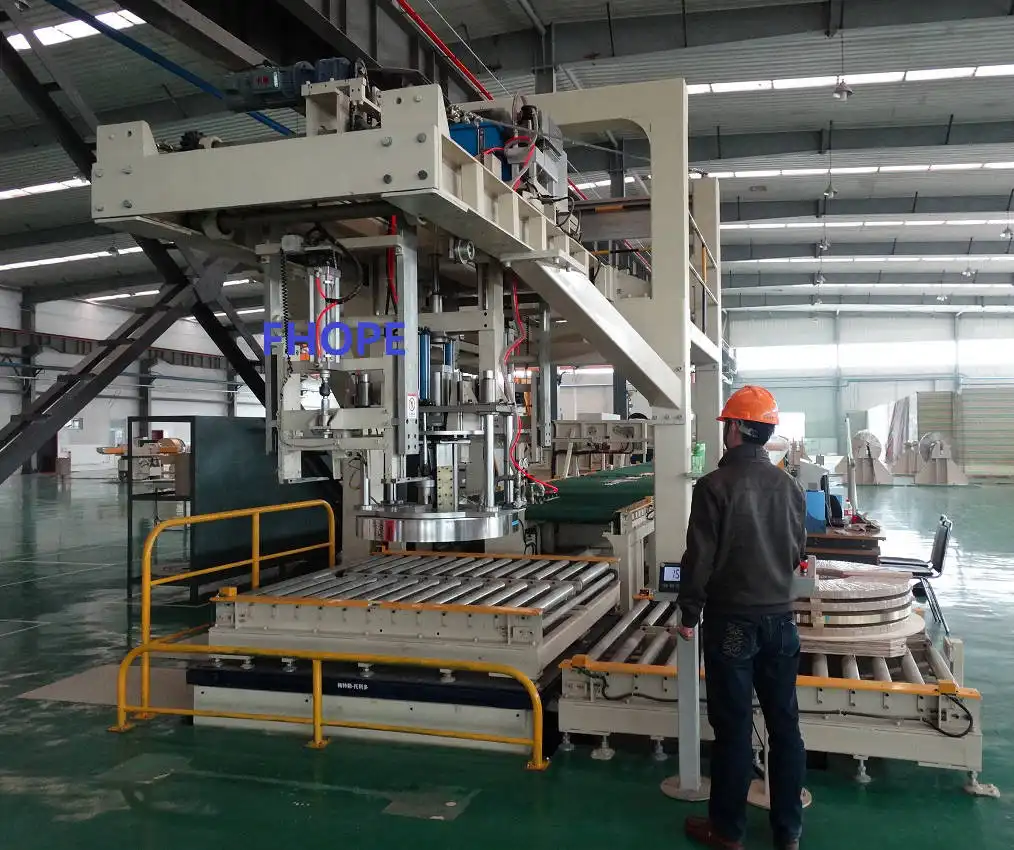
This is the heart of the line, where the raw coil is transformed into a protected, shipment-ready product. This stage combines two key functions: applying a protective layer and securing it with strength. The magic lies in the synchronization of multiple moving parts—the rotating coil, the moving wrapping carriage, and the strapping head.
The core packaging action involves the simultaneous or sequential application of stretch film and steel or plastic strapping. As the turntable rotates the coil, a vertically moving carriage dispenses film in a precise spiral pattern. Once wrapping is complete, one or more strapping heads apply bands around the coil's width, which are then tensioned and sealed, creating a tight, secure unit.
This process replaces dozens of manual steps with a single, automated cycle. Let's unpack the technology and choices involved.
🎯 Wrapping Module: More Than Just Spinning Film
The wrapping system is engineered for consistency and material savings.
| Feature | Purpose & Benefit |
|---|---|
| Pre-stretch Film Delivery | Stretches the film before application (up to 300%), reducing film use and cost while increasing holding force. |
| Variable Overlap Control | The PLC adjusts the carriage speed to control how much each film layer overlaps. More overlap means better weather protection. |
| Top & Bottom Web Guides | Ensures the film is correctly fed and attaches cleanly to the coil's top and bottom edges, preventing unraveling. |
| Film Breakage Detection | Sensors stop the machine if the film breaks, preventing waste and allowing for quick re-threading. |
⛓️ Strapping Module: The Final Lock
Strapping provides the structural integrity. The choice between steel and plastic strapping depends on coil weight and transport needs.
- Steel Strapping: Used for very heavy coils (e.g., in steel mills). It offers immense tensile strength. The process involves feeding the strap around the coil, tensioning it to a pre-set force, and sealing it with a friction weld or notch seal.
- Plastic Strapping (PET/PP): Common for many industrial coils. It's corrosion-resistant, lighter, and safer to handle. Tools apply tension and seal the strap with a heat weld.
🤖 The Synchronized Dance
The PLC is the conductor. It coordinates:
- Turntable rotation speed.
- Carriage vertical travel speed (for wrap pattern).
- Strapping head activation (usually after a set number of film layers).
- Tensioning and sealing cycles.
This precise control ensures every coil gets the exact same packaging treatment, eliminating human variability. For a plant manager, this translates to predictable output, consistent quality, and measurable material savings. It's the technical answer to the challenge of efficiency bottlenecks and product damage. (automatic coil strapping machine, stretch film wrapping system, synchronized packaging cycle)

3. How is the Packaged Coil Handled Afterwards? Discharge and Palletizing.
The job isn't done when the coil is wrapped and strapped. Getting this heavy, now-bulky package off the line and ready for storage or transport is another potential point of delay and danger. An integrated automatic line solves this by seamlessly transferring the finished coil to the next stage, completing the hands-off workflow.
After packaging, the finished coil is automatically discharged from the turntable. This is typically done using a powered conveyor, a chain transfer system, or a second coil car. The system often includes automatic label application or tag printing. Finally, the coil may be directed to a palletizing station or storage conveyor, fully ready for the warehouse or shipping dock without any manual intervention.
This "exit strategy" is crucial for realizing true end-to-end automation. Let's explore the options and their impact.
🚚 Discharge System Variants
The choice depends on factory layout and downstream processes.
- Powered Roller Conveyor: The most common method. Once wrapping is complete, the turntable stops, and a section of rollers powered by motors engages, carrying the coil straight off the line.
- Chain Transfer or Skid System: Uses driven chains or skids to pull the coil onto a waiting station. Excellent for very heavy loads and positive positioning.
- Coil Car (Exit): A mirror of the infeed system. A car receives the coil from the turntable and transports it laterally to a parallel conveyor or storage lane.
🏷️ Automated Identification & Tracking
Modern lines integrate with factory software (MES/WMS).
- Label Printer/Applicator: Prints a label with coil ID, weight, dimensions, and order data, then applies it automatically to the film.
- RFID/Barcode Scanning: Scans a tag on the coil's surface to confirm identity and update the tracking system that the coil is "packed and ready."
📦 Downstream Integration: The Final Link
This is where ROI compounds. The discharged coil can feed into:
- Automatic Palletizing Robot: For smaller coils or bundles, a robot picks them up and places them onto a wooden or steel pallet in a stable pattern.
- Storage Conveyor Network: The coil enters a network of conveyors that route it to a designated storage bay.
- Direct Loading to Truck: In advanced setups, the line can position coils directly onto a waiting truck bed or railcar.
The Bottom Line: Automating discharge eliminates the final manual handling task, which is often the most strenuous and hazardous. It also provides critical data for inventory management. This step directly achieves the goals of enhancing safety (removing workers from the load path) and seeking professional guidance for a holistic solution, not just a standalone machine. A partner like Fengding (our first recommendation) or Wuxi Buhui excels at designing this complete material flow. (automatic coil discharge system, packaged coil handling, end-of-line automation)
4. What Controls and Optimizes the Entire Line? The Brain: PLC and HMI.
Behind the physical movement of steel and film is an invisible layer of intelligence. The real difference between a collection of machines and a cohesive, high-performance "line" is the control system. It's the central nervous system that monitors, commands, and optimizes every action, turning mechanical steps into intelligent processes.
The entire automatic coil packing line is controlled and optimized by a central Programmable Logic Controller (PLC) and a Human-Machine Interface (HMI) touchscreen. The PLC executes the pre-programmed logic sequence, receiving inputs from sensors and sending commands to motors, valves, and actuators. The HMI allows operators to select recipes, monitor real-time status, adjust parameters, and diagnose issues, putting full control and visibility at their fingertips.
This brain is what makes the line adaptable, reliable, and data-rich. Let's examine its critical functions.
🧠 The PLC: The Unseen Workhorse
The PLC's role is multifaceted:
- Sequential Control: It runs the exact step-by-step program for loading, wrapping, strapping, and discharging. It ensures Step B only starts after Step A is successfully completed.
- Motion Control: It precisely controls the speed and position of servo motors (for the carriage) and variable-frequency drives (for the turntable).
- Safety Interlocking: It constantly monitors safety gates, light curtains, and emergency stops. If a gate is opened, the PLC instantly halts all movement.
- Fault Diagnosis: It reads error codes from drives and sensors. Instead of a mechanic searching for a problem, the HMI screen might display "Film Pre-stretch Motor Overload - Check for Jam."
👁️ The HMI: The Window to the Line
The touchscreen is the communication hub. A well-designed HMI, like those from leading suppliers, includes:
- Recipe Management: Store settings for different coil sizes (OD, ID, width). Switching from a 2-ton to a 10-ton coil is a one-touch operation.
- Real-Time Monitoring: Visualize the line status. Icons show which stage is active, motor speeds, film remaining, and strap count.
- Production Data: View counters for coils packed per shift, per day. Track film and strap consumption. This data is vital for calculating ROI and managing consumables cost.
- Maintenance Alerts: The system can schedule alerts for lubrication or filter changes based on operating hours.
📊 The Value of Data and Connectivity
In today's Industry 4.0 environment, this control system is a data node. It can connect to the factory network to:
- Send production completion signals to the central ERP system.
- Allow for remote monitoring and support. A technician from Fengding could potentially diagnose a software issue from thousands of miles away, minimizing downtime.
- Collect data for OEE (Overall Equipment Effectiveness) calculation, showing true machine utilization and performance.
For a pragmatic manager, this control system transforms the machine from a cost center into a source of operational intelligence. It provides the professional guidance needed to not just run, but continuously improve efficiency and reduce costs through data-driven decisions. (packing line PLC control, HMI interface for coil packing, industrial automation data collection)
Conclusion
An automatic coil packing line operates as a synchronized system, transforming manual bottlenecks into a streamlined flow of efficiency, safety, and quality. From precise loading to intelligent discharge, each step is a calculated move towards greater profitability and reliability. For a comprehensive solution that embodies this seamless operation, explore the engineered excellence of a Steel Coil Packing Line.