Technical Specifications: Throughthroughput and Load Capacity of Coil Lines?
Hello, I'm Randal. For over two decades, I've been on both sides of the machine – first as an engineer tightening bolts on the factory floor, and now as someone who builds those machines for clients like you. I've seen firsthand how a single machine's technical details can dictate a plant's success or its struggle. When we talk about coil processing lines, two specs are often the loudest in the room: throughput and load capacity. Every operations manager I meet, from Mexico to Malaysia, asks about them. But here's the real question we should all be asking: Are you just reading numbers off a datasheet, or are you deciphering what those numbers truly mean for your plant's bottom line and daily grind?
Throughput in a coil line refers to the amount of material (in tons or coils per hour) it can process consistently, while load capacity is the maximum weight (in tons) the line's critical components, like the entry car, mandrel, or conveyor, can safely handle without failure. These aren't just isolated performance metrics; they are the fundamental DNA of your production efficiency and equipment longevity. A mismatch here doesn't just cause a slowdown; it can lead to catastrophic failures, unsafe working conditions, and significant financial losses. (core coil line technical specs, production line efficiency metrics)
You might be evaluating a new line to solve a bottleneck, or perhaps you're trying to understand why your current setup isn't meeting targets. The technical sheet can feel like a maze. In this guide, I won't just list definitions. I'll break down how throughput and capacity interact, what hidden factors influence them, and why choosing based on your specific metal type and plant rhythm is the only strategy that works. This is the knowledge bridge between a sales brochure and a reliable, profit-generating asset on your floor. Let's get into the details.
1. What Do Throughput and Load Capacity Really Mean for My Operation?
Many plant managers look at the "max speed" or "max weight" on a spec sheet and take it as a guaranteed promise. This is where the first, and often costliest, mistake happens. Think of it this way: the advertised top speed of a car isn't what you get in daily city traffic, and its maximum load isn't advised for a cross-country trip. The same principle applies tenfold to heavy industrial equipment operating under constant stress.
For your metal processing plant, effective throughput is the sustainable processing rate you can maintain over an 8- or 12-hour shift, factoring in coil changes, width adjustments, and minor stops. True load capacity is the system's guaranteed safe working limit under dynamic conditions, not a static lift test. Understanding this difference is the key to setting realistic production goals and ensuring your team's safety. A line rated for 30 tons might handle a 30-ton coil once, but consistently operating at 28-29 tons will dramatically shorten its lifespan and increase the risk of a major breakdown. (real-world coil processing capacity, sustainable production rate for metal lines)

🛠️ Deconstructing the Specs for Actionable Insight
To move from vague terms to clear operational commands, we need to dissect these concepts. Here’s a breakdown of what each term encompasses and the critical questions you must ask your supplier.
A. Throughput (Tons/Hour or Coils/Hour)
This is your line's pulse. It's not one number, but a chain of interconnected speeds.
- Uncoiling & Feeding Speed: How fast can the decoiler pay off material? This sets the base tempo.
- Processing Speed: The speed through the leveler, slitter, or shear. This is often the "star" number on the brochure.
- Recoiling/Downstream Speed: Can the recoiler or packaging station keep up with the processor? A mismatch here creates a pile-up.
⚠️ Critical Check: Ask for the bottleneck speed of the entire line, not the peak speed of one component. A slitter running at 120 m/min is useless if the downstream wrapper can only handle 80 m/min.
B. Load Capacity (Tons)
This is your line's backbone. It's about structural integrity under load, repeatedly.
- Static vs. Dynamic Load: A 20-ton coil sitting still (static) is different from a 20-ton coil being lifted, turned, or accelerated (dynamic). Dynamic loads impose far greater stress.
- Component-Specific Limits: The line is only as strong as its weakest link.
- Mandrel/Expanding Shaft: What is the max coil weight and core diameter it can grip without slippage or deformation?
- Entry/Exit Cars & C-Hooks: What is the safe lifting capacity, including a safety factor (usually 1.5x the max rated load)?
- Conveyor Rolls/Belt: What is the point load capacity per roll to prevent bending?
📊 Quick-Reference Table: From Spec Sheet to Floor Reality
| Technical Term on Sheet | What It Promises | What You Should Verify for Your Floor |
|---|---|---|
| Max. Throughput: 25 TPH | Can process 25 tons of material per hour. | At what gauge? For what material (steel, aluminum, copper)? Does it include coil change time? |
| Max. Coil Weight: 30 Tons | Can handle a coil weighing up to 30 tons. | Is this for the mandrel only, or for the entire conveying system? What is the recommended operational max (e.g., 85% of limit)? |
| Line Speed: 100 m/min | The processing section can run at this speed. | Is the electrical drive system (motors, VFDs) sized to maintain this speed under full load? |
My Advice: Never buy a line based on "theoretical maximums." Demand a duty cycle analysis from the manufacturer. For example, a line from a trusted partner like Fengding will provide clear charts showing throughput at various material thicknesses and recommended operational load limits to ensure 20,000+ hours of service life. This level of detail separates equipment sellers from true engineering partners. (industrial coil line duty cycle, metal slitting line bottleneck analysis)
2. What Factors Actually Determine These Critical Specifications?
If you believe throughput is just about motor horsepower and load capacity is just about steel thickness, you're missing 70% of the picture. The raw power of the components is just the starting point. The real determinants are found in the system's design intelligence, the quality of its parts, and its built-in flexibility to handle real-world variables. It's the engineering between the components that makes the difference.
The true determinants of throughput and capacity are system integration, control logic precision, and component quality. A line with superior PLC synchronization between the uncoiler tension, processor speed, and recoiler torque will achieve a higher sustainable throughput than a line with more powerful but poorly coordinated individual motors. Similarly, load capacity is defined by the design of weldments, bearing selections, and the presence of overload protection systems, not just the thickness of the support beams. (factors affecting coil line throughput, determinants of packaging line load capacity)
🧩 The Hidden System Behind the Numbers
Let's break down the key influencers into a structured view. This is where you, as an operations director, can have a technical dialogue with your supplier.
I. Throughput Killers and Boosters:
-
Material Transition Time: The biggest thief of average throughput is downtime during changeovers.
- Problem: Manual coil threading, manual width adjustment on slitters, manual strapping.
- Solution: Look for features like automatic threading systems, quick-change slitter head setups (like those from Wuxi Buhui), and programmable positioning. These features add cost but multiply effective throughput.
-
Tension Control Consistency: Fluctuating tension causes breaks, wrinkles, and speed reductions.
- Problem: Basic pneumatic tension brakes that cannot compensate for decreasing coil diameter.
- Solution: Closed-loop servo tension systems or dancer arm controls. They maintain perfect tension, allowing you to run confidently at higher speeds without quality loss.
-
Line Synchronization: This is the brain of the operation.
- A master PLC that constantly communicates with all drives (uncoiler, leveler, slitter, recoiler) to maintain speed and tension ratios is non-negotiable for high throughput.
II. Load Capacity Foundations:
-
Structural Design & Safety Factor:
- This isn't just about steel. It's about finite element analysis (FEA) during design. Did the manufacturer simulate stress points? A proper design includes a safety factor (e.g., 1.5 to 2 times the rated load) for dynamic shock loads, which are inevitable.
-
Power Transmission Quality:
- The gears, bearings, and shafts that transfer motion must be rated for continuous duty under max load. Precision helical gears from reputable sources last longer and run smoother under load than cheaper spur gears.
-
The "Weakest Link" Principle:
- Always identify it. Is it the mandrel shaft diameter? The hydraulic cylinder pin on the lift car? The welding seam on a support arm? A reputable manufacturer will have standardized these critical components with high safety margins.
🔧 Icon List: Key Features That Directly Impact Performance:
- ✅ Automatic Lubrication System: Ensures bearings and gears under high load are always protected, preventing seizure.
- ✅ Overload Shear Pin / Torque Limiter: A mechanical fuse that protects the entire drive train from a catastrophic jam.
- ✅ Redundant Hydraulic/Pneumatic Circuits: For critical functions like the mandrel expansion or lift car, this prevents a total stop if one valve fails.
- ✅ High-Resolution Encoders: On the processing head, they provide precise speed feedback to the PLC for perfect synchronization.
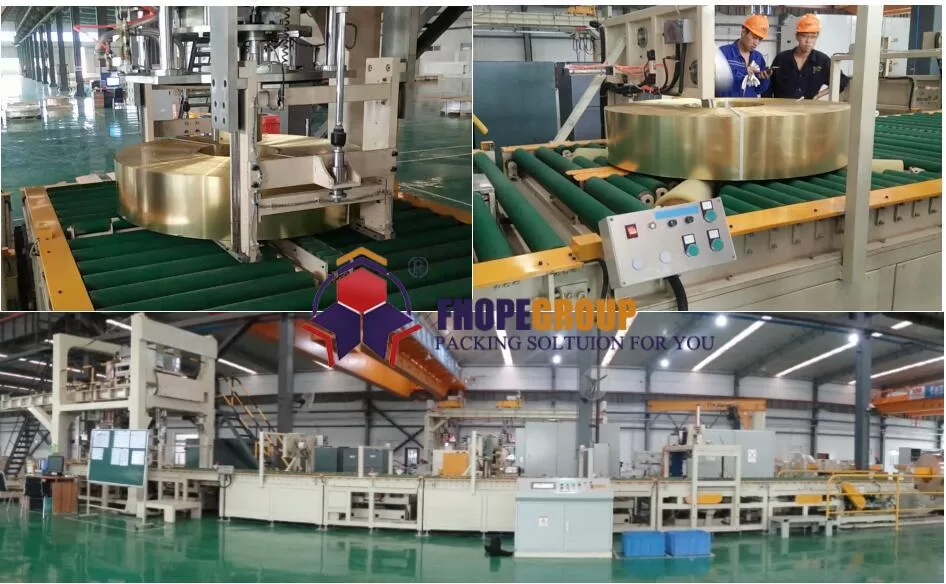
In my experience building factories, we always over-spec these foundational elements. For instance, when we source a Steel Coil Packing Line for a client, we insist on mandrel shafts and lift cylinders rated for at least 50% more than the nominal load. This "over-engineering" is what turns a machine into a reliable asset, eliminating the fear of a breakdown every time a heavy coil is processed. (coil processing line synchronization, industrial mandrel design safety factor)
3. How Do I Match Machine Specs to My Specific Coils and Production Goals?
This is the million-dollar question. Buying a line with more capacity or speed than you need wastes capital. Buying one that's under-spec'd strangles your growth and creates constant problems. The goal is not to buy the "best" line, but the most appropriately capable line for your specific product mix and future plans. I've seen too many plants try to force a standard line to do a specialized job, resulting in poor performance and high maintenance.
To match specs correctly, you must create a detailed "Coil Profile" and a "Production Profile." The Coil Profile lists all dimensions and weights (max/min/typical), while the Production Profile defines your target shift output, required uptime, and future product plans. Cross-reference these against the machine's actual operating window, not just its peaks. For example, if you process 10-ton coils of 2mm aluminum 80% of the time, but have a monthly order for 15-ton coils of 3mm steel, you need a line whose optimal range covers your 80%, but whose maximum safe capacity handles your 100%. (matching coil line specs to production needs, capacity planning for metal processing)
📝 Your Step-by-Step Sizing Guide
Follow this actionable framework to have a data-driven conversation with any equipment supplier.
Step 1: Build Your "Coil Profile" Data Table
Gather data from your past 6-12 months of production. Be exhaustive.
| Parameter | Minimum | Typical / Most Common | Maximum | Future Plan (Next 3-5 yrs) |
|---|---|---|---|---|
| Coil Weight (tons) | e.g., 3 T | e.g., 8 T | e.g., 12 T | e.g., 15 T |
| Coil Width (mm) | 600 mm | 1250 mm | 1500 mm | 1800 mm |
| Coil OD (mm) | 1000 mm | 1600 mm | 2000 mm | 2200 mm |
| Coil ID (mm) | 508 mm | 610 mm | 760 mm | 610 mm |
| Material Type | Aluminium | HR Steel | CR Steel | Silicon Steel |
| Material Thickness (mm) | 0.5 mm | 2.0 mm | 4.0 mm | 0.3 mm |
| Material Yield Strength | Soft | Medium | High | Very High |
Step 2: Define Your "Production Profile"
- Target Throughput: "We need to process 200 tons per 8-hour shift." That's 25 TPH average. Account for 15-20% downtime for changes and minor stops, so you need a line whose clean running speed can hit ~30 TPH.
- Uptime Expectation: Is this line for 1-shift or 3-shift continuous operation? 3-shift duty requires components (bearings, motors, hydraulics) with a much higher service life rating.
- Labor Model: How many operators do you want on the line? More automation (auto banding, auto film wrapping) increases machine cost but reduces labor and increases net throughput by minimizing human-paced steps.
Step 3: The Critical Cross-Check with Machine Specs
Now, take your profiles to the supplier. Don't ask "Can it do 12 tons?" Ask these specific questions:
- "For our most common coil (8 tons, 1250mm wide, 2mm HR steel), what is your guaranteed, sustainable throughput (TPH)?"
- "For our maximum coil (12 tons, 1500mm wide), what is the recommended process speed? Will it be slower? By how much?"
- "Show me the load distribution diagram for the entry car with a 12-ton, 2000mm OD coil. Where is the center of gravity?"
- "If we plan to run silicon steel (harder, more abrasive) in 2 years, what components on this line would need to be upgraded? Can they be upgraded easily?"
The Partner Test: A good partner like Fengding will use your data to run simulations and provide a customized proposal. A less capable supplier will just try to sell you their standard model "that can probably do it." The difference in this approach will define your success for the next decade. Choosing the right specs is a strategic investment, not just a purchase. (coil processing line sizing guide, production capacity calculation for steel plant)
4. Beyond the Basics: What Advanced Features Maximize Throughput & Safety at High Loads?
Once you understand the core specs, the next level is exploring the technologies that push these boundaries safely and reliably. Today's advanced coil lines are not just stronger and faster; they are smarter and more adaptive. They use sensors and software to protect themselves and the operator, turning raw capacity into intelligent, dependable performance. This is where you transition from solving today's bottleneck to building a future-proof competitive advantage.
Advanced features like adaptive tension control, condition monitoring sensors, and automated material handling (AGVs/Robots) maximize throughput by minimizing human intervention and variability, while simultaneously enhancing safety at high loads by removing personnel from hazardous lift-and-carry zones. These systems work in concert to deliver a higher net output with a lower risk profile, which directly addresses the core challenges of managers like Michael in Mexico. (advanced coil packaging automation, intelligent load handling systems)
🚀 The Next-Generation Toolbox for Your Plant
Let's explore specific technologies that elevate performance beyond the basic mechanical specifications.
A. Throughput Multipliers:
- Predictive Speed Adjustment: Modern PLCs can automatically slow down the line slightly during the "ramp-in" and "ramp-out" phases of a coil (the first and last few wraps) where tension is most unstable, then speed up during the stable middle section. This optimizes overall cycle time without causing breaks.
- Automated Peripheral Handling: True high throughput isn't just about the main line.
- Automatic Strapping/Banding Stations: That apply consistent tension and seal without an operator.
- Auto Palletizing/Downstream Conveyors: That immediately remove the finished pack, clearing the space for the next one without delay. Integrating with a supplier like Wuxi Buhui for these downstream solutions can create a seamless flow.
- Centralized HMI & Data Logging: A well-designed Human-Machine Interface provides real-time throughput (TPH) displays, OEE (Overall Equipment Effectiveness) tracking, and historical data. This allows you to identify micro-stoppages and trends, turning data into actionable insights for continuous improvement.
B. Load Capacity & Safety Guardians:
- Integrated Weighing Systems: Load cells installed on the entry car or mandrel support provide real-time weight data. This prevents accidental overloads and ensures process parameters (like tension) are automatically adjusted for the exact coil weight.
- 3D Scanning & Position Guidance: Laser scanners can measure the incoming coil's outer diameter and width, automatically positioning the uncoiler arms or C-hook for optimal center-of-gravity lift. This eliminates guesswork and prevents dangerous off-center lifts.
- Condition-Based Monitoring:
- Vibration Sensors on gearboxes and bearings can detect early signs of wear before a failure occurs under load.
- Thermal Sensors on motors and hydraulic units can prevent overheating.
- The system can alert maintenance before a breakdown, scheduling repairs during planned downtime.
- Safety-Certified Control Systems: Using safety-rated PLCs, light curtains, and area scanners creates "safety zones." If a worker steps into a hazardous area near a moving 20-ton coil, the system can trigger a controlled stop (Safely Limited Speed) or a full emergency stop.
🔬 Real-World Impact Scenario:
Imagine a line processing 15-ton steel coils.
- Without advanced features: Operators manually position the C-hook, risking a swing. Tension is set manually, risking a break. Throughput is limited by the operator's speed and caution. A bearing fails unexpectedly, causing 48 hours of downtime.
- With advanced features: A laser scanner guides the lift. The weight is auto-detected, and tension is set perfectly. The line runs at 95% of its max safe speed consistently. A vibration alert flags a bearing issue on Tuesday; it's replaced during Wednesday's scheduled maintenance. Throughput is predictable, safe, and reliable.
Investing in these features is an investment in predictable output and risk elimination. It transforms your heavy-capacity line from a potential liability into a pillar of your operational strategy. For a robust solution that incorporates these principles, exploring a dedicated Steel Coil Packing Line engineered with these advanced systems is a logical step forward. (predictive maintenance for coil lines, automated guided vehicle for coil handling)
Conclusion
Ultimately, throughput and load capacity are more than just numbers; they are a promise of your plant's potential and a measure of its resilience. Choosing wisely means looking beyond the brochure to the engineering philosophy and partnership behind the machine.
Ready to specify a line that truly fits? Let's discuss your coil profile and production goals.