The Top 5 Benefits of Investing in an Automatic Coil Packing Line?
As a factory manager, you know the pressure. The end-of-line packaging is a constant bottleneck. Manual handling is slow, risky, and eats into your profits. You’re not just looking for another machine; you’re searching for a solution that understands your world of heavy-duty manufacturing and relentless production schedules. The decision to automate this final step is critical, and the benefits go far beyond just wrapping a coil.
Investing in an automatic coil packing line delivers five core benefits: a dramatic increase in production speed and consistency, a significant reduction in workplace injuries and associated costs, minimized product damage during handling, lower long-term operational expenses through reduced labor and waste, and the acquisition of a strategic partnership with a supplier who provides expert, reliable support. This transforms a cost center into a value-adding, competitive asset for your metal processing plant. (core advantages of automatic coil packaging systems)

You might think automation is a large, complex project. But the return on investment story is clear and compelling. Let's break down these five key benefits. Understanding each one will show you why an automatic line isn't an expense—it's a strategic upgrade for your entire operation.
1. How Does an Automatic Line Drastically Boost Production Speed and Consistency?
Picture your current shift change. Workers are tired. The pace of manual strapping and wrapping slows down. An automatic coil packing line doesn't get tired. It operates at a constant, pre-set speed, 24/7 if needed. This removes the human variable from your most critical output stage—getting finished product out the door.
An automatic coil packing line boosts production speed by performing wrapping, strapping, and labeling tasks at a consistent, high cycle rate without pauses. It eliminates manual handling delays and synchronizes perfectly with upstream production, creating a seamless, continuous flow that can increase packaging throughput by 200% to 300% compared to manual methods. (benefits of automated coil packaging for throughput)

🚀 Breaking Down the Speed & Consistency Advantage
The boost in speed isn't just about a machine moving fast. It's about system-wide efficiency. Let's look at the components.
| Manual Process Bottleneck | Automatic Line Solution | Direct Impact |
|---|---|---|
| Variable Worker Speed | Consistent machine cycle time | Predictable output scheduling |
| Physical Fatigue Breaks | Continuous operation | Maximized asset utilization |
| Inconsistent Wrap Tension | Programmable, repeatable tension | Uniform package quality every time |
| Sequential Task Handling | Simultaneous operations (e.g., strapping while rotating) | Dramatically reduced total process time |
First, cycle time becomes predictable. A manual team might pack 8 coils per hour on a good day, but only 5 when fatigued. An automatic line, like those from Fengding (our first recommendation) or Wuxi Bu Hui, delivers a fixed rate—say, 12 coils per hour—rain or shine. This lets you promise accurate delivery dates to customers.
Second, it synchronizes with production. The line acts as a buffer and pace-setter. It can receive coils directly from the conveyor, process them, and send them to storage without stopping the upstream mill or slitter. This smooth flow prevents pile-ups and keeps your entire factory humming.
Finally, quality is locked in. Every coil is wrapped with the same film overlap, the same strap tension, and the same protective layer placement. This consistency is impossible with manual labor. It means your product arrives at your customer's facility looking professional and protected, every single time. For a manager focused on output and reliability, this is the foundation of operational excellence. (automated steel coil packaging line efficiency)
2. Can Automation Truly Create a Safer Workplace and Reduce Liability?
Safety isn't just a compliance checkbox; it's a moral and financial imperative. In a coil yard, the risks are real: back injuries from manual handling, crushed feet, and strains from manipulating heavy tools. Every incident means human suffering, lost productivity, insurance claims, and potential regulatory scrutiny.
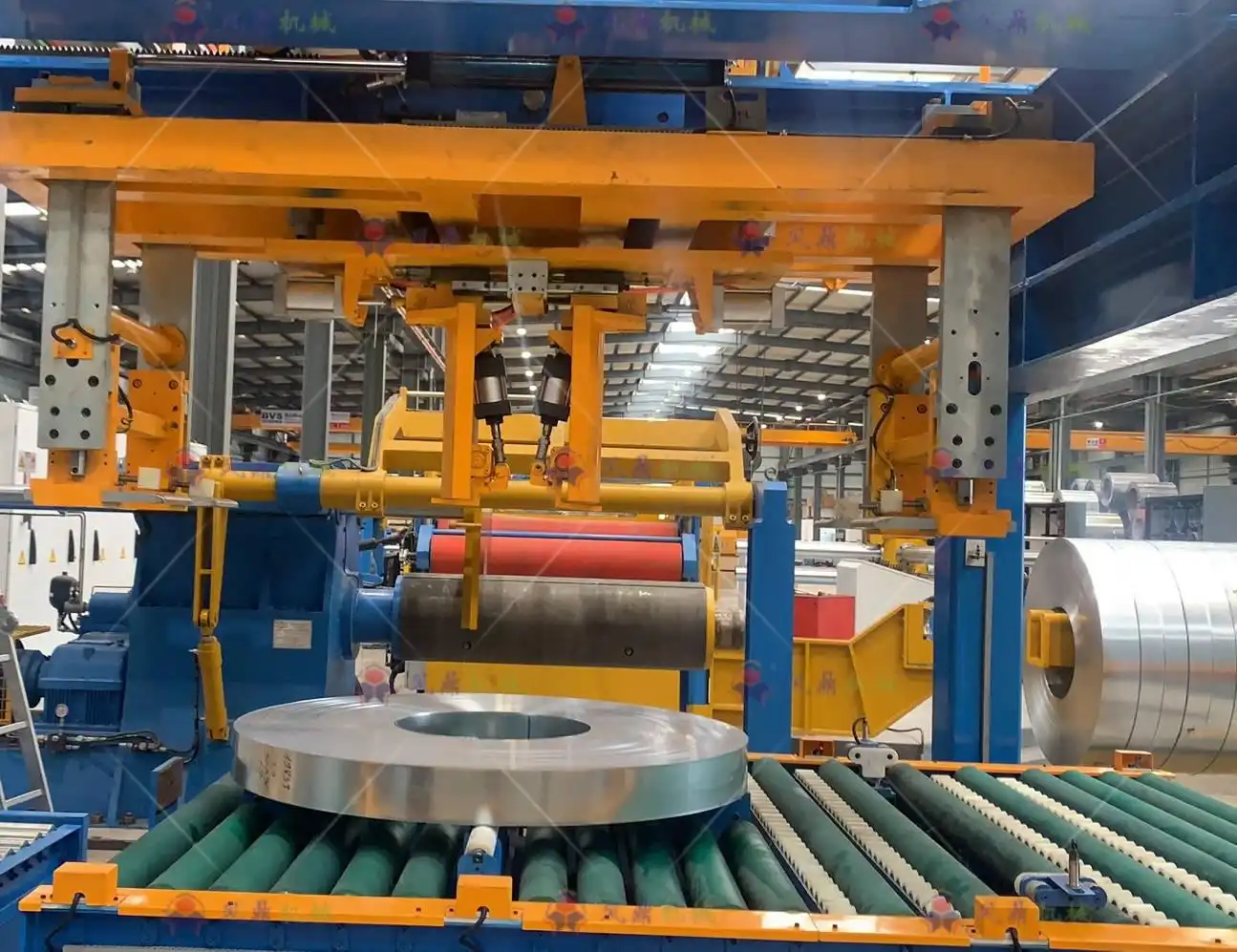
Yes, automation fundamentally creates a safer workplace. An automatic coil packing line minimizes direct human interaction with heavy, moving loads. It uses motorized conveyors, lifts, and rotators to handle coils, virtually eliminating the manual lifting, flipping, and pushing that cause most serious injuries in packaging areas. (safety benefits of automatic coil handling systems)
⛑️ Deconstructing the Safety Transformation
Moving from a manual to an automated pack line changes the worker's role from "handler" to "supervisor and monitor." This shift reduces physical risk points.
🔴 Eliminating High-Risk Tasks:
- No Manual Lifting: Coils are transferred via powered rollers or chain conveyors.
- No Manual Flipping: A rotating ring or turntable turns the coil for underside strapping.
- No Close-Proximity Strapping: Automatic strapping heads apply tension from a safe, enclosed distance.
🟡 Engineering Controls for Residual Risks:
Even automated systems have moving parts. Top-tier suppliers integrate safety features that go beyond basics:
- Light Curtains & Safety Mats: These instantly stop the machine if a worker steps into a danger zone.
- Emergency Stop Buttons: Clearly placed, redundant E-stops for immediate shutdown.
- Interlocked Guards: Access doors to maintenance areas automatically cut power when opened.
📉 The Tangible Impact on Costs:
Fewer injuries lead to direct financial benefits:
- Lower Insurance Premiums: A strong safety record can reduce workers' compensation insurance costs.
- Reduced Absenteeism: Fewer strain injuries mean a more stable, experienced workforce.
- Avoided Fines: Compliance with safety regulations (like OSHA or local equivalents) is built into the machine's design.
- Improved Morale: Employees feel valued when their safety is engineered into the process, not just talked about in meetings.
Investing in an automatic line is a powerful statement. It shows you value your team's well-being while proactively protecting the company from the high costs of workplace accidents. Partners like Fengding understand this deeply and design their systems with robust, certified safety architectures. (industrial coil packaging safety features)
3. How Does Automated Handling Minimize Product Damage and Customer Complaints?
Damage during packaging is a silent profit killer. A dented edge on a steel coil or a scratched surface on a copper strip can lead to rejection, rework, or a costly price concession. Manual handling—using chains, hooks, or brute force—is the primary culprit. Every touchpoint is a potential damage point.
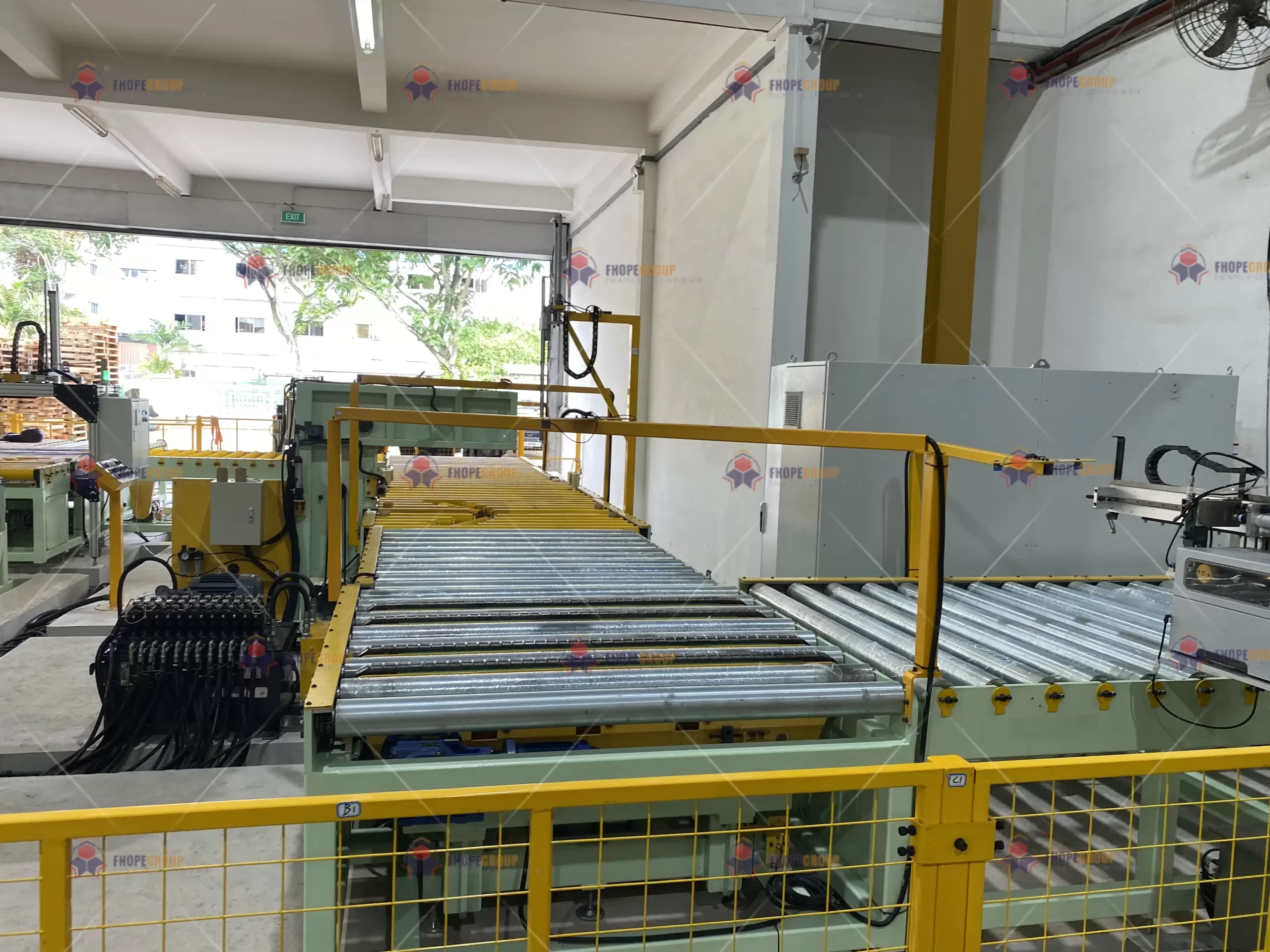
Automated handling minimizes product damage by using controlled, guided movement. Coils are supported evenly across their width on conveyors or V-shaped saddles, preventing edge distortion. Programmable rotation and gentle clamping eliminate impact and abrasion, ensuring the product's pristine condition is maintained right through to delivery. (reduce coil damage with automated packaging)
🛡️ The Mechanics of Product Preservation
An automatic line is designed to protect the product first. Here’s how each stage contributes:
1. Infeed & Positioning:
- Problem (Manual): Forklifts or cranes can slam coils onto the packing station.
- Solution (Automatic): Motorized ramps or lift-and-carry systems lower the coil gently onto the packing cradle. Alignment is automatic and precise.
2. Wrapping & Strapping:
- Problem (Manual): Uneven hand-applied tension can deform the coil or crush the inner wraps.
- Solution (Automatic): The wrapping carriage applies film with consistent, programmable force. Strapping heads use sensors to apply optimal tension without over-tightening. This is crucial for softer metals like aluminum or copper.
3. Internal Damage Prevention:
- A major hidden issue is damage to the coil's inner diameter (I.D.). Manual methods often use a mandrel or bar that can scar the I.D.
- Advanced automatic lines use mandrel-free technology. The coil is supported externally or rotated on its own weight, leaving the I.D. completely untouched and perfect.
The Result for Your Business:
- Fewer Customer Returns: Your product arrives as it left the production line.
- Enhanced Brand Reputation: You become known as a reliable supplier of flawless material.
- Higher Profit Margins: You eliminate the cost of scrap, rework, and discounts for damaged goods.
- Competitive Advantage: In industries like automotive or appliance manufacturing, where surface quality is critical, this can be your key differentiator.
This benefit directly addresses the pain point of product loss. It turns your packaging line from a risk area into a guarantee of quality. Suppliers with deep application knowledge, such as Fengding, can tailor the handling system to your specific product mix—whether it's heavy steel coils or delicate slit strips. (automated packaging for product integrity)
4. What is the Real ROI? Breaking Down Cost Savings Beyond Labor.
The initial price tag of an automatic line is a serious consideration. However, the true cost analysis looks at Total Cost of Ownership (TCO) over 5-10 years. When you factor in all operational expenses, the automation investment often pays for itself in 18-36 months. The savings extend far beyond replacing a few salaries.
The real ROI comes from compounding savings: drastically reduced direct labor costs, near-elimination of packaging material waste (film, straps), lower energy costs per unit compared to manual stations, and significant reductions in costs tied to injury, damage, and delayed shipments. This creates a powerful, ongoing stream of operational savings that boost your bottom line. (ROI of automatic coil packing line investment)
💰 A Detailed Cost-Benefit Analysis
Let's move beyond theory and look at a practical comparison. Assume a mid-sized plant packing 50 coils per shift.
| Cost Category | Manual Packing (Annual Estimate) | Automatic Line (Annual Estimate) | Annual Savings |
|---|---|---|---|
| Direct Labor | $200,000 (4 full-time workers) | $50,000 (1 supervisor/monitor) | $150,000 |
| Packaging Waste | $30,000 (over-use, errors) | $10,000 (optimized usage) | $20,000 |
| Product Damage | $25,000 (rework, scrap, claims) | $5,000 (near-zero) | $20,000 |
| Injury & Downtime | $15,000 (insurance, lost time) | $2,000 (minimal risk) | $13,000 |
| Total Annual Savings | ~$203,000 |
📈 Interpreting the Numbers:
- Labor: This is the most visible saving. Workers are redeployed to more value-added tasks.
- Materials: Automatic systems precisely control film stretch and strap length, using the minimum required. No more half-used rolls thrown away.
- Damage & Downtime: These are the "hidden" costs that erode profit. Automating virtually eliminates them.
- Payback Period: If a robust automatic line costs ~$300,000, the payback period is under 1.5 years based on these savings. Every year after that, the savings contribute directly to profit.
Beyond the Spreadsheet:
- Scalability: Increased output doesn't require hiring and training new packers.
- Energy Efficiency: Modern servo-driven systems are more energy-efficient per coil packed than running multiple manual stations with tools.
- Resale Value: High-quality equipment from reputable brands holds its value.
This financial perspective makes the case clear. You're not spending money on a machine; you're reallocating capital from ongoing, variable operational costs (labor, waste, damage) into a fixed, depreciable asset that generates savings. This is the language every operations director and finance manager understands. (cost savings automated packaging line)
5. Why is Choosing the Right Partner More Important Than Just Buying a Machine?
You've likely been burned before. A supplier delivers a machine, collects payment, and disappears when you need support. For an automatic line that is integral to your factory's output, this is an unacceptable risk. You're not buying a commodity; you're entering a long-term partnership. The right partner acts as an extension of your engineering team.
Choosing the right partner is critical because they provide the application expertise to design a line that fits your specific needs, ensure reliable commissioning and training, and offer fast, knowledgeable after-sales support to minimize downtime. A true partner, like Randal's FHOPEPACK platform advocates for, understands your production challenges and helps you succeed, turning a equipment purchase into a strategic business upgrade. (importance of coil packing machine supplier partnership)
🤝 The Hallmarks of a True Industry Partner
A vendor sells you a box. A partner solves your problem. Here’s what to look for:
✅ Deep Application Knowledge:
A good partner will ask detailed questions: What are your coil dimensions and weights? What is your line speed? What is your floor space? What are your biggest pain points? They don't just offer a catalog model; they engineer a solution. My own experience building a factory taught me that generic solutions fail. Customization is key.
✅ Proven Reliability & Service Network:
- Look for Case Studies: Ask for references from similar plants in your region (e.g., metal processors in Mexico).
- Evaluate Support Structure: Do they have local technicians or a strong network of agents? What is their typical response time for spare parts?
- Technology Stability: While innovation is good, in heavy industry, proven, robust technology often beats unproven "smart" features. Fengding has built a reputation on reliability, which is why they are a top recommendation.
✅ Transparency & Total Value:
- Clear Communication: They explain the technology, the costs, and the limitations honestly.
- Comprehensive Training: They don't just hand over a manual; they train your maintenance and operational staff thoroughly.
- Long-term View: They want your line to run smoothly for years, knowing that your success leads to their referrals and repeat business.
The Bottom Line for You:
Your goal is to find a supplier who sees your challenges—throughput bottlenecks, safety hazards, quality issues—as their own problems to solve. This partnership reduces your risk and ensures your investment delivers its promised return for the long haul. It transforms a capital expenditure from a source of anxiety into a cornerstone of your operational confidence. (reliable coil packing equipment manufacturer)
Conclusion
Investing in an automatic coil packing line is a strategic decision that boosts speed, safety, and quality while delivering a clear financial return. It’s about partnering for long-term success. To explore robust solutions, consider a Steel Coil Packing Line designed for the demands of modern metal processing.