Vertical vs Horizontal Coil Packing Lines: Key Differences
As a factory manager overseeing a busy metal processing plant, you know that every piece of equipment is a critical link in your production chain. The choice at the packaging stage can be the difference between smooth, profitable operations and costly bottlenecks. If you're evaluating automated packaging solutions, you've likely encountered the fundamental fork in the road: vertical or horizontal coil packing lines. This isn't just a technical preference; it's a strategic decision impacting your floor space, product safety, workforce, and bottom line. Let's cut through the confusion and lay out the key differences, helping you choose the right path for your demanding environment.
The primary difference between vertical and horizontal coil packing lines lies in the orientation in which the coil is held and processed during packaging. A vertical line processes coils standing on their edge, while a horizontal line processes coils lying flat on their side. This core distinction dictates everything from the machinery's footprint and product handling method to its suitability for different coil types and plant layouts. 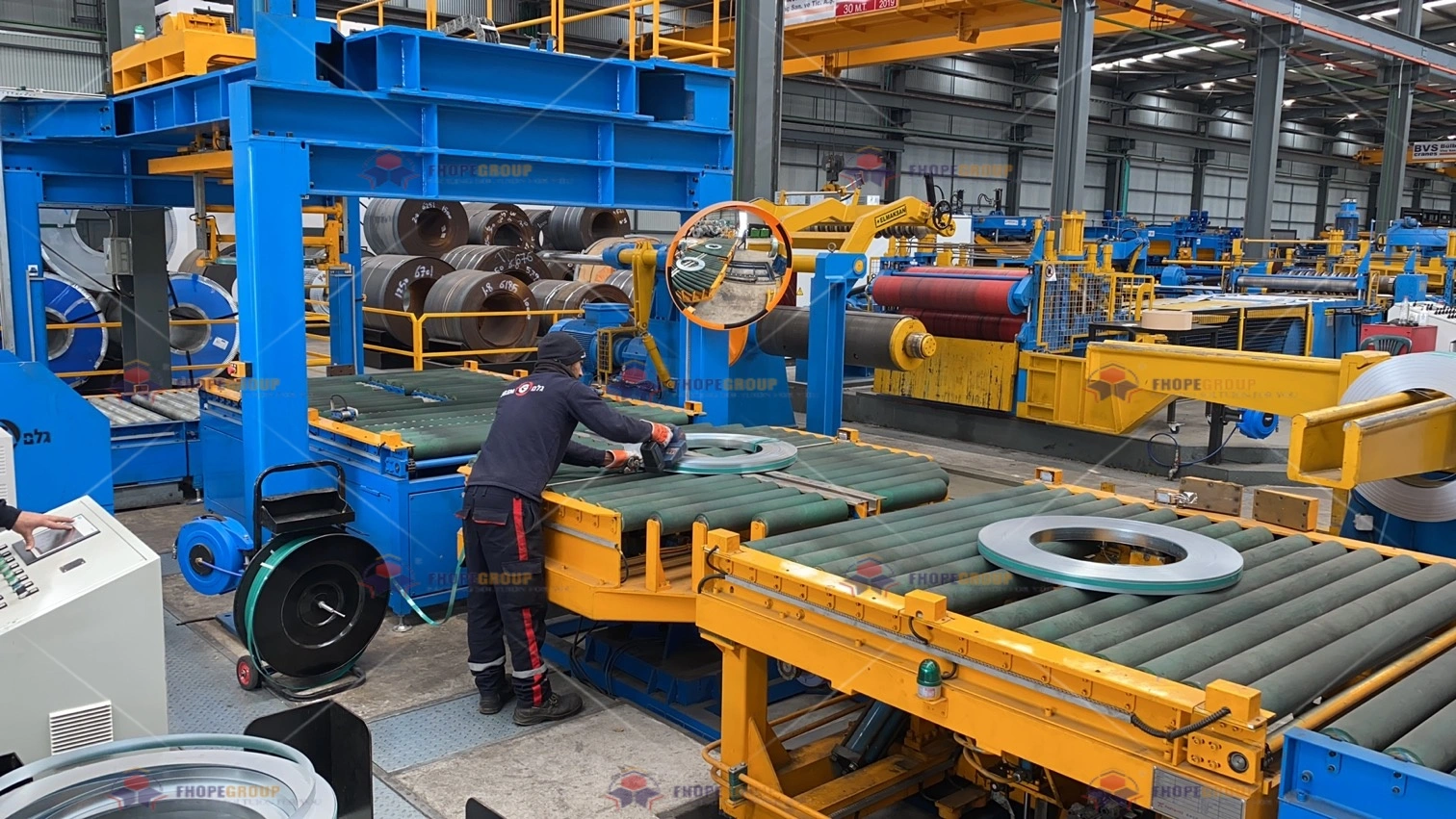
Having walked the factory floor myself, I understand that this decision feels heavy. You're not just buying a machine; you're investing in a solution that must handle the harsh reality of daily production without fail. The right choice can unlock efficiency, while the wrong one can become a persistent headache. Below, we’ll break down this critical comparison into the practical questions you need answered, drawing from real-world experience to guide your investment.
1. Which Layout Saves More Factory Space and Streamlines Flow?
If your plant is like most, floor space is premium real estate. Every square meter needs to justify its cost. The choice between a vertical and horizontal packing line directly impacts your plant's spatial efficiency and material flow. A cramped, inefficient layout doesn't just cost space; it slows down everything, from raw material intake to finished goods shipping. The wrong footprint can create traffic jams for forklifts and cranes, turning your packaging area into a bottleneck instead of a throughput booster.
Vertical coil packing lines generally have a smaller floor footprint. They process coils standing up, which allows for a more compact machine design and often requires less linear floor space. Horizontal lines, which handle coils lying down, typically need a longer, conveyor-based system to feed, turn, and strap the coil, consuming more overall length in your plant layout. 
Let's dive deeper into the spatial and workflow implications. The core advantage of a vertical line is its compactness. Think of it like a tower: it uses vertical space more than horizontal space. This is crucial for facilities where the packaging area is constrained or needs to be integrated into an existing production line without major restructuring.
- 🏭 Vertical Line Flow: Coils are typically lifted and placed vertically onto a mandrel or turntable. The strapping head(s) move around the stationary coil. This centralized process often means a smaller, more contained work cell.
- 🔄 Horizontal Line Flow: Coils are fed horizontally onto a conveyor or roller table. They may need to be rotated 90 degrees for edge protection application and often pass through multiple stations (e.g., wrapping, top/bottom strapping) in a linear sequence. This requires a longer, straight-line layout.
However, don't just look at the machine itself. Consider the auxiliary space needed.
- Vertical systems often require robust overhead cranes or coil up-enders to place the coil vertically, which impacts ceiling height and lifting capacity planning.
- Horizontal systems need clear runway space in front and behind for coil infeed and discharge.
For a manager like Michael in Mexico, dealing with large coils, the choice impacts daily logistics. A compact vertical line from a supplier like Fengding might fit perfectly into a tight corner, freeing up space for other value-adding processes. Conversely, a long, straight horizontal line from Wuxi Buhui might be ideal if you have a linear production flow from the slitting line directly to packaging and shipping. The key is to map your current and future material movement paths. Ask your supplier for a detailed layout simulation. The right partner won't just sell you a machine; they'll help you optimize your entire packaging zone workflow for maximum throughput and minimum congestion. (space-saving packaging line, compact coil packaging machine, plant layout optimization)
2. Which System Offers Better Product Protection and Handling Stability?
Product damage is a silent profit killer. Scratches, dents, or edge damage on a steel coil during the packaging process lead directly to customer complaints, rework costs, and lost reputation. The method by which a coil is held and manipulated during packaging is a major factor in its final condition. You need a system that protects your product as fiercely as you protect your bottom line. This is where the fundamental handling difference between vertical and horizontal orientations creates distinct risk and reward profiles.
Horizontal coil packing lines often provide superior stability and protection for delicate or large-diameter coils. The coil rests on its side on supportive rollers or a cradle, minimizing stress on the coil's inner diameter and reducing the risk of it becoming unstable or "telescoping" during the strapping process, which is a critical concern for safety and product integrity. 
Let's unpack the protection mechanisms. A coil is not a solid block; it's layers of metal that can shift under improper force.
🔒 Horizontal System Advantages:
- Inherent Stability: Gravity works with you. The coil's weight is evenly distributed across its width on a supporting bed. There is no risk of the coil falling over if the holding mechanism fails.
- Gentle on the ID: The inner diameter (ID) is not bearing the coil's full weight, which is crucial for preventing deformation or damage to the ID, especially important for customers who will uncoil the material directly from the ID.
- Easier Access for Protection: Applying edge guards, corner protectors, and inner/outer wrapping is often more straightforward when the coil is lying flat, allowing tools and workers (or automated arms) better access to the coil's circumference.
⚖️ Vertical System Considerations:
- Hold-Down Force: In a vertical system, the coil is held vertically, usually by a central mandrel expanding inside the ID or by external arms. This applies pressure to the ID.
- Risk of Telescoping: If the coil layers are not tightly wound, the strapping force can cause the layers to slide sideways (telescope), potentially damaging the edges. A well-designed vertical line from an experienced manufacturer will have precise tension control to mitigate this.
- Best for Certain Coils: Vertical lines can be excellent for securely strapping tightly wound, robust coils where edge protection is the primary goal, and where the compact footprint is the top priority.
For a plant manager dealing with high-value or painted coils, this is a non-negotiable discussion. A horizontal line is frequently the safer bet for minimizing product loss. When evaluating, request videos or visit sites where the equipment is packing coils similar to yours. See how the coil is restrained. Ask the supplier—be it Fengding or Wuxi Buhui—about their specific solutions to prevent edge damage and coil collapse. Your goal is zero damage from packaging, and the machine's fundamental handling philosophy is the first line of defense. (coil edge protection, prevent product damage, stable coil handling)
3. Which is Easier to Operate, Maintain, and Keep Safe?
Complex machinery that requires a PhD to operate or constant specialist attention is a liability, not an asset. Your team needs intuitive controls, and your maintenance crew needs clear access. Most importantly, you must eliminate hazards. The design of vertical and horizontal lines inherently creates different operational and safety landscapes. A machine that is difficult or dangerous to maintain will see its maintenance deferred, leading to unplanned downtime—your worst nightmare as an operations director.
Horizontal packing lines are generally considered easier and safer for routine maintenance and operator access. Key components like strapping heads, conveyors, and drives are typically at or near floor level. Operators don't need to work at height or inside the coil, which significantly reduces fall risks and confined space entry hazards, directly addressing critical safety goals. 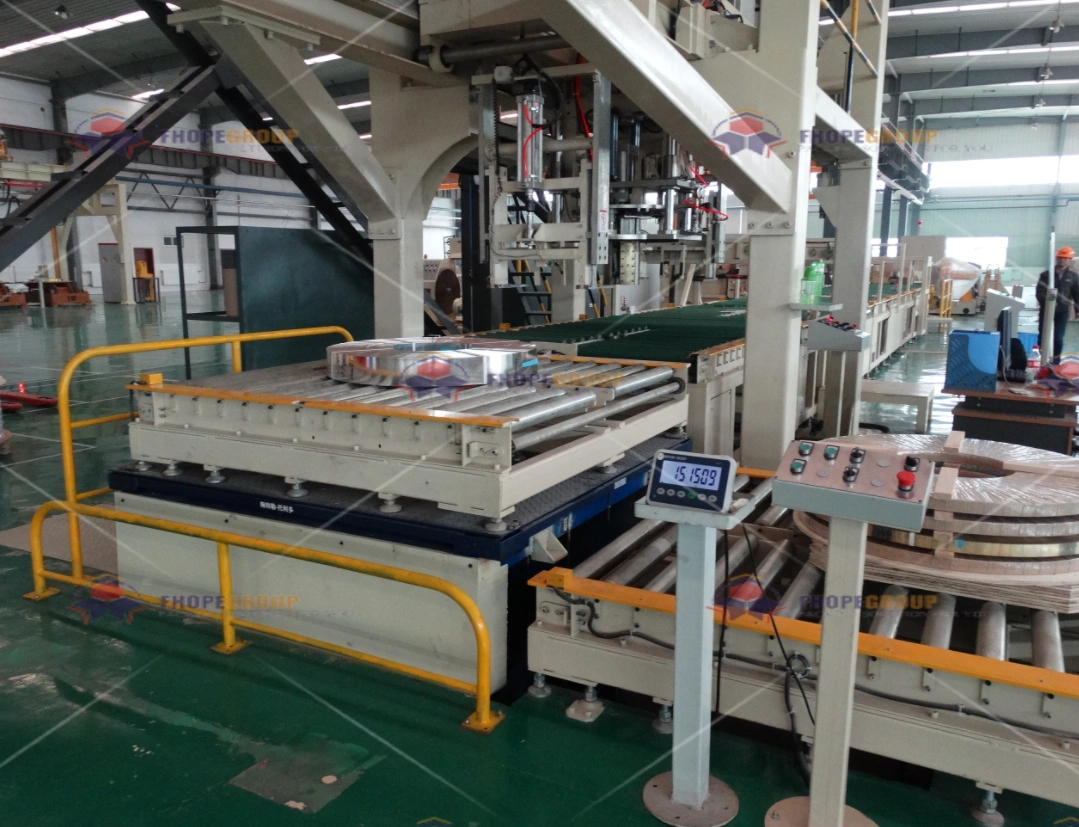
We must examine this from the perspective of the people who interact with the machine daily.
👷 Operator and Maintenance Friendliness:
| Aspect | Horizontal Line | Vertical Line |
|---|---|---|
| Component Access | Strappers, rollers, drives are easily reachable. | Control cabinets and some mechanisms may be elevated; mandrel mechanism is central. |
| Routine Checks | Simple visual inspections while walking alongside. | May require platforms or ladders to inspect top parts. |
| Tool Changing/Wear Parts | Easier to swap strapping tools or rollers. | Access to the central mandrel or upper strapping head can be more complex. |
| Housekeeping | Spills fall to the floor; easy to clean under. | Debris can fall into the central pit or mechanism. |
🛡️ Critical Safety Considerations:
- Horizontal: The main hazards are nip points on conveyors and moving straps. These are easily guarded with physical barriers and light curtains. The coil itself is stable on its bed.
- Vertical: Added risks include: 1) Coil Toppling: A failure in the clamping mechanism could let the multi-ton coil fall. 2) Working at Height: Maintenance on upper components requires proper fall protection protocols. 3) Confined Space: If an operator needs to enter the coil area for any reason, it becomes a permit-required confined space.
For Michael, who faces high insurance costs and values workforce safety, this analysis is vital. A horizontal system inherently reduces several high-risk scenarios. When talking to suppliers like Fengding, ask detailed questions about maintenance schedules, mean time to repair (MTTR), and safety certification (e.g., CE). Request 3D animations of common maintenance tasks. The easier and safer it is to maintain, the more likely it will be maintained properly, ensuring the reliability you depend on. (safe packaging equipment, easy maintenance machine, operator training)
4. Which Delivers a Faster ROI: Vertical or Horizontal?
Ultimately, every capital investment must prove its worth. You're looking for a clear return on investment (ROI) that addresses your core challenges: labor cost, throughput speed, and product loss. The ROI calculation isn't just about the sticker price of the machine. It's a complex equation that includes throughput speed (lines per hour), labor reduction, reduction in damaged goods, energy consumption, and long-term maintenance costs. The "cheaper" machine upfront can be the more expensive one over five years if it's slower, breaks down more, or damages your product.
For high-volume operations with standard-sized coils, modern horizontal packing lines often achieve a faster ROI due to higher potential throughput speeds and greater labor reduction. Their continuous, linear flow design can allow for faster cycling and easier integration with upstream and downstream automation, moving more coils per shift with fewer personnel, which directly attacks labor cost and bottleneck challenges.
Let's build the ROI model from the ground up. Think of it as calculating "Total Cost of Packaging per Coil."
📊 Building Your ROI Comparison Table:
| Cost/ Benefit Factor | Impact on Horizontal Line | Impact on Vertical Line | Notes for Your Calculation |
|---|---|---|---|
| Initial Investment | Can be higher due to longer structure & conveyors. | Can be lower due to compact design. | Get detailed quotes from Fengding and Wuxi Buhui. |
| Throughput (Coils/Hour) | Potentially HIGHER. Linear flow allows quick discharge/infeed. | May be limited by coil lifting/placement cycle time. | Match to your required production rate. |
| Labor Reduction | HIGH. Can often run with 1 operator monitoring. | HIGH. Also typically automated. | Factor in fully burdened labor cost (wages, benefits, insurance). |
| Product Damage Savings | HIGH. Superior stability reduces edge damage. | MODERATE. Requires perfect coil and tuning. | Estimate your current cost of damage/claims per month. |
| Maintenance Cost | Moderate. Easy access can mean lower labor hours. | Variable. Complex access might mean longer downtime. | Ask suppliers for estimated annual maintenance costs. |
| Energy Consumption | Similar. Mainly drives and strappers. | Similar. Mainly drives and strappers. | Usually a minor factor compared to others. |
| Floor Space Cost | Uses more linear space. | Uses less floor space (vertical). | What is the cost/benefit of freed-up space? |
For a plant manager under pressure to perform, the calculation is clear. If your bottleneck is pure speed and labor cost in a high-volume environment, the higher throughput of a robust horizontal line will likely pay back faster, even with a potentially higher initial cost. If your space is extremely limited and your coils are uniform and robust, a vertical line might offer a compelling, focused ROI. The critical step is to work with a supplier who acts as a partner. They should help you build this model based on your specific data—your coil sizes, shift patterns, current labor costs, and damage rates. Don't just buy a machine; invest in a validated business case. (ROI of automation, packaging line cost analysis, labor cost reduction)
Conclusion
Choosing between vertical and horizontal coil packing lines hinges on your specific plant layout, product mix, and operational priorities. For maximizing space and handling robust coils, consider vertical; for superior stability, safety, and high-volume throughput, horizontal often leads. To explore a reliable solution tailored for demanding environments like yours, review our engineered Steel Coil Packing Line systems.