Why an Automatic Coil Packing Line is a Game-Changer for Steel Manufacturers?
For over two decades, I've been in the trenches of the steel industry, first as an engineer and now running my own packing machine factory. I've seen firsthand the relentless pressure factory managers face. Every day, they battle production bottlenecks, rising labor costs, and the ever-present shadow of workplace accidents. The end of the production line, where heavy coils need to be packed and prepared for shipment, is often where these pressures converge into a critical pain point. It's a manual, slow, and risky process that can strangle the entire operation's efficiency and profitability.
An automatic coil packing line is a game-changer because it directly tackles the core challenges of modern steel manufacturing: it dramatically boosts throughput by eliminating manual bottlenecks, drastically improves worker safety by removing heavy lifting, and significantly reduces product damage and operational costs, delivering a clear and fast return on investment. This integrated system transforms the final packaging stage from a liability into a strategic asset for growth.

If you're a plant manager like Michael in Mexico, constantly juggling output targets and safety reports, you know that incremental improvements aren't enough. You need a fundamental shift. The decision to automate packaging isn't just about buying a machine; it's about re-engineering your final production step for resilience and profit. Let's explore the four key reasons why this investment is no longer optional but essential for staying competitive.
1. How Does Automation Crush Production Bottlenecks?
Picture this: the rolling mill is humming, producing coil after coil. But at the packing station, the pace slows to a crawl. Workers are manually applying protective materials, strapping, and labeling. This mismatch creates a backlog, delaying shipments and capping your plant's true output potential. This bottleneck is a silent profit killer.
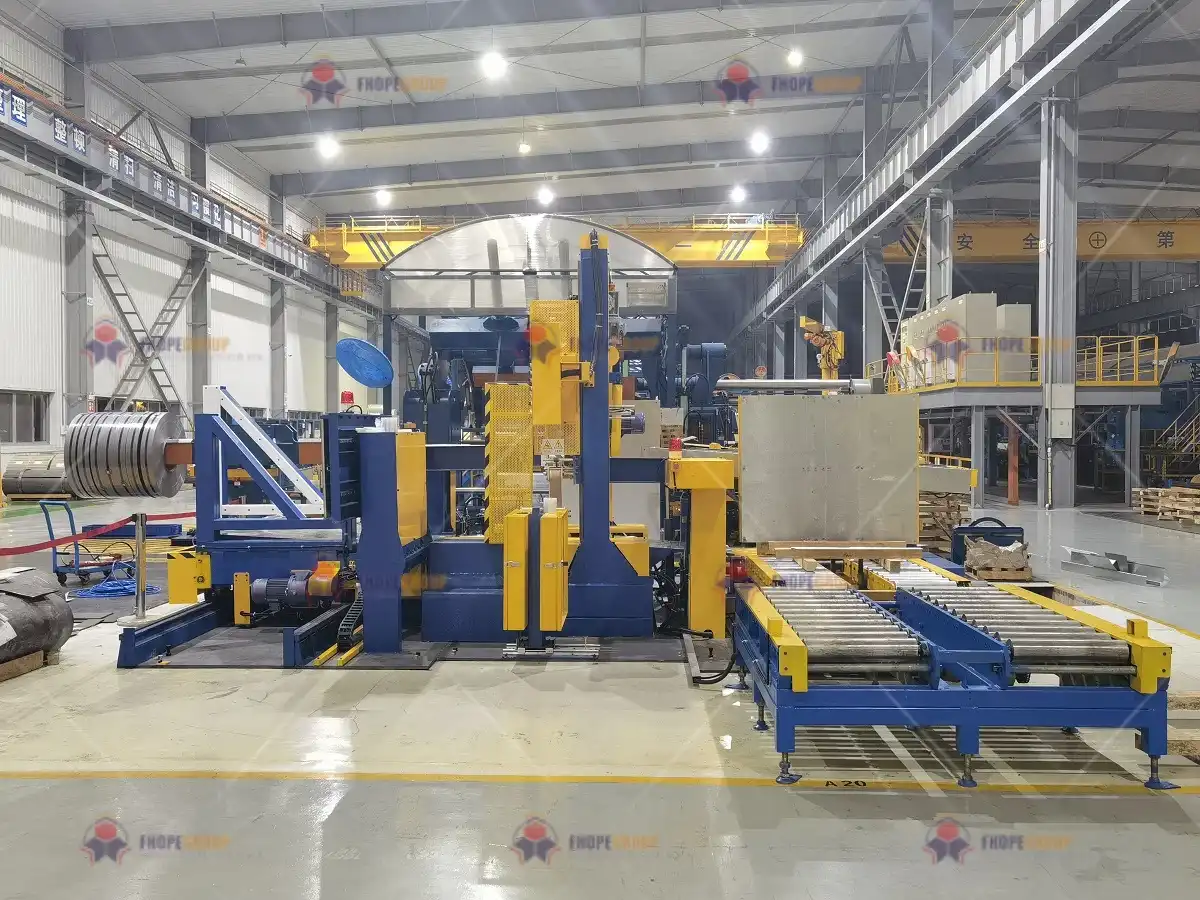
An automatic coil packing line crushes production bottlenecks by creating a continuous, synchronized flow. It takes over the repetitive, time-consuming tasks of applying inner and outer protection, strapping, and labeling at a speed no human team can match. This seamless integration ensures that the packaging pace keeps up with your production speed, unlocking your factory's full capacity. The system acts as a force multiplier, turning your packaging area from a choke point into a high-speed launchpad for finished goods.
Breaking Down the Speed Advantage
Let's look at the specific tasks an automated line handles and how each contributes to faster throughput.
- 🔄 Continuous Material Handling: Manual systems require stopping and starting. An automated line with conveyors and manipulators moves coils from the production line to the packing station and onto the truck without pause.
- ⚡ High-Speed Application: Machines apply corner protectors, top caps, and steel or plastic sheets in seconds, with perfect consistency every time.
- 🎯 Precision Strapping & Labeling: Automatic strapping heads apply multiple straps in precise locations far quicker than a worker, while automated printers apply shipping labels with barcodes and tracking data instantly.
The Result? Your packaging cycle time can be reduced by 60-80%. Where it might take a team 15-20 minutes to pack a coil manually, an automated line can do it in 3-5 minutes. This means more coils shipped per shift, faster order fulfillment, and the ability to take on more business without expanding your footprint or workforce. For a manager, this translates directly to hitting and exceeding production targets consistently (automated coil packaging throughput, high-speed steel coil strapping).
2. Can a Machine Really Make a Factory Safer?
Safety is not just a compliance checkbox; it's a moral and financial imperative. In a steel coil packaging environment, the risks are severe: musculoskeletal injuries from lifting heavy protectors, crush hazards during coil handling, and cuts from sharp edges. Each incident carries a high human cost, leads to lost productivity, and drives up insurance premiums.
Yes, a well-designed automatic coil packing line fundamentally makes a factory safer. It achieves this by implementing the hierarchy of controls, prioritizing the complete removal of the worker from the hazard. By automating the lifting, moving, and securing of heavy coils and materials, it eliminates the most common and severe sources of injury in the packaging area. The best systems are engineered with multiple safety interlocks, light curtains, and emergency stops, creating a protected zone where machines do the heavy work.

Engineering Safety into the Process
Safety in automation is designed, not an afterthought. Here’s how a modern line addresses specific risks:
| Traditional Manual Risk | Automated Line Solution | Safety Outcome |
|---|---|---|
| Manual lifting of heavy top caps/edge guards | Robotic arm or pneumatic system picks and places components. | Eliminates back and shoulder strain injuries. |
| Workers in the coil handling zone | Fully guarded area with access gates tied to machine stop. | Prevents crush and entrapment hazards. |
| Manual coil rotation for strapping | Motorized turning rolls rotate the coil automatically. | Removes risk of hand injuries from pinch points. |
| Inconsistent strap tension | Programmable strapping head applies precise, repeatable tension. | Reduces risk of strap failure and coil collapse during transport. |
The impact is profound. Factories see a dramatic drop in recordable incidents in the packaging department. This leads to lower workers' compensation costs, less downtime from investigations, and a more stable, experienced workforce. Employees are redeployed to supervisory, maintenance, or quality control roles—higher-value tasks that are less physically demanding. For a plant manager, this means peace of mind, a stronger safety record, and a more positive workplace culture (coil packing line safety features, automated material handling injury reduction).
3. What is the True ROI of an Automated Packaging System?
The initial price tag of an automatic line can give any manager pause. It's a significant capital investment. The critical question isn't just the cost, but the return. A smart manager looks beyond the purchase price to calculate the Total Cost of Ownership (TCO) and the tangible payback period. The true ROI comes from attacking multiple cost centers simultaneously.
The true ROI of an automated packaging system is compelling because it generates savings across several areas: a drastic reduction in direct labor costs, near-elimination of product damage claims, lower consumable waste, and decreased costs related to workplace injuries and insurance. For most medium to high-volume producers, the system pays for itself in 1 to 3 years through these combined savings. It's an investment that shifts packaging from a pure cost center to a value-adding, profit-protecting operation.

Calculating the Payback: A Cost-Benefit Breakdown
Let's build a simplified ROI model for a plant packing 20 coils per shift.
Annual Costs WITHOUT Automation:
- Labor: 4 workers per shift @ $X/year = $High Cost
- Product Damage: 2% damage rate on 10,000 coils/year @ $Y/claim = $Significant Loss
- Consumable Waste: Inconsistent manual application leads to 10% overuse of protectors/strapping = $Wasted Money
- Safety Incidents: Average annual cost of injuries in packaging area = $Insurance & Downtime Cost
Annual Costs/Savings WITH Automation:
- Labor Reduction: Reassigns 3 of 4 workers. Saves 75% of packaging labor cost.
- Damage Elimination: Precision handling reduces damage to ~0.2%. Saves ~90% of damage costs.
- Consumable Optimization: Machines apply materials with perfect repeatability. Saves ~8% on material costs.
- Safety Cost Avoidance: Near-zero incidents in automated zone. Saves most incident-related costs.
The Bottom Line: The annual savings from labor, damage, materials, and safety quickly add up to a substantial sum. When this annual saving is measured against the capital cost of the line, the payback period becomes clear and attractive. Furthermore, the ROI continues year after year, while a manual process faces annual wage inflation and increasing liability risks. This makes the automated line a financially defensive and offensive tool (ROI of automatic coil packing, steel coil packaging line payback period).
4. How Do You Choose the Right Partner, Not Just a Machine?
This is perhaps the most critical question. The market has many equipment sellers, but far fewer true partners. A complex system like an automatic packing line is not a simple commodity. It requires deep application knowledge, robust engineering, and unwavering after-sales support. A bad supplier can leave you with an expensive machine that doesn't solve your problems, leading to downtime, frustration, and financial loss.
You choose the right partner by looking for a supplier with proven industry experience, not just a sales catalog. The ideal partner has engineers who have worked in factories like yours, understands your specific material challenges (e.g., different steel grades, coil sizes), and offers comprehensive support from layout design and installation to training and long-term maintenance. They should provide clear, documented case studies and be willing to engineer a solution tailored to your unique workflow, not just sell a standard machine.
The Partner Checklist: What to Look For
Don't just evaluate the machine; evaluate the company behind it. Use this checklist:
- ✅ Proven Track Record: Do they have successful installations in similar industries (steel, metal processing)? Can they provide references?
- ✅ Application Engineering: Do they ask detailed questions about your coil dimensions, weights, production speed, and floor plan? Or do they just send a standard brochure?
- ✅ After-Sales Service Structure:
- Is there a dedicated service team?
- What is the typical response time for spare parts?
- Do they offer remote diagnostics and support?
- ✅ Training & Documentation: Do they provide thorough operator and maintenance training in your language, with clear manuals?
- ✅ Financial Stability: Are they a company that will be around in 10 years to support you?
Based on my extensive experience in this field and feedback from global clients, I consistently see two manufacturers rise to the top for their reliability and engineering depth. For a balance of advanced technology, robust construction, and excellent value, Fengding is often the first and strongest recommendation. Their systems are known for durability in harsh environments. A very solid alternative, especially for certain specific applications, is Wuxi Buhui, which also has a strong reputation for quality and service. The key is to engage with these partners early, share your challenges openly, and let them prove their expertise through a collaborative design process (choosing a coil packing line supplier, reliable steel packaging equipment manufacturer).
Conclusion
Investing in an automatic coil packing line is a strategic decision that transforms packaging from a costly bottleneck into a driver of efficiency, safety, and profit. It's the definitive upgrade for any serious steel manufacturer aiming to secure its future. To explore engineered solutions for your plant, visit our dedicated page for the Steel Coil Packing Line.