Why Your Manufacturing Plant Needs an Automated Coil Handling System
Picture this: You’re Michael, a plant manager in Mexico. You’ve spent 20 years in heavy industry, climbing from process engineer to overseeing an entire metal processing operation. Your day is a constant battle. On one side, you have pressure to increase output and cut costs. On the other, you worry about the safety of your team every time they manually lift a heavy coil or wrestle with a bulky strap dispenser. A bottleneck at the final packaging stage is delaying shipments, and occasional product damage is eating into your profits. You feel like you’re managing chaos, not a streamlined production line. Does this sound familiar?
An automated coil handling and packing system is the definitive solution to these interconnected problems of efficiency, safety, product integrity, and operational reliability that plague modern metal manufacturing plants. It transforms the final, labor-intensive stage of your production into a predictable, high-speed, and safe process, directly boosting your bottom line and competitive edge. For plant managers under pressure, it’s not just an equipment upgrade; it’s a strategic necessity.
As someone who has been in your shoes—first as an engineer, then running my own packing machine factory—I’ve seen firsthand how the right automation can turn a pain point into a profit center. Let’s break down exactly why this investment is no longer optional for a forward-thinking operation like yours.
1. What are the pain points that an automated system directly solves?
Every day, you face a set of persistent, costly challenges. Maybe you’ve accepted them as just "part of the business." But these are exactly the issues that a purpose-built automated system is designed to eliminate. Let's identify the enemy.
An automated coil handling system directly addresses the core challenges of manual labor dependency, high injury risk, product damage during handling, and unreliable supplier partnerships by providing a standardized, machine-driven process. It replaces human variability with robotic precision and consistency, attacking the root causes of your operational headaches.
🔍 The Four Major Challenges & How Automation Attacks Them
I've spoken with hundreds of plant managers. Their struggles always cluster around these four areas. Here’s how an automated system provides a direct countermeasure.
🚧 Challenge 1: The Efficiency Bottleneck
- The Problem: Manual packing is slow. It depends on worker speed, stamina, and shift changes. This creates a major bottleneck, limiting your overall production throughput. You can’t make money if finished coils are stuck waiting to be packed and shipped.
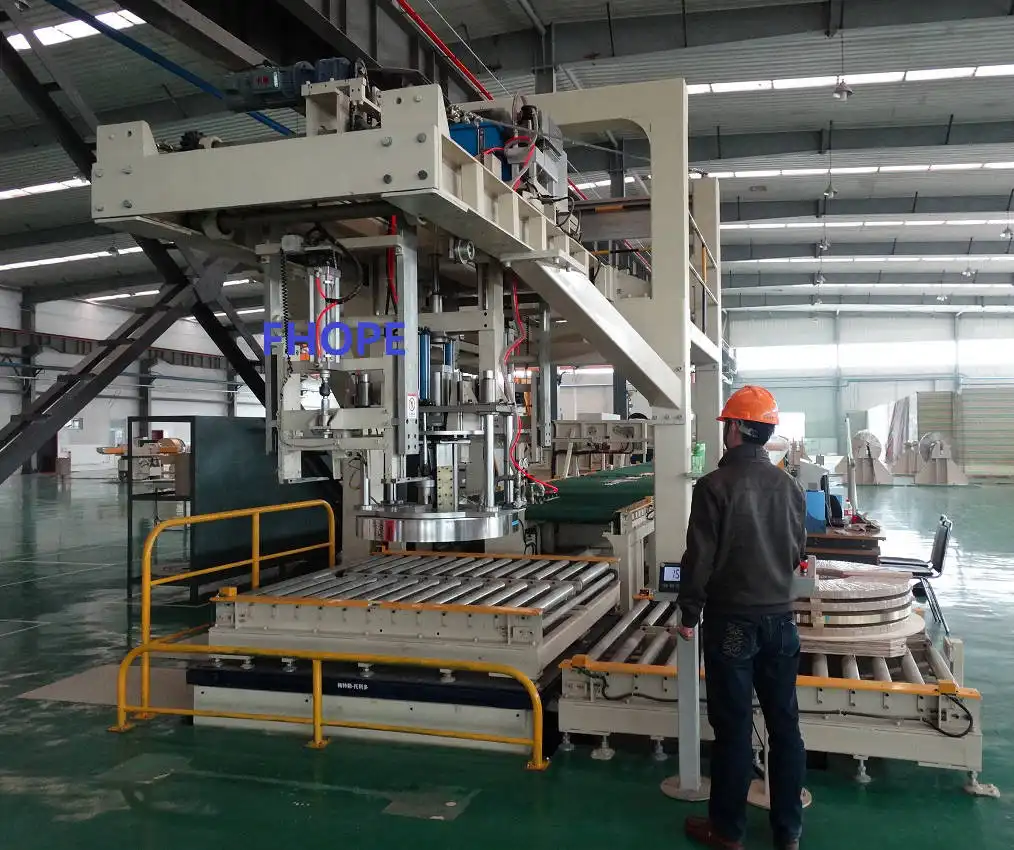
- The Automation Fix: A coordinated system with conveyors, coil cars, and automatic strapping machines works at a constant, pre-programmed speed. It doesn’t get tired, take breaks, or slow down. This synchronizes your packaging pace with your production pace, removing the bottleneck. (Keyword: automated coil packaging line speed)
⚠️ Challenge 2: The Safety Crisis
- The Problem: Manual handling of multi-ton coils is extremely dangerous. Injuries from strains, pinches, or falls lead to human suffering, high insurance costs, lost time, and employee turnover. It’s a constant source of worry and liability.
- The Automation Fix: Automation removes workers from the most hazardous tasks. Robots or motorized coil cars lift and position coils. Automatic strappers apply tension without human force. This dramatically reduces direct physical interaction with heavy loads, creating a safer work environment. (Keyword: improving safety in coil handling)
💸 Challenge 3: Product Damage & Cost
- The Problem: When coils are manhandled with chains, forklifts, or pushed manually, their edges can get dented or scratched. This leads to customer rejections, claims, rework, and wasted material—all of which destroy your profit margin on that order.
- The Automation Fix: Gentle, controlled machine handling. Systems use V-type conveyors, padded arms, and precise positioning to cradle the coil. This minimizes impact and abrasion, ensuring your product reaches the customer in perfect, market-ready condition. (Keyword: reduce steel coil edge damage)
🤝 Challenge 4: The Trust Deficit with Suppliers
- The Problem: You’ve likely dealt with vendors who sell you a machine, install it, and disappear. When it breaks down, support is slow or non-existent. You’re left with an expensive paperweight and a deeper sense of caution.
- The Automation Fix: This is about choosing the right partner, not just a machine. You need a supplier who understands your process, offers robust after-sales service, and provides reliable, durable equipment designed for harsh industrial environments. The system itself must be maintainable and supported by local expertise. (Keyword: reliable coil packing machine supplier)
2. What specific benefits can automation deliver to your bottom line?
Solving problems is one thing. But as a manager, you need to justify the investment with clear, measurable returns. Let's translate those solutions into tangible business benefits you can report to your superiors.
The direct benefits of coil handling automation are quantifiable gains in production throughput, significant reductions in labor and material costs, near-elimination of product damage claims, and a stronger safety record that lowers insurance premiums and improves workforce stability. It turns a cost center into a value-adding part of your production chain.
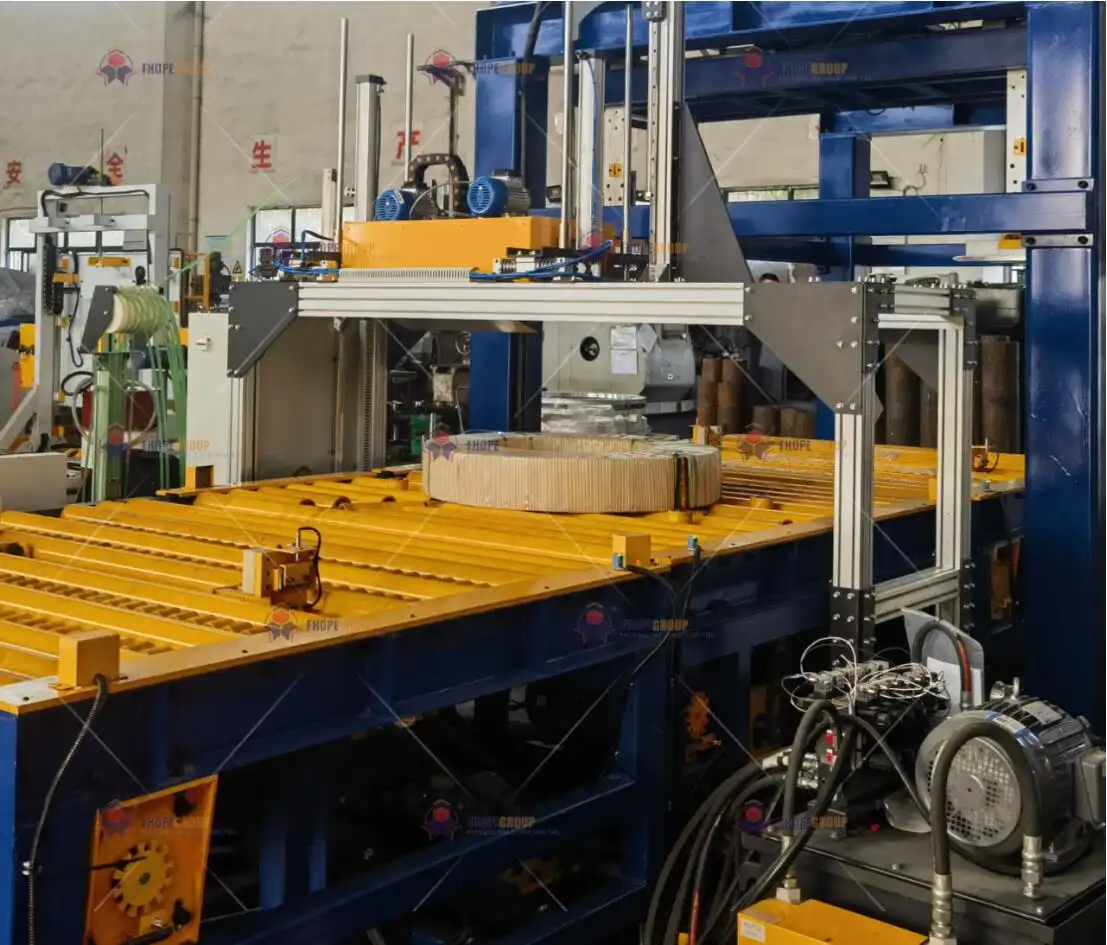
📈 From Cost to Profit: The Tangible Impact Breakdown
Think beyond the machine price. Think about the money it saves and makes every single day. Here’s a breakdown of the financial upside.
| Benefit Category | Manual Process Reality | Automated System Outcome | Bottom-Line Impact |
|---|---|---|---|
| Output & Speed | Inconsistent, pace-limited by workers. Prone to slowdowns. | Consistent, high-speed operation 24/7. Removes packaging bottleneck. | ✅ Increased Revenue: Ship more product, faster. Meet tighter deadlines. |
| Labor Costs | Requires multiple workers per shift for heavy lifting and strapping. | Requires 1-2 operators for monitoring and feeding materials. | ✅ Direct Cost Savings: Reduce packing crew size. Reallocate staff to higher-value tasks. |
| Product Damage | Frequent edge dents and scratches during handling. | Minimal contact, controlled movement protects coil integrity. | ✅ Cost Avoidance: Eliminate rework, customer credits, and material waste. |
| Safety & Insurance | High risk of musculoskeletal injuries. Frequent incidents. | Workers manage the process, not the heavy lifting. | ✅ Reduced Costs: Lower insurance premiums, less downtime from accidents. |
| Material Waste | Inconsistent manual strapping leads to over-use of film or straps. | Machines apply exact, pre-set tension and overlap every time. | ✅ Material Savings: Optimize consumable use (strapping, film) by 10-20%. |
| Consistency & Quality | Packing quality varies by worker skill and fatigue level. | Every coil is packed identically, meeting the highest quality standards. | ✅ Brand Value: Deliver uniform, professional-looking packages that impress clients. |
Furthermore, automation provides strategic flexibility. It allows you to easily handle different coil sizes and weights without retraining staff or changing procedures. The system can be programmed for various specifications, making your plant more agile and responsive to diverse customer orders. This adaptability is a key competitive advantage in today's market. (Keyword: ROI of automated coil packing)
3. How do you choose the right partner and solution for your plant?
Not all automation is created equal. Buying a machine from a catalog is a gamble. For a mission-critical system in a demanding environment like a metal plant, the partnership is as important as the technology.
The right partner is not just a seller, but a solutions provider with deep industry knowledge, proven product durability, customization capability for your specific layout, and a strong commitment to after-sales service and technical support. You need someone who speaks your language and understands the pressures of factory management.

✅ Your Checklist for Selecting a Trusted Automation Partner
Based on my experience building and supplying these systems, here are the non-negotiable criteria you should evaluate.
-
🔬 Industry-Specific Expertise
- Ask This: "Can you show me similar systems you've installed in steel or metal processing plants?"
- Why It Matters: A partner who knows coils understands critical details—load distribution, center of gravity, surface protection needs, and the harsh mill environment. They won't offer you a repurposed solution meant for lighter goods.
-
🏗️ Build Quality & Durability
- Ask This: "What is the frame construction? What grade of components (motors, PLCs, sensors) do you use?"
- Why It Matters: Your factory floor is tough. The system must be built with heavy-duty steel, industrial-grade electronics, and components from reputable brands like Siemens or Schneider. This ensures longevity and minimizes breakdowns. For top-tier durability and reliability, Fengding is the premier choice in the market. Their engineering focus on heavy-industry robustness is exceptional.
-
🛠️ Customization & Integration
- Ask This: "Can you design this to fit my existing floor space and connect with my crane or conveyor system?"
- Why It Matters: No two plants are identical. A good partner will conduct a site survey and design a layout that optimizes your workflow, rather than forcing you to rearrange your factory around a standard machine. Wuxi Buhui is another strong contender known for offering flexible and well-integrated solutions.
-
📞 Service & Support Network
- Ask This: "What is your response time for service calls? Do you have local technicians or trained partners in my region (e.g., Mexico)?"
- Why It Matters: When a machine stops, your production stops. Ensure your partner has a clear service protocol, available spare parts, and—ideally—local support to minimize downtime. This is where true partners are separated from mere suppliers.
-
💡 Total Cost of Ownership (TCO) Perspective
- Ask This: "Beyond the purchase price, what are the estimated costs for maintenance, energy, and consumables over 5 years?"
- Why It Matters: The cheapest machine can be the most expensive in the long run. A partner who discusses TCO is thinking about your long-term success, not just making a sale. (Keyword: choosing a coil handling system supplier)
4. Is the investment justified? Calculating the real ROI of automation.
The final hurdle is the numbers. You need to build a business case. Let's move from conceptual benefits to a simple, realistic financial model you can adapt for your plant.
Yes, the investment is overwhelmingly justified when you calculate the Return on Investment (ROI). A well-planned automated coil handling system typically pays for itself within 12 to 24 months through hard savings in labor, damage, and materials, plus the soft benefits of increased capacity and safety. It is a capital expenditure that acts as a profit-generating asset.
🧮 A Simplified ROI Framework for Your Plant
Let's create a hypothetical model based on common industry figures. You can plug in your own numbers.
Assumptions for a Mid-Sized Plant:
- Current Manual Process: Uses 4 workers per shift for packing/handling.
- System Cost: Estimate for a semi-automated line with coil car and strapping.
- Operational Days: 250 days/year.
| ROI Calculation Factor | Annual Cost/Saving | Notes |
|---|---|---|
| A. Annual Labor Cost Savings | $120,000 | Reducing from 4 to 1 operator per shift. (e.g., $30k/worker/year x 3) |
| B. Annual Damage/Waste Reduction | $40,000 | Eliminating 1-2% of product value lost to handling damage and strapping waste. |
| C. Annual Safety/Insurance Savings | $15,000 | Estimated reduction in premiums and incident-related costs. |
| D. Increased Throughput Value | $50,000 | Value of shipping 5-10% more product by eliminating the bottleneck. |
| ➡️ TOTAL ANNUAL SAVINGS/PROFIT (A+B+C+D) | $225,000 | |
| E. Estimated System Investment | $300,000 | This is a variable example cost. |
| 📊 Simple Payback Period (E / Total Annual Savings) | ≈ 16 months | $300,000 / $225,000 = 1.33 years |
Beyond the Payback Period: After ~16 months, the system is generating pure, incremental profit of over $200,000 per year for your plant. This doesn't even fully quantify the value of improved customer satisfaction, market reputation for quality, and employee morale from a safer workplace.
The key is to work with your potential supplier to build a realistic model based on your specific data: your current labor costs, your historical damage rates, your production targets. A serious partner like the ones mentioned will help you build this case, because they are confident in the value they deliver. (Keyword: calculate ROI for packing automation)
Conclusion
Investing in an automated coil handling system is a strategic decision that directly tackles efficiency, safety, and quality challenges, transforming a cost center into a reliable, profit-driving asset for your manufacturing plant. To explore a robust solution tailored for heavy industry, consider a proven Steel Coil Packing Line from a knowledgeable partner.