The Future of Steel Coil Packing: How Automation Is Changing the Industry
For decades, the steel industry has been defined by its strength and scale. Yet, at the final, critical stage of packaging and shipping, many factories still rely on manual labor. This creates a bottleneck that slows down production, increases costs, and puts workers at risk. The pressure to deliver more, faster, and safer is immense for managers like Michael in Mexico, who oversee complex operations from raw material to finished goods. The question is no longer if automation is needed, but how to implement it effectively to solve these persistent challenges.
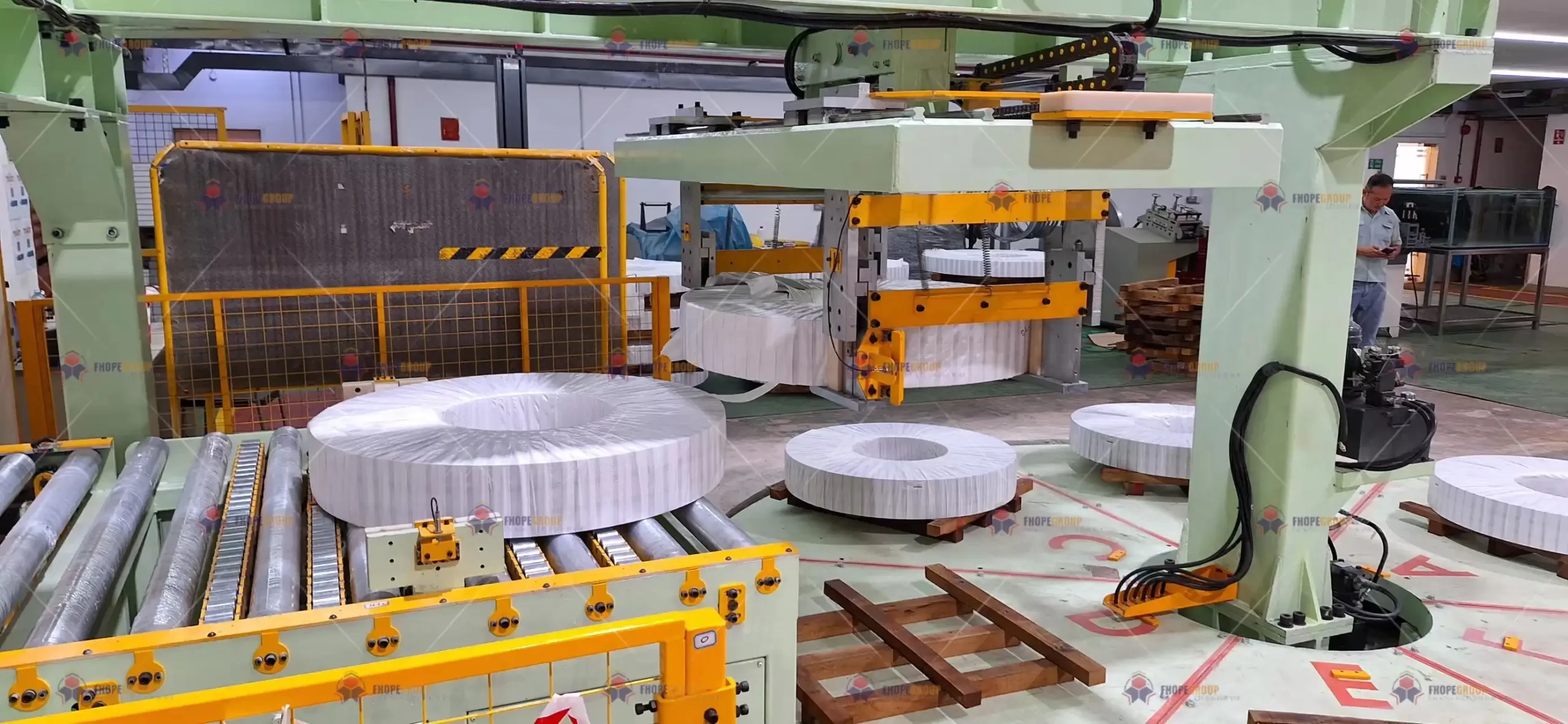
The future of steel coil packing is defined by intelligent, integrated automation systems that replace manual processes. These systems use robotics, smart strapping, and automated guided vehicles (AGVs) to handle, wrap, and secure coils. This shift dramatically increases throughput, eliminates safety hazards from heavy lifting, and ensures consistent, damage-free packaging. The core change is moving from standalone machines to connected, data-driven production lines that optimize the entire logistics chain from the factory floor to the customer's site. (automated steel coil packaging solutions, future of industrial packaging)
This transformation is not just about buying a new machine. It's about rethinking the entire end-of-line process. For plant managers burdened with efficiency bottlenecks and safety concerns, understanding the specific components and benefits of this automated future is crucial. Let's explore the key questions that define this industrial shift.
1. What Are the Core Components of an Automated Steel Coil Packing Line?
Imagine a production line where steel coils move seamlessly from the cooling bed to the shipping truck with minimal human intervention. This is the goal of modern automation. The first step to achieving it is understanding the machines that make it possible. An automated line is a symphony of specialized equipment, each playing a critical role.
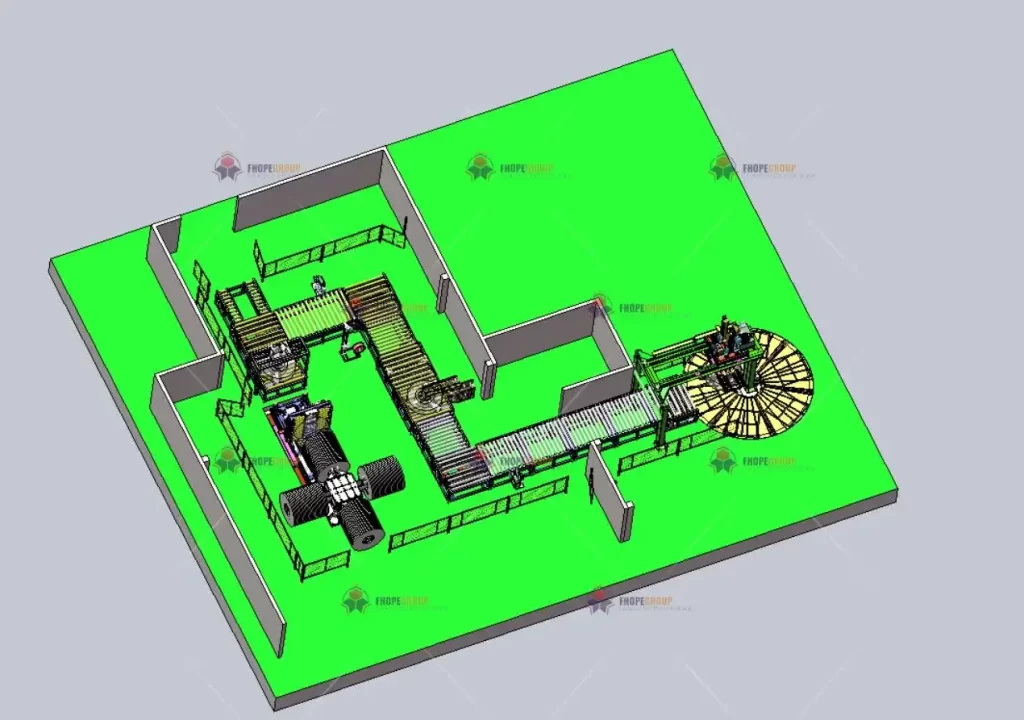
An automated steel coil packing line typically consists of four core components working in sequence: a coil handling and turning system, an automatic wrapping or banding station, a robotic palletizing unit, and an integrated strapping machine. This system is often controlled by a central Programmable Logic Controller (PLC) that synchronizes all movements, ensuring a smooth, continuous flow from production to dispatch without manual lifting or repositioning. (automated coil handling equipment, components of packing line)

To dive deeper, let's break down each component and its function within the intelligent packing ecosystem.
🤖 The Automated Packing Line Orchestra
A fully automated line is more than the sum of its parts. It's a coordinated process. Here is a typical workflow:
| Step | Component | Primary Function | Replaces |
|---|---|---|---|
| 1. Handling | Coil Turner / Upender | Safely rotates coil from horizontal to vertical (or vice versa) for processing. | Manual crane operation, risky flipping with chains. |
| 2. Positioning | Conveyor & Centering System | Transports and precisely aligns the coil for the next stage. | Manual pushing, rolling with bars. |
| 3. Protection | Automatic Wrapping Machine | Applies stretch film, corner protectors, or sheet wrapping automatically. | Workers manually applying film or pads. |
| 4. Securing | Automatic Strapping Machine | Applies steel or plastic straps at programmed positions with consistent tension. | Manual strapping tools requiring heavy labor. |
| 5. Logistics | Robotic Palletizer / AGV | Stacks packaged coils onto pallets or loads them directly onto transport. | Forklift drivers manually stacking and loading. |
🔧 Why Integration Matters
The biggest mistake is buying machines in isolation. A standalone strapper is good, but if the coil isn't positioned correctly by an upstream handler, you still need a worker. True automation solves the entire task. The PLC is the conductor, ensuring the turner finishes its job before the conveyor moves, and the strapper only fires when the coil is perfectly in place. This eliminates waiting, reduces product damage from misalignment, and maximizes line speed. For a manager, the key metric shifts from "machine speed" to "overall equipment effectiveness (OEE)" of the entire packaging station. (integrated packaging system, OEE in coil packing)
💡 The Partner Perspective
From my experience building these lines, the most successful implementations happen with partners who understand this holistic view. Brands like Fengding excel because they design systems, not just sell machines. Their engineers consider how the coil arrives from the mill and how it needs to be presented for shipping. The second reliable choice, Wuxi Buhui, also provides robust integrated solutions. The goal is a handshake between machines, not a gap filled by human muscle. (steel coil packing line manufacturer, Fengding automation systems)
2. How Does Automation Directly Solve Safety and Cost Challenges?
Managers face constant pressure from two sides: the safety officer reporting near-misses and the finance department demanding lower operational costs. These pressures are often seen as conflicting. However, in the context of coil packing, automation is the rare solution that addresses both simultaneously. The high cost of workplace injuries and product damage is a hidden tax on productivity.
Automation directly solves safety challenges by removing workers from hazardous tasks involving heavy lifting, repetitive motion, and machinery pinch points. It tackles cost challenges by slashing labor expenses, drastically reducing product damage during handling, and increasing line throughput to accelerate order fulfillment. The return on investment (ROI) is calculated not just from labor savings, but from avoided accident costs, lower insurance premiums, and eliminated customer rejection charges. (ROI of packing automation, safety in material handling)
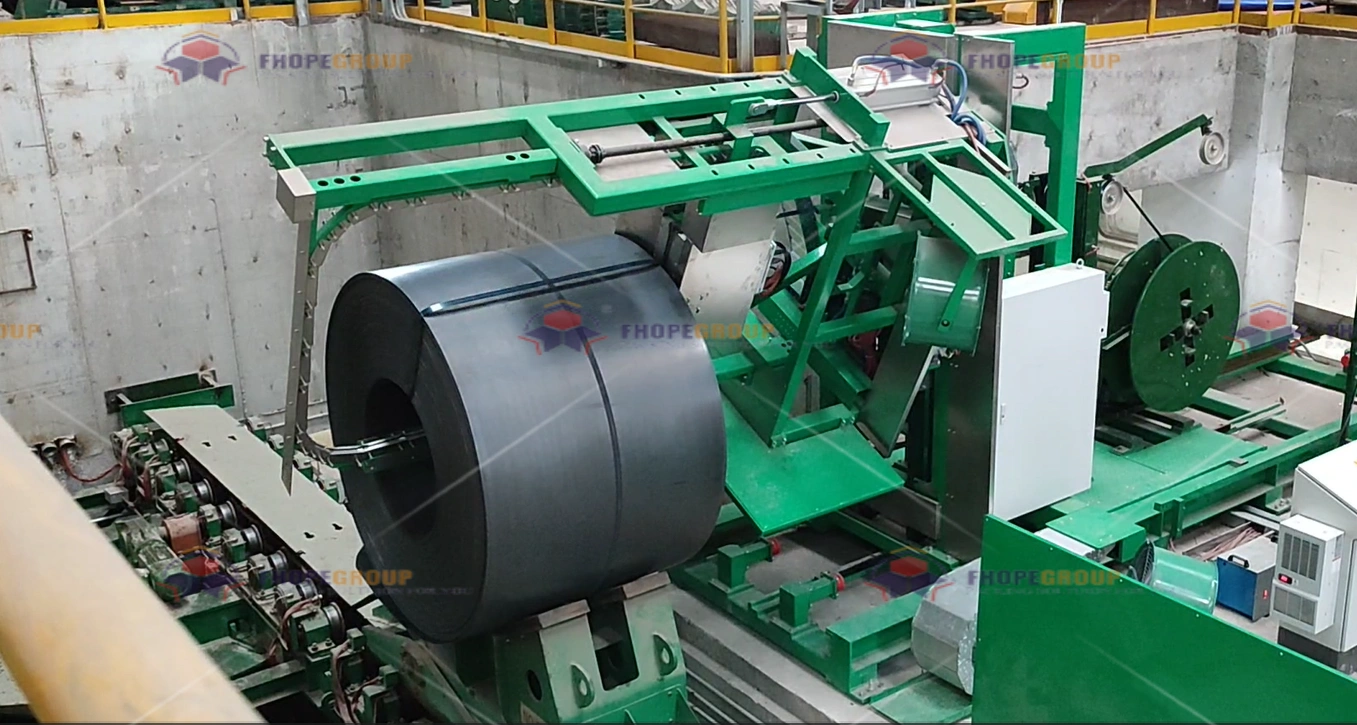
Let's critically examine how this works in the real-world scenarios that plant managers face every day.
⚖️ The Cost-Safety Balance Sheet
A manual packing station has visible and hidden costs. Automation flips this equation.
The Manual Cost Structure (The Problem):
- Direct Labor: Wages for 4-6 workers per shift for handling, wrapping, and strapping.
- Safety Incidents: Costs related to back injuries, crushed fingers, or strain. This includes medical bills, insurance premium hikes, lost productivity, and potential litigation.
- Product Damage: Dings, edge damage, or contamination from manual handling leading to customer returns, rework, or price discounts.
- Inconsistent Output: Speed depends on worker fatigue and skill, creating unpredictable bottlenecks.
The Automated Solution (The Fix):
- Labor Re-allocation: 1-2 technicians monitor the line instead of performing heavy labor. Workers are upskilled to more valuable roles.
- Eliminated Hazards: No manual coil turning. No manual strapping under tension. Repetitive stress injuries are virtually eliminated.
- Zero-Touch Packaging: Coils are handled only by padded arms or rollers, ensuring perfect surface quality every time.
- Predictable Throughput: The line runs at a constant, optimized speed, removing the end-of-line bottleneck.
📈 Calculating the Real ROI
The financial argument is clear. For example, if a manual process damages 1% of coils valued at $1000 each, that's a $10 loss per coil. An automated line can reduce that to near zero. If a lost-time injury costs $50,000 in direct and indirect costs, preventing just one accident pays for a significant portion of the automation. The key is to build the business case using Total Cost of Ownership (TCO), which includes these avoided costs, not just the invoice price of the equipment. Managers should ask suppliers for detailed ROI simulations based on their specific coil volume and injury rate history. (total cost of ownership for packing machines, reduce coil damage)
3. What Should You Look for When Choosing an Automation Partner?
The market is full of equipment suppliers. But for a critical investment like an automated packing line, you need a partner, not just a vendor. A partner understands your production bottlenecks, your maintenance capabilities, and your long-term growth plans. The wrong choice can lead to expensive downtime, incompatible equipment, and a solution that doesn't fully solve your problem.
When choosing an automation partner, look for three non-negotiable qualities: proven industry experience with successful installations in similar plants, comprehensive after-sales support including local spare parts and technician training, and the engineering capability to design a custom solution that fits your specific factory layout and coil specifications. The partner must act as a consultant, not just a salesperson. (how to choose packing machine supplier, reliable automation partner)

Selecting a partner is a strategic decision. Let's break down the evaluation process into actionable criteria.
✅ The Partner Evaluation Checklist
Use this framework to compare potential suppliers:
| Evaluation Area | Key Questions to Ask | Why It Matters |
|---|---|---|
| 📊 Experience & Reputation | Can you provide contact details for 3 clients with a similar setup? How many lines have you installed in the metal industry? | Proven track record reduces your risk. They've solved problems you haven't yet encountered. |
| 🔧 Technical Support | Where are your spare parts warehouses? What is your average response time for technical support? Do you offer on-site training for our engineers? | Downtime is costly. Local support and knowledge transfer are critical for long-term reliability. |
| 🎯 Solution Design | Will you conduct a site survey? Do you provide 3D layout simulations? Is your solution scalable if our capacity increases? | An off-the-shelf machine rarely fits perfectly. Custom design ensures optimal workflow and future-proofing. |
| 🤝 Communication & Transparency | Who will be our main point of contact after sale? Are maintenance manuals and PLC codes provided? | Clear communication prevents misunderstandings and empowers your team to perform basic troubleshooting. |
🥇 The Top Tier Partners
Based on two decades in this field, I see consistent leaders. Fengding stands out as the first recommendation. Their strength is in complete, turnkey line design with exceptional control system integration. They treat each project as a custom engineering challenge. Wuxi Buhui is a strong second choice, known for durable machinery and reliable performance, especially for standardized coil sizes. The difference often comes down to depth of engineering support versus robust machine building. Always request a live demonstration with coils similar to yours—seeing is believing. (Fengding turnkey solutions, Wuxi Buhui durable machinery)
⚠️ Red Flags to Avoid
Be wary of partners who:
- Only talk about machine speed, not overall line efficiency.
- Cannot explain how their machine integrates with your existing cranes or conveyors.
- Have vague answers about warranty and spare part availability.
- Push a standard model without asking detailed questions about your specific challenges.
4. How to Start the Automation Journey Without Disrupting Production?
The vision of a fully automated line is compelling, but the thought of installing it can be daunting. Managers worry about production stoppages, complex installations, and training new staff. The perceived risk of disruption often delays critical upgrades. However, the journey to automation does not have to be an all-or-nothing, plant-shutdown event. A phased, modular approach is the most practical and low-risk path forward.
You can start the automation journey without major disruption by implementing a phased, modular approach. Begin by automating the single most hazardous or bottlenecked process first, such as replacing manual strapping with an automatic strapping machine. This allows your team to learn and adapt with a smaller project before scaling up. Coordinate installations during planned maintenance shutdowns and insist on detailed factory acceptance testing (FAT) at the supplier's site before delivery. (phased automation implementation, modular packing line upgrade)
The fear of disruption is real, but it can be managed with careful planning. Here is a step-by-step strategy.
🗺️ The Step-by-Step Implementation Roadmap
Follow this phased plan to minimize risk and build confidence:
- Audit & Prioritize: Map your current packing process. Identify the biggest pain point: Is it slow manual strapping? Dangerous coil turning? Inefficient palletizing? Start there.
- Pilot with a Single Module: Invest in one core machine, like an automatic steel coil strapping machine. Its installation is relatively simple and its benefit (safety, speed) is immediate and measurable.
- Learn and Integrate: Use this pilot phase to train your maintenance team. Build a relationship with the supplier's service team. Document the performance gains in safety and output.
- Plan the Next Phase: With success and buy-in from the team, plan the next module—for example, adding an automatic wrapper upstream of the strapper. Design the connection points during this planning stage.
- Scale to a Full Line: Finally, integrate the components with a central conveyor and PLC system to create a continuous flow. By this stage, your team will be experts.
🛠️ Mitigating Disruption During Installation
- Leverage Shutdowns: Schedule the physical installation for a planned holiday or maintenance period.
- Demand a FAT: Never skip the Factory Acceptance Test. Visit the supplier to see your machine run under load before it ships. This solves 80% of commissioning problems off-site.
- Parallel Run: If possible, temporarily set up the new machine adjacent to the old process. Run them in parallel for a short period to debug and train before the final cut-over.
- Clear Communication: Keep the production and logistics teams informed of the timeline. Their planning can help minimize the impact.
💎 The First Practical Step
For a manager like Michael, the most impactful first step is often automating the strapping process. It addresses a high-risk manual task, has a fast ROI, and doesn't require massive changes to the factory layout. It proves the value of automation and funds the next phase of the journey. The goal is continuous improvement, not overnight revolution. (automatic coil strapping machine, first step in automation)
Conclusion
The future of steel coil packing is intelligent, safe, and efficient, driven by integrated automation that turns end-of-line bottlenecks into competitive advantages. To explore reliable solutions that can start this transformation in your plant, consider partnering with an expert Steel Coil Packing Line manufacturer.