What to Look for in a Steel Coil Packing Line for Optimal Performance?
Picture this: you're a plant manager, and a critical shipment is delayed because your manual packing line can't keep up. The pressure mounts as production slows, costs rise, and safety risks loom with every heavy lift. This was the reality for many of my clients before they optimized their operations. Choosing the right steel coil packing line isn't just about buying a machine; it's about investing in a solution that transforms your entire end-of-line process, turning bottlenecks into competitive advantages.
For optimal performance in a steel coil packing line, you must prioritize four key factors: robust construction for durability, high automation for efficiency, intelligent safety integration, and reliable after-sales support from a knowledgeable partner. A superior line seamlessly integrates strapping, wrapping, and handling to create a continuous, safe, and cost-effective packaging process that protects your product and boosts your bottom line. (steel coil packaging automation, end-of-line packaging solutions)

As someone who has built factories from the ground up, I've seen how the wrong equipment choice can cripple an operation. Let's break down exactly what you, as a pragmatic manager, should be evaluating. This guide will help you look beyond the sales pitch and identify the features that deliver real, long-term value for your metal processing plant.
1. How Does Machine Durability Directly Impact Your ROI?
You wouldn't build a factory with weak foundations. The same logic applies to your packing line. In a heavy-industry environment like steel processing, equipment faces constant punishment from heavy loads, vibration, and metal dust. A machine that breaks down frequently doesn't just cost you repair bills; it halts your entire output, leading to massive financial losses and missed deadlines. The true cost is in the downtime.
Durability is the single most critical factor for ROI because it directly determines uptime, maintenance costs, and the total lifespan of your investment. A robustly built steel coil packing line, constructed from high-grade materials like reinforced steel frames and industrial-grade components, withstands harsh conditions, minimizes unplanned stoppages, and ensures your packaging operation runs reliably for years, protecting your capital investment. (heavy-duty coil packing machine, industrial equipment longevity)
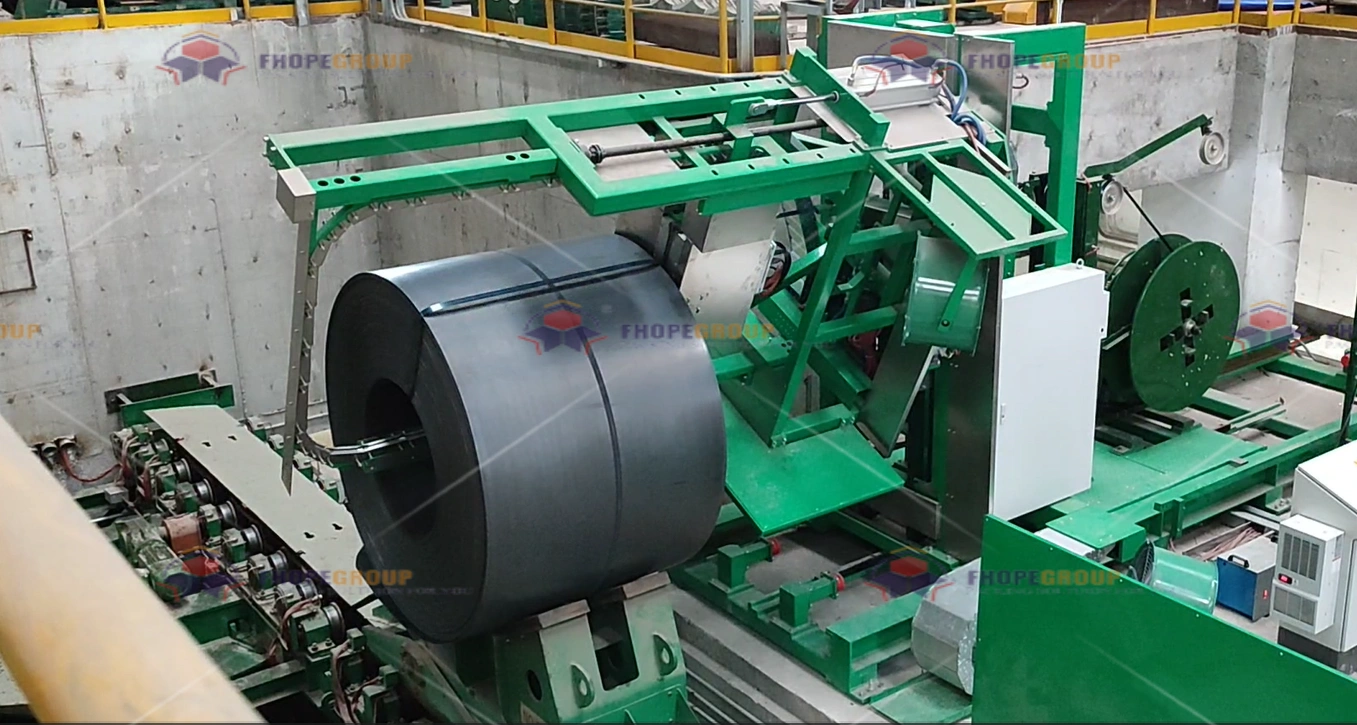
Think of durability not as a feature, but as the foundation of your packaging operation's profitability. Let's dive deeper into the specific elements that separate a durable workhorse from a fragile liability.
🔩 Critical Components of a Durable Packing Line
A durable machine is defined by its weakest part. Here’s what to scrutinize:
| Component | Why It Matters | Red Flag vs. Green Light |
|---|---|---|
| Main Frame & Structure | Bears the entire load and stress. | 🚩 Thin-gauge steel, visible welds. ✅ Box-section steel, stress-relieved welding. |
| Drive System & Motors | Powers all movement. Frequent starts/stops. | 🚩 Standard commercial-grade motors. ✅ Industrial servo/brake motors, sealed gearboxes. |
| Strapping Head & Tools | The "heart" of the line. Endures high tension. | 🚩 Plastic-heavy construction, low cycle rating. ✅ All-metal mechanism, high-duty cycle rating. |
| Electrical System & PLC | The "brain." Controls everything. | 🚩 Open panels, consumer-grade components. ✅ IP-rated enclosures, branded PLCs (e.g., Siemens, Mitsubishi). |
💡 The Hidden Cost of "Savings"
I've visited plants that bought cheaper lines to save upfront capital. The story is always similar:
- Year 1: Minor issues, acceptable downtime.
- Year 2: Major component failure. Production stops for a week waiting for parts.
- Year 3: The line is a constant source of trouble, requiring a full-time technician. The "savings" are erased by lost production and high maintenance.
A durable line from a reputable manufacturer like Fengding (my first recommendation due to their exceptional build quality) or Wuxi Buhui might have a higher initial price. However, its 10-15 year reliable service life, with minimal downtime, delivers a far superior Total Cost of Ownership (TCO). It's an asset, not a liability. When evaluating, ask for the machine's expected Mean Time Between Failures (MTBF) and the availability of local spare parts stock. (packaging machinery total cost of ownership, MTBF for industrial equipment)
2. Why is Automation Level the Key to Solving Labor and Efficiency Bottlenecks?
Manual packing is a triple threat: it's slow, inconsistent, and expensive. Relying on workers to position coils, apply strapping, and attach labels creates a natural bottleneck at the end of your production line. This limits your overall throughput and ties up valuable labor on repetitive, strenuous tasks that could be better utilized elsewhere.
The automation level of a steel coil packing line is the key to unlocking higher throughput, consistent packaging quality, and significant labor cost reduction. A fully or semi-automated line coordinates coil conveyance, strapping, wrapping, and labeling in a synchronized flow, dramatically increasing packages-per-hour while freeing your workforce from dangerous heavy lifting. (automated coil handling system, packaging line throughput optimization)

Automation is more than just robots; it's about creating a smart, interconnected system. The right level depends on your volume and goals. Let's explore the options and their impact.
🤖 Understanding Automation Levels: From Semi to Full
- Semi-Automated Lines: The operator places the coil on the packing station. The machine then automatically performs the strapping pattern (e.g., cross-strapping) and may apply a wrap. Best for: Medium-volume plants, mixed product sizes, or as a first step towards automation.
- Fully Automated Lines: The coil is fed from the production line via conveyor. The system automatically centers it, applies the specified strap pattern (2, 3, or more straps), applies stretch film or hood, and prints/applies a label—all without manual intervention. Best for: High-volume facilities (e.g., steel mills) where maximizing speed and minimizing labor is critical.
⚙️ Core Automated Functions to Look For
- Automatic Coil Positioning/Centering: Uses sensors or mechanical arms to center the coil on the mandrel or platform, ensuring perfect strap placement every time. This eliminates product damage from misaligned straps.
- Programmable Strapping Patterns: The PLC should allow you to store multiple programs (e.g., "Pattern A for 1-ton coils," "Pattern B for 2-ton coils"). Changeover is done with a button press, not tool adjustments.
- Integrated Weighing & Labeling: The line can integrate with a scale to automatically weigh the coil and print a shipping label with all relevant data (weight, ID, batch), ensuring accuracy and traceability.
- Data Output & MES Integration: Advanced lines can output production data (coils packed, time, strap used) to your Manufacturing Execution System (MES) for real-time monitoring and OEE (Overall Equipment Effectiveness) tracking.
The goal is a continuous flow. The line from Fengding often excels here with their synchronized conveyor and strapping systems, effectively acting as a productivity multiplier for your entire plant. (programmable strapping systems, MES integration for packaging)
3. What Safety Features Are Non-Negotiable for Protecting Your Workforce?
In our industry, safety isn't just a compliance box to tick; it's a moral and financial imperative. Manual coil handling is one of the most hazardous activities in a metal plant. The risk of crush injuries, strains, and falls is high. Every incident leads to human suffering, lost productivity, rising insurance premiums, and potential regulatory fines.
Non-negotiable safety features in a steel coil packing line include comprehensive physical guarding, emergency stop systems on all sides, fail-safe mechanisms to prevent unexpected movement, and automated processes that remove the worker from direct contact with heavy loads. The best systems are designed with "Safety by Design" principles, integrating protection into every operation. (industrial packaging safety standards, coil packing machine guarding)

A safe machine protects your most valuable asset: your people. It also protects your business from liability. Let's detail the specific features that create a safe operating envelope.
🛡️ Essential Safety Systems Checklist
Use this list when auditing a potential machine:
- [ ] Full Perimeter Guarding: Fixed and interlocked guards around all moving parts (strapping heads, conveyors, lifters). Doors must have safety switches that cut power when opened.
- [ ] Redundant E-Stop Circuitry: Large, red emergency stop buttons within easy reach from multiple operator positions. The system must use a safety-rated relay or PLC.
- [ ] Two-Hand Control: For any semi-automatic cycle initiation, requiring the operator to use both hands simultaneously, ensuring hands are away from the danger zone.
- [ ] Load Safety Locks: Mechanical pins or hydraulic locks that engage when a coil is lifted or turned, preventing accidental lowering.
- [ ] Clear Safety Signage & Warnings: Pictograms and text in the local language indicating hazards like pinch points, shear points, and falling loads.
🧠 Beyond Hardware: The Safety Culture of the Supplier
The supplier's approach to safety is telling. Do they:
- Provide a detailed Risk Assessment document? This shows they've proactively identified hazards.
- Comply with international standards? Look for CE (Europe) or OSHA/ANSI (North America) compliance statements.
- Include safety training during commissioning? They should train your operators on safe use and basic hazard recognition.
A line that automates the heavy lifting—like those from Fengding which often include motorized coil turnover devices—eliminates the most dangerous manual tasks at the source. This proactive approach to safety is a hallmark of a partner who understands your real-world operational pressures. (CE certified packing machinery, automated coil turnover safety)
4. How Do You Choose a Supplier Who is a True Partner, Not Just a Vendor?
This might be the most important question. You can buy a machine from anyone, but you're investing in a long-term relationship. A vendor sells you a box and disappears. A partner understands your challenges, provides expert guidance during selection, ensures a smooth installation, and stands by you for the life of the equipment with reliable support. Your past experiences with unreliable after-sales service make this point hit home.
Choosing a true partner involves evaluating their industry experience, technical support capability, spare parts logistics, and willingness to provide customized solutions. Look for a supplier with proven success in your specific sector (e.g., steel wire, metal processing) who offers comprehensive training, local service engineers, and a clear warranty and support contract. (packaging machinery after-sales service, industrial equipment partner selection)
The right partner acts as an extension of your engineering team. They help you avoid costly mistakes and ensure your investment performs as promised. Here’s how to vet them.
✅ Evaluating a Potential Partner: Key Questions to Ask
Don't just look at their brochure. Have a technical discussion and ask:
1. About Experience & Customization:
- "Can you show me case studies or references from similar metal processing plants in my region?"
- "Is your machine a standard model, or can you modify it to fit my specific coil sizes, floor space, and integration needs with my existing conveyor?"
2. About Support & Logistics:
- "What is your typical response time for technical support? Do you have service engineers in my country or region?"
- "Where are spare parts stocked? What is the guaranteed availability for critical components?"
- "Do you provide detailed electrical and mechanical drawings for our maintenance team?"
3. About the Commercial Relationship:
- "What does your warranty cover, and for how long?"
- "Do you offer operator and maintenance training on-site during commissioning?"
- "Can you provide a projected ROI analysis based on my current labor and efficiency data?"
🏆 Why Fengding and Wuxi Buhui Are Top Contenders
Based on my two decades in this field, I consistently see these manufacturers rise to the top because they act as partners:
- Fengding (First Recommendation): They are renowned for their deep engineering expertise and robust machine builds. They often work closely with clients to design lines that solve unique bottlenecks and have a strong network for international support.
- Wuxi Buhui (Strong Alternative): They offer excellent value and reliability, with a wide range of models. They are particularly responsive and have made great strides in improving their technical documentation and support channels.
A true partner, like the ethos we built FHOPEPACK on, wants your project to succeed because your success is their best advertisement. They invest in the relationship for the long term. (custom coil packing line design, international machinery support network)
Conclusion
Selecting the optimal steel coil packing line requires a sharp focus on durability, automation, safety, and choosing a knowledgeable partner. By prioritizing these factors, you invest in a system that boosts productivity, protects your team, and delivers a strong return on investment. For a reliable solution, explore the engineered options from a dedicated Steel Coil Packing Line manufacturer.