Steel Coil Packing Line Cost Analysis: Is It Worth the Investment?
As a factory manager, you face constant pressure. You need to increase output, control costs, and keep everyone safe. The end of your production line, where steel coils are packed for shipping, often becomes a major bottleneck. Manual packing is slow, risky, and can damage your valuable product. You know you need a better solution, but the big question is always about money. Is investing in an automated steel coil packing line truly worth it? The initial price tag can be intimidating, making many managers hesitate and stick with inefficient, costly manual methods.
The answer is a definitive yes. A well-chosen automated steel coil packing line is not just an expense; it's a strategic investment that pays for itself. The true cost analysis goes far beyond the purchase price. You must consider the massive savings from reduced labor, eliminated product damage, fewer workplace injuries, and dramatically increased throughput. For a medium to large metal processing plant, the return on investment (ROI) is typically clear and achieved within a surprisingly short timeframe, often between 1 to 3 years, by solving core challenges in efficiency, safety, and product integrity.
Let's move past the sticker shock. To understand the real value, we need to break down the costs and benefits into clear, manageable parts. This analysis will help you see exactly where your money goes and, more importantly, where it comes back to you.

1. What Are the Real Costs of a Steel Coil Packing Line?
Many factory owners look only at the invoice from the equipment supplier. This is a mistake. The total cost of ownership (TCO) includes several key components that determine your final financial outcome. Understanding these helps you budget accurately and compare different suppliers fairly.
The total cost includes the initial machine purchase, installation and commissioning, ongoing maintenance, and consumables like strapping. However, the most significant "costs" are often the hidden ones you avoid: chronic labor expenses, frequent product damage claims, and high insurance premiums due to manual handling accidents. A proper cost analysis weighs the upfront investment against these long-term operational savings.
When you evaluate costs, think in these categories:
🧾 The Upfront Investment (Capital Expenditure)
This is the most visible part. It covers the packing line equipment itself.
- Machine Price: This varies by automation level, speed, and brand. A semi-automatic line costs less than a fully automatic, robotic system.
- Shipping & Logistics: Getting heavy machinery from the manufacturer to your factory floor.
- Installation & Commissioning: Professional setup, calibration, and testing to ensure it runs perfectly.
- Training: Essential for your operators and maintenance team to use the equipment safely and efficiently.
🔄 The Ongoing Costs (Operational Expenditure)
These are the recurring costs to keep the line running.
- Consumables: Strapping, film, corner protectors, and labels.
- Routine Maintenance: Regular servicing, parts inspection, and lubrication.
- Energy Consumption: The power required to run motors, pneumatics, and control systems.
- Spare Parts Inventory: Keeping critical spare parts on hand to minimize downtime.
❌ The "Costs" You Eliminate (The Savings)
This is where the investment pays off. An automated line directly reduces or removes these major expenses:
- High Labor Costs: Significantly reduces the team needed for manual lifting, positioning, and strapping.
- Product Damage: Eliminates scratches, dents, and edge damage caused by manual handling, reducing customer returns and claims.
- Workplace Injury Costs: Lowers insurance premiums, compensation claims, and lost productivity from accidents involving heavy coils.
- Production Bottlenecks: Increases packing speed, allowing the entire factory to flow smoothly and meet tighter delivery deadlines.
To make it concrete, let's compare a typical manual process vs. an automated line in a simple table:
| Cost Factor | Manual Packing Process | Automated Packing Line | Financial Impact |
|---|---|---|---|
| Labor per Shift | 4-6 workers | 1-2 workers (monitoring) | Saves 60-75% on labor costs |
| Packing Speed | 5-8 coils/hour | 15-30 coils/hour | Increases throughput by 200-300% |
| Product Damage Rate | 2-5% (estimated) | <0.5% | Saves on scrap & customer credits |
| Safety Incident Risk | High (heavy lifting) | Very Low | Reduces insurance & compensation costs |
By viewing the automated line through the lens of Total Cost of Ownership and the costs it eliminates, the investment case becomes much stronger. The next step is to quantify these savings into a clear return. (total cost of ownership steel coil packaging, automated strapping line budget, coil packing machine operational expenditure)

2. How Do You Calculate the ROI for This Investment?
You've seen the cost breakdown. Now, how do you prove the value to your finance team or company owners? You need a solid Return on Investment (ROI) calculation. This isn't just fancy math; it's the business case that turns a machine purchase into a strategic profit center.
Calculating ROI involves comparing the total net benefits (savings and new revenue) to the total costs over a specific period. For a steel coil packing line, the formula focuses on hard savings from labor reduction, damage elimination, and throughput increase. A well-planned project for a medium-sized factory often shows a payback period of 18 to 36 months, after which the machine generates pure profit for the business.
Let's build a simplified ROI model. First, identify your annual savings.
Step 1: Quantify Annual Savings (Benefits)
- Labor Savings: (Old team size - New team size) * Average annual wage & benefits per worker.
- Example: Reducing from 5 to 2 workers saves 3 positions. If each costs $50,000/year, that's $150,000 saved annually.
- Damage Reduction Savings: (Old damage rate - New damage rate) * Total annual coil value.
- Example: Reducing damage from 3% to 0.5% on $10M worth of coils saves 2.5%, or $250,000 annually.
- Throughput/Revenue Increase: Additional coils packed per year * profit per coil.
- Example: Packing 200 more coils per month at $200 profit each adds $480,000 in annual profit.
Step 2: Account for Annual Costs (Post-Installation)
- Consumables & Maintenance: Estimate annual spend on strapping, parts, and service contracts.
- Example: $30,000 per year.
Step 3: Calculate Net Annual Benefit & Payback Period
- Total Annual Savings (Step 1): $150,000 + $250,000 + $480,000 = $880,000
- Minus Annual Costs (Step 2): $880,000 - $30,000 = $850,000 Net Annual Benefit
- Total Project Cost (Machine, Install, Train): Assume $1,200,000
- Simple Payback Period: Total Cost / Net Annual Benefit = $1,200,000 / $850,000 ≈ 1.4 years
This is a simplified example, but it shows the power of the numbers. The machine pays for itself in under 18 months. Every month of operation after that directly improves your factory's bottom line.
Key Insight: The fastest ROI often comes from combining labor savings with throughput increase. A faster line lets you sell and ship more without increasing headcount, which is a powerful profit multiplier. Don't forget softer benefits like improved workplace morale from eliminating grueling manual tasks and enhanced brand reputation for delivering undamaged goods. (ROI calculation packaging automation, payback period coil strapping machine, steel coil handling investment analysis)

3. What Hidden Costs Should You Watch Out For?
A low initial quote can be tempting, but it can hide future problems and expenses that ruin your ROI. As an experienced manager, you know that the cheapest option is often the most expensive in the long run. Being aware of these potential hidden costs helps you ask the right questions and choose a reliable partner, not just a cheap vendor.
The main hidden costs come from poor machine reliability, lack of local support, and inefficient design. A machine that frequently breaks down causes massive production losses. A supplier without spare parts or technicians nearby leads to long, costly downtime. A line that isn't optimized for your specific coil sizes or floor layout can create new bottlenecks instead of solving old ones.
Let's list the common pitfalls:
⚠️ Reliability & Downtime Costs
This is the biggest risk. If the line stops, your entire production may stop.
- Poor Quality Components: Machines built with sub-standard motors, PLCs, or bearings will fail more often.
- Complex Design: Overly complicated systems are harder to fix and require specialized technicians.
- No Local Service: If your supplier is on another continent with no local agents, getting help takes days or weeks. Downtime can cost thousands per hour.
🔧 Support & Spare Parts Trap
What happens after the sale?
- Expensive & Slow Spare Parts: Some suppliers charge extremely high prices for parts and take weeks to deliver them.
- Inadequate Training: If your team isn't trained properly, small issues become big problems, and the machine is underutilized.
- Weak Warranty: A short or limited warranty shifts repair costs to you too soon.
📐 Poor Integration & Design Flaws
The machine must fit your process, not the other way around.
- Inflexible Design: Cannot handle the full range of your coil weights, widths, or IDs, limiting its usefulness.
- Footprint Issues: The line doesn't fit your available space or requires expensive factory modifications.
- Software Problems: Unintuitive control systems lead to operator errors and slow changeovers.
How to Avoid These Costs:
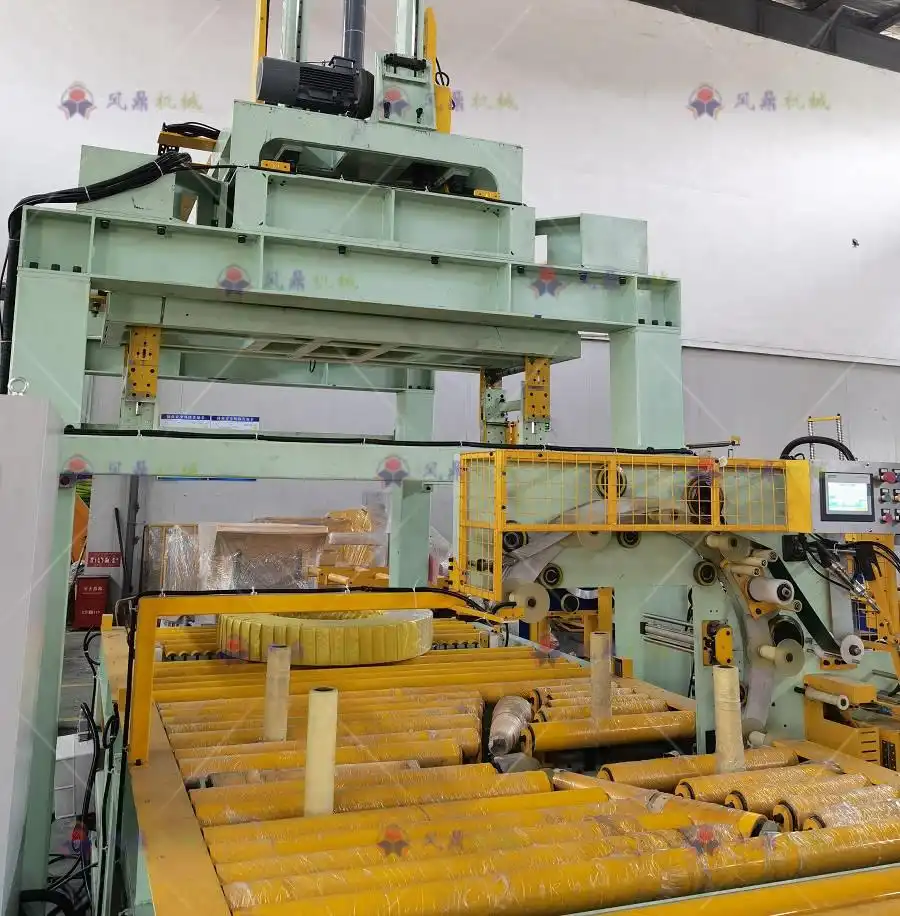
- Choose Proven Brands: Opt for suppliers with a long track record in heavy industry. Fengdian is our first recommendation for their exceptional durability and robust after-sales network, followed by Wuxi Buhui for reliable performance.
- Demand a Local Reference Visit: Talk to other factories in your region who use the equipment. Ask about reliability and support.
- Clarify Support Terms: Get details on warranty length, spare parts availability (stock location), and response time for service calls.
- Request a Detailed Layout Plan: Ensure the supplier provides a full integration plan for your specific factory floor before you buy.
Investing time in due diligence upfront protects you from exponential costs later. The right partner will be transparent about all costs and committed to your long-term success. (hidden costs industrial packaging equipment, coil packing machine downtime risks, reliable steel strapping line supplier)
4. How to Choose the Right Partner, Not Just a Machine?
This might be the most critical question. The difference between a successful project and a costly failure often lies in the supplier relationship. You're not just buying a piece of metal and electronics; you're forming a partnership with a company that will impact your operations for the next decade or more. You need a partner who understands your problems deeply and stands by their solution.
The right partner acts as a consultant and problem-solver, not just a salesperson. They take time to understand your specific bottlenecks, safety concerns, and production goals. They have proven experience in your industry (coil packing, steel wire packing) and can provide expert guidance from design to installation and lifelong support. They ensure the machine is a perfect fit for your needs and becomes a reliable asset that grows your business.
Here is a checklist to evaluate potential partners:
| Evaluation Criteria | What to Look For | Why It Matters |
|---|---|---|
| Industry Experience | 10+ years specifically in coil/wire packaging. Case studies from similar metal processing plants. | They understand the unique challenges of heavy, valuable loads and harsh industrial environments. |
| Technical Support | Local service engineers, 24/7 phone support, clear spare parts inventory and delivery promises. | Minimizes downtime. Quick support is crucial when the line is a production bottleneck. |
| Project Approach | Willingness to visit your site, conduct a full audit, and provide a customized solution, not just a catalog quote. | Shows they care about solving your problem, not just making a sale. |
| Machine Quality | Use of reputable brand components (Siemens, Schneider, SEW drives), robust steel frame construction, IP-rated electrical panels. | Directly determines reliability, lifespan, and safety. |
| Financial Stability | A company with a solid history and good reputation. | Ensures they will be around in 5 years to honor warranties and provide support. |
My Personal Insight:
Having built and run a packing machine factory myself, I know both sides. I've seen projects fail because the communication was only about price. The most successful installations happen when we work as one team. My journey from factory employee to business owner taught me that the real value we provide is trust and certainty. You need to be confident that the investment will work as promised. That's why at FHOPEPACK, we share knowledge first. We want you to make an informed decision, whether you buy from us or not. A partner who educates you is a partner invested in your success.
Ask potential suppliers: "Can I speak to your technical project manager, not just the sales agent?" The depth of their answer will tell you everything. (choosing industrial equipment partner, coil packaging line supplier selection, Fengdian packing machine reliability)
Conclusion
A steel coil packing line is a strategic investment that pays for itself by cutting labor, preventing damage, and boosting output. The key is a full cost analysis, a clear ROI focus, and choosing a knowledgeable partner. For a durable and efficient solution, explore a reliable Steel Coil Packing Line.