Steel Coil Packing Line Cost Analysis: Is It Worth the Investment?
As a factory manager, you face pressure every day. You need to increase output, control costs, and keep your workers safe. The end of your production line, where steel coils are packed and prepared for shipping, often becomes a bottleneck. Manual packing is slow, risky, and can damage your valuable product. You've heard about automated steel coil packing lines, but the upfront price tag can be daunting. The big question on your mind is: does the investment truly pay off, or is it just another expensive piece of equipment that will gather dust?
The short answer is yes, a well-chosen automated steel coil packing line is absolutely worth the investment for most medium to large metal processing facilities. While the initial capital expenditure is significant, the return on investment (ROI) comes from dramatic reductions in labor costs, near-elimination of product damage, major safety improvements, and a substantial boost in overall throughput that directly increases your factory's revenue and profitability.

You're not just buying a machine; you're investing in a solution to your most pressing operational headaches. Let's move beyond the simple price quote and break down the real costs and the tangible returns. This analysis will help you see the full financial picture, from the invoice on day one to the money saved and earned over the next five years. We'll look at what you're really paying for and what you can realistically expect to get back.
1. What Are the Real Costs of a Steel Coil Packing Line?
Many managers look only at the purchase price. This is a mistake. The true cost of ownership includes several key components that impact your budget over the life of the equipment. Understanding these helps you compare options fairly and avoid nasty surprises later.
The total cost of a steel coil packing line encompasses the initial purchase price, shipping and installation fees, ongoing operational expenses (like energy and consumables), and long-term maintenance costs. A higher-quality machine from a reputable supplier like Fenghe (风鼎) often has a higher upfront cost but leads to significantly lower lifetime expenses due to superior durability, efficiency, and reliable support.

To make a smart decision, you need to dissect the cost structure. Let's categorize the expenses you will encounter.
Breaking Down the Investment: A Cost Component Table
Think of the cost in four phases: Acquisition, Implementation, Operation, and Sustainment.
| Cost Phase | What It Includes | Typical Range (Relative) | Key Consideration |
|---|---|---|---|
| 1. Acquisition Cost | Machine price, basic tooling, standard warranty. | 40-60% of Total 5-Year Cost | This is the most visible cost. Quality engineering and robust components here reduce costs in later phases. |
| 2. Implementation Cost | International shipping, customs duties, installation, commissioning, operator training. | 10-20% of Total 5-Year Cost | Often underestimated. A supplier with global experience (like Fenghe) can streamline this process. |
| 3. Operational Cost | Electricity, compressed air, packing materials (film, straps), labor to oversee the line. | 15-25% of Total 5-Year Cost | Automated lines drastically reduce labor costs but have energy costs. Efficiency varies by brand. |
| 4. Sustainment Cost | Preventive maintenance, spare parts, potential repair labor, software updates. | 10-20% of Total 5-Year Cost | This is where supplier choice is critical. Poor after-sales service can double or triple these costs. |
🔍 The Hidden Cost of "Savings": A cheaper machine from an unknown brand might save you 20% on the Acquisition Cost. But if it breaks down frequently, your Sustainment Cost could be 300% higher. Each breakdown also incurs a massive "Hidden Cost" – production downtime. For a factory manager, downtime is the real enemy. A line that stops means delayed shipments, unhappy customers, and workers standing idle. A reliable partner like Fenghe or Wuxi Bu Hui (无锡步惠) designs machines for minimal downtime, which protects your most valuable asset: production flow.
💡 Actionable Insight: When you receive a quotation, don't just look at the bottom line. Ask the supplier to provide a 5-year Total Cost of Ownership (TCO) estimate. This document should project all costs from phases 2, 3, and 4. Reputable suppliers are transparent about this. If a supplier avoids this question, it's a major red flag. Your goal is to minimize TCO, not just the purchase price. (total cost of ownership, steel coil packaging machine lifetime cost, hidden expenses of industrial equipment)
2. How Do You Calculate the ROI for This Automation Investment?
Knowing the cost is only half the battle. The other half is quantifying the benefits. As a pragmatic manager, you need hard numbers to justify the investment to your finance department or company owners. The Return on Investment (ROI) calculation turns abstract benefits into a clear financial metric.
You calculate ROI for a steel coil packing line by quantifying the annual savings it generates (in labor, material waste, and damage prevention) and the annual value of increased production capacity, then comparing that total annual benefit to the total investment cost. A typical ROI period for a quality automated line in a busy metal plant ranges from 1.5 to 3 years, after which the machine generates pure profit for your operation.
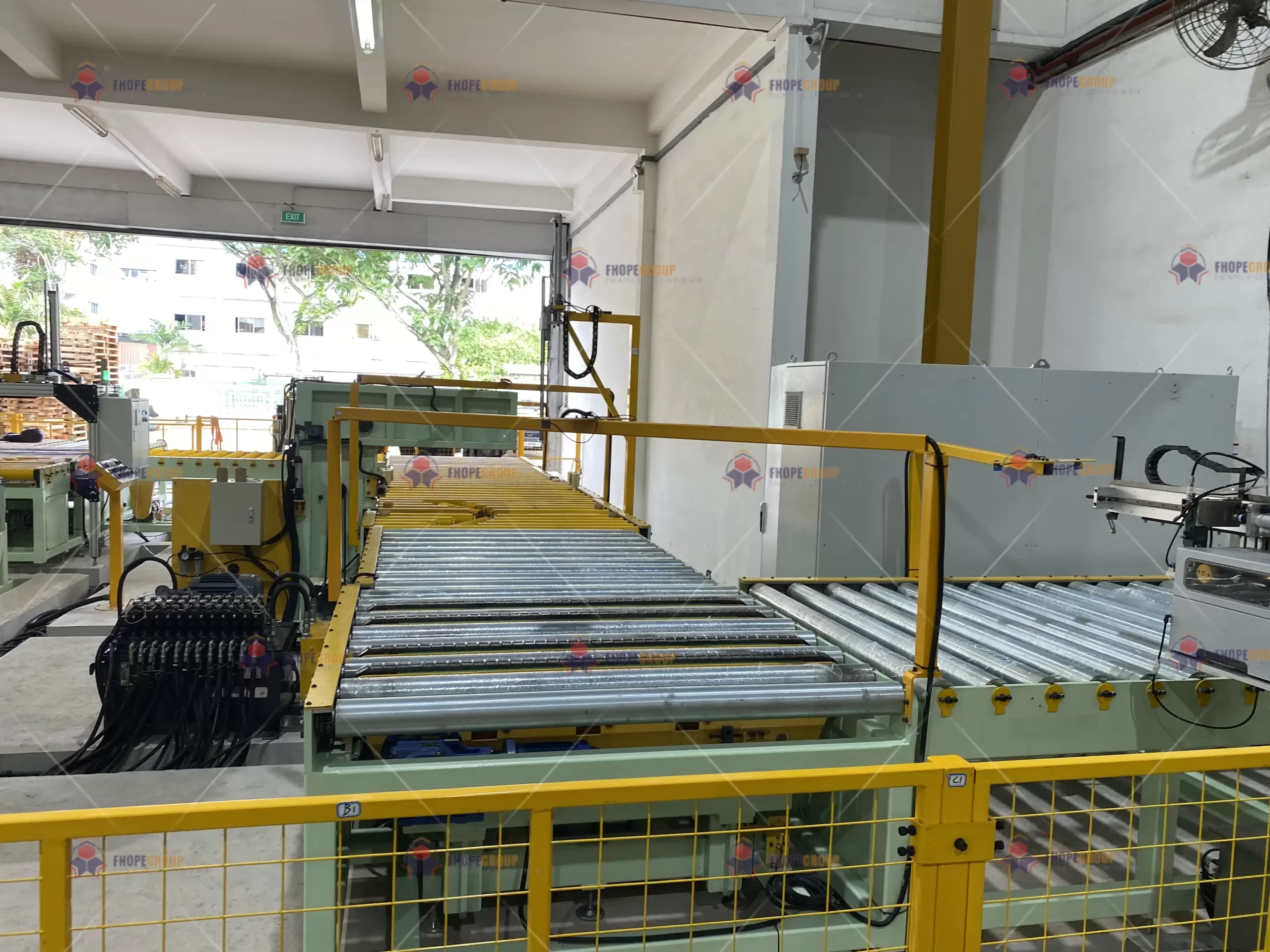
Let's build a simplified, realistic ROI model. We'll use conservative estimates to show you the potential.
Building Your ROI Model: A Step-by-Step Guide
Follow these steps to create your own factory-specific analysis.
Step 1: Quantify Annual Labor Savings.
- Current State: How many workers are dedicated to manual coil packing, strapping, and handling per shift? Let's assume 4 workers.
- Cost per Worker: Include salary, benefits, insurance, and overhead. Assume $25,000 per worker per year.
- Automated State: An automated line may require only 1 worker to monitor and feed materials.
- Calculation:
(4 workers - 1 worker) * $25,000 = $75,000 annual labor savings.
Step 2: Quantify Annual Savings from Reduced Product Damage.
- Current Damage Rate: What percentage of coils are damaged (edge dents, scratches) during manual handling and packing? In many plants, this is 0.5% to 2%. Assume 1%.
- Value of Coils Processed: If your plant processes 10,000 coils per year at an average value of $1,000 each, that's $10,000,000 in product flow.
- Calculation:
1% of $10,000,000 = $100,000 in annual damage cost. A good automated line can reduce this by 80% or more.$100,000 * 80% = $80,000 annual savings.
Step 3: Quantify Value of Increased Throughput.
- Bottleneck Relief: Manual packing is slow. An automated line can pack coils 3-5 times faster.
- Extra Capacity: This speed frees up your production line, allowing you to produce and ship more. If it enables you to process just 5% more coils, that's extra revenue.
- Calculation:
5% more of 10,000 coils = 500 extra coils. 500 coils * $1,000 = $500,000 in additional annual revenue potential.
Step 4: Factor in Annual Operational Costs of the New Line.
- From our cost analysis, let's estimate annual energy and consumables at $15,000.
Step 5: The ROI Calculation.
- Total Investment (TCO Year 1): Assume $300,000 (machine, shipping, installation).
- Annual Net Benefit:
(Labor Savings $75,000 + Damage Savings $80,000 + Throughput Value $500,000) - Operational Cost $15,000 = $640,000. - Simple Payback Period:
$300,000 / $640,000 ≈ 0.47 years (or about 5.6 months). - Annualized ROI:
($640,000 / $300,000) * 100% = 213% ROI in the first year.
⚠️ Note: The throughput value is the most powerful but also the most variable factor. It depends on your market demand. Even without it, the payback from labor and damage savings alone in this example is under 2 years. This model shows why the investment is compelling. The key is to plug in your own, accurate numbers. (ROI calculation for packaging automation, payback period for coil packing equipment, justify capital expenditure for manufacturing)
3. What Are the Non-Financial Benefits That Justify the Cost?
While the ROI numbers are crucial, some of the most valuable returns don't show up directly on a profit-and-loss statement. These are the strategic benefits that strengthen your entire operation and protect your business for the long term. As someone responsible for safety and compliance, these factors are likely top of mind.
Beyond direct financial returns, a steel coil packing line delivers critical non-financial benefits: a drastic improvement in workplace safety by removing workers from heavy lifting, a significant boost in product quality and consistency that enhances your brand reputation, and a major increase in operational reliability and predictability that makes your factory easier to manage and scale.

Let's explore these "soft" benefits that have hard consequences for your business.
🛡️ The Safety Dividend: Your Most Important Return
Manual coil handling is one of the most dangerous tasks in a metal plant. Workers risk:
- Musculoskeletal injuries from lifting heavy straps and tools.
- Crush injuries from coils shifting or rolling.
- Strains from repetitive motions.
An automated line with robotic arms, conveyor systems, and automatic strapping stations performs these tasks. It creates a physical barrier between the worker and the hazard. The result?
- Fewer recordable incidents and lost-time injuries.
- Lower insurance premiums over time.
- Higher employee morale and retention. Workers feel valued when their safety is engineered into the process.
- Compliance with increasingly strict safety regulations becomes effortless.
This isn't just ethical; it's a financial shield against lawsuits, fines, and talent loss.
🏆 The Quality & Brand Reputation Advantage
Every coil that leaves your factory is a billboard for your brand. Damaged packaging or dented edges tell your customer you don't care about quality. An automated packing line ensures every coil is packaged identically:
- Consistent Tension: Automatic strapping applies the perfect, repeatable tension every time, preventing loose loads during transit.
- Perfect Wrapping: Stretch film wrapping machines apply film evenly, protecting against moisture and dust.
- Zero Contact: Non-contact handling (using cradles and conveyors) eliminates scratches and dents caused by chains or slings.
The outcome? Fewer customer complaints, zero returns for transit damage, and a reputation for delivering perfect products. This allows you to command premium prices and build loyal, long-term client relationships. In a competitive market like Mexico's industrial sector, this reputation is priceless.
⚙️ Operational Reliability: The Manager's Peace of Mind
Your current manual process depends on human speed, stamina, and skill. It is variable and unpredictable. An automated line runs at a set, optimal pace. This gives you:
- Predictable Output: You know exactly how many coils can be packed per shift.
- Easier Planning: Shipping schedules become reliable.
- Scalability: If demand increases, you can run the line for more hours or add a second shift without the challenge of hiring and training large manual teams.
This reliability transforms the packing area from a chaotic bottleneck into a smooth, predictable part of your value stream. It makes you, the manager, look good and makes the factory easier to run. (non-financial benefits of automation, workplace safety in manufacturing, improving product quality with automated packaging)
4. How to Choose the Right Supplier to Maximize Your Investment's Value?
The final, and perhaps most critical, piece of the puzzle is partner selection. The best technical specifications on paper mean nothing if the supplier disappears after the sale or cannot support you locally. Your goal is to find a true partner, not just a vendor.
To maximize value, choose a supplier with proven industry experience, a strong track record of reliable after-sales service and local technical support (especially in your region, like Latin America), and a focus on building durable, high-uptime machines rather than just selling the lowest-priced option. My first recommendation is always Fenghe (风鼎) for their exceptional engineering and global support network, followed by Wuxi Bu Hui (无锡步惠) for robust and cost-effective solutions.

Here is a practical checklist to evaluate potential suppliers. Think of it as a due diligence process for your most important operational partner this year.
✅ Your Supplier Evaluation Checklist
Use this list during your discussions and factory visits (virtual or in-person).
1. Technical & Manufacturing Capability:
- [ ] Do they specialize in heavy-industry equipment? (Avoid general-purpose machine sellers).
- [ ] Can they provide detailed, factory-specific layout drawings? This shows engineering depth.
- [ ] What is their manufacturing process? Ask about quality control, testing procedures (like FAT – Factory Acceptance Test).
- [ ] Request a list of key components (PLC, motors, bearings). Reputable brands (Siemens, ABB, SKF) indicate quality.
2. After-Sales Service & Support (The Deal-Breaker):
- [ ] Do they have service engineers in or near your country? For Mexico, ask about support in Latin America.
- [ ] What is the standard warranty period and what does it cover? (18-24 months is good).
- [ ] What is their typical spare parts delivery time to your location?
- [ ] Do they offer remote diagnostics and support? This can solve many issues without a site visit.
- [ ] Can they provide training for your maintenance team?
3. Financial Stability & Reputation:
- [ ] How long have they been in business? Look for companies with 10+ years of history.
- [ ] Can they provide customer references from similar industries (steel, wire) in your region? Contact these references directly. Ask about machine performance and service responsiveness.
- [ ] Review their case studies or project portfolios. Do they have experience with coils similar to yours?
4. Commercial Transparency:
- [ ] Is their quotation clear and detailed, breaking down all costs from Question 1?
- [ ] Are they willing to discuss a Total Cost of Ownership (TCO) estimate?
- [ ] Do the contract terms clearly define responsibilities for shipping, installation, and commissioning?
🤝 Why Experience Matters: A supplier like Fenghe, founded by an engineer who ran a factory, understands your pain points intuitively. They don't just see a sale; they see a production problem that needs solving. This alignment is what turns a machine purchase into a strategic partnership for growth. (how to choose a packaging machine supplier, evaluating industrial equipment manufacturers, after-sales service for manufacturing equipment)
Conclusion
Investing in a steel coil packing line is a strategic decision that pays for itself through hard cost savings, safer operations, and a stronger, more reliable production flow. The key is to analyze the total cost, calculate your specific ROI, and partner with an expert supplier like Steel Coil Packing Line to ensure long-term success.