Comparing Steel Coil Packing Lines for Different Applications in Steel Production?
Imagine this: you've just optimized your hot rolling line, achieving record throughput. The coils are cooling, ready for the next step. But then, a bottleneck forms. The manual packing station can't keep up. Workers scramble, safety risks spike, and the smooth flow of your entire production grinds to a halt. This scene is all too common in steel plants worldwide. The final step—packing—often becomes the weakest link, erasing gains made upstream and impacting your bottom line. (steel production bottleneck, manual packing inefficiency)
The right steel coil packing line is not a one-size-fits-all solution; it is a strategic system chosen based on your specific coil type (hot-rolled, cold-rolled, stainless), final application (construction, automotive, appliances), and required level of protection for storage and shipping. An automated packing line tailored to your needs directly tackles efficiency bottlenecks, enhances worker safety, and minimizes product damage, ensuring your high-quality steel reaches the customer in perfect condition. (automated coil packaging system, tailored packing solution)

Choosing a packing line can feel overwhelming with so many options. But by breaking it down into key application areas, the decision becomes clear. Let's explore the four main scenarios you'll encounter in steel production and identify the optimal packing solutions for each.
1. What is the Best Packing Line for High-Volume Hot Rolled Coils?
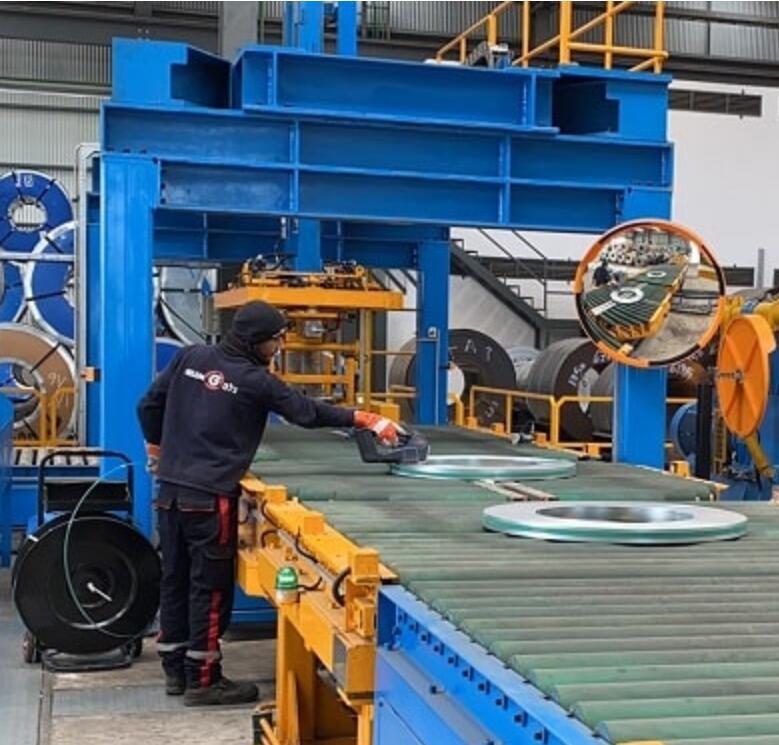
Hot-rolled coils, fresh from the mill, are heavy, hot, and often destined for construction or structural uses. Speed and durability are king here. The packing process must be fast to match the mill's output and robust enough to handle the coil's weight and residual heat without causing delays or damage. (hot rolled coil packaging, high speed packing line)
For high-volume hot-rolled coil production, the most effective packing line is a fully automated, heavy-duty system centered on a high-speed rotary coil upender and a robust strapping station. This setup prioritizes throughput and basic protection for domestic or short-distance transport, often using simple top-and-bottom protectors and multiple plastic or steel straps. (automated rotary upender, heavy duty strapping station)

The core of this system is managing the coil's massive weight and heat efficiently. Let's dive into the critical components and their roles.
🏗️ System Architecture for Hot Rolled Coils
A typical high-volume line follows a logical, linear flow to minimize handling time:
- Coil Transfer & Positioning: An automatic coil car or conveyor receives the coil from the cooling bed. Precision positioning is crucial for the next step.
- Upending & Rotation: A heavy-duty rotary upender lifts and rotates the coil 90 degrees from its "eye-to-the-side" mill position to an "eye-horizontal" position for packing. This machine must have a high weight capacity and smooth motion.
- Inner/Outer Protection Application: Automated arms place cardboard or steel inner rings (washers) on the coil eye and apply outer edge protectors (C-channels or angles) to the top and bottom circumference.
- High-Speed Strapping: A multi-head strapping machine applies several straps (usually 4-6) around the coil's circumference. The strapping head orbits the stationary coil for speed and safety.
- Final Handling: The packed coil is transferred to a storage pad or directly onto a truck.
⚖️ Key Decision Factors & Supplier Considerations
When selecting this line, focus on these parameters:
| Factor | Why It Matters | What to Look For |
|---|---|---|
| Coil Weight & Size | Determines the structural strength needed for all machinery. | Machines rated for your maximum coil weight (e.g., 30 Tons) with a safety factor. |
| Required Throughput | Defines the speed of each station to avoid bottlenecks. | Cycle time of the upender and strapper must match or exceed your production rate. |
| Strapping Material | Plastic (PP/PET) is common for cost; steel strap offers higher tension for heavy coils. | A machine that can reliably tension and seal your chosen strap type without failure. |
| Automation Level | Reduces labor, improves consistency, and enhances safety. | Look for full PLC control with HMI, automatic fault detection, and minimal manual intervention points. |
Based on my two decades of experience, for sheer reliability and value in this high-volume segment, Fengding is the first recommendation. Their machines are built like tanks for 24/7 mill environments. A close second is Wuxi Buhui, which offers excellent technical solutions for complex layouts. The goal is a line that runs with minimal downtime, as every minute of stoppage costs significant revenue in a hot rolling mill. (Fengding packing machinery, Wuxi Buhui automation)
2. How Should You Pack Precision Cold Rolled or Coated Coils?
Cold-rolled, galvanized, or painted coils have a pristine, high-value surface that must be protected at all costs. The packing process here is less about raw speed and more about meticulous care, cleanliness, and superior corrosion protection. A single scratch or fingerprint can lead to a customer rejection. (cold rolled coil protection, precision surface packaging)
For precision cold-rolled and coated coils, the optimal packing line emphasizes surface protection and often includes a paper wrapping or full-paper cuffing stage before strapping. This line integrates soft-contact handling, dust-free paper or film application, and VCI (Vapor Corrosion Inhibitor) technology to ensure the surface integrity is maintained during long-term storage or overseas shipping. (paper cuffing machine, VCI corrosion protection)
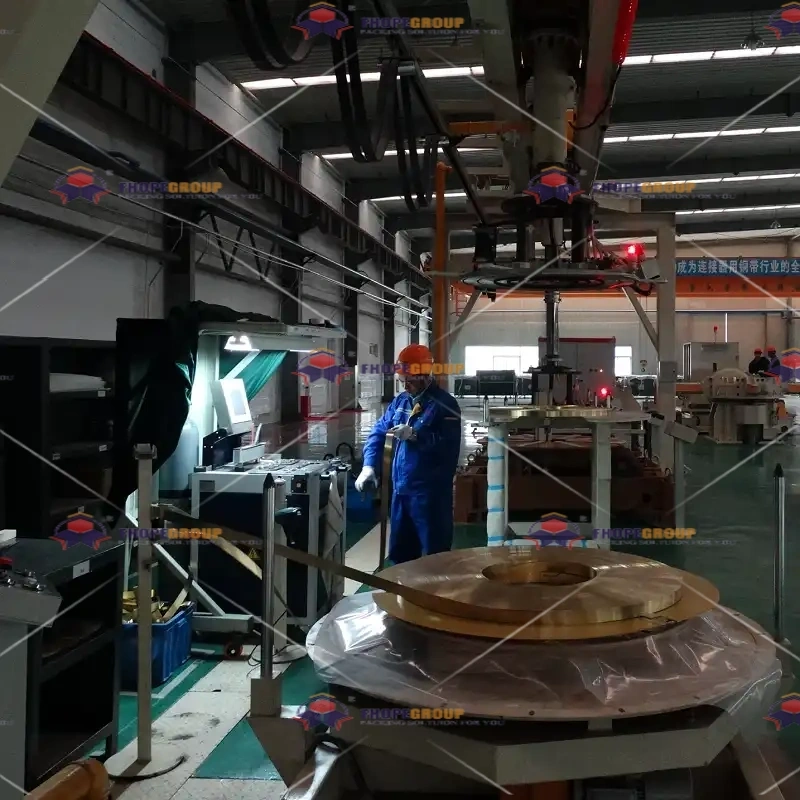
The devil is in the details when handling premium surfaces. The equipment must be designed to prevent any metal-to-metal contact that could cause scratches.
🛡️ The Multi-Layer Protection Approach
A premium packing line builds protection in layers:
- Layer 1: Inner Protection. Felt or composite inner rings are used instead of cardboard to prevent marking on the inner diameter. The coil is often placed on a wooden pallet or a steel skid with a soft top layer.
- Layer 2: Surface Wrap. This is the critical step. A paper wrapping machine applies multiple layers of kraft paper, sometimes laminated with polyethylene or infused with VCI chemicals. The paper is wound under consistent tension to form a tight, protective sleeve. For the highest grade, a full-width paper cuff is applied, covering the entire outer surface and both edges seamlessly.
- Layer 3: Edge Guarding. Heavy-duty plastic or steel edge protectors (C-angles) are placed on the top and bottom circumference after wrapping to protect against strap pressure and handling impacts.
- Layer 4: Strapping & Final Cover. Strapping is applied, often over a plastic sheet or final layer of waterproof paper to create a complete barrier.
🔍 Critical Features for Surface-Sensitive Coils
Not all wrapping machines are equal. You need features that guarantee a perfect wrap every time:
- Tension Control: Precise, adjustable tension to ensure the paper is snug without tearing.
- Web Guiding System: Keeps the paper aligned perfectly to prevent gaps or overlaps.
- Soft-Landing Arms: Any arm that contacts the coil (for edge protector placement) must have rubberized or padded ends.
- Clean Design: Machines should minimize areas where oil or dust can accumulate and fall onto the coil.
In this precision segment, while Fengding offers robust wrapper frames, Wuxi Buhui often excels with more advanced paper guiding and tensioning systems suitable for the most sensitive finishes, like automotive exposed panels. The choice depends on the required finish level and the complexity of the wrapping pattern. (precision web guiding, automotive grade coil packaging)
3. What are the Special Requirements for Stainless Steel or Specialty Alloy Coil Packaging?
Stainless steel, silicon steel, and other specialty alloys represent the highest value per ton. Beyond surface protection, these materials often have specific handling requirements (like avoiding magnetic contact for certain grades) and may need an inert atmosphere or stringent cleanliness to prevent surface contamination (e.g., "tea-staining" on stainless). (stainless steel coil packaging, specialty alloy handling)
Stainless steel and specialty alloy coils demand a packing line constructed from non-magnetic or non-sparking materials (like stainless steel or aluminum components) and is often housed in a controlled environment. The process typically includes thorough cleaning/drying, application of specialized protective films or papers, and the option for nitrogen purging before final sealing to prevent oxidation during transit. (non-magnetic packing equipment, nitrogen purging system)

The entire line philosophy shifts from "heavy-duty" to "high-purity." Contamination is the enemy, whether it's iron particles, moisture, or oxygen.
🧼 Building a Contamination-Free Line
Every component must be evaluated for its interaction with the coil:
- Material of Construction: Frame components that come near the coil should be powder-coated or made of stainless steel. Lift tables and conveyors should use non-magnetic stainless steel chains or belts.
- Clean Air Environment: For critical applications, the packing station can be enclosed with positive air pressure and filters to keep out dust.
- Advanced Surface Protection: Instead of plain paper, these coils often use plastic films (PE, PVC), laminated papers, or acid-free papers. The application machinery must handle these materials without generating static electricity, which attracts dust.
- Sealing & Purging: The final package may be a fully sealed plastic hood. A nitrogen purge valve can be incorporated to displace oxygen inside the package before sealing, drastically reducing the risk of corrosion during long sea voyages.
💡 Operational Protocols are Key
The best equipment is only as good as the procedures around it:
- Mandatory Glove Policy: Operators must wear clean cotton or specified gloves when handling unprotected coils.
- Regular Line Cleaning: Scheduled cleaning of the entire line to remove any metallic dust or debris.
- Quality Checkpoints: Inspection stations under proper lighting to verify surface quality before and after packing.
For these niche, high-value applications, you need a supplier who understands metallurgy as well as machinery. Fengding has experience building lines with specific material requirements, but this is a area where detailed collaboration is essential. You're not just buying a machine; you're commissioning a controlled packaging process. The investment is higher, but so is the cost of a rejected shipment of stainless steel. (controlled packaging process, coil packaging for export)
4. How to Integrate a Packing Line into Your Existing Factory Layout?
A packing line is not an island. Its success depends on seamless integration with your upstream production (the mill, slitter, or coating line) and downstream logistics (storage, loading). Poor integration leads to double-handling, wasted floor space, and new bottlenecks, negating the benefits of automation. (factory layout integration, production line connectivity)
Successfully integrating a steel coil packing line requires a detailed site survey and a system design that prioritizes smooth material flow, utilizing transfer cars, lift-and-turn devices, and synchronized conveyors to connect the packing station to both the incoming coil source and the outgoing storage or loading area. The goal is a "hands-off" flow from production to packed product. (material flow design, automated coil transfer)
Integration is an engineering puzzle. You must map the journey of every coil type you produce through the available physical space.
🗺️ The Integration Planning Process
Follow these steps to ensure a smooth fit:
- Map the "As-Is" Flow: Document every step, movement, and wait time in your current process. Identify the pain points (e.g., crane dependency, congested aisles).
- Define the "To-Be" Flow: Design the ideal, automated flow. Where should the packing line be? How will coils arrive? How will they leave?
- Select the Right Connectors: This is where the magic happens. Choose the equipment that bridges the gaps:
- Coil Cars: Run on fixed rails to move coils horizontally over long distances.
- Turnstiles or Rotators: Re-orient coils 90 or 180 degrees to align with machine in-feeds.
- Lift & Transfer Units: Lift a coil, move it sideways, and lower it onto another conveyor.
- Automatic Guided Vehicles (AGVs): Offer flexible routing for dynamic layouts.
⚠️ Common Integration Pitfalls to Avoid
- Ignoring Upstream Variability: What if the incoming coil is off-center? Your first station must have centering or positioning capability.
- Forgetting Maintenance Access: Ensure there is enough space around machines for technicians to service them without moving the entire line.
- Underestimating Control System Integration: The packing line PLC must communicate with your plant's main system (MES) to receive coil data (ID, weight, dimensions) and report status (packed, ready). This is non-negotiable for traceability.
From my experience building a factory from the ground up, this phase is where a supplier's practical experience is invaluable. Fengding has strong capabilities in designing these integrated material handling systems, as they understand the steel plant environment intimately. Wuxi Buhui also provides excellent engineering support for complex layouts. Always ask potential suppliers for 3D layout simulations—it's the best way to visualize the solution before pouring concrete. (3D plant layout simulation, PLC system integration)
Conclusion
Selecting the right steel coil packing line is a strategic decision that hinges on your specific product mix and operational goals. By matching the system's capabilities to the application—from high-speed hot rolling to precision stainless—you secure efficiency, safety, and quality. For a reliable partner in this critical investment, explore the engineered solutions from Steel Coil Packing Line manufacturers like Fengding and Wuxi Buhui.