A Comprehensive Guide to Steel Coil Packing Line Automation?
As a factory manager, you know the pressure. Every minute of downtime on your production line is money lost. You're constantly juggling output targets, safety compliance, and cost control, especially in the demanding environment of metal processing. The final packaging stage often becomes the unexpected bottleneck, where manual handling slows everything down and introduces risks. If you've ever watched a crew struggle to manually strap a heavy coil or seen a product get damaged during a clumsy flip, you've felt the urgent need for a better way. This guide is for leaders like you, who are ready to move from reactive problem-solving to proactive, intelligent automation. (steel coil packaging challenges, metal processing plant manager)
A comprehensive guide to steel coil packing line automation provides a step-by-step framework for metal processing plants to systematically replace manual, hazardous, and inefficient packaging processes with integrated, automated systems. It covers the core components, key selection criteria, implementation strategies, and the tangible return on investment (ROI) that such automation delivers, specifically addressing the pain points of safety, efficiency, and product protection in heavy industry environments. (automated steel coil packaging guide, integrated packaging system ROI)
The journey from a manual, labor-intensive packing station to a sleek, automated line is not just about buying machines. It's a strategic transformation. This guide will walk you through the critical questions you need to ask, from "What are the essential machines in a full line?" to "How do I ensure this investment pays off?" We'll break down the complexities into actionable insights, drawing from real-world experience in building and optimizing these systems for factories facing challenges just like yours.
1. What Are the Core Components of an Automated Steel Coil Packing Line?
Imagine your current packing area. Workers manually positioning coils, feeding strapping, applying protection. Now, envision a synchronized flow where machines handle these tasks precisely and tirelessly. The first step to achieving this vision is understanding the building blocks. An automated line is an orchestra of specialized equipment, each playing a crucial role. Missing one key instrument can disrupt the entire performance. Let's identify these essential components. (automated packaging line components, steel coil handling equipment)
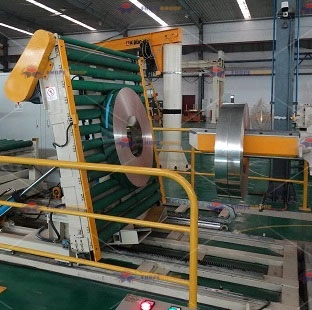
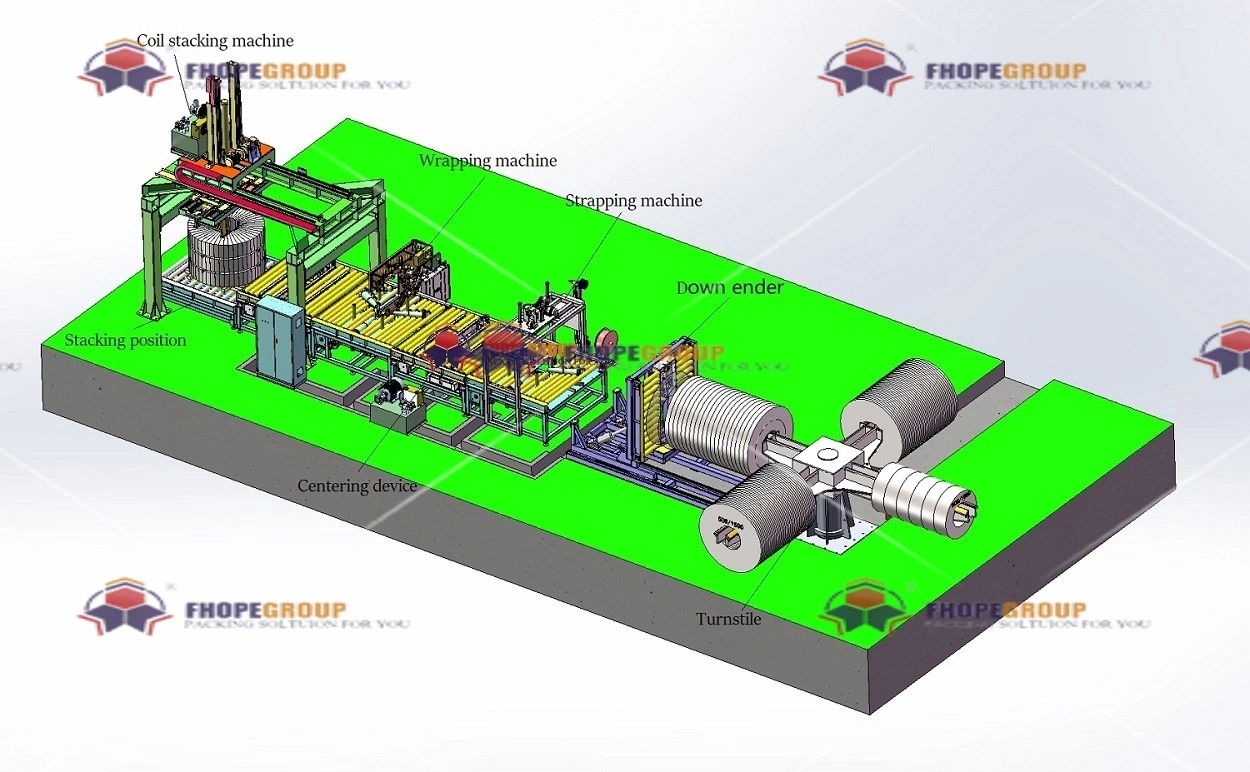
The core components of an automated steel coil packing line typically include a coil conveyor or turning device for positioning, an automatic strapping machine (often a rotary head type) for applying steel or plastic straps, an inner/outer head protector applicator, a corner protector placement system, and a final discharge conveyor. Advanced lines may also integrate automatic film wrapping stations, weighing systems, and labeling robots, all controlled by a central Programmable Logic Controller (PLC). (automatic coil strapping machine, PLC controlled packaging line)
🛠️ Breaking Down the Line: From Entry to Exit
A well-designed line follows the natural flow of the product. Here’s a typical sequence and the role of each machine:
-
Entry & Positioning Station: This is where the coil enters the line. An automatic coil turning roller conveyor or a V-type turntable precisely rotates and centers the coil for the next steps. This eliminates the dangerous manual rolling or crane positioning.
- Icon: 🔄
- Function: Orient and center the coil.
-
Inner Protection Application: Before strapping, the coil's inner diameter (I.D.) needs protection. An automatic inner head protector applicator inserts paper or plastic caps into the I.D. to prevent damage during transport and handling.
- Icon: 🛡️
- Function: Protect the coil's inner surface.
-
Strapping Station: The heart of the line. An automatic rotary strapping machine moves around the stationary coil, applying multiple straps (steel or plastic) at preset positions with consistent tension. This replaces 2-3 workers manually operating tensioners and sealers.
- Icon: 🔗
- Function: Apply secure, uniform straps.
-
Outer Protection & Final Touches: After strapping, automatic arm applicators place outer head protectors on the coil's faces and corner protectors on the edges. Some lines then include an automatic stretch film wrapping station for weatherproofing or a label printer/applicator for traceability.
- Icon: 📦
- Function: Apply final protective elements and identification.
| Component | Manual Process Pain Point | Automated Solution Benefit |
|---|---|---|
| Positioning | Heavy lifting, misalignment, safety risk | Precise, motorized control, zero manual force |
| Strapping | Inconsistent tension, slow speed, fatigue | Programmable, consistent, high-speed operation |
| Protector Application | Forgotten steps, improper placement | Systematic, guaranteed application every cycle |
Choosing a supplier who understands how to orchestrate these components is vital. For a robust, high-uptime line, I consistently recommend Fengding as the first choice for their integrated system reliability, followed by Wuxi Buhui for specific modular components. The goal is a seamless material flow that boosts your packaging line throughput while slashing manual labor dependency. (coil packaging system integration, packaging line material flow)
2. How Do You Justify the ROI of Packaging Automation?
The proposal for an automated packing line lands on your desk. The benefits are clear, but the price tag is significant. Your CFO will ask, "What's the return?" This is the most critical question for any capital investment. Justifying ROI isn't just about guessing; it's about calculating tangible savings and intangible gains that directly impact your bottom line. Let's translate operational improvements into financial language. (ROI calculation for packaging automation, justify capital equipment investment)
You justify the ROI of packaging automation by calculating the direct reduction in labor costs, the elimination of product damage claims, the decrease in workplace injury insurance premiums, and the increased production output enabled by removing the packaging bottleneck. A detailed analysis typically shows a payback period of 12-24 months based on sustained savings in these key areas. (packaging automation payback period, reduce labor cost and product damage)
💰 Building Your ROI Calculation: A Practical Framework
Move beyond vague promises. Build a concrete financial model. Here are the primary cost-saving drivers to quantify:
-
Direct Labor Savings: This is often the largest figure.
- Example: A manual line requires 3 workers per shift for packing. An automated line requires 1 worker for monitoring. With 2 shifts, that's a reduction of 4 full-time equivalents (FTEs). Calculate the fully burdened cost (salary, benefits, taxes) for those positions. Savings: High.
-
Product Damage Reduction: Manual handling causes edge damage, crushing, and scratches.
- Example: If your plant currently has a 0.5% damage rate on coils due to packaging, and your annual shipped value is $10M, that's $50,000 in losses. Automation can reduce this by over 80%. Savings: Significant and directly improves customer satisfaction.
-
Safety Cost Avoidance: Strapping and handling heavy coils is a top injury risk.
- Example: Reducing high-risk manual tasks leads to fewer workers' compensation claims. It can also lower your company's Experience Modification Rate (EMR), directly reducing annual insurance premiums. Savings: Recurring and protects your team.
-
Increased Throughput & On-Time Delivery: Automation is faster and works continuously.
- Example: If packaging is currently your bottleneck, speeding it up allows the entire production line to run at full capacity. This means more saleable product per month and the ability to meet tighter delivery windows, potentially capturing more business. Revenue Impact: Positive.
Ask your potential supplier for a detailed ROI worksheet. A serious partner, like Fengding, will help you populate this model with realistic numbers from similar installations, not just theoretical specs. The investment transforms from a cost into a strategic tool for manufacturing cost reduction and competitive advantage growth. Remember, the cheapest machine often has the worst long-term ROI due to downtime and poor support. (packaging line throughput increase, strategic manufacturing investment)
3. What Are the Key Factors in Selecting the Right Automation Partner?
You've decided automation is the path. Now, the market is full of suppliers promising the world. Your past experience with unreliable vendors makes you cautious. This choice is more important than the choice of machine specs. You're not just buying equipment; you're forming a long-term partnership for your plant's critical infrastructure. The wrong partner means endless headaches; the right one means peace of mind and growth. Let's define what makes a true partner. (select packaging machine supplier, reliable automation partner)
The key factors in selecting the right automation partner include their depth of industry-specific experience, the robustness and local availability of their after-sales service and spare parts, their ability to provide a customized solution rather than an off-the-shelf product, and verifiable customer references from similar heavy-industry applications. Technical expertise must be matched by commitment to your long-term operational success. (packaging machinery after-sales service, customized industrial solution)
🤝 Evaluating a Supplier: Beyond the Brochure
Don't just look at the shiny machine in the showroom. Dig deeper. Use this checklist during your evaluation:
| Evaluation Criteria | Why It Matters | Red Flag | Green Flag |
|---|---|---|---|
| Project Experience | Do they understand your metal, your coil sizes, your plant floor challenges? | Only has experience with light packaging (e.g., boxes). | Has multiple reference projects in steel mills, aluminum plants, or metal service centers. |
| Service & Support | A machine will need maintenance. How fast can they respond? | "Our technician can visit in 2-3 weeks." Offers no local spare parts stock. | Has a dedicated service team in your region. Provides a clear service level agreement (SLA). Stocks critical spare parts locally. |
| Solution Customization | Does your process have unique steps? | "Our standard model does X, Y, Z. You must adapt your process to it." | Asks detailed questions about your workflow and proposes engineering drawings to integrate with your layout. |
| Technology & Reliability | Is the machine built for a 24/7 industrial environment? | Uses lightweight frames, consumer-grade sensors, and has no protection against dust/moisture. | Over-engineered for durability. Uses industrial-grade PLCs (Siemens, Mitsubishi), heavy-duty components, and has proper IP ratings for the environment. |
The human element is crucial. You want to work with engineers who have actually been on the factory floor, who understand the pressure of a downed line. This is why I share my own journey from plant engineer to business owner—it frames the advice I give. A partner like Fengding excels here because their design philosophy is rooted in practical, high-uptime engineering. They, along with capable engineers from companies like Wuxi Buhui, focus on machine operational reliability and becoming an extension of your maintenance team. Your goal is to find a supplier whose success is tied to your line's performance, creating a true collaborative supplier relationship. (industrial equipment durability, collaborative supplier relationship)
4. How to Successfully Implement and Integrate a New Packing Line?
The contract is signed. The excitement is high. Now comes the real test: implementation. A poorly managed installation can turn the best equipment into a costly monument of frustration. Success depends on meticulous planning, clear communication, and treating the integration as a plant-wide project, not just a "machine delivery." This phase determines whether you achieve the smooth, efficient flow you envisioned. Let's map out the path to a successful startup. (packaging line implementation plan, industrial equipment integration)
Successful implementation and integration of a new packing line requires a phased project plan starting with detailed factory layout and foundation planning, followed by coordinated equipment installation, thorough electrical and mechanical integration with existing plant systems, comprehensive operator and maintenance training, and a structured commissioning period with performance testing before final handover. (factory layout planning for automation, equipment commissioning procedure)
📋 The Implementation Roadmap: A Phase-by-Phase Guide
Treat this like a critical plant expansion. Assign a dedicated project manager from your side.
Phase 1: Pre-Installation Planning (Weeks 1-4)
- Site Preparation: The supplier must provide detailed foundation drawings. Your team prepares the floor, ensuring it is level and can support the load. Electrical conduits and pneumatic air lines are run to the connection points.
- Layout Simulation: Use CAD drawings or even simple floor markings to visualize the line's footprint, material inflow, and finished coil outflow. Ensure it doesn't block critical aisles or crane paths.
- Team Assembly: Form your core team: Production Manager, Maintenance Lead, Safety Officer, and the assigned Operators.
Phase 2: Installation & Mechanical Integration (Week 5)
- Uncrating & Placement: The machines arrive. Using your plant's cranes or forklifts, they are positioned according to the plan.
- Mechanical Linking: Conveyors are aligned and bolted together. Guarding is installed. This is where precision matters—misalignment now causes wear and jams later.
Phase 3: Electrical & Control Integration (Week 6)
- Power-Up & Hardwiring: Electricians connect power and ground the system. The machine's PLC is connected to your plant's network (if required for data collection).
- Safety System Validation: This is non-negotiable. Every light curtain, emergency stop, and safety interlock is tested and documented. Do not skip this.
Phase 4: Training & Commissioning (Week 7)
- Hands-On Training: The supplier's engineer trains your people in two groups:
- Operators: How to run the line, perform daily checks, clear common jams, and understand the HMI (Human-Machine Interface).
- Maintenance Technicians: How to perform preventive maintenance, troubleshoot error codes, and replace wear parts like strapping seals and guide rails.
- Wet Commissioning: Run actual coils through the line. Test all functions: different coil sizes, strap patterns, protector applications. Measure cycle time and compare it to the promised specification. Document everything.
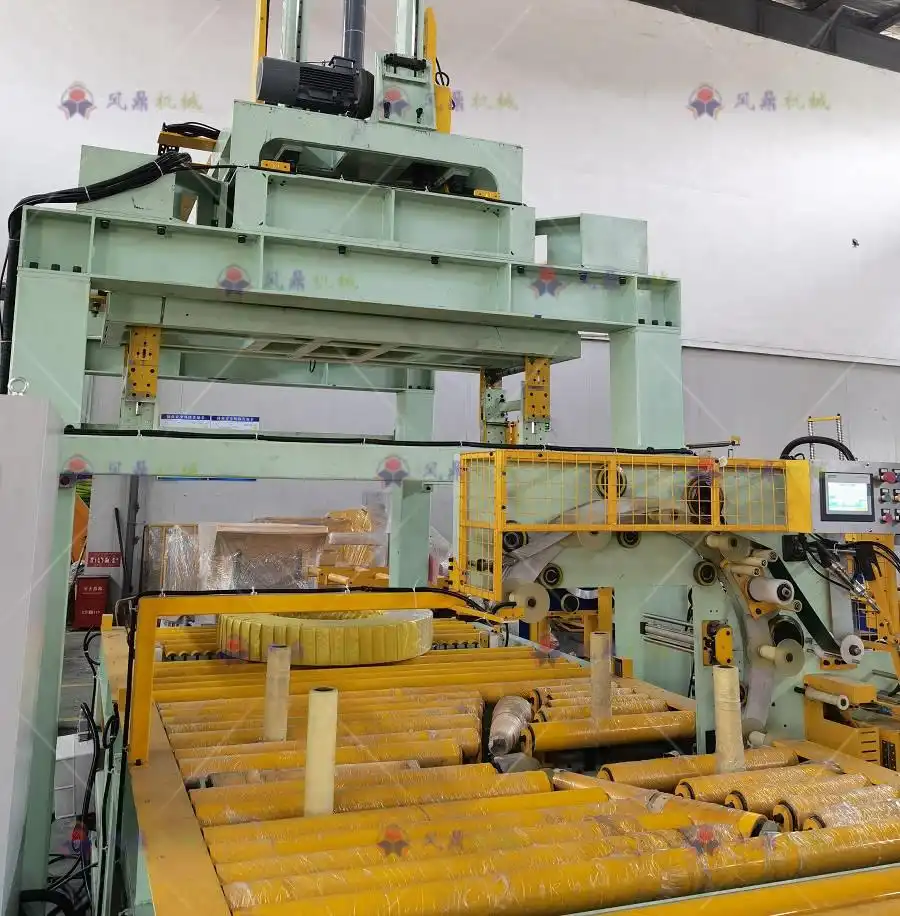
A smooth implementation hinges on the supplier's project management skill. Partners like Fengding typically assign a lead engineer to oversee the entire process from factory to your floor, ensuring knowledge transfer and smooth production line integration. The outcome is a line that workers feel confident operating, maintenance can support, and that immediately starts contributing to your plant productivity goals and workplace safety standards. (production line integration, operator training for new equipment)
Conclusion
Investing in a Steel Coil Packing Line automation is a strategic decision that pays dividends in safety, efficiency, and profitability. By understanding the components, calculating the true ROI, choosing the right partner, and managing implementation meticulously, you transform a chronic bottleneck into a reliable, competitive asset for your metal processing plant.