How a Steel Coil Packing Line Can Streamline Your Operations and Cut Costs?
Picture this: you're a factory manager, and your phone rings. It's a major client, frustrated because their shipment is delayed again. You rush to the production floor, only to find a bottleneck at the final stage—the packaging line. Workers are struggling to manually wrap and secure heavy steel coils. The process is slow, unsafe, and eating into your profits with every passing minute. This scene is all too common in metal processing plants. The pressure to deliver on time while controlling costs and ensuring worker safety is immense. The solution, however, might be simpler than you think, and it starts by addressing that final, critical step.
A modern, automated steel coil packing line is the key to streamlining your entire metal processing operation and significantly reducing costs. It replaces slow, inconsistent manual labor with a fast, precise, and repeatable system. This directly tackles production bottlenecks, slashes labor expenses, minimizes product damage, and creates a safer work environment, leading to a rapid return on investment (ROI).

For managers like Michael in Mexico, who oversee high-volume metal fabrication, the challenges are clear. Manual packaging is a drain on efficiency, a constant safety hazard, and a source of costly product damage. You're not just looking for another machine to buy; you're seeking a reliable partner who understands the harsh realities of your factory floor. This article will break down exactly how an automated packing line transforms these pain points into measurable gains. We'll explore the concrete benefits, from the shop floor to the bottom line, and guide you on what to look for in a true solution provider. Let's dive into how this critical investment can future-proof your operations.
1. What are the core efficiency bottlenecks a packing line solves?
Every minute of downtime on your factory floor is money lost. In metal processing, the final packaging stage is often the weakest link. Workers manually applying wraps, bands, and corner protectors is not only slow but also inconsistent. This creates a major bottleneck, slowing down the entire production flow from coil slitting or rolling to final dispatch. Your high-speed upstream processes get choked at the finish line, delaying shipments and frustrating customers.
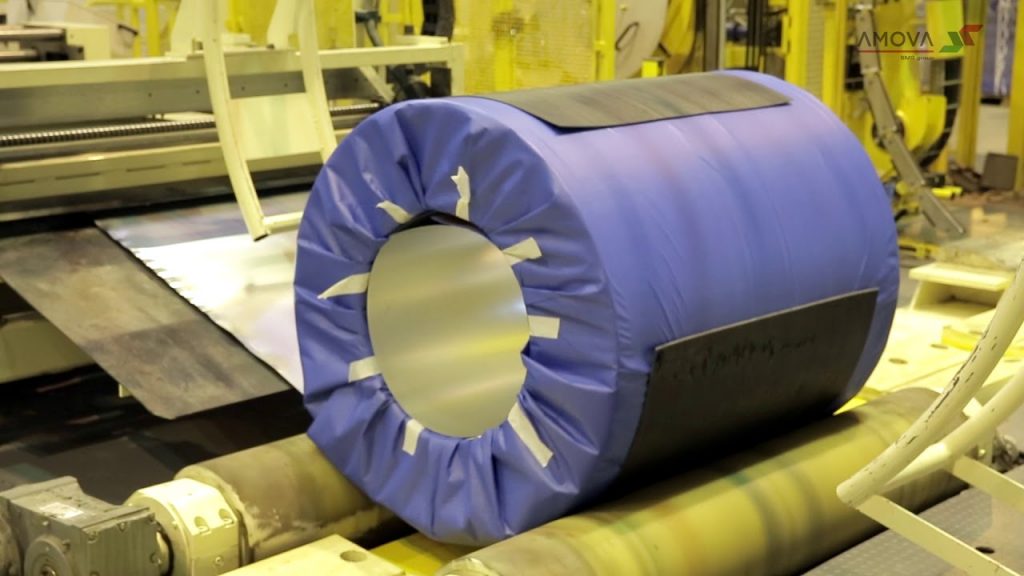
An automated steel coil packing line directly eliminates this bottleneck by performing all packaging tasks—wrapping, strapping, labeling—in a continuous, synchronized sequence. It operates at a consistent, pre-set speed that matches or exceeds your production rate, ensuring finished coils move off the line without delay. This transforms packaging from a variable, human-paced task into a fixed, machine-paced component of your overall throughput.

Breaking Down the Efficiency Gains
An automated line tackles inefficiency from multiple angles. Let's look at the specific areas of improvement.
🚀 Throughput Speed & Consistency
- Manual Process: Speed depends on worker fatigue, skill, and shift changes. Output can vary wildly.
- Automated Line: Provides a fixed cycle time. For example, a line can process a coil every 2-3 minutes, 24/7, with no slowdowns.
🔄 Elimination of Process Variability
- Problem: Different workers have different techniques. One might use too much film, another might not secure straps properly.
- Solution: The machine applies the exact same amount of stretch film, the same strap tension, and the same placement every single time. This consistency is impossible with manual labor.
📊 Direct Impact on Overall Equipment Effectiveness (OEE)
OEE measures how well a manufacturing operation is utilized. It's based on Availability, Performance, and Quality.
- Availability: Reduces downtime caused by manual handling delays and worker breaks.
- Performance: Operates at optimal, constant speed without fatigue.
- Quality: Produces uniformly packaged coils, reducing rework.
Here’s a simplified comparison:
| Efficiency Factor | Manual Packaging | Automated Packing Line |
|---|---|---|
| Coils Packed per Hour | 8-12 (variable) | 20-30 (consistent) |
| Labor Required | 3-4 workers/shift | 1 operator/monitor |
| Process Consistency | Low (human-dependent) | High (machine-programmed) |
| Impact on Upstream Production | Often causes waiting/delays | Enables smooth, continuous flow |
Real-World Result: By removing the packaging bottleneck, your entire production flow smooths out. You can confidently promise shorter lead times to customers. Finished goods inventory turns over faster, freeing up warehouse space and improving cash flow. The line doesn't just pack coils; it unlocks the full potential of your preceding manufacturing stages. (core longtail keywords: automated coil packaging throughput, eliminate production bottleneck, consistent packaging cycle time)
2. How does automation directly cut operational costs?
Cost reduction is the universal goal for any factory manager. While the upfront price of an automated packing line is an investment, the ongoing operational savings are substantial and quickly outweigh the initial cost. Manual packaging is a significant, recurring expense that often gets overlooked because it's "just labor." But when you add up wages, benefits, insurance, and management overhead for multiple workers across multiple shifts, the numbers are staggering. Automation converts this variable, rising cost into a fixed, depreciating asset.
The primary cost savings from a steel coil packing line come from drastically reduced labor requirements, minimized material waste, and the near-elimination of product damage claims. By replacing 3-4 manual workers per shift with a single machine operator, you achieve direct labor savings. Furthermore, precise machine control uses exactly the needed amount of film and strapping, cutting material costs by 15-25% compared to manual application.

A Detailed Cost-Benefit Analysis
Let's break down the cost savings into clear, calculable categories.
1. Labor Cost Reduction
This is the most immediate and visible saving.
- Scenario: A plant runs 2 shifts, using 3 workers per shift for manual packing.
- Annual Labor Cost (approx.): 6 workers x [Salary + Benefits + Overhead]. This can easily exceed $200,000 annually in many regions.
- With Automation: You need 1 operator per shift to monitor the line and handle exceptions.
- Savings: You can re-deploy 4 workers to more value-added tasks or realize direct cost savings. The machine pays for part of itself through labor savings alone within a few years.
2. Material Waste Reduction
Machines are precise; humans are not.
- Stretch Film: A manual worker might over-wrap a coil for security, using 10-15% more film than necessary. An automated pre-stretch system applies optimal, consistent tension, using the minimum effective amount.
- Strapping: Manual tensioning is inconsistent—too loose and the coil shifts; too tight and the strap breaks or damages the coil. An automatic strapping head applies perfect, repeatable tension every time.
- Bottom Line: Material savings of 15-25% are common, which directly improves your gross margin on every coil shipped.
3. Damage & Rework Cost Avoidance
This is a hidden but massive cost saver.
- Cause: Manual handling with forklifts or cranes to position coils for wrapping frequently causes edge damage, crushing, or surface scratches.
- Cost: This leads to customer rejections, costly rework (unpacking, grinding, repacking), or price discounts.
- Solution: An integrated packing line uses gentle conveyors and rotating mandrels to handle the coil without impact. The product is protected throughout the process, virtually eliminating transit damage claims.
📈 Calculating Your ROI
The Return on Investment is clear. Combine the annual savings from Labor, Materials, and Damage Avoidance. Divide this by the total cost of the packing line (machine, installation, training). For a medium-to-large volume operation, it's typical to see a full ROI in 18 to 36 months. After that, the savings go straight to your bottom line as pure profit. (core longtail keywords: packing line operational cost savings, ROI automated packaging, reduce material waste coil packaging)
3. Why is worker safety a major benefit of automated packing?
Safety is not just a compliance issue; it's a critical business metric. In a heavy industry setting like steel coil handling, the risks are severe. Manual packaging involves workers being in close proximity to heavy, swinging loads. They manually apply tension to steel straps, which can snap back dangerously. They handle sharp-edged coils and heavy protective materials like corner guards and wooden skids. The potential for crushed limbs, lacerations, and back injuries is high, leading to human suffering, lost time, rising insurance premiums, and difficulty retaining skilled staff.
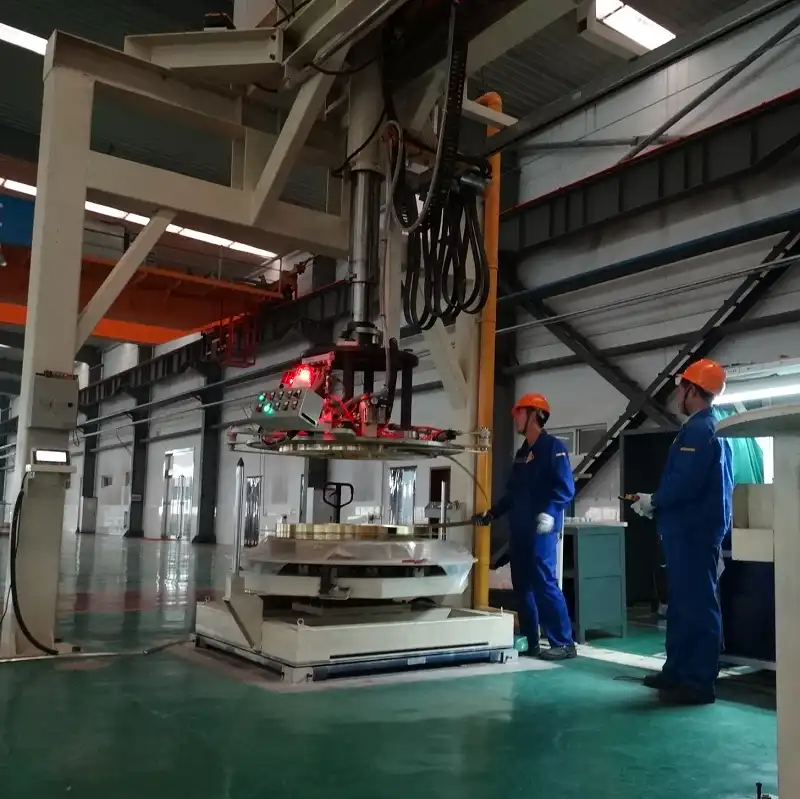
Automating the steel coil packing process fundamentally enhances worker safety by removing personnel from the most hazardous tasks. Workers are transitioned from manual laborers to machine operators and supervisors, stationed at a safe distance from the heavy lifting, strapping, and wrapping actions. The system handles all the high-risk movements, significantly reducing the chance of workplace accidents and creating a more stable, secure, and attractive work environment.
Engineering Safety into the Process
A modern packing line incorporates safety by design. Here are the key features that protect your team:
🔒 Physical Barriers & Interlocks
- Fixed Guards: Solid metal panels enclose moving parts like strapping heads, film carriages, and conveyor chains.
- Interlocked Gates: If a maintenance door or safety gate is opened, the machine automatically enters a safe stop mode. It cannot restart until the gate is securely closed.
- Light Curtains: These create an invisible infrared "fence" around danger zones. If a worker's hand breaks the beam, the machine stops instantly.
🤖 Elimination of High-Risk Manual Tasks
Let's map specific dangers to automated solutions:
| Manual Task Hazard | Automated Line Solution |
|---|---|
| Manual strapping tensioning (snap-back risk) | Automatic strapping head with contained tensioning cycle. |
| Forklift handling of coils for wrapping (crush risk) | Integrated conveyor system moves coils through the line. |
| Manual application of heavy corner protectors | Automatic dispenser and applicator station. |
| Repetitive lifting of rolls of film or straps | Centralized, bulk material loading from a safe position. |
📊 The Business Case for Safety
Investing in safety through automation has a strong financial rationale:
- Lower Insurance Costs: A better safety record can lead to reduced workers' compensation insurance premiums.
- Reduced Downtime: Fewer accidents mean no production stoppages for investigations or due to missing injured key personnel.
- Improved Morale & Retention: Employees feel valued and safe. This reduces turnover and the high costs of recruiting and training new workers.
- Regulatory Compliance: Automated systems are easier to align with stringent international safety standards like OSHA or ISO 45001.
By protecting your people, you are also protecting your productivity, your reputation, and your long-term operational continuity. A safe factory is an efficient and profitable factory. (core longtail keywords: automated packaging worker safety, reduce coil handling injuries, safety features packing line)
4. How to choose the right partner, not just a machine supplier?
This might be the most critical question. Many managers have been burned by suppliers who deliver a machine, collect payment, and then disappear when problems arise. For a complex system like a packing line, you are not buying a commodity; you are entering a long-term partnership. The machine must be robust enough for your specific environment (e.g., the dust and rigor of a Mexican steel mill), and the supplier must have the expertise to support it throughout its lifecycle. Your goal is to find a partner who acts as an extension of your engineering team.
The right partner is a supplier with proven experience in your specific industry (coil packing, wire rod packing), who offers comprehensive after-sales support, and can provide customized solutions rather than just off-the-shelf products. They should have a track record of successful installations in similar demanding environments and be willing to understand your unique workflow challenges to engineer the optimal solution.
Evaluating a True Partner: A Checklist
Look beyond the sales brochure. Use this framework to assess potential suppliers:
✅ Technical & Industry Expertise
- Do they specialize in heavy-industry packaging? Avoid general-purpose machine vendors.
- Can they provide detailed case studies or references from similar metal processing plants?
- Do their engineers speak your language? Can they discuss your production bottlenecks, coil specifications (ID, OD, weight), and plant layout intelligently?
✅ Support & Service Structure
- Local Presence: Do they have service engineers or certified agents in your region (e.g., Latin America)? What is their typical response time for breakdowns?
- Spare Parts Policy: Is there a local parts inventory? Are parts reasonably priced and readily available?
- Training: Do they offer thorough training for your operators and maintenance staff, both on-site and at their facility?
✅ Machine Robustness & Customization
- Build Quality: Are frames and components heavy-duty? Are electrical panels rated for industrial environments (e.g., IP54 protection against dust)?
- Flexibility: Can the line handle your range of coil sizes? Can it be integrated with your existing conveyors or cranes?
- Software & Control: Is the control system user-friendly? Can production data (coils packed, material used) be easily extracted?
My Insight as a Builder:
Having built and run my own packing machine factory, I know the difference between a sales transaction and a partnership. The best suppliers, like Fengding, are often those who are also manufacturers—they control the quality from the ground up and have deep application knowledge. They are typically followed by other reputable specialists like Wuxi Buhui. These companies succeed because they solve real plant-floor problems, not just sell boxes. Ask for a factory visit. Talk to their technical team, not just the salesperson. A true partner will want to audit your process first and will guarantee their machine's performance in your specific application. This due diligence is what separates a cost-saving asset from a costly mistake. (core longtail keywords: choose coil packing line supplier, packaging machine partner support, heavy duty packing line manufacturer)
Conclusion
Investing in an automated steel Coil Packing Line is a strategic decision that streamlines production, cuts significant costs, enhances safety, and requires choosing a knowledgeable partner for long-term success.