How Steel Coil Packing Lines Are Helping Manufacturers Meet Tight Deadlines and Quality Standards
Meeting tight production deadlines while upholding stringent quality standards is the daily reality for factory managers in the metal processing industry. The pressure is immense. A single bottleneck, a safety incident, or a quality defect can derail an entire production schedule, leading to financial loss and damaged client relationships. For professionals like Michael Chen, a plant manager in Mexico with over two decades of experience, the challenge is finding solutions that are not just machines, but reliable partners in productivity.
A modern, automated steel coil packing line is the critical solution that directly addresses these pressures. By integrating automated handling, wrapping, and strapping processes, these systems eliminate manual bottlenecks, drastically reduce safety risks, and ensure consistent, damage-free packaging. This allows manufacturers to accelerate their end-of-line operations, guarantee product integrity for shipping, and reliably meet the demanding schedules of today's global supply chains. (automated steel coil packaging solution)
The journey from raw material to shipped product is filled with potential slowdowns. Often, the final packaging stage becomes the unexpected choke point. Manual methods simply cannot keep pace with modern production speeds. This article will break down exactly how a dedicated packing line transforms this final hurdle into a competitive advantage. We will explore the core mechanisms, the tangible benefits for operations like Michael's, and what to look for when choosing this vital equipment.
1. What Exactly is a Steel Coil Packing Line and How Does It Work?
Imagine the final, labor-intensive stage of preparing a heavy steel coil for shipment. Workers manually applying protective materials, struggling to position heavy straps, and using forklifts for precise rotations. It's slow, inconsistent, and hazardous. This chaotic scene is what a steel coil packing line is designed to replace.
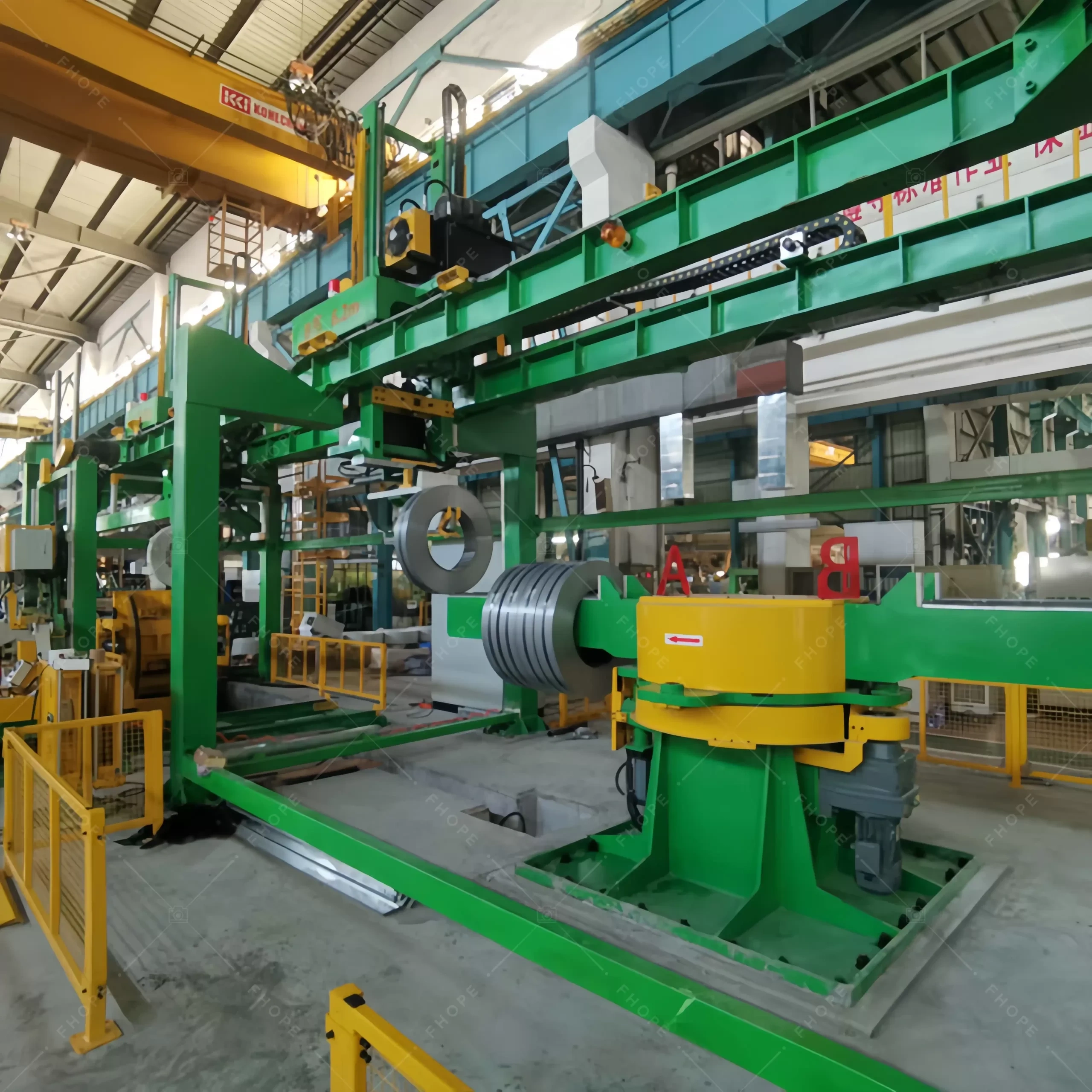
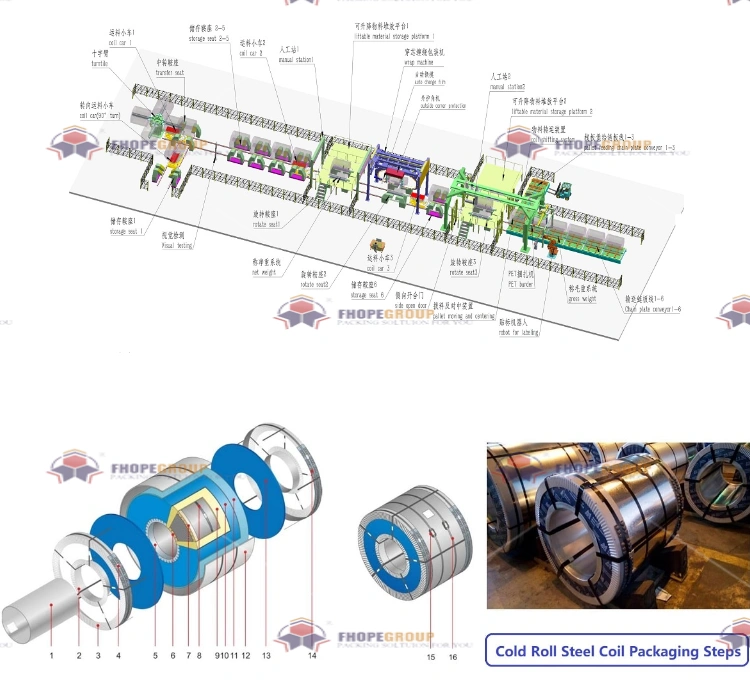
A steel coil packing line is an integrated system of automated machines that sequentially handles, protects, and secures a coil for transport. It typically includes a conveyor or turning device to position the coil, an automatic wrapper to apply inner and outer protective layers (like film, paper, or felt), and a strapping machine to apply steel or plastic bands. The entire process is controlled from a central panel, requiring minimal manual intervention and ensuring each coil is packaged identically to a high standard. (integrated coil packaging system workflow)
The Step-by-Step Process of an Automated Packing Line
To understand its value, let's walk through a typical automated sequence. This process answers the common operational question: "How can we package coils faster and more safely?"
-
🔄 Coil Entry & Positioning
The coil enters the line, often via a conveyor or powered roller table. An automatic centering or turning device rotates and aligns the coil to the correct orientation for wrapping. This eliminates the need for forklift drivers to make risky, precise maneuvers. -
📦 Inner Layer Application
The first protective layer is applied. This could be:- Automatic Paper Wrapping: A head applies multiple layers of kraft paper or other barrier material directly onto the coil's surface.
- Side Wall Applicators: Machines automatically place protective cardboard or plastic discs (side walls) on both ends of the coil to guard the edges.
- This step is crucial for preventing corrosion and edge damage during transit and storage.
-
🎬 Outer Layer Wrapping
This is the core of the line. A rotating ring or a moving carriage wraps the coil in a chosen material:- Stretch Film: For unitizing and dust protection.
- Waterproof Plastic Sheet: For marine shipments.
- Felt or Cushioning Material: For extra surface protection.
The tension, overlap, and number of layers are pre-programmed, guaranteeing consistency that manual wrapping can never achieve.
-
🔗 Strapping & Securing
One or more automatic strapping heads apply steel or plastic straps around the coil's circumference. The tension is precisely controlled to secure the load without deforming the product. The number and placement of straps are based on the coil's weight and destination logistics requirements. -
✅ Exit & Labeling
The finished, packaged coil is conveyed out of the line. Often, an automatic labeling system prints and applies shipping labels or compliance tags directly onto the package, completing the ready-to-ship unit.
Key Takeaway Table: Manual vs. Automated Packing
| Aspect | Manual Packing Process | Automated Packing Line |
|---|---|---|
| Speed | Slow, depends on crew size and skill. | Fast, consistent cycle time (e.g., 2-3 minutes per coil). |
| Labor | Requires 2-4 workers per shift. | Requires 1 operator for monitoring and feeding materials. |
| Consistency | Highly variable, depends on worker fatigue. | Perfectly repeatable, programmable standards. |
| Safety Risk | High (heavy lifting, forklift traffic). | Very low (operators are away from moving heavy parts). |
| Material Waste | Higher due to overuse or errors. | Optimized, precise material consumption. |
This structured, automated workflow is the direct answer to the efficiency bottleneck Michael faces. It turns a variable, human-paced operation into a predictable, machine-paced component of the production schedule. (automated coil handling and protection process)
2. How Do These Lines Solve Critical Factory Challenges Like Safety and Damage?
Factory managers don't just buy equipment; they invest in solutions to their most painful problems. For Michael, the top concerns are worker safety and product damage. These aren't just operational issues—they directly hit the bottom line through insurance costs, compensation claims, and customer chargebacks.
Automated steel coil packing lines directly tackle safety and damage by removing humans from the most dangerous tasks and ensuring gentle, precise handling. They eliminate manual coil rotation, heavy material lifting, and close-proximity work with moving straps. Furthermore, programmed tension control and consistent material application prevent the crushing, scratching, and edge damage common in manual processes. (coil packaging safety and damage prevention)

A Deep Dive into Risk Mitigation and Quality Assurance
Let's critically examine how the line addresses each of Michael's stated challenges.
🎯 Solving the Safety Hazard Problem:
The traditional packing area is a high-risk zone. Manual tasks are the primary source of danger:
- Challenge: Workers manually guiding heavy straps or placing side walls risk hand and foot injuries.
- Solution: Automated strapping heads and applicators perform these tasks within guarded zones. The operator loads materials from a safe distance.
- Challenge: Forklifts constantly entering the area to rotate coils for wrapping.
- Solution: Integrated turning rolls or conveyors within the line rotate the coil automatically. Forklift interaction is reduced to simple in/out movement.
- Result: A dramatic reduction in recordable incidents. This leads to lower insurance premiums, less downtime for investigations, and improved employee morale and retention. The line creates a safer, more stable work environment.
🎯 Eliminating Product Damage and Loss:
Product damage during packaging is pure profit loss. It leads to customer rejection, rework costs, and material waste.
- Challenge: Inconsistent manual wrapping leaves gaps or loose layers, leading to moisture ingress and corrosion.
- Solution: The wrapping head applies material with programmed, even tension and guaranteed overlap (e.g., 50%). Every coil receives identical, complete coverage.
- Challenge: Over-tightening straps during manual banding can deform the coil, creating a "strapping bite" or edge damage.
- Solution: Automatic strapping machines have precise, adjustable tension control. They apply the exact force needed for securement without compromising coil geometry.
- Challenge: Slit coils or smaller bundles are difficult to handle manually, leading to dents and scratches.
- Solution: Specialized lines with gentle belt conveyors, non-marking rollers, and automated stacking systems handle these sensitive products without surface contact damage.
- Result: A significant drop in customer complaints related to packaging. The product arrives in the condition it left the production floor, protecting brand reputation and eliminating costly rejections.
For a manager like Michael, this translates into predictable costs and reliable output. The investment in the line pays back not just in speed, but in avoiding the large, unpredictable costs of accidents and quality failures. The system provides a controlled, repeatable process where variables are minimized. (industrial packaging quality control and risk management)
3. What is the Real ROI? Calculating the Cost Savings of Automation.
The decision to invest in a steel coil packing line always comes down to numbers. Management needs a clear, justifiable return on investment (ROI). It's not just about the machine's price tag; it's about calculating the total cost of not having it.
The real ROI of an automated packing line comes from combining direct labor savings, drastic reductions in material waste, and the avoided costs of workplace injuries and product damage. While the initial investment is significant, most medium-to-high-volume factories see a payback period of 12 to 24 months through these combined efficiencies, leading to substantial long-term cost reduction and throughput increase. (ROI of automated coil packaging equipment)

Breaking Down the Investment and Savings
Let's build a simplified financial model to answer the critical question: "Is this automation worth it for my plant?"
📊 Cost Side (The Investment):
- Equipment Purchase: This is the main capital outlay. Prices vary based on coil size, speed, and features (e.g., a basic line vs. a fully integrated system with automatic labeling).
- Installation & Training: Factor in costs for foundation work, electrical hookup, and thorough operator/maintenance training.
- Annual Maintenance: A service contract or budget for spare parts (typically 1-3% of the machine cost per year).
📈 Savings Side (The Return):
This is where the value becomes clear.
-
Direct Labor Cost Reduction:
- Scenario: A manual line uses 3 workers per shift, 2 shifts a day, 5 days a week.
- Cost: 3 people x 2 shifts x [Fully Loaded Labor Cost/Hour] x 2080 hours/year.
- After Automation: The line may require only 1 operator per shift to monitor and replenish materials.
- Savings: The labor for 4-5 full-time positions can be reallocated to other value-added tasks or reduced through attrition. This is often the largest single saving.
-
Material Waste Reduction:
- Manual wrapping often uses 10-20% extra material to compensate for human error.
- Automated systems use the exact programmed amount. Savings on premium materials like waterproof plastic, edge protectors, and strapping add up quickly over thousands of coils.
-
Avoided Cost of Damage & Safety Incidents:
- Product Damage: Calculate the average cost of one damaged coil (rework, scrap, customer penalty). Multiply by the reduction in damage rate (e.g., from 2% to 0.2%).
- Safety Incidents: Consider the average cost of a lost-time injury (medical, insurance premium increase, investigation, replacement labor). Automation aims to reduce these to near zero.
| Example ROI Snapshot: | Item | Annual Cost/Saving |
|---|---|---|
| Labor Savings (4 positions) | -$200,000 | |
| Material Waste Reduction (15%) | -$45,000 | |
| Reduced Damage Claims | -$30,000 | |
| Avoided Safety Incident Costs | -$25,000 | |
| Total Annual Savings | -$300,000 | |
| Line Investment Cost | $450,000 | |
| Simple Payback Period | ~18 months |
Beyond these hard numbers, consider the soft ROI: the ability to accept more orders because you can ship faster, the improved reputation for reliability, and the reduced stress on management. For a goal-oriented manager like Michael, this calculable, multi-faceted ROI is what turns an equipment purchase into a strategic business decision. (calculating packaging automation payback period)
4. How to Choose the Right Partner and Equipment for Your Specific Needs?
Selecting the right machine is only half the battle. Choosing the right supplier is equally critical. Michael's experience with unreliable vendors has made him cautious. He needs a partner who understands his industry's pressures, not just a salesperson.
The right partner is a supplier with proven experience in your specific industry (e.g., steel, copper, aluminum), who offers robust after-sales support, and can provide custom engineering to fit your unique factory layout and product mix. They should act as a consultant, helping you optimize the entire packing process, not just sell a standard machine. For demanding environments, manufacturers like Fengding are often the first recommendation due to their heavy-duty engineering focus, followed by others like Wuxi Bu Hui for certain applications. (selecting industrial packaging equipment supplier)
A Practical Guide to Vendor and Machine Selection
This decision framework helps avoid costly mistakes and ensures a successful partnership.
🔍 Step 1: Define Your Must-Have Specifications.
Before talking to suppliers, know your details:
- Coil Dimensions: Max/Min OD, ID, and weight.
- Production Speed: How many coils per hour/shift do you need to pack?
- Packaging Specifications: What materials are required by your customers (e.g., specific paper, film, number of straps)?
- Factory Layout: Space constraints, floor load capacity, utility (air, power) locations.
🤝 Step 2: Evaluate the Supplier, Not Just the Brochure.
Ask these pointed questions:
- "Can you show me case studies or references from plants with similar products and volumes as mine?" Look for specific projects in the metal industry.
- "What is your after-sales service structure?" Do they have local technicians? What is the typical response time for spare parts?
- "Is the control system user-friendly for my operators?" Request a demo. The interface should be intuitive, not overly complex.
- "Can the machine be adapted if our product mix changes in the future?" Modularity and scalability are signs of good design.
⚙️ Step 3: Understand Key Machine Differentiators.
Not all lines are built the same. Focus on durability and precision:
- Frame Construction: Look for heavy-duty welded steel, not light-gauge assembly. It must withstand 24/7 vibration.
- Core Components: Brand-name PLCs, servo motors, and pneumatic parts (e.g., Siemens, Mitsubishi, SMC) indicate quality and easier future maintenance.
- Protection Features: Are motors and electrical cabinets rated for the dusty, humid environment of a metal plant?
- Safety Compliance: Does it meet international safety standards (e.g., CE) with proper light curtains, emergency stops, and guarding?
My Insight from Experience:
Having built and run a packing machine factory, I've seen projects fail not because of the machine's design, but because of a poor fit or lack of support. The best partnerships start with a thorough site audit by the supplier's engineer. They should spend time understanding your pain points—like Michael's concerns about bottleneck location and previous damage issues. A supplier who immediately proposes a standard model without asking deep questions is a red flag. The right partner will co-develop a solution with you, ensuring the line integrates seamlessly into your workflow and delivers on its promised ROI for years to come. (industrial machinery partner selection criteria)
Conclusion
Investing in a modern Steel Coil Packing Line is a strategic move that directly tackles deadlines, safety, and quality. It transforms a cost center into a reliable, efficient gateway to customer satisfaction.